


Space infrastructure innovator Intuitive Machines, Inc. (NASDAQ: LUNR) is moving to internalize one of the most mission-critical components of deep space exploration through its agreement to acquire KinetX, Inc., an Arizona-based aerospace navigation firm uniquely certified by NASA for deep space operations. While the deal is expected to close before the end of 2025, the transaction reflects a deliberate push toward vertical integration in a market where ownership of navigation technology could define leadership from the lunar surface to Mars orbit.
Founded in 2013 by Steve Altemus, Kam Ghaffarian, and Tim Crain, Intuitive Machines has evolved from a lunar lander specialist into a broader infrastructure-as-a-service provider in the cislunar economy. The addition of KinetX — with more than three decades of deep space navigation heritage supporting missions to Mercury, Pluto, and asteroids — could serve as the final link in creating an end-to-end portfolio for government, commercial, and defense clients.
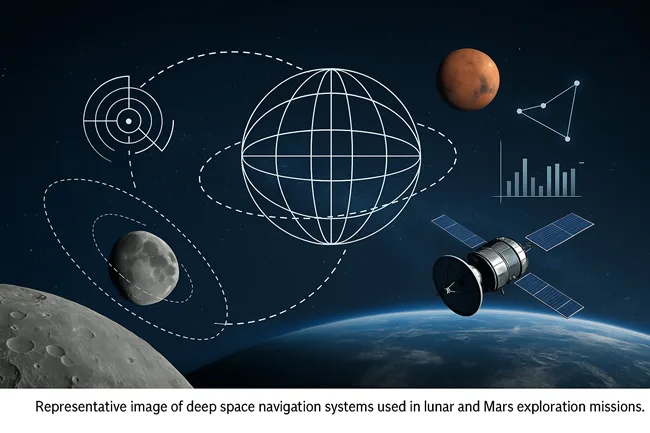
Why does bringing NASA-certified deep space navigation in-house strengthen Intuitive Machines’ market position beyond lunar landings?
Intuitive Machines gained international visibility with its Nova-C lunar lander, which in 2024 marked the first American return to the Moon since the Apollo era. The company’s business model is built around three pillars: lunar delivery services, space data transmission, and infrastructure-as-a-service for exploration and defense missions.
Until now, deep space navigation has been delivered through external partnerships. Integrating KinetX’s proprietary navigation algorithms, flight dynamics expertise, and ground-control analysis tools gives Intuitive Machines direct control over trajectory design, secure constellation management, and precision orbital modeling. These capabilities are already familiar to the company, having been used to support its past and upcoming lunar missions, including a planned 2025 south-pole landing.
By owning this competency outright, Intuitive Machines can refine mission performance, reduce reliance on subcontractors, and position itself to compete in high-value interplanetary navigation contracts.
How does KinetX’s software integration with lander and communications systems create new infrastructure opportunities?
KinetX is the only commercial enterprise certified by NASA to provide deep space navigation services, a distinction earned through work on flagship interplanetary programs. Its portfolio includes proprietary navigation software, secure constellation operations tools, and analytical systems for mission trade studies.
According to CEO Steve Altemus, the acquisition will help position Intuitive Machines as “an indispensable infrastructure services layer for space exploration.” Combining KinetX’s flight-proven software with Intuitive Machines’ flight systems and communications payloads could enable bundled service offerings that address both navigation and data relay requirements for lunar, cislunar, and Mars missions.
These integrated capabilities could be competitive in NASA’s Near Space Network Services program, a successor to the Tracking and Data Relay Satellite System (TDRSS), as well as in defense-linked communications and commercial data relay constellations.
What competitive trends in the commercial deep space market make this acquisition strategically important?
The space infrastructure sector is in the midst of a vertical integration wave. Competitors such as Redwire Corporation and Firefly Aerospace are building portfolios that encompass spacecraft design, manufacturing, servicing, and mission support.
For Intuitive Machines, acquiring KinetX eliminates a dependency on external navigation providers, enabling it to control more of the mission lifecycle and potentially capture higher margins. Government agencies and large primes increasingly seek vendors capable of delivering integrated systems, reducing interface and integration risks across multi-year programs.
However, this strategy is not without risk. Deep space navigation is a technically demanding field requiring absolute precision, and merging KinetX’s software into Intuitive Machines’ hardware and mission operations will demand careful coordination to maintain NASA-level certification standards.
How do Intuitive Machines’ current financials and contract portfolio support its acquisition strategy?
In the second quarter of 2025, Intuitive Machines reported GAAP revenue of USD 50.3 million, a 21 percent increase year-over-year but short of analyst expectations by approximately 25 percent. The company recorded an adjusted EBITDA loss of USD 25.4 million and an operating loss of USD 28.6 million.
Despite these losses, liquidity remains strong, with USD 344.9 million in cash and no debt on the balance sheet — a key factor enabling acquisitions like KinetX without jeopardizing ongoing mission funding. The company’s backlog has declined 22 percent due to contract deliveries, but it retains visibility through major awards, including a share of NASA’s USD 4.82 billion Near Space Network Services program and multiple defense-linked projects.
These factors suggest that while near-term profitability remains a challenge, Intuitive Machines has the capital runway to invest in strategic capabilities that could enhance long-term margins.
How is the stock performing and what does investor sentiment indicate post-announcement?
Shares of Intuitive Machines (LUNR) were trading at USD 9.81 as of August 8, 2025, down 2.4 percent on the day and off nearly 10 percent for the week. Despite recent declines, the stock remains up more than 180 percent year-over-year, reflecting strong investor appetite for exposure to the commercial space sector.
Institutional sentiment appears cautiously optimistic. Analysts see the acquisition as a strategic fit that could expand Intuitive Machines’ addressable market and improve revenue visibility if integration is successful. The consensus 12-month price target of approximately USD 15.11 suggests potential upside of more than 50 percent from current levels, contingent on execution and contract wins.
Where does the KinetX acquisition fit into Intuitive Machines’ Moon-to-Mars roadmap?
Near-term, KinetX’s navigation systems are expected to play a direct role in the 2025 south-pole lunar landing mission, a technically challenging target due to lighting conditions, rugged terrain, and the potential for water ice.
In the medium term, Intuitive Machines plans to deploy navigation-enabled data relay satellites and surface stations to support sustained lunar activity. Longer term, the company envisions extending these systems to Mars missions, where the complexities of orbital mechanics and communication delays make robust navigation and flight dynamics indispensable.
By integrating navigation capabilities now, Intuitive Machines could accelerate its roadmap, reduce mission risk, and deliver more predictable outcomes for clients planning multi-billion-dollar exploration initiatives.
Can Intuitive Machines turn NASA-certified navigation into a lasting competitive advantage?
The acquisition of KinetX represents more than an incremental capability upgrade — it is a strategic move to control one of the most critical enablers of deep space missions. If successfully integrated, KinetX’s NASA-certified software and decades of operational heritage could give Intuitive Machines a decisive edge in competing for cislunar and Mars infrastructure contracts.
The ultimate measure of success will be the company’s ability to merge these capabilities seamlessly, maintain mission reliability, and secure high-value, long-duration contracts. If these conditions are met, Intuitive Machines could establish itself as a central player in the deep space economy — with potential benefits for both its market share and its stock performance in the years ahead.
Discover more from Business-News-Today.com
Subscribe to get the latest posts sent to your email.



