


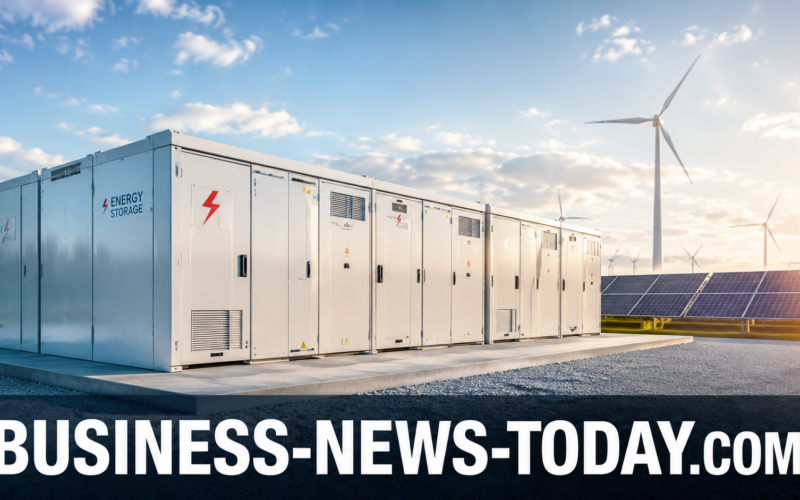
HMC Capital Limited (ASX:HMC) has received the regulatory approvals required for its energy transition partnership with KKR, keeping the transaction on track to complete on June 30, 2026. The deal brings up to A$603 million of KKR-managed capital into a 652-megawatt Australian wind, solar and battery platform backed by a 5.7-gigawatt development pipeline. Completion would allow HMC Capital to repay A$200 million of mezzanine debt, reduce the amount of its own capital tied up in the platform and add A$1.3 billion of fee-generating assets under management. ASX:HMC traded around A$2.92 on June 26, approximately 4.3% lower over five trading days, about 1.4% higher over one month and within a 52-week range of A$2.16 to A$5.35.
Why do regulatory approvals matter when the HMC and KKR transaction has not yet closed?
The June 26 announcement removes one of the most important conditions attached to the partnership. When HMC Capital and KKR announced the transaction in February, completion remained dependent on regulatory clearances, including approval under Australia’s foreign investment framework. Receiving those approvals materially reduces the probability that the structure will be delayed, altered or abandoned for regulatory reasons.
The transaction is nevertheless not complete merely because approvals have been received. Financial settlement, the transfer of funds, repayment of the existing mezzanine facility and implementation of the agreed ownership and governance arrangements must still occur. HMC Capital has indicated that completion is targeted for June 30, leaving a short but meaningful distinction between regulatory clearance and financial close.
That distinction matters because several expected financial benefits only begin at completion. HMC Capital’s capital invested in the Energy Transition Platform is expected to reduce, the existing A$200 million mezzanine facility can be repaid, and the platform can begin operating under its new joint-control structure with KKR.
The approval milestone therefore converts the partnership from a proposed financing solution into a near-completion transaction. The June 30 settlement will be the point at which balance-sheet changes, accounting treatment and capital deployment become effective.
How does KKR’s A$603 million preferred-equity structure change HMC Capital’s funding risk?
KKR-managed funds have committed up to A$603 million through a preferred-equity structure rather than a conventional purchase of ordinary shares. The commitment consists of A$355 million expected at financial close and up to A$248 million that can fund approximately 90% of the equity requirement for the platform’s first major battery energy storage development.
The structure reduces HMC Capital’s immediate funding burden. Developing large batteries and wind projects requires substantial capital well before assets generate operating cash flow. By securing committed funding from KKR, HMC Capital can advance selected projects without carrying the entire construction-equity requirement on its corporate balance sheet.
The preferred equity is non-recourse to HMC Capital, which helps isolate project-level financial risk. If development costs rise or a project underperforms, KKR’s claims sit within the Energy Transition Platform rather than directly against HMC Capital’s broader assets.
That risk transfer is not free. The preferred equity carries a 14% annual return, consisting of an 11% payment-in-kind component and a 3% cash component. The payment-in-kind return accumulates rather than being paid immediately, increasing the amount that the platform will ultimately need to repay.
At the end of the arrangement, or when the preferred equity is repaid earlier, KKR-managed investors are also expected to receive an ordinary equity interest of between 20% and 35%. The final percentage will depend on repayment timing and KKR’s participation in future capital raisings.
The structure therefore exchanges short-term balance-sheet pressure for a significant long-term cost of capital. It is attractive if HMC Capital can develop projects that generate returns comfortably above the preferred return and the value of the equity surrendered. It becomes less attractive if projects are delayed, construction costs rise or energy-market revenues fall below expectations.
Why could the partnership unlock more value from HMC Capital’s 5.7-gigawatt development pipeline?
The HMC Energy Transition Platform already contains 652 megawatts of operating wind, solar and battery assets. Approximately 85% of operating capacity is supported by contracts, providing a degree of revenue visibility while the development portfolio is advanced.
The operating assets generated approximately A$64 million of earnings before interest, tax, depreciation and amortisation during fiscal 2025. That cash-generating base distinguishes the platform from an early-stage renewable developer that depends entirely on projects which have not yet entered construction.
The larger opportunity lies in the 5.7-gigawatt pipeline covering 19 battery and wind projects. HMC Capital expects around 2.3 gigawatts of capacity to become ready for final investment decisions within 12 to 18 months. Even a partial conversion of that pipeline could materially expand operating capacity, assets under management and recurring earnings.
Capital availability has been one of the central constraints. Renewable and storage pipelines can look impressive on presentation slides, but projects create value only after securing grid access, planning approvals, construction contracts, financing and revenue arrangements. KKR’s commitment gives HMC Capital greater confidence that capital will be available when selected projects reach investment readiness.
The initial battery project will be particularly important because KKR has committed up to A$248 million toward its equity requirements. Successful delivery could establish a repeatable funding and development model for later projects. Weak execution could make both parties more cautious about committing further capital.
The partnership may also improve HMC Capital’s credibility with lenders, contractors and energy-market counterparties. KKR brings global infrastructure and climate-investment experience, potentially strengthening procurement, financing and commercial negotiations.
However, KKR’s involvement does not remove planning, transmission or construction risks. Projects can remain delayed even when equity funding is available. The partnership solves part of the capital equation, not every obstacle between a development site and an operating power asset.
What does completion mean for HMC Capital’s balance sheet and recurring earnings model?
HMC Capital expects its invested capital in the Energy Transition Platform to decline from approximately A$305 million to around A$180 million after completion, net of the anticipated A$35 million upfront capital charge. This releases corporate capital that can be used to reduce debt or support investment opportunities across the wider group.
The platform is expected to hold a A$550 million non-recourse senior debt facility alongside KKR’s A$355 million initial preferred-equity investment. The existing A$200 million mezzanine facility is scheduled to be repaid, replacing a shorter-term and potentially less flexible funding layer.
HMC Capital will also receive an annual corporate-services fee of A$5 million and approximately A$2 million of additional cost recovery. These payments provide a recurring income stream that is less dependent on development profits or changes in project valuations.
The partnership is expected to add approximately A$1.3 billion of fee-generating assets under management. That supports HMC Capital’s broader strategy of growing recurring funds-management income while limiting the proportion of corporate capital required to support each platform.
HMC Capital reported A$19.5 billion of assets under management at the end of December 2025. First-half management fees excluding performance fees increased 33% to A$88.7 million, showing that recurring income is becoming a larger contributor to the group’s financial profile.
The accounting presentation will change after financial close. HMC Capital and KKR will have joint control, meaning HMC Capital expects to account for the platform using the equity method rather than consolidating its assets, debt, revenue and expenses line by line.
This may make the corporate balance sheet appear lighter, but investors will need to look beyond reported leverage. Economic exposure remains through HMC Capital’s equity investment, the value of its development pipeline and its obligations to fund part of future projects.
Does KKR’s 14% preferred return make the energy partnership too expensive?
The 14% annual preferred return is the most important challenge within the transaction economics. It provides KKR with substantial downside protection and creates a high return threshold for the underlying platform.
The 11% payment-in-kind component reduces near-term cash pressure because it is accumulated rather than paid each year. However, accumulated returns compound over the seven-year term, potentially creating a large repayment amount if the preferred equity remains outstanding for an extended period.
KKR also receives a minority ordinary equity interest after the preferred instrument is repaid. This means KKR retains exposure to future upside even after receiving its preferred capital and accumulated return.
From HMC Capital’s perspective, the structure may still be rational because it avoids a distressed sale, reduces corporate funding pressure and provides committed capital for development. The relevant comparison is not between a 14% instrument and cheap investment-grade debt, which may not have been available for the same development risk. The comparison is between the KKR structure and alternative equity, mezzanine or asset-sale options.
The arrangement will create value if HMC Capital can convert projects into operating assets or sell them at valuations that generate returns meaningfully above the cost of the preferred funding. HMC Capital is targeting an equity return above 20% and a multiple on invested capital of approximately four times within five years.
Those targets are ambitious. They depend on projects advancing through approvals, financing and construction without material delays. They also assume supportive demand for storage capacity, grid services and renewable generation.
The KKR partnership is strategically useful but financially demanding. It reduces the risk that HMC Capital must fund the platform alone, yet it does not eliminate the need for exceptional development execution. The transaction should be judged through realised project returns, not simply the amount of capital announced.
How does Australia’s battery investment cycle support the HMC and KKR strategy?
Australia is adding renewable generation faster than many electricity systems, increasing the requirement for storage that can absorb excess power and dispatch it during periods of higher demand. Battery projects can also provide grid-stability services and respond rapidly when conventional generators or transmission assets experience interruptions.
Large-scale battery investment has accelerated, with several gigawatts of new capacity reaching financial commitment. This creates a supportive market for platforms that already control development sites, grid connections and experienced operational teams.
HMC Capital’s portfolio includes operating battery, wind and solar assets, giving the platform practical experience rather than relying entirely on undeveloped projects. The Victorian Big Battery provides an established reference point for operating grid-scale storage in the National Electricity Market.
Demand growth from data centres, electrification and industrial investment may increase the long-term need for reliable electricity supply. HMC Capital’s separate exposure to digital infrastructure also gives management a direct view of how artificial intelligence and cloud investment are changing electricity requirements.
Competition is increasing at the same time. Infrastructure funds, utilities, renewable developers and global energy companies are all pursuing battery projects. Greater competition can increase land, connection, engineering and construction costs while reducing expected returns.
Grid congestion represents another risk. A technically completed battery may still face limits on charging or dispatch if transmission infrastructure is constrained. Connection studies and revenue assumptions must therefore be assessed project by project.
Battery revenues can also be volatile. Income may come from energy arbitrage, frequency services, contracts and capacity arrangements, with each revenue source carrying different risks. As more batteries enter the market, unusually high early returns may decline.
The opportunity remains substantial, but development quality will matter more than headline pipeline size. HMC Capital must prioritise projects with strong grid locations, credible commercial arrangements and manageable construction costs rather than attempting to develop all 5.7 gigawatts simultaneously.
Why has ASX:HMC remained near its yearly low despite the KKR approval milestone?
HMC Capital shares traded around A$2.92 on June 26, approximately 4.3% lower over five trading sessions. The stock was about 1.4% higher than its late-May level but remained roughly 45% below its A$5.35 52-week high.
The subdued response indicates that regulatory approval was largely expected. Investors already knew the transaction was targeting a mid-2026 close, meaning the June 26 announcement confirmed progress without changing the headline commercial terms.
The market is also evaluating the complexity of HMC Capital’s wider portfolio. The group manages real estate, healthcare assets, digital infrastructure, private credit, private equity and energy-transition investments. Diversification creates multiple growth opportunities, but it also makes valuation and risk exposure harder to assess.
The energy transaction reduces immediate funding concerns but introduces a costly preferred-equity instrument. Investors must decide whether the released capital and development upside compensate for the 14% preferred return and the ordinary equity that KKR will eventually receive.
HMC Capital’s market capitalisation was approximately A$1.2 billion at the June 26 share price. This remains below levels reached before concerns emerged around balance-sheet complexity, asset valuations and the execution of newer investment platforms.
The stock’s position close to its 52-week low may reflect scepticism rather than a rejection of the underlying assets. A rerating will probably require evidence that HMC Capital can convert its capital-light strategy into recurring earnings and cash flow without creating further balance-sheet surprises.
Regulatory approval closes one uncertainty. It does not answer the larger valuation question around how much shareholders will ultimately earn from the Energy Transition Platform.
What should investors watch after the expected June 30 financial close?
The first checkpoint is confirmation that the transaction has completed on the expected terms. Investors should look for evidence that the A$355 million initial funding has been received, the A$200 million mezzanine facility has been repaid and HMC Capital’s invested capital has declined as planned.
The second issue is the treatment of the A$35 million capital charge. HMC Capital previously included this amount when presenting pro forma operating earnings, but investors should distinguish the one-time transaction benefit from sustainable recurring income.
The third milestone is a final investment decision for the first major battery project. The project’s location, capacity, construction cost, revenue arrangements and commissioning timetable will indicate whether the KKR funding is being deployed into an economically attractive asset.
Investors should also monitor the speed at which the 2.3-gigawatt near-term pipeline advances. Repeated delays would weaken projected returns because preferred-equity costs continue accumulating while projects remain undeveloped.
Operating performance across the existing 652-megawatt portfolio will provide another important signal. Stable contracted revenue and reliable plant availability can help fund development and demonstrate the quality of the operating base.
HMC Capital must also provide transparent reporting on the equity-accounted platform. Investors will need information on debt, preferred-equity balances, development expenditure, operating earnings and project valuations to assess the underlying economics.
The June 26 approval is an important milestone, but June 30 begins the more consequential phase. HMC Capital and KKR must now convert a complex financing structure into operating assets, recurring earnings and returns that exceed the cost of the capital employed.
What are the key takeaways from HMC Capital’s KKR energy partnership approval?
- HMC Capital has received the regulatory approvals required for its partnership with KKR-managed funds.
- The transaction is expected to complete on June 30, 2026, meaning it should not yet be described as closed.
- KKR has committed up to A$603 million, including A$355 million at completion and up to A$248 million for the first major battery development.
- The partnership should allow the Energy Transition Platform to repay A$200 million of mezzanine debt.
- HMC Capital expects its invested capital in the platform to fall from approximately A$305 million to around A$180 million.
- The preferred equity carries a 14% annual return and gives KKR investors a future ordinary equity interest of between 20% and 35%.
- The platform contains 652 megawatts of operating assets and a 5.7-gigawatt battery and wind development pipeline.
- Completion should add approximately A$1.3 billion of fee-generating assets under management and A$5 million of annual corporate-services fees.
- ASX:HMC remains approximately 45% below its 52-week high, indicating that investors continue to demand evidence of execution and cash generation.
- The next major catalysts are financial close, repayment of mezzanine debt and a final investment decision on the first KKR-backed battery project.
Discover more from Business-News-Today.com
Subscribe to get the latest posts sent to your email.