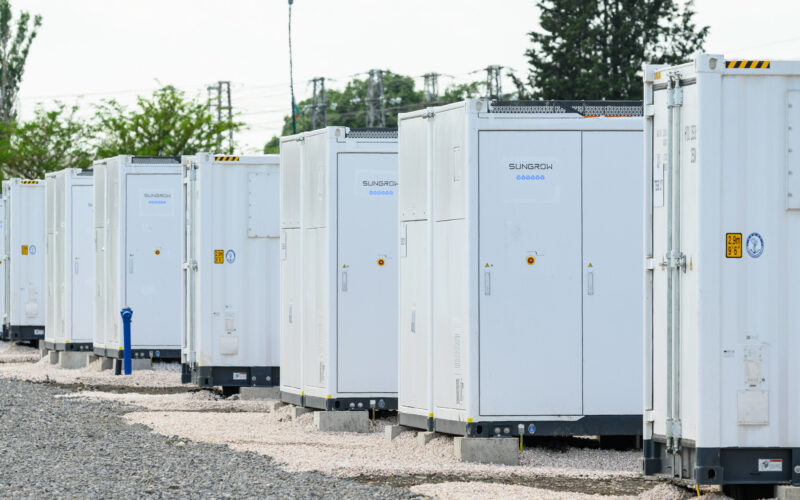
Sungrow Power Supply Co., Ltd. (SZSE: 300274) and Sunotec have commissioned Enery’s 150MW/600MWh battery energy storage system in Nova Zagora, Bulgaria, marking one of the country’s largest utility-scale storage deployments. The project uses Sungrow’s PowerTitan 2.0 liquid-cooled energy storage system and is financed through Bulgaria’s national RESTORE programme. The facility is part of a broader storage rollout in Bulgaria, with Sungrow and Sunotec expecting total commissioned capacity under the programme to reach 3GWh by the end of 2026. Sungrow stock recently traded near CN¥149.10, below its 52-week high of CN¥209.88 but far above its 52-week low of CN¥62.07, reflecting a company still valued strongly despite recent volatility in China’s clean-energy equipment sector. The strategic question is whether Bulgaria’s storage buildout can become a template for Southeast Europe’s grid-flexibility market, while helping Sungrow defend growth in a more competitive global battery and inverter industry.
Why does Sungrow’s Nova Zagora battery storage project matter for Southeast Europe’s power grid?
Sungrow’s Nova Zagora project matters because Southeast Europe is moving from renewable capacity ambition to grid-balancing reality. Wind and solar capacity can be added quickly, but power systems still need flexibility to absorb variable generation, manage frequency, reduce curtailment and support balancing markets. A 150MW/600MWh battery system gives Bulgaria four hours of storage capacity at scale, making it a practical grid asset rather than a demonstration project.
The location is strategically important because Bulgaria is trying to modernise its power system while integrating more renewable electricity. The country sits in a region where coal generation, cross-border power flows, renewable development and grid constraints all interact. Large-scale storage can help reduce stress on the system by absorbing excess renewable power and dispatching electricity when the grid needs support.
For Southeast Europe, the project also signals that battery storage is no longer a niche technology reserved for Western Europe or California-style markets. The Nova Zagora system shows that large storage assets are becoming part of mainstream power planning in emerging European energy markets. That matters for developers, utilities and equipment suppliers because the next wave of storage demand may come from regions that are only now building market rules and grid-code experience around utility-scale batteries.

How does the project strengthen Sungrow’s position in European energy storage?
The Nova Zagora project strengthens Sungrow’s European storage position by placing its PowerTitan 2.0 system inside a high-profile, grid-connected asset backed by national support funding. Europe is a crucial market for energy storage suppliers because renewable penetration, power-price volatility, grid congestion and energy-security concerns are all increasing demand for flexibility. Sungrow is using this project to deepen its visibility in a region that is likely to need more storage over the next decade.
The project also gives Sungrow a working reference case in Bulgaria. That matters because battery-storage procurement is still highly trust-driven. Developers, lenders and grid operators want technology providers that can show operating performance, grid compliance, thermal management and service capability. A commissioned project is more valuable than a pitchbook because it gives future customers something to inspect, measure and underwrite.
For Sungrow, the competitive value extends beyond one installation. The company is already a major global supplier of photovoltaic inverters and energy storage systems, but competition in both sectors is intense. European storage projects can help Sungrow diversify from inverter-led revenue toward higher-value energy storage systems, software-enabled performance, long-term service and grid-support applications. In simple terms, Sungrow is not just selling boxes anymore. It is trying to sell confidence in grid flexibility.
Why is Sunotec’s role important in the Bulgaria battery storage rollout?
Sunotec’s role is important because large-scale storage projects depend on execution as much as technology. Battery systems require civil works, electrical integration, grid-code compliance, commissioning discipline, site management and long-term operational planning. Sunotec brings infrastructure delivery capability in large-scale renewable projects, while Sungrow contributes the battery technology platform.
That partnership model matters for Southeast Europe because the region needs both equipment and localised execution. Importing battery units is only one part of the work. Projects must connect to the grid, meet national technical requirements, participate in balancing markets and operate safely across changing weather and power-market conditions. A technology supplier without strong delivery partners can struggle to convert pipeline into operational assets.
The broader partnership also includes a larger storage programme in Bulgaria. The partners expect another 2.2GWh of storage capacity to come online over the next two months, with total commissioned capacity expected to reach 3GWh by the end of 2026. If delivered, that would shift Bulgaria from having limited utility-scale storage visibility to becoming one of the more important battery-storage markets in Southeast Europe.
What does the Enery-backed project say about battery storage economics in Bulgaria?
Enery’s role as developer and owner is important because the economics of the Nova Zagora battery will depend on active participation in power and balancing markets. Large batteries create value by charging when power is cheaper or abundant, discharging when prices are higher, supporting grid stability and providing ancillary services. That means revenue depends on market design, volatility, dispatch optimisation and regulatory clarity.
Bulgaria’s RESTORE programme helps reduce financing pressure by supporting large-scale storage investment. Public funding can be decisive in early-stage storage markets because lenders and equity investors may still be cautious about merchant revenue, battery degradation, performance guarantees and market liquidity. Support programmes can help projects reach financial close while the market matures.
The risk is that storage economics must eventually stand on operating value, not only public support. If balancing markets deepen and renewable penetration rises, batteries like Nova Zagora could become increasingly valuable. If market rules remain shallow or grid operators do not fully monetise flexibility, returns may be more modest. The project’s success will therefore depend not only on Sungrow’s technology, but also on Bulgaria’s ability to build a market that pays batteries for the services they provide.
How does Sungrow’s PowerTitan 2.0 technology fit Europe’s battery storage needs?
Sungrow’s PowerTitan 2.0 liquid-cooled system is designed for utility-scale storage applications where land use, installation speed, safety and thermal management are central. Liquid cooling is important because battery performance and safety depend heavily on temperature control. In large systems, poor thermal management can reduce efficiency, shorten battery life or increase operational risk.
For Europe, the technology fit is linked to grid flexibility. Many countries are adding solar and wind faster than they are adding transmission and dispatchable balancing resources. Batteries help bridge that gap by shifting electricity across hours and supporting short-term grid stability. A four-hour system such as Nova Zagora can participate in multiple revenue streams if the market framework allows it.
The competitive issue is that energy storage technology is becoming more commoditised in some segments. Many suppliers now offer large-scale battery containers, power conversion systems and energy management platforms. Sungrow’s challenge is to prove that PowerTitan 2.0 can win not only on price, but also on reliability, bankability, integration performance and service support. In storage, the cheapest system on day one can become very expensive if it misbehaves on day 400.
What does the Bulgaria project mean for Sungrow stock sentiment?
Sungrow stock remains well above its 52-week low, but still materially below its 52-week high. At about CN¥149.10, the shares reflect strong investor recognition of Sungrow’s position in renewable power electronics and storage, while also showing that the market has moderated from peak enthusiasm. The stock’s 52-week range of CN¥62.07 to CN¥209.88 captures both the upside investors see in the clean-energy equipment cycle and the volatility attached to Chinese solar and storage names.
The Nova Zagora project is unlikely to move Sungrow’s valuation by itself because the company is large and globally diversified. However, it supports the longer-term sentiment case that Sungrow can keep expanding in European energy storage even as inverter margins face competition. Investors want evidence that Sungrow can grow in higher-value segments where technical reliability and grid integration matter.
The market will also watch whether Sungrow’s international storage pipeline can offset pressure in China’s domestic clean-energy equipment market. Chinese suppliers face intense price competition, margin pressure and policy-sensitive demand cycles. European projects can improve geographic diversification, but they also bring regulatory, trade and bankability scrutiny. Sungrow’s investor story depends on converting global scale into resilient profitability, not just shipping more hardware.
Why could Bulgaria become a reference market for European storage growth?
Bulgaria could become a reference market because it combines renewable growth need, grid-flexibility demand and public support through the RESTORE programme. If the Nova Zagora project and the broader 3GWh rollout perform well, other Southeast European countries may look at Bulgaria as evidence that large-scale battery storage can be deployed quickly and integrated into national grids.
The regional opportunity is significant. Countries across Southeast Europe are trying to reduce reliance on fossil generation, strengthen energy security and connect more renewable projects. Battery storage can support those goals by reducing curtailment, improving flexibility and helping grids manage intermittent power. It can also reduce the need to rely on expensive emergency generation during system stress.
The risk is that fast deployment can expose gaps in regulation. Storage needs clear rules around grid connection, market participation, tariffs, dispatch rights, capacity remuneration and degradation treatment. If those rules lag the technology rollout, projects may underperform financially even if they operate technically well. Bulgaria’s success will therefore be judged not only by megawatt-hours commissioned, but by whether batteries earn sustainable revenue and support reliable system operations.
What competitive pressure does this create for other storage suppliers in Europe?
The Nova Zagora commissioning adds competitive pressure on other storage technology providers targeting Europe. A large operational reference in Bulgaria gives Sungrow a stronger sales story in markets where developers want proven systems and fast execution. That could matter in tenders across Central and Eastern Europe, where grid flexibility demand is rising but project bankability is still developing.
Competitors will likely respond on technology, price and local partnerships. European buyers may also weigh geopolitical and supply-chain considerations, especially as governments examine dependence on Chinese clean-energy technology. Sungrow’s scale is a commercial advantage, but it also means the company must navigate scrutiny around supply chains, cybersecurity, grid-critical equipment and trade policy.
For project developers, competition among suppliers can be beneficial if it lowers costs and improves product quality. However, buyers must avoid treating battery systems as interchangeable commodities. Performance guarantees, warranty strength, software controls, thermal safety and long-term service support can make a major difference. In grid storage, procurement is not only about the upfront quote. It is about who will still answer the phone when the battery is being asked to save the grid at 7:15 p.m.
What happens next as Sungrow and Sunotec target 3GWh of Bulgarian storage by year-end?
The next major test is execution speed. Sungrow and Sunotec expect to bring 2.2GWh of additional storage capacity online over the next two months and reach 3GWh by the end of 2026. That is an aggressive timeline, and investors, developers and policymakers will watch whether the rollout meets commissioning, grid-code and operational milestones.
The second test is market performance. Nova Zagora must prove it can deliver value through power and balancing markets while supporting renewable integration. If the asset performs well, it could strengthen confidence in storage-backed energy transition planning across Southeast Europe. If market participation is weaker than expected, the region may need to refine rules and revenue mechanisms.
The third test is replication. A successful Bulgarian rollout could help Sungrow, Sunotec and Enery pursue similar storage programmes in other European markets. For Sungrow, the upside is clear: Europe needs flexibility, and storage is becoming one of the fastest ways to deliver it. The strategic read is constructive, but not risk-free. Bulgaria has given Sungrow a platform. Now the company must prove the platform can scale profitably.
Key takeaways on Sungrow’s Bulgaria battery storage project and Europe’s grid-flexibility race
- Sungrow and Sunotec have commissioned Enery’s 150MW/600MWh battery energy storage system in Nova Zagora, Bulgaria, making it one of the country’s largest BESS projects.
- The project uses Sungrow’s PowerTitan 2.0 liquid-cooled energy storage technology and is backed by Bulgaria’s national RESTORE programme.
- The Nova Zagora system is designed to support grid flexibility, renewable energy integration and power-system resilience in Southeast Europe.
- The project is part of a broader Sungrow and Sunotec rollout that targets 3GWh of commissioned storage capacity in Bulgaria by the end of 2026.
- Sungrow stock remains far above its 52-week low but below its 52-week high, reflecting strong clean-energy investor interest alongside equipment-sector volatility.
- The project strengthens Sungrow’s European storage credentials at a time when the company is trying to expand beyond inverter-led growth.
- Bulgaria could become a reference market for Southeast European battery storage if the assets perform well in balancing and power markets.
- The main risks include storage market design, grid-code execution, revenue certainty, technology performance and regulatory treatment of battery assets.
- Competitors in Europe’s storage market will watch the rollout closely because a large operational reference can influence future procurement decisions.
- The executive read is positive but disciplined: Sungrow has gained a major European storage proof point, but the real test is whether Bulgaria’s 3GWh pipeline becomes commercially repeatable.
Discover more from Business-News-Today.com
Subscribe to get the latest posts sent to your email.