


How does Harvest Midstream’s $1 billion acquisition of MPLX’s Uinta and Green River assets reshape its U.S. midstream growth story?
Harvest Midstream has moved to significantly expand its U.S. natural gas footprint with the $1 billion purchase of MPLX LP’s gathering and processing assets in the Uinta and Green River basins, spanning Wyoming, Utah, and Colorado. The agreement, announced on August 27, 2025, underscores the Houston-based privately held operator’s ambition to establish itself among the most diversified midstream players in the country. The transaction is expected to close in the fourth quarter of 2025, subject to customary conditions including regulatory clearance under the Hart-Scott-Rodino Act.
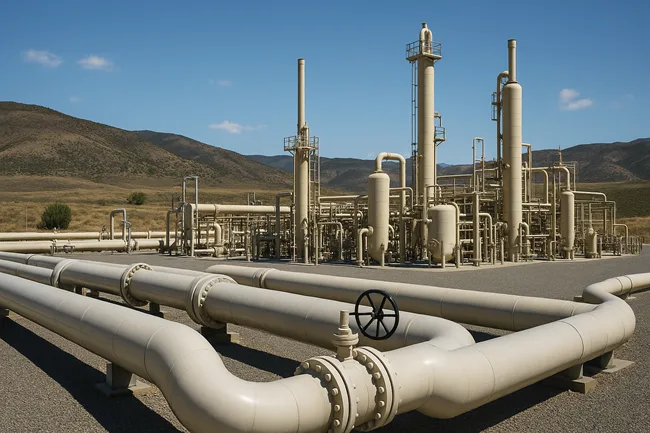
The deal gives Harvest Midstream control of nearly 1,500 miles of natural gas pipelines and over 845 million cubic feet per day of combined processing capacity across four major facilities. The assets include the Ironhorse and Stagecoach plants in Utah’s Uinta Basin, and the Blacks Fork and Vermilion plants in Wyoming’s Green River Basin, alongside fractionation capacity of 10,000 barrels per day. MPLX had operated these facilities at an average utilization of around 52% in 2024, suggesting ample headroom for throughput growth.
Why is Harvest Midstream pursuing these gas assets now, and how does it fit into its long-term expansion strategy?
Jason C. Rebrook, chief executive officer of Harvest Midstream, described the acquisition as the start of a new chapter for the company. He emphasized that the MPLX assets would strengthen Harvest’s ability to deliver long-term value through operational expertise and commercial agility. Industry observers note that Harvest has pursued a disciplined acquisition-led growth path in recent years, moving from a consolidated position in the Bakken Shale to expansion in Alaska, and now broadening further into the Rockies.
By layering these assets onto its portfolio, Harvest is aiming to position itself as a best-in-class midstream enterprise with diversified exposure across multiple basins. Analysts have pointed out that the company’s private ownership structure gives it flexibility to move quickly on strategic deals without the same shareholder pressures faced by listed midstream operators. The new acquisitions, however, also bring the challenge of maintaining utilization rates and integrating complex infrastructure across three states.
What does the divestiture mean for MPLX and why is it doubling down on Marcellus and Permian positions?
For MPLX LP (NYSE: MPLX), the sale represents a deliberate shift in strategic focus. Maryann Mannen, president and chief executive officer of MPLX, said the divestiture would sharpen the partnership’s portfolio around its anchor positions in the Marcellus and Permian basins. These two regions remain the largest natural gas and crude oil supply engines in the U.S., and midstream operators with concentrated assets there have typically delivered more consistent returns.
MPLX will continue to receive value from the divested portfolio even after the sale. Under the agreement, Harvest Midstream has contractually committed to deliver approximately 12,000 barrels per day of natural gas liquids from the Rockies system back to MPLX beginning in 2028, following the expiration of an existing commitment. That seven-year dedication provides some continuity of supply and commercial linkage between the two companies.
How do the Rockies assets enhance Harvest Midstream’s network scale and geographic reach?
The Uinta Basin assets provide about 700 miles of gathering lines and nearly 345 million cubic feet per day of processing capacity, with expansion already underway. The Green River Basin system includes 800 miles of pipelines, 500 million cubic feet per day of active processing, and fractionation capabilities. Combined, these systems extend Harvest’s reach into prolific but historically under-invested Rocky Mountain production areas, while also providing optionality to connect into interstate pipelines that move gas toward Western markets.
Institutional investors tracking the deal highlight that Rockies natural gas production, while less headline-grabbing than Marcellus or Permian volumes, provides critical supply diversification to U.S. markets. For Harvest, the acquisition could serve as a platform for both organic expansions and further bolt-on acquisitions in the western U.S.
What is the institutional sentiment around the deal and how is MPLX’s stock reflecting the divestiture?
MPLX’s shares (NYSE: MPLX) have traded in line with broader midstream peers over the past month, with institutional sentiment tilting positively toward simplification of the company’s asset base. Investors broadly see the Rockies system as non-core relative to MPLX’s scale in the Marcellus and Permian, making the $1 billion valuation attractive given the underutilization of the assets. Analysts suggest that divesting assets operating at just over 50% capacity frees up capital to reinvest into higher-return regions.
Harvest Midstream, as a privately held operator, does not have publicly listed shares, but the market narrative positions it as an emerging consolidator in the midstream sector. Institutional observers note that private equity-backed or privately held midstream operators are increasingly stepping into assets divested by larger listed peers, reflecting a trend of portfolio rationalization among public partnerships.
What are the forward-looking implications for the U.S. midstream sector as consolidation accelerates?
The transaction illustrates a broader trend in U.S. midstream infrastructure where large, listed partnerships like MPLX are pruning non-core assets to focus on their most productive basins, while privately held companies like Harvest Midstream are stepping in to aggregate systems across wider geographies. This cycle of rationalization and consolidation could intensify as energy transition pressures reshape capital allocation across oil and gas infrastructure.
Analysts expect Harvest Midstream to continue leveraging acquisitions as a central pillar of its long-term growth strategy, particularly as the U.S. midstream sector faces heightened pressure to optimize assets and unlock new efficiencies. Industry observers note that Harvest’s model of acquiring underutilized or non-core systems from larger publicly traded partnerships gives it the ability to expand rapidly without bearing the full upfront risk of greenfield projects. This “aggregation play” has become increasingly common in the midstream space, where private operators are positioning themselves as infrastructure consolidators in regions where majors and master limited partnerships are rationalizing portfolios.
For MPLX, the forward trajectory of capital expenditures is expected to tilt heavily toward the Marcellus and Permian basins, which together represent some of the most prolific and lowest-cost hydrocarbon regions in the United States. Analysts believe this sharper geographic focus will allow MPLX to sustain higher utilization rates, improve return on invested capital, and strengthen its ability to deliver stable cash flows to unitholders. The company has repeatedly emphasized its strategy of concentrating on core assets that align with long-term demand for both natural gas and liquids infrastructure.
From a customer perspective, the immediate impact of the transaction is projected to be minimal, as both Harvest Midstream and MPLX have reaffirmed commitments to maintain uninterrupted service. Producers in the Uinta and Green River basins are expected to benefit from a renewed operator focus on enhancing throughput and expansion potential under Harvest’s stewardship, while shippers tied to MPLX’s core regions could see increased investment in gathering, processing, and takeaway infrastructure over the medium term.
For investors, the deal reinforces confidence in MPLX’s decision to streamline operations and double down on its strongest basins, a strategy that institutional stakeholders broadly interpret as prudent capital discipline in a volatile energy transition environment. At the same time, the acquisition highlights the rising importance of privately held midstream players like Harvest in sustaining critical U.S. natural gas networks. As large-cap listed partnerships divest secondary assets, private operators with flexible capital structures and a long-term horizon are stepping in to ensure infrastructure resiliency. This dynamic suggests that midstream consolidation will continue to be a defining feature of the sector, with private and public operators playing complementary roles in shaping the future of U.S. energy logistics.
Discover more from Business-News-Today.com
Subscribe to get the latest posts sent to your email.