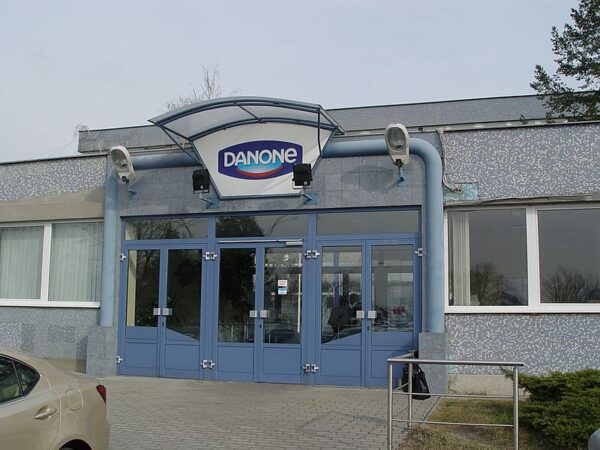





Danish fermented ingredient producer FERM FOOD is acquiring Orkla’s former manufacturing site in Skovlund, Denmark, effective 1 April 2026, in a move that signals both accelerating global demand for functional fermented food ingredients and the company’s readiness to operate at industrial scale. The acquisition adds a second production base to complement FERM FOOD’s existing facility in Vejen and, once fully ramped, is expected to push total new-site capacity to up to 20,000 tonnes per year depending on product mix. The transaction is the clearest sign yet that fermentation-based ingredient technology, long positioned as a niche or premium segment, is moving into mainstream food manufacturing supply chains. For FERM FOOD’s parent entity, Fermentationexperts A/S, which already operates factories in the United States, Malaysia, Ukraine, and Denmark, the Skovlund site extends a production footprint built on patented solid-state fermentation technology using lactic acid bacteria.
Why is FERM FOOD scaling fermented ingredient capacity so rapidly and what is driving export demand beyond Denmark?
The Skovlund acquisition is described by FERM FOOD chief executive Jens Legarth as a direct response to export interest that has materialised faster than the company anticipated. That framing matters because it shifts the narrative from a planned strategic expansion to a demand-pull capacity decision, which typically carries lower commercial risk than a speculative capacity build. The company has not publicly disclosed the names or geographies of the food manufacturers driving international enquiry, but the combination of product categories FERM FOOD serves, spanning bread and bakery, hybrid meat, plant-based alternatives, ready meals, salads, and snacks, maps closely onto the segments experiencing the fastest reformulation pressure globally as manufacturers respond to consumer and regulatory scrutiny of additive use.
The former Orkla site in Skovlund is a meaningful industrial asset. Orkla, the Norwegian consumer goods and industrial group, has been rationalising manufacturing assets across Northern Europe as part of a broader portfolio simplification strategy, and FERM FOOD’s acquisition of this facility effectively repurposes an established food production site rather than building greenfield infrastructure. That route to capacity is typically faster and cheaper and involves fewer planning and environmental approval variables, which is relevant when a company is responding to live commercial demand rather than speculative market projections.
How does solid-state fermentation with lactic acid bacteria differ from standard food ingredient processing and why does that matter commercially?
FERM FOOD’s technology platform is built on solid-state fermentation, a process in which microorganisms grow on and within a solid substrate without free-flowing water. This is materially different from the liquid submerged fermentation used in most large-scale industrial biotechnology, including the production of vitamins, enzymes, and organic acids. Solid-state fermentation more closely replicates the conditions under which traditional food fermentation, such as cheese aging, tempeh production, or bread sourdough, naturally occurs. The practical consequence is that the resulting ingredients retain a complexity of bioactive compounds that liquid fermentation typically cannot replicate at cost.
For food manufacturers, the functional case rests on several concurrent effects. Fermentation can extend shelf life by suppressing spoilage pathways and lowering water activity. It improves binding and viscosity in formulations that would otherwise require synthetic hydrocolloids or chemical emulsifiers. It increases the digestibility of proteins and improves the bioavailability of minerals and vitamins. And critically from a label and regulatory standpoint, it does all of this while remaining classifiable as a minimally processed ingredient rather than a food additive. In a regulatory environment where additive lists are under growing scrutiny, particularly in the European Union and increasingly in the United States, that distinction is commercially valuable.
The feedstocks FERM FOOD applies this process to include legumes, rapeseed press cake, kernels, oats, buckwheat, and wheat. Rapeseed press cake in particular is worth noting: it is a high-volume byproduct of the rapeseed crushing industry, which is one of the largest oilseed sectors in Northern Europe. Converting a low-value agricultural co-product into a functional food ingredient via fermentation is both an economically efficient and environmentally credible proposition, and positions FERM FOOD within a circular economy narrative that is commercially resonant with large food and beverage companies managing scope 3 procurement commitments.
What competitive dynamics in the European fermented ingredient sector does the Skovlund acquisition reflect or accelerate?
The European market for functional food ingredients is large, competitive, and in the early stages of a structural shift driven by clean-label reformulation. Established ingredient companies including Kerry Group, DSM-Firmenich, IFF, and Givaudan have all made significant investments in fermentation-derived ingredients over the past several years, primarily through acquisitions of specialist biotechnology firms. FERM FOOD’s position differs in two important respects: it is operating through a proprietary solid-state fermentation platform rather than sourcing technology through acquisition, and it is focused on plant-based substrate ingredients for direct food application rather than isolated bioactives, flavour compounds, or nutritional supplements.
That positioning places FERM FOOD in a segment that has fewer large-scale competitors but also carries greater commercial development risk. Unlike enzyme preparations or yeast extracts, which have established decades-long applications in food manufacturing, fermented whole-substrate ingredients are a newer category and require food manufacturers to reformulate around them rather than simply substituting in an existing formulation slot. The commercial development cycle is therefore longer, and the scaling trajectory depends on FERM FOOD’s ability to co-develop applications with manufacturing partners, which in turn requires a sustained investment in food technology and applications capabilities alongside production capacity.
What execution risks does FERM FOOD face in ramping the Skovlund site to 20,000 tonnes and how material are they at this stage of growth?
A capacity ceiling of 20,000 tonnes per year is a significant production commitment, but the qualifier in FERM FOOD’s own language is worth holding: the figure is described as dependent on product mix. Solid-state fermentation is inherently more complex to scale than liquid fermentation because substrate handling, aeration management, moisture control, and heat dissipation all become progressively harder to manage uniformly at larger volumes. FERM FOOD’s parent company has experience operating solid-state fermentation at industrial scale in multiple geographies, which reduces but does not eliminate the risk that the Skovlund ramp presents engineering or microbiological challenges not encountered in smaller facilities.
Demand risk is the other material consideration. The company’s CEO has indicated that global interest has accelerated faster than expected, but converting expressions of interest from food manufacturers into committed purchase volumes and long-term supply agreements is a separate commercial task. Food manufacturers trialling new ingredient platforms typically run pilot programs over twelve to eighteen months before committing to volume procurement, meaning the revenue profile of the Skovlund site is likely to build gradually rather than immediately. FERM FOOD has not disclosed financing details for the acquisition, and it is not publicly listed, so the balance-sheet dynamics of holding a large industrial facility while demand and revenue ramp on a multi-year timeline are not externally visible.
Regulatory considerations are broadly supportive. Fermented plant-based ingredients produced through lactic acid bacteria fermentation generally fall within established food ingredient classifications in both the European Union and major export markets. There is no indication that FERM FOOD’s production processes create novel regulatory exposure, though any expansion into new substrate types or bioactive compound claims could require additional notification or approval processes under EU food law.
What does FERM FOOD’s expansion signal about the broader trajectory of fermentation technology in mainstream food manufacturing supply chains?
The broader significance of the Skovlund acquisition may lie less in FERM FOOD’s own growth trajectory and more in what it signals about the commercial maturity of fermentation-based ingredient technology as an industrial supply chain input. A decade ago, fermentation in food ingredients was largely confined to dairy cultures, baking enzymes, and flavour compounds. The category has expanded substantially as precision fermentation, solid-state fermentation, and biomass fermentation have each attracted investment and commercial development. What FERM FOOD is doing at Skovlund, converting a conventional industrial food site into a fermentation ingredients platform serving mainstream food categories, is a pattern being replicated or attempted by multiple companies across Europe and North America.
The intersection of clean-label consumer demand, additive regulatory pressure, sustainability procurement commitments by large food companies, and the technical maturation of fermentation process engineering is creating commercial conditions that favour ingredient producers who have invested early in scalable fermentation infrastructure. FERM FOOD’s combination of proprietary technology, multi-country production experience through Fermentationexperts, and a feedstock portfolio built around high-volume European agricultural co-products positions it to be a relevant supplier to major European food manufacturers as those manufacturers accelerate reformulation programs. Whether it can translate that positioning into durable commercial relationships at the volume the Skovlund site implies remains the central question for the company’s next growth phase.
Key takeaways: What FERM FOOD’s Skovlund acquisition means for the company, its sector, and food ingredient supply chains in Europe
- FERM FOOD is acquiring Orkla’s former Skovlund manufacturing site effective 1 April 2026, adding up to 20,000 tonnes per year of fermented ingredient capacity on top of its existing Vejen facility.
- The acquisition is described as a demand-pull decision driven by export interest accelerating faster than anticipated, which reduces speculative risk relative to a greenfield capacity build.
- Solid-state fermentation with lactic acid bacteria produces functional food ingredients, including shelf-life extension, improved binding, and higher nutritional bioavailability, while remaining classifiable as minimally processed rather than additive, a commercially significant regulatory distinction.
- Feedstocks include rapeseed press cake, a high-volume Northern European agricultural co-product, positioning FERM FOOD within circular economy supply chain narratives resonant with large food companies managing scope 3 commitments.
- Parent company Fermentationexperts A/S provides multi-geography industrial-scale fermentation experience across the US, Malaysia, Ukraine, and Denmark, reducing but not eliminating ramp risk at Skovlund.
- Key execution risk is the gap between expressed manufacturer interest and committed long-term purchase volume, given typical twelve to eighteen month pilot-to-procurement timelines in food ingredient adoption.
- The competitive landscape is dominated by much larger ingredient companies, but FERM FOOD’s proprietary platform and whole-substrate positioning give it a differentiated niche relative to the flavour, enzyme, and bioactive compound fermentation players.
- The Skovlund acquisition is structurally consistent with a broader industry trend of conventional food manufacturing sites being repurposed for fermentation ingredient production as the sector industrialises.
- FERM FOOD is not publicly listed; its financial structure and balance-sheet capacity to sustain a multi-year Skovlund ramp while demand builds are not externally visible.
- The macro tailwind of EU additive regulation scrutiny and consumer clean-label demand provides a structural commercial backdrop that favours FERM FOOD’s ingredient positioning over a three to five year horizon.
Discover more from Business-News-Today.com
Subscribe to get the latest posts sent to your email.