

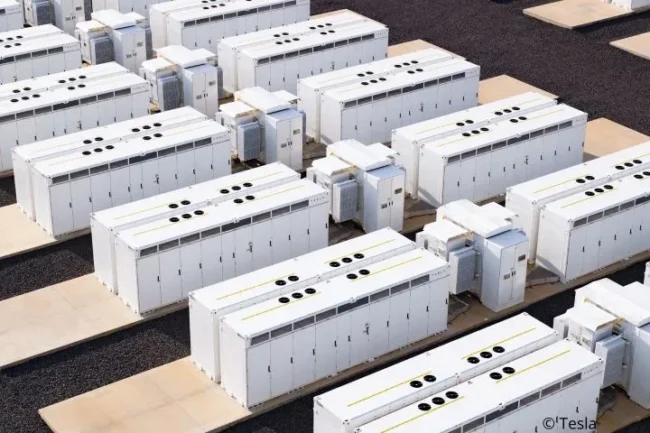
SPIE SA (EPA: SPIE) has entered into a new multi-country framework agreement with Tesla Inc. (NASDAQ: TSLA) for the large-scale deployment of battery energy storage systems (BESS) across Europe, using Tesla’s Megapack technology. The three-year agreement, which applies to all SPIE subsidiaries with BESS capabilities, marks a formal expansion of their collaboration after a series of projects in Belgium, the Netherlands, and France. The deal aims to standardize execution for utility-scale storage projects and expand BESS rollout to new markets such as Germany and Poland.
Why is SPIE’s European framework agreement with Tesla strategically important for both companies?
The SPIE–Tesla agreement is not just a service contract; it institutionalizes a pan-European deployment model for grid-scale battery storage during a critical window of energy transition. By providing a standardized legal and operational framework for all Tesla Megapack deployments via SPIE, the agreement simplifies project mobilization across SPIE’s national subsidiaries. This is particularly significant for Tesla, which is racing to establish Megapack as the de facto grid battery standard in Europe amid growing competition from players such as Fluence, Wärtsilä, and LG Energy Solution.
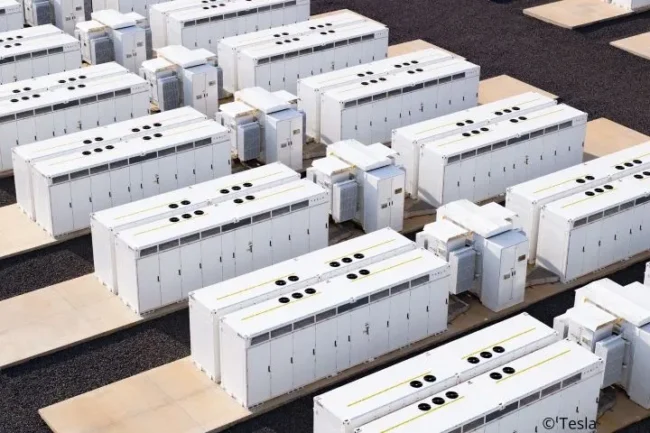
For SPIE, the deal anchors its position as a trusted technical partner with deep knowledge of local regulatory environments, especially in grid integration, engineering, and high-voltage connectivity. The scope of SPIE’s responsibilities—ranging from Balance of Plant (BoP) engineering to auxiliary systems and commissioning—moves the company up the value chain from contractor to strategic integrator.
Importantly, this also makes SPIE a key gatekeeper for Tesla’s BESS market access across several energy-regulated EU jurisdictions. With standardization built into the contract, SPIE can apply learnings from projects in Belgium and France to new territories like Germany and Poland, where Tesla is aggressively pursuing new Megapack installations to meet EU grid flexibility mandates.
How does the agreement reinforce Tesla’s Megapack positioning in the European energy storage race?
Tesla’s Megapack is gaining traction globally due to its high energy density, rapid install time, and vertical integration from hardware to software (via Autobidder). However, European deployment has always been more complex due to fragmented regulations, varied grid architectures, and stricter permitting.
By locking in a multi-country integrator with technical reach and regulatory fluency, Tesla is effectively outsourcing the hard part of European BESS deployment—navigating infrastructure rules, grid codes, and municipal constraints—to a company that already has boots on the ground. This mirrors Tesla’s successful U.S. playbook, where strong local EPC partners have been critical in scaling Megapack adoption.
The framework agreement also gives Tesla repeatable execution leverage across large pipeline opportunities. Notably, the agreement supports scale deployments like the 372-Megapack “Mufasa” project in the Netherlands (1.4 GWh), and a 100 MW project in France’s Eure department. These high-capacity sites represent a shift from pilot-scale BESS to backbone infrastructure within national power grids.
What does SPIE gain by aligning with Tesla on energy storage buildout?
For SPIE, the Tesla deal consolidates its push into energy transition infrastructure—moving beyond traditional multi-technical services into the high-growth domain of grid modernization. The agreement elevates SPIE’s profile in a segment where credibility with OEMs and utilities determines deal flow.
Beyond that, the technical scope of the Megapack deployments—high-voltage connections, 90 kV substations, fire detection, security, and control systems—plays directly to SPIE’s strengths in integrated project delivery. These are not passive installation jobs; they require cross-border engineering coordination, which SPIE can uniquely provide through its decentralized-yet-networked subsidiary model.
Operationally, the shared framework across SPIE’s subsidiaries enables knowledge transfers, standard bill-of-materials (BoM) processes, and accelerated commissioning. It also allows SPIE to push for procurement economies of scale as BESS becomes a more standardized asset class across Europe.
Where are the next growth markets for Tesla–SPIE Megapack installations?
While the agreement currently covers France, Belgium, and the Netherlands, the real strategic upside lies in future deployments across energy-hungry but still storage-deficient markets like Poland and Germany. Poland is rapidly investing in renewables to reduce its coal dependency but lacks sufficient grid storage capacity, creating a ripe opportunity for Megapack installations paired with SPIE’s grid interconnect know-how.
Germany, already Europe’s largest energy market, presents a regulatory challenge but a massive upside. With its nuclear phase-out complete and coal phase-out underway, BESS is a necessary enabler for renewable reliability. Tesla’s Gigafactory Berlin proximity could be a strategic enabler here, reducing logistics cost and delivery time for Megapack units.
SPIE’s existing local presence in both markets, combined with this framework agreement, gives it a first-mover advantage as more BESS tenders open up, particularly those linked to grid balancing services and capacity markets.
How are industry dynamics shaping the need for integrated BESS deployment models?
The broader shift in Europe’s energy mix—from centralized fossil generation to distributed renewables—has made BESS not just optional, but essential. With frequency regulation, congestion mitigation, and peak shaving now bundled into national energy strategy, turnkey deployment capability has become a competitive differentiator.
Regulators are also accelerating permitting pathways for co-located storage, particularly alongside solar and wind farms. That means companies like SPIE, which can integrate storage as part of a wider energy infrastructure build, are increasingly valuable. For Tesla, this makes SPIE an ideal partner—not just for its electrical engineering capabilities, but also for its institutional access and track record with utilities and TSOs like RTE.
This signals a broader industry move away from “box shipping” battery deals to solution-based contracts, where local technical players ensure compliance, safety, and integration. As grid codes evolve and storage begins to participate more actively in energy markets, that integration role will only grow in complexity and value.
What are the execution risks and how might they affect project delivery timelines?
While the SPIE–Tesla agreement improves standardization, execution risk remains, particularly around permitting bottlenecks, interconnection approvals, and supply chain volatility for critical components like transformers and switchgear. Tesla’s Megapack supply is constrained globally, and SPIE’s coordination across multiple jurisdictions adds complexity even with a framework in place.
Cost escalation in civil works, rising interest rates impacting project finance, and the need for interoperability with national grid control systems could delay or reduce the scope of certain projects. That said, SPIE’s long-standing utility partnerships and its embedded presence in markets like France give it more influence in navigating those risks than newer entrants might have.
Moreover, the agreement’s three-year renewable horizon gives both parties room to calibrate based on project throughput and evolving national policies on energy storage incentives or mandates.
Key takeaways: What does the SPIE–Tesla BESS framework mean for energy infrastructure markets?
- SPIE SA and Tesla Inc. have signed a three-year pan-European framework agreement to standardize Megapack deployments.
- The agreement consolidates Tesla’s European Megapack strategy around a single high-trust integrator, reducing project fragmentation.
- SPIE elevates its position in the energy storage value chain by expanding from EPC to strategic BESS integrator status.
- The deal opens up new grid-scale storage markets in Poland and Germany, aligning with EU decarbonization goals.
- Projects like Ville-sur-Haine (50 MW), Vlissingen (1.4 GWh), and Eure (100 MW) demonstrate the scale and complexity of upcoming deployments.
- Tesla gains local execution leverage across fragmented EU permitting landscapes without needing internal build-out.
- Regulatory acceleration and renewable integration mandates are driving demand for repeatable BESS deployment models.
- Execution risks include grid interconnection delays, equipment supply chains, and interjurisdictional coordination.
Discover more from Business-News-Today.com
Subscribe to get the latest posts sent to your email.