





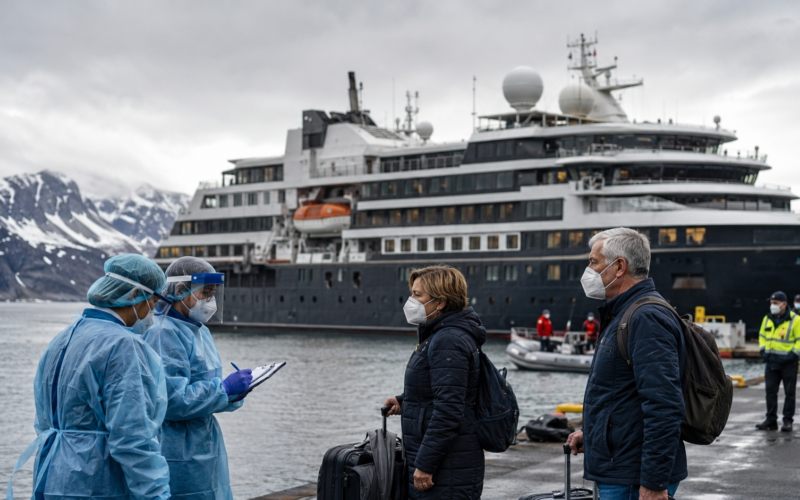
A rare rodent-borne virus that most people had never heard of is now being tracked across at least a dozen countries, after a cluster of severe respiratory illness aboard the Dutch expedition cruise ship MV Hondius produced three deaths and forced an international containment effort. As of 7 May 2026, eight cases linked to the vessel have been reported, including five laboratory-confirmed infections, with passengers who disembarked earlier in the voyage now being traced across Europe, North America, Asia and Africa. The World Health Organization has been blunt that this is not a new pandemic, but it has also conceded that more cases are likely to emerge before the cluster is closed out. For a public still scarred by the early weeks of Covid-19, the optics of a virus carrying a 30 to 50 percent fatality rate moving between continents on commercial flights and luxury cruise itineraries is what is driving the alarm, not the underlying biology.
Hantavirus is the common name for a family of single-stranded RNA viruses in the genus Orthohantavirus, family Hantaviridae, order Bunyavirales. Each individual hantavirus species is tied to a specific rodent or insectivore reservoir, in which it produces a long-running infection without making the animal sick. The reservoir is the central fact of the disease. Where the rodent lives, the virus lives. Humans are accidental hosts, almost always infected by inhaling aerosolised dust from rodent urine, droppings or saliva in enclosed or poorly ventilated spaces. Direct rodent bites and contaminated food or water are documented but rare transmission routes. Once inside a human host, depending on the strain, the virus produces one of two clinical syndromes: hantavirus pulmonary syndrome, also called hantavirus cardiopulmonary syndrome, in the Americas, or haemorrhagic fever with renal syndrome across Asia and Europe. Both syndromes are severe. Neither has a licensed antiviral cure or a widely available vaccine.
Why is hantavirus suddenly a global news story in May 2026?
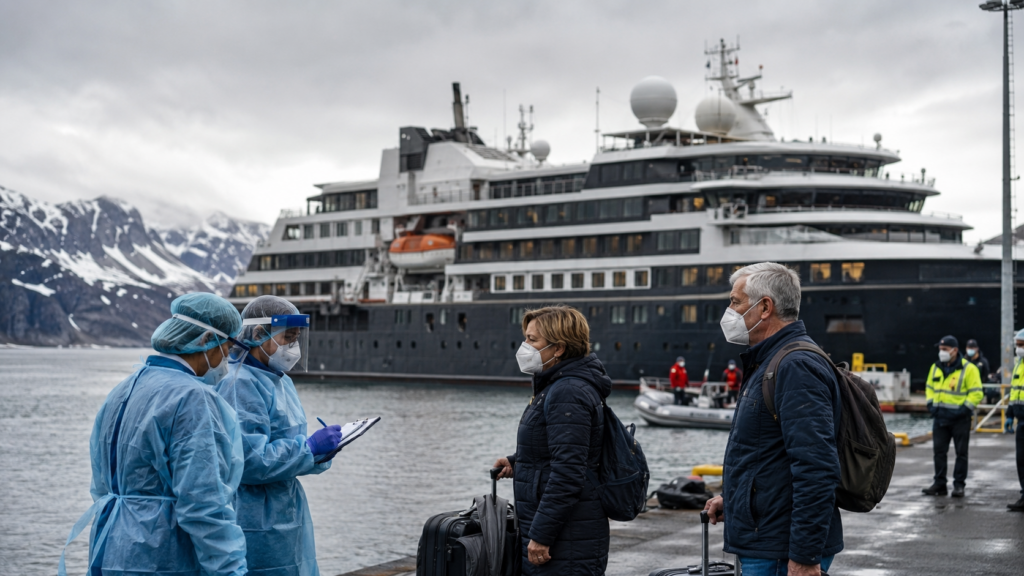
The answer is the MV Hondius, a 196-passenger Dutch-flagged expedition vessel operated by Oceanwide Expeditions, which left Ushuaia at the southern tip of Argentina on 1 April 2026 on a South Atlantic itinerary that included Antarctica, South Georgia, Tristan da Cunha, Saint Helena and Ascension before continuing toward the Canary Islands. The first death occurred on 11 April when a 70-year-old Dutch passenger collapsed with fever, headache, abdominal pain and diarrhoea. His wife later died after being airlifted to Johannesburg, and a German national has since become the third confirmed fatality. The South African National Institute for Communicable Diseases identified the strain as the Andes virus, the only hantavirus with documented human-to-human transmission. The WHO was formally notified on 2 May 2026 by the United Kingdom’s International Health Regulations focal point. Since then, the response has spilled across borders. Spain’s Canary Islands government initially refused to allow MV Hondius to dock at Tenerife on public-safety grounds, before the central Spanish government reversed course and confirmed the vessel would be permitted to discharge passengers in the archipelago from 11 May. Three patients have been medically evacuated to South Africa, one to Switzerland, and the United States is monitoring former passengers across Arizona, California, Georgia, Texas and Virginia.
What exactly is hantavirus and why does each strain behave so differently from the others?
Hantaviruses are zoonotic RNA viruses that have coevolved with their rodent hosts over millions of years, which is why each major strain is tightly geographically confined. Sin Nombre virus, the dominant New World hantavirus in North America, lives in the deer mouse Peromyscus maniculatus and produces hantavirus pulmonary syndrome with a case fatality rate of roughly 35 to 50 percent. Andes virus, the South American counterpart, lives in the long-tailed pygmy rice rat Oligoryzomys longicaudatus across Argentina and Chile and is the strain at the centre of the MV Hondius cluster. Hantaan virus, named after the Korean river where it was first isolated during the Korean War in the early 1950s, is carried by the striped field mouse Apodemus agrarius across northeast Asia and produces haemorrhagic fever with renal syndrome with a fatality rate of 5 to 15 percent. Puumala virus in northern and central Europe, carried by the bank vole Myodes glareolus, produces a milder renal syndrome called nephropathia epidemica with mortality below 1 percent. Seoul virus, carried by Norway and black rats, has a global urban distribution because its hosts travel on ships. Thottapalayam virus, isolated in 1964 from an Asian house shrew in India, was the first non-rodent hantavirus identified and underlines how much of the family’s natural history remains uncharacterised.
How does hantavirus actually infect humans and is human-to-human spread a real risk?
For almost every hantavirus, transmission is one-way from rodent to human and does not propagate further. People become infected by breathing in microscopic particles of dried rodent excreta in barns, cabins, sheds, woodpiles, grain stores, basements and any other enclosed space where infected rodents have been active. Outdoor exposure is also documented, particularly during activities like hiking, hunting, agricultural work, military deployment, camping and bird-watching that bring people into contact with rodent habitat. Andes virus is the singular exception. Person-to-person transmission has been documented in Argentina and Chile, almost exclusively among household members, intimate partners and close care-givers in prolonged contact during the symptomatic phase. The most-studied secondary outbreak occurred at a 2018-2019 birthday party and subsequent funeral wake in El Bolsón, Argentina, where 34 people were infected through close indoor contact with symptomatic cases. WHO and Stanford infectious disease specialists have repeatedly stressed that even Andes virus is far less transmissible than influenza or Covid-19, and that the symptomatic window in which a case can infect others is short because patients deteriorate so rapidly that they are quickly hospitalised or die.
What are the symptoms of hantavirus infection and why is the case fatality rate so high?
Hantavirus pulmonary syndrome typically begins one to eight weeks after exposure, with most cases presenting at two to four weeks. The illness moves through three phases. The prodromal phase lasts three to five days and produces non-specific influenza-like symptoms: fever, severe muscle pain, headache, fatigue, dizziness, abdominal pain, nausea, vomiting and diarrhoea. This is the period in which hantavirus is most often misdiagnosed as flu, gastroenteritis or generic viral illness. The cardiopulmonary phase then arrives abruptly, often within hours. Capillary leakage in the lungs floods the alveoli with fluid, producing acute respiratory distress syndrome, low blood pressure, cardiogenic shock and severe hypoxia. Most deaths occur within 24 to 48 hours of cardiopulmonary onset. Survivors enter a slow recovery phase that can last months, with residual breathlessness reported up to two years after the acute illness. Haemorrhagic fever with renal syndrome, the Asian and European version, follows a different five-stage course centred on acute kidney injury, low platelet count, vascular leak and shock, with mortality between 1 and 15 percent depending on the strain. There is no specific antiviral therapy approved for either syndrome. Care is supportive: oxygen, mechanical ventilation, fluid management, vasopressors, dialysis where needed, and in the most severe cases extracorporeal membrane oxygenation. Early ICU admission is the single most important determinant of survival.
Where does hantavirus come from historically and how was it first identified?
Outbreaks of haemorrhagic fever with renal syndrome were recognised in Asia for centuries before the causative agent was isolated. Western medicine first encountered it at scale during the Korean War, when roughly 3,200 United Nations troops fell ill with what was then called Korean haemorrhagic fever between 1951 and 1954. The Hantaan virus was finally isolated from the striped field mouse in 1976 by South Korean virologist Ho Wang Lee and named after the Hantan River near the Korean demilitarised zone. The American chapter opened in 1993 in the Four Corners region where Arizona, New Mexico, Colorado and Utah meet, when an unexplained cluster of rapid respiratory deaths among young, previously healthy Navajo residents prompted a CDC investigation. The pathogen was identified as a previously unknown New World hantavirus, eventually named Sin Nombre, meaning “no name” in Spanish, after early disputes over what to call it. That investigation also linked the outbreak to an unusually wet El Niño cycle that produced a piñon nut bloom and a population explosion among deer mice, the first formal demonstration that hantavirus emergence is driven by ecology and climate rather than by the virus itself changing.
How dangerous is hantavirus compared with Covid-19, influenza or other respiratory threats?
The honest comparison cuts in two directions. On lethality, hantavirus is far more dangerous per infection than either Covid-19 or seasonal influenza. Andes virus and Sin Nombre virus carry case fatality rates between 30 and 50 percent, which is in the same severity bracket as untreated MERS-CoV and well above any common respiratory virus. On transmissibility, hantavirus is in a different universe from a true pandemic pathogen. There is no airborne human-to-human spread for any strain other than Andes, and even Andes requires close, sustained, indoor contact with a symptomatic case to jump between people. CDC data show 890 confirmed hantavirus pulmonary syndrome cases in the United States across thirty years from 1993 to 2023, an annual incidence well below thirty cases nationwide. Globally, haemorrhagic fever with renal syndrome accounts for an estimated 150,000 to 200,000 cases per year, concentrated heavily in China, the Korean peninsula, Russia and the Nordic countries, while hantavirus pulmonary syndrome runs at roughly 200 cases annually across South America. The MV Hondius cluster, with eight cases and three deaths, is statistically tiny against that backdrop. What makes it editorially significant is the cruise-ship setting, the international evacuation logistics, and the fact that the only known person-to-person hantavirus is the strain involved.
What is the practical risk for travellers, residents and workers in 2026?
For anyone not on the MV Hondius and not in close, prolonged contact with a confirmed Andes case, the day-to-day risk is essentially unchanged from before the outbreak. WHO has assessed the public-health risk as low. The exposure profile that actually matters is the same one it has always been: cleaning out long-closed cabins, sheds, barns, basements, attics or storage units that have hosted rodent populations; sweeping or vacuuming dry rodent droppings without dust suppression; sleeping in poorly maintained rural accommodation; agricultural and forestry work in endemic regions; and rodent-trapping or pest-control activity without respiratory protection. CDC and WHO guidance has been consistent for two decades. Ventilate enclosed spaces for at least thirty minutes before entry. Wet down contaminated surfaces with a bleach solution before cleaning. Wear gloves and an N95-grade respirator. Seal rodent entry points around homes and outbuildings. Store food in rodent-proof containers. For travellers to South America, particularly to Patagonia and the Andean foothills of Argentina and Chile, the operational advice is to avoid sleeping in unventilated rural cabins, avoid disturbing rodent nests, and seek medical attention for any flu-like illness within eight weeks of return. Argentina’s health ministry has reported 101 hantavirus infections since June 2025, roughly double the previous year’s caseload over the same period, which has prompted active rodent surveillance and trapping in Ushuaia and along the route the MV Hondius index case is believed to have travelled.
What are the latest 2026 developments shaping the global hantavirus response?
The MV Hondius cluster is moving through what is effectively its containment endgame. Spain’s central government has confirmed Tenerife will receive the vessel from 11 May 2026, with non-Spanish passengers to be repatriated to home countries after medical assessment. Three patients are receiving intensive care in South Africa, one in Switzerland, and contact tracing is active across at least a dozen jurisdictions including Singapore, Canada, France, the Philippines and the United States. The WHO has classified this as a multi-country event under the International Health Regulations 2005 framework, but has explicitly ruled out Public Health Emergency of International Concern status. Argentina is conducting rodent trapping along a four-month overland route that the Dutch index case couple followed across Chile, Uruguay and Argentina between November 2025 and April 2026, in an effort to reconstruct the original spillover event. The leading hypothesis, attributed to two anonymous Argentine investigators, is that the couple were exposed during a bird-watching outing near Ushuaia that included a landfill where Oligoryzomys rodents are common. Beyond the cluster, the broader research and policy picture has shifted in two important ways since 2024. First, several candidate Andes virus monoclonal antibody therapies have advanced to early-stage human trials, and a DNA-based vaccine has shown protective immune responses in primate models, although none is yet approved. Second, climate-driven changes in rodent population dynamics, particularly across the western United States and Patagonia, are forcing public-health agencies to revisit historical risk maps. The 1993 Four Corners outbreak playbook, where wet weather drove a deer mouse population spike, is now being applied prospectively to El Niño and La Niña forecasts in both hemispheres.
What is the outlook for hantavirus and pandemic-preparedness policy over 2026 to 2028?
Three trajectories are worth tracking. The MV Hondius outbreak will almost certainly be contained without spreading into community transmission, given the biology of Andes virus and the speed of the international response, but it will become a reference case in global health diplomacy for how cruise-line outbreaks are handled. The dispute over the Canary Islands docking refusal is already being framed as a test of solidarity obligations under the International Health Regulations. Endemic incidence is likely to keep rising in Argentina and Chile through 2027 in line with the upward trend the Argentine health ministry has reported, driven by climate-linked rodent population dynamics and expanding human encroachment into reservoir habitat. Vaccine and therapeutic development will probably accelerate. The pipeline has been thin for two decades because the disease burden was geographically narrow and commercially unattractive, but the MV Hondius headlines have given Andes virus countermeasures a profile they previously lacked. For ordinary readers, the longer-term takeaway is that hantavirus is not the next Covid-19 and was never going to be, but it is a sharp reminder that zoonotic pathogens with severe individual outcomes do not need pandemic-grade transmissibility to disrupt international travel, force diplomatic conflict and reshape rural public-health priorities. The virus has been with humans for centuries. It will be with us in 2030. The work is in containing the next spillover faster than the last.
Discover more from Business-News-Today.com
Subscribe to get the latest posts sent to your email.

