
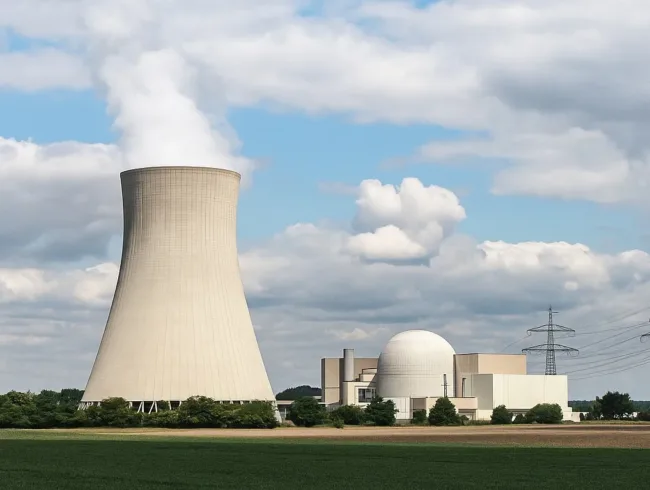




Greenvolt – Energias Renováveis, S.A., through its Greenvolt Power platform, has inaugurated a 200MW and 800MWh battery energy storage facility at Turośń Kościelna in north-eastern Poland. The four-hour system is completed, connected to the electricity grid and capable of shifting substantial volumes of power between periods of surplus generation and stronger demand. From 2028, the facility is scheduled to participate in Poland’s capacity market under a 17-year agreement carrying a 170MW capacity obligation. The project gives KKR-owned Greenvolt a physical operating asset in one of Europe’s fastest-expanding storage markets rather than another development-stage entry in a crowded pipeline. The central tension is whether contracted capacity revenue can provide a sufficiently stable foundation while balancing services, electricity trading and battery optimisation deliver the additional income required to justify the project’s considerable capital cost.
Why does the completed Turośń Kościelna battery represent more than another storage announcement?
The significance of Turośń Kościelna begins with its operating status. European battery markets contain large volumes of proposed capacity that may still face land, permitting, financing, grid-connection or equipment-delivery constraints. Greenvolt has moved beyond those development uncertainties by installing 196 containerised battery modules, 49 transformer stations and the supporting control, fire-protection and grid infrastructure required for a functioning storage facility.
The system can deliver its full 200MW power rating for approximately four hours, based on its 800MWh storage capacity. That duration gives Greenvolt greater flexibility than a one-hour battery designed primarily around rapid frequency-response services. Turośń Kościelna can respond within seconds to system-operator instructions while also storing electricity for longer periods when renewable generation is abundant or wholesale prices are lower.
The facility uses lithium iron phosphate battery technology supplied by BYD Energy Storage. Greenvolt has indicated an expected operating life of more than 20 years, supported by the durability of the battery cells and the efficiency of the charging and discharging process. That lifespan remains dependent on how intensively the asset is cycled, how degradation is managed and whether augmentation or component replacement is required over time.
P&Q acted as the project’s general contractor, while the site covers approximately 35,000 square metres. More than 70% of that area has been retained as biologically active land, and the project underwent environmental and social assessment against International Finance Corporation and European Bank for Reconstruction and Development standards. These details do not determine commercial returns, but they demonstrate that utility-scale storage development increasingly requires the same financing, safety and community-risk disciplines expected of other large infrastructure assets.
How will the 17-year Polish capacity-market agreement support project revenues from 2028?
Turośń Kościelna’s capacity-market contract is one of its most important commercial protections. The project is expected to carry a 170MW capacity obligation from 2028, equivalent to 85% of its 200MW power rating, under a contract lasting 17 years. In return for capacity payments, the facility must remain available to support the electricity system when required under the applicable market rules.
The agreement should create a long-term revenue floor that is less directly exposed to hourly electricity-price movements than pure energy trading. That visibility can make a capital-intensive battery project easier to finance because lenders are not relying entirely on volatile arbitrage spreads or short-term ancillary-service prices. It also places operational obligations on Greenvolt, since failure to deliver contracted capacity could expose the project to penalties or reduced payments.
The contract does not mean that 85% of the battery’s physical output will remain permanently reserved and unavailable for other uses. Battery operators can normally optimise assets across several markets, provided they maintain the state of charge, technical availability and response capability required to meet contracted commitments. The commercial opportunity therefore lies in coordinating capacity obligations with balancing services and energy-market participation.
The crucial limitation is timing. The facility is already connected to the grid, but the disclosed long-term capacity-market contract begins in 2028. Greenvolt must therefore operate and monetise the asset before the contracted capacity period starts, while also proving that the battery can meet the technical and availability standards that will underpin payments over the following 17 years.
The capacity agreement substantially reduces revenue uncertainty, but it does not eliminate it. Greenvolt has not publicly disclosed the annual capacity payment attributable to Turośń Kościelna, the expected share of revenue from each market or the project’s target return. The facility’s ultimate economics will depend on how effectively the fixed and merchant elements of the revenue stack work together rather than on the contract duration alone.
Why is Poland’s capacity market becoming a major route for financing battery storage?
Poland’s storage market is being shaped by the country’s need to maintain electricity-system reliability while renewable generation expands and ageing conventional capacity faces economic and regulatory pressure. Batteries can absorb power when generation exceeds immediate demand, respond rapidly to frequency changes and return electricity during periods of system stress. Those capabilities give storage an increasingly important role in a power system historically dependent on coal-fired generation.
The results of Poland’s main capacity auction for the 2028 delivery year showed how quickly storage participation was increasing. The Energy Regulatory Office reported that battery storage represented 15% of contracted capacity in that auction, compared with less than 7% in previous years. Electrochemical storage capacity obligations for 2028 reached approximately 1.73GW, more than ten times the volume contracted for 2027.
That increase is positive for the development of Poland’s flexibility market, but it also creates a more competitive operating environment. A larger fleet of batteries can reduce scarcity in balancing markets and compress the price spreads available through energy arbitrage. Early projects may benefit from limited competition, while later assets must rely more heavily on sophisticated optimisation, lower financing costs and disciplined equipment procurement.
Turośń Kościelna therefore enters a market offering both structural demand and growing supply. Greenvolt benefits from having completed the asset before much of Poland’s proposed battery pipeline reaches operation. However, the project must remain commercially competitive as more storage capacity begins providing similar services.
The capacity-market mechanism helps bridge that tension by paying qualifying resources for availability rather than relying exclusively on energy delivered. For Poland, the mechanism supports security of supply. For Greenvolt, it reduces exposure to a storage market in which merchant revenues could become less predictable as competition increases.
Can merchant electricity and balancing revenues provide the project’s necessary upside?
The capacity contract is only one component of the investment case. Turośń Kościelna can charge during periods of lower electricity prices and discharge when prices rise, creating potential arbitrage revenue. It can also provide balancing and ancillary services because batteries can move between charging, standby and discharge modes faster than many conventional generating assets.
A four-hour configuration gives Greenvolt more optionality than a battery with the same power rating but lower energy capacity. The project can sustain output through a longer peak period, absorb a larger block of excess renewable generation and potentially avoid relying on many rapid, shallow cycles. That flexibility may become particularly useful as Poland’s solar generation grows and midday production increasingly diverges from evening electricity demand.
Merchant revenues are inherently less predictable than contracted capacity payments. Wholesale-price spreads vary with weather, fuel costs, interconnector flows, generation outages and demand. Ancillary-service revenues can also decline when new battery projects compete for a limited requirement, even when the wider system continues to need flexibility.
Battery degradation adds another layer to the optimisation decision. Every commercial dispatch opportunity must be assessed against the effect of cycling on battery health, future availability and replacement requirements. Greenvolt’s objective is not simply to maximise the number of operating hours, but to deploy the asset when the expected revenue exceeds the associated efficiency losses, degradation cost and opportunity cost of reserving capacity for other markets.
This is where operating capability becomes as important as construction capability. Greenvolt will need accurate price forecasting, reliable control systems and disciplined state-of-charge management to maximise revenue without weakening long-term performance. The project’s value will depend on thousands of operating decisions rather than one annual capacity payment or a single favourable period of electricity-price volatility.
What does the disclosed financing structure reveal about Greenvolt’s storage business model?
Public financing disclosures indicate that Turośń Kościelna was developed alongside Greenvolt’s equivalent 200MW and 800MWh Ełk battery project. The International Finance Corporation estimated the combined cost of the two Polish facilities at approximately €300 million and described a long-term debt-financing package of up to €180 million. Those figures apply to the combined 400MW and 1.6GWh portfolio rather than to Turośń Kościelna alone.
The European Bank for Reconstruction and Development signed a senior secured loan of up to €60 million for the two project companies in February 2026. The financing was structured for the special-purpose entities holding the Turośń Kościelna and Ełk assets, reflecting a project-finance model in which debt repayment depends substantially on the cash flow generated by the facilities.
The International Finance Corporation separately considered lending up to the Polish-zloty equivalent of €75 million and mobilising additional commercial financing. The use of local-currency debt could reduce a mismatch between project revenue received in Polish zloty and financing obligations otherwise denominated in euros. It also illustrates how development institutions are being used to support a market where standalone battery projects still have a relatively limited operating history.
The financing disclosures described the projects as containing a significant merchant component despite their capacity-market contracts. That assessment captures the core commercial issue. Long-term availability payments improve bankability, but the projects still require electricity-market and balancing income to achieve their broader financial objectives.
Greenvolt has not disclosed Turośń Kościelna’s standalone construction cost, expected EBITDA, debt-service coverage or return on invested capital. The combined financing numbers nevertheless show that large battery facilities require infrastructure-scale capital even though their construction periods can be shorter than those of conventional power plants. The project’s future credibility will depend on operating cash flow proving that the capital structure was supported by durable revenue rather than optimistic merchant assumptions.
How does KKR ownership affect Greenvolt’s ability to scale battery storage across Europe?
Greenvolt was acquired by KKR and delisted from Euronext Lisbon in November 2024. Greenvolt Group is now fully owned by the global investment firm, giving the renewable-energy company access to an owner with substantial infrastructure, private-equity and capital-markets capabilities. The absence of a listed Greenvolt share price means the immediate market response to Turośń Kościelna cannot be measured through daily trading in the developer itself.
Private ownership may support longer investment horizons for storage projects whose economics develop across construction, commissioning, capacity-market delivery and merchant operation. It can also provide greater flexibility in deciding whether to retain projects, refinance them or sell operating assets to infrastructure investors. Greenvolt’s historical strategy has included developing and monetising renewable assets, making ownership and capital recycling important considerations as the storage portfolio grows.
KKR backing does not make every project financially attractive. Greenvolt must still demonstrate project-level discipline, especially because battery economics can change rapidly with equipment prices, regulation and market saturation. Scale can reduce procurement and financing costs, but it can also magnify exposure if several projects rely on similar merchant-revenue assumptions.
Turośń Kościelna is therefore relevant as an operating proof point for the KKR-owned platform. A completed project with long-term contracted revenue can support future financing and partnership discussions more effectively than a development pipeline alone. Consistent operating performance would give Greenvolt stronger evidence that it can build, finance and optimise storage assets across multiple European markets.
How will the Ełk and Siedlce projects determine whether Greenvolt can replicate its Polish execution?
Greenvolt is finalising a second 200MW and 800MWh battery facility at Ełk in the Warmian-Masurian region. Commercial operation is scheduled for the fourth quarter of 2026. Once completed, Turośń Kościelna and Ełk would provide a combined 400MW of power capacity and 1.6GWh of storage.
The two projects share similar scale and technology, creating opportunities for standardised engineering, procurement, operating systems and market optimisation. Repetition can lower execution risk because lessons from the first facility can be applied to commissioning and operating the second. However, Greenvolt must still prove that two comparable assets will not compete against each other during the same market intervals or create concentrated exposure to the same Polish revenue pools.
The next scale increase is considerably larger. Greenvolt is developing the Siedlce battery project with a planned capacity of 600MW and 2.4GWh. The company has selected BYD Energy Storage to supply battery systems, with construction scheduled to start during the third quarter of 2026 and commercial operation targeted by the end of 2027.
Siedlce would have three times the power and storage capacity of Turośń Kościelna. Its scale could create procurement and operating advantages, but it also increases grid, financing and market-exposure requirements. A project of that size must earn revenue without overwhelming the very balancing and arbitrage markets it intends to serve.
Greenvolt’s wider battery-development pipeline stands at approximately 5GW across 13 countries. The company also inaugurated the 99.8MW and 288.6MWh Buj battery facility in Hungary during June 2026. These developments indicate that storage is becoming a central growth platform rather than an occasional addition to Greenvolt’s wind and solar portfolio.
The strategic test is replication with discipline. Turośń Kościelna proves that Greenvolt can deliver a large battery to the grid. Ełk must demonstrate repeatability, while Siedlce must show that the model can be expanded without sacrificing project economics or operating flexibility.
What could prevent the Turośń Kościelna battery from delivering its expected long-term value?
The first risk is revenue compression. Poland’s storage market is expanding rapidly, and additional batteries may reduce balancing-service prices and wholesale arbitrage spreads. The capacity contract offers protection from complete merchant exposure, but Greenvolt still needs supplementary market income to strengthen returns.
The second risk is operating performance. Battery availability, conversion efficiency, thermal management and software reliability will influence how often the facility can respond to profitable opportunities. Underperformance could reduce merchant revenue and become more consequential once the 170MW capacity obligation begins in 2028.
The third risk involves degradation and augmentation. An expected operating life exceeding 20 years does not imply that every original battery cell will deliver unchanged performance throughout that period. Greenvolt may need to replace modules or add capacity to offset degradation and maintain contracted output, creating future capital requirements.
Regulatory design is another variable. Changes to capacity-market rules, balancing-market access, grid charges, taxation or charging and discharging tariffs could alter project economics. Storage policy is evolving because batteries can behave as both electricity consumers and suppliers, creating regulatory questions that conventional generators do not face in the same way.
The project nevertheless begins from a stronger position than many proposed competitors. It is built, connected, supported by a long-term capacity agreement and backed by an owner capable of accessing institutional capital. The unresolved issue is no longer whether Greenvolt can construct the asset. It is whether the company can operate Turośń Kościelna across several markets while protecting battery health and producing returns consistent with an infrastructure-scale investment.
What are the key takeaways from Greenvolt’s Turośń Kościelna battery project?
- Greenvolt Power has inaugurated a completed 200MW and 800MWh battery energy storage facility in north-eastern Poland.
- The four-hour system contains 196 battery modules and 49 transformer stations supplied with BYD Energy Storage technology.
- The battery can support electricity arbitrage, balancing services, renewable integration and short-term security of supply.
- From 2028, Turośń Kościelna will carry a 170MW capacity obligation under a 17-year Polish capacity-market contract.
- The capacity agreement provides long-term revenue visibility but does not remove reliance on merchant electricity and ancillary-service income.
- Public financing disclosures estimate a combined cost of approximately €300 million for the Turośń Kościelna and Ełk projects.
- The European Bank for Reconstruction and Development signed financing of up to €60 million for the two-project portfolio.
- Greenvolt expects the equivalent 200MW and 800MWh Ełk project to enter commercial operation in the fourth quarter of 2026.
- The planned 600MW and 2.4GWh Siedlce battery will test whether Greenvolt can replicate the model at three times the scale.
- Turośń Kościelna’s decisive proof point will be sustained availability and profitable operation before and after capacity payments begin in 2028.
Discover more from Business-News-Today.com
Subscribe to get the latest posts sent to your email.

