
KKR & Co. Inc. (NYSE: KKR) has agreed to acquire Integer Holdings Corporation (NYSE: ITGR) in an all-cash transaction that values the medical device contract manufacturer at approximately US$5.7 billion including debt. Integer Holdings shareholders will receive US$127 for each share they own, giving the company an equity value of about US$4.3 billion. The offer represents a 4.8% premium to Integer Holdings’ US$121.21 closing price on July 31, but approximately 52% above the company’s US$83.67 closing price on April 29, immediately before the board disclosed that it was reviewing strategic alternatives. The transaction is expected to close before the end of 2026, after which Integer Holdings will become a privately owned KKR portfolio company.
The distinction between the US$4.3 billion equity value and US$5.7 billion enterprise value is important. KKR is not paying US$5.7 billion directly to Integer Holdings shareholders. The higher figure incorporates Integer Holdings’ debt and other enterprise-value adjustments, while the US$127-per-share consideration represents the cash value attributable to the company’s outstanding equity.
The acquisition ends a relatively rapid strategic review that Integer Holdings launched on April 30, 2026. That process followed engagement with activist investor Irenic Capital Management, changes to the company’s board and increased interest from potential buyers. KKR is acquiring the business at a time when near-term operating growth has weakened, but demand for outsourced medical device development and manufacturing continues to offer a longer-term expansion opportunity.
Why is KKR paying US$5.7 billion for Integer Holdings despite weaker near-term growth?
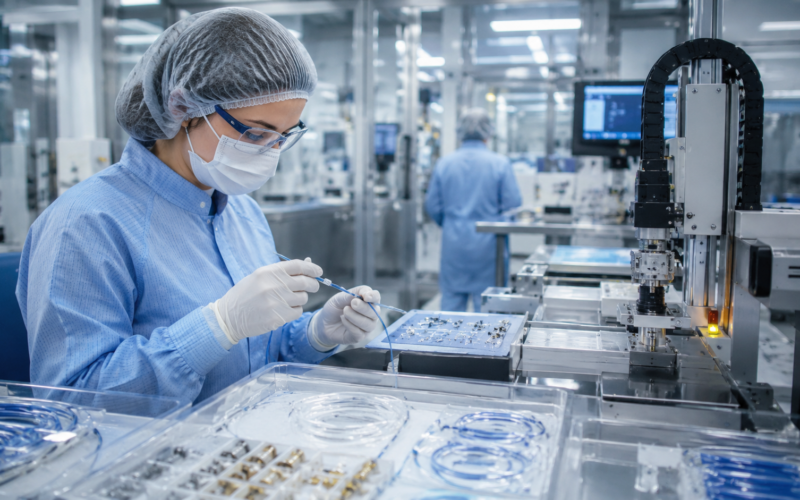
Integer Holdings is one of the larger contract development and manufacturing organisations serving the global medical technology industry. The company designs, develops and manufactures components, subassemblies and finished devices used in cardiovascular treatments, cardiac rhythm management, neuromodulation and other specialised medical applications.
Its technologies are incorporated into products including pacemakers, defibrillators, catheters, neurostimulation systems and devices used in pain management and cardiovascular procedures. This positions Integer Holdings behind many visible medical device brands without requiring it to assume the full commercial risk associated with marketing those products directly to hospitals and patients.
For KKR, the strategic attraction is not simply Integer Holdings’ current earnings. The company occupies an important position within the medical device supply chain, where customers increasingly depend on specialist manufacturers for complex engineering, regulatory compliance, precision production and product commercialisation.
Medical device manufacturers face pressure to shorten development cycles while controlling capital expenditure and maintaining strict quality standards. Outsourcing selected engineering and manufacturing activities can allow those companies to concentrate resources on clinical development, regulatory strategy, sales and product portfolio management.
Integer Holdings therefore offers KKR exposure to medical technology growth without depending on the success of one branded device. Its manufacturing platform serves multiple therapeutic categories and customers, providing a degree of diversification that a single-product medical device company would not offer.
The difficulty is that the company entered the transaction with slower growth and product-specific headwinds. First-quarter 2026 sales increased only 0.5% to US$440 million, while organic sales rose 1.3%. Adjusted operating income fell 14% to US$61 million, adjusted net income declined 10% to US$41 million and adjusted EBITDA decreased 7% to US$85 million.
Management attributed the performance partly to previously disclosed demand challenges affecting three newer products, including two products within electrophysiology and another within neuromodulation. Integer Holdings subsequently reduced its 2026 sales outlook to between US$1.805 billion and US$1.835 billion, representing a reported decline of approximately 1% to 3%.
KKR is consequently buying a business with attractive long-term market exposure, but not one experiencing uncomplicated near-term growth. The investment case depends on whether the buyer can support operational improvements and customer programme execution while allowing Integer Holdings to move beyond temporary product headwinds.

How did activist pressure and Integer Holdings’ strategic review lead to the KKR deal?
The acquisition follows months of engagement between Integer Holdings and Irenic Capital Management. Integer Holdings entered a cooperation agreement with Irenic in March 2026 and appointed James Flanagan and Aaron Kapito as independent directors.
The agreement also provided for two incumbent directors not to seek re-election at the company’s 2026 annual meeting. Irenic agreed to customary voting, confidentiality and standstill provisions as part of the arrangement.
Integer Holdings formally began its strategic review on April 30 after receiving interest from potential counterparties. The board said it would consider a sale, merger or strategic business combination alongside the value that could be created by continuing to operate independently. Goldman Sachs & Co. LLC was appointed as financial adviser, while Davis Polk & Wardwell LLP advised the company on legal matters during the review.
The board’s decision created a clear valuation catalyst. Integer Holdings shares closed at US$83.67 on April 29, before the review was announced. By July 31, when reports emerged that KKR was nearing an acquisition, the shares had climbed to US$121.21, representing a gain of approximately 45%.
The US$127 offer therefore provides only a modest premium to the price reached after takeover expectations had already been incorporated into the stock. It provides a substantially larger premium when measured against Integer Holdings’ unaffected trading price before the strategic review.
This difference explains why the 4.8% headline premium understates the transaction’s value relative to where the company traded before a potential sale became public knowledge. It also means much of the expected takeover return was captured by investors who owned the shares before the review or before reports of KKR’s negotiations emerged.
The outcome can be considered a successful activist catalyst for Irenic Capital Management. However, the acquisition price must still be assessed against Integer Holdings’ long-term earnings potential, debt position and the possibility that an operational recovery could have created additional value as a standalone public company.
What does the US$127 offer imply about Integer Holdings’ valuation and earnings outlook?
Integer Holdings reported US$1.85 billion of sales during 2025, including approximately US$1.11 billion from Cardio and Vascular, US$669 million from Cardiac Rhythm Management and Neuromodulation, and US$78 million from Other Markets.
The company generated US$402 million of adjusted EBITDA in 2025, an increase of 12%, as full-year sales grew 8% and adjusted earnings per share increased 21%. Total debt stood at approximately US$1.19 billion at the end of the year.
By the end of the first quarter of 2026, total debt had increased to US$1.25 billion, while non-GAAP net total debt reached US$1.26 billion. Integer Holdings reported a leverage ratio of 3.2 times adjusted EBITDA, compared with its targeted range of 2.5 to 3.5 times.
Management’s revised 2026 guidance called for adjusted EBITDA of between US$375 million and US$399 million. Using the US$5.7 billion enterprise value, the KKR transaction values Integer Holdings at approximately 14.3 to 15.2 times forecast 2026 adjusted EBITDA.
The US$127 offer also equates to roughly 19.8 to 21.8 times the company’s revised adjusted earnings-per-share guidance of US$5.83 to US$6.40.
Those multiples suggest KKR is paying for more than the company’s near-term growth rate. The price reflects the strategic importance of Integer Holdings’ customer relationships, regulatory and manufacturing capabilities, therapeutic exposure and potential to improve earnings once temporary product headwinds moderate.
KKR must nevertheless avoid relying exclusively on multiple expansion or financial leverage to generate returns. The company is already operating with meaningful debt, and the acquisition will likely introduce a new financing structure. Sustainable value creation will require revenue growth, manufacturing productivity, margin improvement and disciplined investment in new customer programmes.
Why could private ownership help Integer Holdings address its product and manufacturing challenges?
Operating as a private company may give Integer Holdings greater flexibility to make investments whose benefits will not be immediately visible in quarterly earnings. Medical device manufacturing programmes can require extended development, qualification, regulatory and production ramp-up periods before they generate attractive revenue and margins.
Public companies must balance those long investment cycles against short-term earnings expectations. Product delays, customer forecast changes or slower market adoption can quickly affect reported growth and investor sentiment, even when the underlying customer relationship remains strategically valuable.
KKR could provide capital and operational support for automation, manufacturing capacity, research and development, acquisition integration and expansion into higher-growth therapeutic categories. Its broader private equity platform also gives it experience with corporate carve-outs, operational transformation and acquisition-led growth.
KKR describes its healthcare growth strategy as covering biopharmaceuticals, medical devices, healthcare services, life science tools, diagnostics and healthcare information technology. The Integer Holdings deal gives the firm a scaled manufacturing platform within that wider healthcare investment strategy.
Private ownership does not automatically resolve Integer Holdings’ operating issues. Customer demand, product adoption and regulatory timelines remain outside the company’s complete control. Medical device manufacturing also requires consistent quality performance, and cost-cutting that undermines engineering, compliance or production reliability would weaken the business rather than improve it.
The more credible private equity value-creation route would combine investment in capacity and capabilities with better capital allocation and operational discipline. KKR will need to protect Integer Holdings’ customer relationships while improving the returns generated from manufacturing assets and acquired businesses.
How important are acquisitions and manufacturing capabilities to Integer Holdings’ growth strategy?
Integer Holdings has expanded its technology portfolio through a series of acquisitions. These transactions have added capabilities in precision coatings, biomaterials, metal processing and specialised components used in implantable and interventional medical devices.
The company acquired Precision Coating in January 2025 for approximately US$152 million and subsequently completed the acquisition of VSi Parylene. Earlier transactions included Pulse Technologies and Aran Biomedical, which expanded Integer Holdings’ exposure to complex delivery systems, medical textiles, biomaterial coverings and implantable device technologies.
This acquisition strategy helped support the 17% increase in Cardio and Vascular sales during 2025. However, it also contributed to higher debt and integration requirements.
KKR could continue using acquisitions to broaden Integer Holdings’ capabilities, but it will need to demonstrate that acquired businesses generate organic cross-selling, stronger margins and deeper customer relationships. Simply adding revenue through repeated purchases would not be sufficient if integration costs and debt grow at a similar pace.
The strategic opportunity lies in offering customers a wider range of services across the product lifecycle. A medical device company that can rely on one partner for early engineering, coatings, components, subassemblies and commercial-scale production may be less inclined to change suppliers.
That creates potential customer stickiness, but also increases Integer Holdings’ responsibility for execution. Delays or quality issues in one part of the platform could affect broader customer programmes. KKR’s ownership thesis therefore depends heavily on operational reliability rather than financial restructuring alone.
What does the Integer Holdings share-price reaction say about deal completion expectations?
Integer Holdings shares rose more than 20% on July 31 after reports indicated that KKR was nearing an agreement. The stock closed at US$121.21, a 13-month high, before the definitive transaction was announced.
The shares gained approximately another 2% in premarket trading on August 3, narrowing the gap between the market price and KKR’s US$127 offer.
Based on historical closing prices, Integer Holdings had risen approximately 23% over the five sessions ending July 31 and almost 30% from its June 30 close. Available market data placed the company’s recent 52-week trading range at approximately US$62 to US$124 before the transaction announcement.
The remaining discount to US$127 reflects the time required to complete the acquisition, the opportunity cost of holding the shares and the possibility that regulatory, financing, shareholder or other closing conditions could delay or prevent completion.
A narrow transaction spread would indicate that investors assign a high probability to completion. A wider spread developing after the announcement could signal concern about regulatory review, financing conditions, shareholder opposition or a deterioration in the broader deal environment.
The market reaction also confirms that expectations of a sale, rather than an improvement in current operating performance, drove much of the recent share-price appreciation. Once the transaction closes, Integer Holdings shareholders will no longer participate in any operating recovery beyond the agreed US$127 cash consideration.
What does KKR need to prove after taking Integer Holdings private?
The first challenge will be completing the transaction within the expected timetable. Detailed merger filings should provide further information about financing commitments, regulatory requirements, shareholder voting, termination provisions and the board’s evaluation of alternative offers.
The second challenge will be stabilising Integer Holdings’ near-term product growth. Management expects the company to return to organic sales growth approximately 200 basis points above its markets in 2027. KKR will inherit that ambition, but the forecast remains dependent on customer demand and the successful ramp-up of new programmes.
The third challenge will be managing leverage. Integer Holdings already carried more than US$1.25 billion of debt at the end of the first quarter. Acquisition financing could increase the effective debt burden placed on the business, making cash conversion, margin expansion and capital-expenditure discipline more important.
The final test will be whether KKR can build Integer Holdings into a stronger and more valuable medical device manufacturing platform without weakening the engineering and quality capabilities that attracted customers in the first place.
For Integer Holdings shareholders, the transaction converts an uncertain operational recovery into a defined cash exit at a substantial premium to the unaffected share price. For KKR, it creates exposure to a strategically important medical device supply chain platform, but at a valuation that requires credible execution.
The acquisition will look increasingly attractive if Integer Holdings restores above-market organic growth, improves margins and converts its expanded capabilities into larger customer programmes. The thesis would weaken if product headwinds persist, leverage restricts investment or operational changes undermine customer confidence.
Key takeaways from KKR’s US$5.7 billion Integer Holdings acquisition
- KKR will acquire Integer Holdings Corporation for US$127 per share in cash.
- The transaction carries an equity value of approximately US$4.3 billion and an enterprise value of roughly US$5.7 billion including debt.
- The offer is 4.8% above Integer Holdings’ July 31 closing price but approximately 52% above its April 29 unaffected price.
- Integer Holdings will become a privately owned KKR portfolio company after the transaction closes.
- The deal follows a strategic review launched on April 30 after the company received interest from potential buyers.
- Activist investor Irenic Capital Management had previously secured board changes through a cooperation agreement.
- Integer Holdings reported slower first-quarter growth and reduced its 2026 sales and earnings outlook.
- The enterprise value represents approximately 14.3 to 15.2 times Integer Holdings’ forecast 2026 adjusted EBITDA.
- KKR’s value-creation case depends on restoring product growth, improving manufacturing efficiency and carefully managing leverage.
- The transaction is expected to close before the end of 2026, with detailed merger filings providing the next important evidence on financing and closing conditions.
Discover more from Business-News-Today.com
Subscribe to get the latest posts sent to your email.