

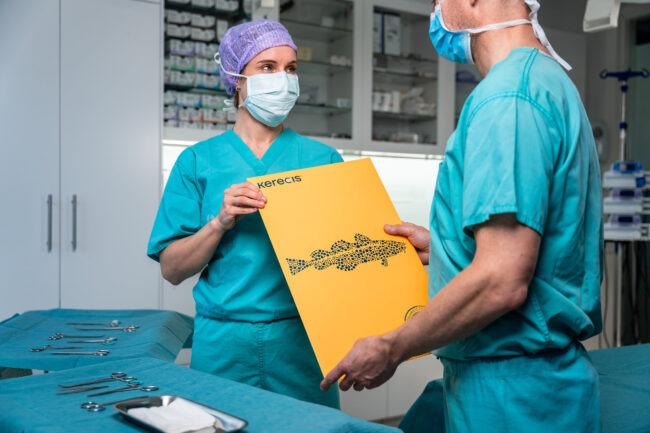
The U.S. Centers for Medicare & Medicaid Services has withdrawn proposed Local Coverage Determinations for skin substitute grafts in outpatient settings, averting restrictions that would have narrowed treatment options for chronic wounds. Kerecis, the Iceland-founded company acquired by Coloplast, emerges as a direct beneficiary, with its fish-skin grafts already operating under existing coverage rules and priced well below the new fixed-rate threshold.
The timing fortifies Kerecis’ position in the U.S. biologic wound care market, reinforcing a reimbursement-aligned strategy that now appears less exposed than competitors relying on higher-priced or narrowly indicated graft products. With the policy reversal reverting coverage to the preexisting framework, Kerecis maintains uninterrupted Medicare reimbursement for a broader range of wound types and can continue scaling under the upcoming $127 per square centimeter payment ceiling.
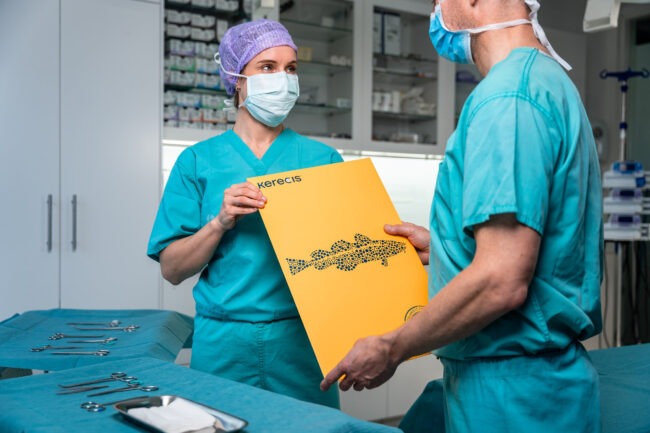
How the CMS LCD reversal removes near-term reimbursement friction for Kerecis and its provider base
The proposed LCDs from several Medicare Administrative Contractors, including CGS, Novitas, and First Coast Service Options, would have significantly curtailed coverage for skin substitute products used in the outpatient setting. These changes, originally scheduled to take effect on January 1, 2026, aimed to tighten indications to only diabetic foot ulcers and venous leg ulcers while excluding chronic surgical wounds, pressure ulcers, and other difficult-to-heal wound types.
Additionally, the draft policies would have reduced the number of allowable graft applications from ten to five, and introduced ambiguities in documentation and billing compliance that were flagged by clinicians and product manufacturers alike.
On December 24, 2025, the U.S. Centers for Medicare & Medicaid Services confirmed that these LCDs were being withdrawn. The decision effectively restores the use of the existing legacy LCDs where they are in force and maintains access to broader wound care coverage where no active LCD exists. Medicare Administrative Contractors including Palmetto, Noridian, WPS, and NGS remain without active LCDs, allowing regional flexibility in coverage interpretation.
For Kerecis, which built its U.S. outpatient business under the legacy LCD structure, the regulatory pullback removes a disruptive variable and reinforces the defensibility of its fish-skin platform. The product line, including MariGen, continues to be reimbursable for wound types such as pressure ulcers and post-surgical wounds that have failed 30 days of conservative therapy—indications that would have been at risk under the withdrawn policies.
Why Kerecis remains structurally aligned with the $127/cm² fixed payment framework taking effect in 2026
While the LCD reversal preserves access, another major reimbursement shift is still happening: starting January 1, 2026, a fixed national payment rate of $127 per square centimeter will apply to all qualifying outpatient skin substitute procedures under Medicare. This marks a transition away from historically variable pricing and seeks to reduce both cost inflation and inappropriate utilization.
Kerecis has publicly stated that its average Medicare outpatient pricing is approximately $110 per square centimeter, offering sufficient headroom under the new ceiling. This pricing alignment, combined with the company’s disciplined commercial execution, positions Kerecis as one of the few biologics vendors able to absorb the reimbursement change without materially disrupting margins or clinic economics.
By contrast, biologics companies pricing near or above the new ceiling may be forced to repackage, rebundle, or discount their offerings to remain viable in outpatient settings. That creates both margin compression and operational complexity, especially for companies that scaled under cost-plus billing structures.
Fertram Sigurjonsson, Chief Executive Officer of Kerecis and Executive Vice President of Wound and Tissue Repair at Coloplast, said the company’s model was purpose-built to operate under evolving reimbursement conditions. He noted that while peers may need to adjust pricing or seek exception pathways, Kerecis’ pricing discipline and coverage footprint make it a “safe harbor for providers.”
How clinical usability and real-world evidence are reinforcing Kerecis’ growth prospects amid policy volatility
Beyond pricing, Kerecis benefits from strong real-world usability and documented clinical performance. Its fish-skin grafts preserve the original three-dimensional structure of Atlantic cod tissue with minimal processing, retaining a molecular and structural profile that closely mimics human skin. This includes the preservation of bioactive lipids and a scaffold architecture that supports cellular ingrowth and revascularization.
Because fish skin carries no risk of viral or prion transmission between species, Kerecis does not require the same harsh sterilization techniques used in mammalian or human-derived grafts. This reduces processing cost while improving graft integrity. Clinical studies have shown faster healing times in select wound types compared to conventional graft materials, and provider adoption has been bolstered by straightforward handling protocols that reduce training burden.
As CMS continues to evolve toward evidence-based utilization models, Kerecis appears well positioned to navigate more selective reimbursement thresholds. Its tissue platform is supported by peer-reviewed evidence, which could serve as a barrier to entry for less-established biologics providers. In a reimbursement environment that increasingly prioritizes real-world value over legacy coverage, the company’s data-driven positioning may enhance durability of access.
What the LCD withdrawal means for competitive dynamics in biologic wound care and xenograft platforms
The market for outpatient wound care biologics is populated by a mix of human allografts, porcine and bovine xenografts, and synthetic or bioengineered grafts—each with different cost structures, safety profiles, and logistical demands. Many of these vendors have oriented their reimbursement strategies around geographic MAC policies and product-specific carve-outs, creating fragmented access pathways.
The CMS withdrawal effectively resets the competitive landscape by favoring vendors with consistent, broad-based coverage and predictable pricing. Kerecis now stands out as a biologic provider that is simultaneously reimbursement-aligned, margin-protected, and clinically differentiated.
Vendors dependent on the now-withdrawn LCDs may face delayed growth or sudden shifts in their commercial strategy. Companies with higher-cost products are likely to encounter margin pressure or require increased patient co-pay support. Others may attempt to shift toward inpatient markets or off-label uses to preserve volume, moves that could invite increased audit risk or payer scrutiny.
Physician-owned outpatient wound care centers, which are particularly sensitive to margin erosion and prior authorization complexity, may begin consolidating their biologic product portfolios around a smaller number of reimbursement-compliant platforms. Kerecis’ investments in clinical education, billing documentation, and MAC-compliant workflows give it an added advantage in winning provider loyalty during this realignment.
Strategic implications for Coloplast as it integrates Kerecis into its global wound care portfolio
Coloplast acquired Kerecis in 2023 to complement its global wound care business and expand its presence in the U.S. biologic skin substitute market. The regulatory developments of December 2025 may accelerate the value of that transaction.
Kerecis’ model—based on scalable production of Icelandic cod-derived skin, powered by renewable energy and aligned with the UN Sustainable Development Goals—offers a sustainability narrative that may support future access discussions in both U.S. and EU markets. Its low bioburden, high biocompatibility, and predictable cost structure enhance its appeal in settings that favor standardized care delivery under bundled payments or fixed fee schedules.
As Coloplast integrates Kerecis into its broader product suite, opportunities may emerge to expand the fish-skin platform beyond wound care, potentially into surgical applications, burn treatment, or orthopedics. The avoidance of xenogeneic viral risk and simplified regulatory path make the technology attractive for pipeline expansion across geographies.
From a market optics perspective, Coloplast’s strategic bet now looks especially prescient. While other acquirers may find themselves grappling with post-policy rationalization of biologics portfolios, Coloplast enters 2026 with a U.S. platform that is already aligned with regulatory, pricing, and clinical expectations.
What the CMS LCD withdrawal means for Kerecis, Coloplast, and the biologics wound care market
The CMS decision to withdraw proposed LCDs removes short-term reimbursement headwinds for outpatient wound care products. For Kerecis, the outcome validates a commercial strategy built around pricing transparency, coverage breadth, and real-world data. The fish-skin platform now enters 2026 with a strong competitive foundation under fixed reimbursement rules, while many peers will need to reassess pricing, packaging, and clinical justification strategies. As Coloplast integrates Kerecis more fully into its wound and tissue repair operations, the next phase will likely involve pipeline expansion and greater push into bundled care models that reward predictable healing outcomes.
What Kerecis’ regulatory momentum means for wound-care competitors and reimbursement strategy
- The Centers for Medicare & Medicaid Services’ decision to withdraw proposed LCDs removes imminent reimbursement restrictions and preserves broader coverage across wound types.
- Kerecis is strategically aligned with both legacy coverage and the new $127/cm² outpatient fixed rate, giving it a margin and compliance edge over higher-priced biologics.
- The fish-skin graft platform remains covered for pressure ulcers, post-surgical wounds, and diabetic ulcers, preserving its access to high-cost, high-need patient segments.
- Competitors relying on premium pricing or less differentiated products may face pricing pressure and market share losses in outpatient settings.
- Kerecis benefits from Coloplast’s experience in reimbursement-focused market shaping, especially in evolving value-based care environments.
- CMS’ retreat likely reflects provider and policy pushback, but broader pricing discipline in outpatient biologics remains on the long-term agenda.
- Clinics may become more selective in product choices based on ease of documentation, post-application support, and audit readiness—areas where Kerecis has invested.
- Kerecis’ strong real-world data and simplified clinical profile position it for favorable placement in any future national LCD restructuring.
Discover more from Business-News-Today.com
Subscribe to get the latest posts sent to your email.