


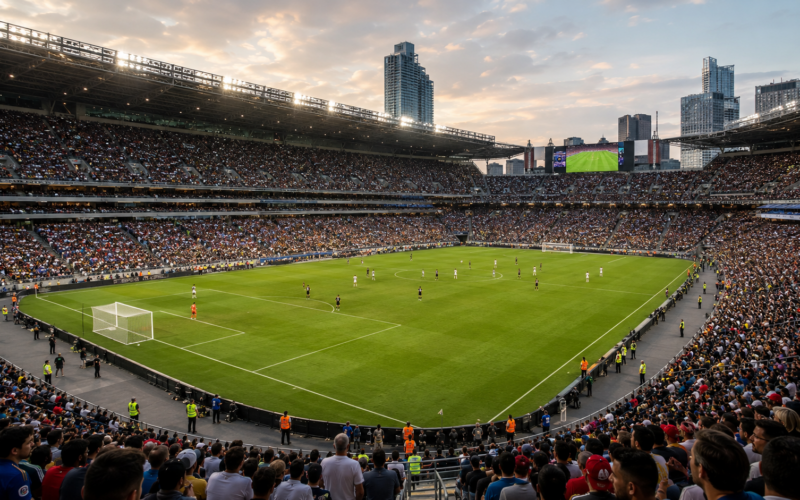
Youri Tielemans scored a 125th-minute penalty as Belgium recovered from two goals behind to defeat Senegal 3-2 after extra time in their FIFA World Cup 2026 Round of 32 match at Seattle Stadium on Wednesday, July 1, 2026. Senegal led through Habib Diarra in the 25th minute and Ismaïla Sarr in the 51st before Romelu Lukaku and Tielemans scored during the final four minutes of normal time.
Lukaku, introduced at half-time, converted Thomas Meunier’s low cross in the 86th minute. Tielemans then headed in Leandro Trossard’s delivery three minutes later, rescuing Belgium from an elimination that had appeared almost certain.
The match remained level until the closing moments of extra time, when a VAR review identified Lamine Camara’s challenge on Tielemans inside the penalty area. Referee Saíd Martínez awarded the spot kick after reviewing the incident, and the Belgium captain drove the ball into the upper corner at 120+5 minutes.
Belgium advanced to the Round of 16 after completing one of the latest recoveries in FIFA World Cup history, while Senegal were eliminated despite producing the better chances and leading 2-0 until the 86th minute. Belgium will return to Seattle Stadium on Monday, July 6, to face the winner of United States vs Bosnia and Herzegovina.
FIFA World Cup 2026 Belgium 3-2 Senegal full match scorecard and key incidents
How did Senegal seize tactical control before Belgium could establish its possession game?
Senegal began with greater aggression, cleaner spacing and a clearer understanding of how to attack Belgium’s defensive weaknesses. Sarr operated centrally more often than a conventional right winger, while Mané drifted towards the left half-space and Ndiaye provided width from the opposite side.
Those movements prevented Belgium’s full-backs from defending narrow positions. De Cuyper and Castagne were repeatedly forced to choose between following Senegal’s wide runners and protecting the spaces beside Mechele and Theate.
Senegal’s midfield also prevented De Bruyne from receiving regularly between the lines. Idrissa Gana Gueye and Pape Gueye protected the central area, while Diarra moved forward aggressively whenever Belgium’s midfield possession became loose.
The early warning arrived in the 13th minute when Sarr struck the post from close range and forced Courtois into a save from the rebound. Belgium survived that sequence, but it showed that Senegal could penetrate without requiring long periods of possession.
Why did Habib Diarra’s opening goal reflect Senegal’s superiority in both penalty areas?
Senegal’s first goal began with Mané receiving on the left and creating enough separation to deliver into the penalty area. Sarr attacked the cross ahead of Belgium’s defenders and directed his header against the post.
Diarra reacted more quickly than the surrounding defenders and side-footed the rebound into the net from close range. The finish was simple, but the goal was created by Senegal’s superior anticipation during the entire sequence.
Belgium had enough players inside the penalty area to clear the danger. However, the defenders became fixed on Sarr’s initial header and did not react when the ball returned from the woodwork.
Diarra’s movement also demonstrated why Senegal’s midfield structure was so effective. He contributed defensively when Belgium attempted to build and then arrived inside the penalty area as an additional attacker whenever Mané or Sarr moved the ball forward.
How did Ismaïla Sarr produce one of the finest individual goals of FIFA World Cup 2026?
Senegal doubled its lead six minutes after half-time through a move that combined Niakhaté’s passing range with Sarr’s strength and technique. The defender launched a long diagonal pass over Belgium’s midfield towards the forward.
Sarr controlled the ball on his chest while moving between two defenders. He resisted the physical pressure, allowed the ball to fall into his stride and drove a powerful finish beyond Courtois.
The goal exposed Belgium’s vulnerability when its defensive line was required to turn towards its own goal. Mechele and Theate were comfortable defending crosses in front of them but struggled when Sarr attacked the space behind.
Senegal had almost scored moments earlier when Diarra found space inside the penalty area. Belgium therefore received two warnings during the opening minutes of the second half and failed to respond to either.
At 2-0, Senegal were not protecting a fortunate lead. They had created the stronger opportunities, hit the woodwork twice and produced a far higher expected-goals total than Belgium.
Why did Belgium’s original attacking structure create so little against Senegal?
Belgium started without a recognised centre-forward, using De Ketelaere ahead of Doku, De Bruyne and Trossard. The approach offered technical mobility but gave Senegal’s defenders no fixed physical reference to manage.
That initially appeared beneficial, but the movement rarely produced depth. De Ketelaere dropped towards midfield, De Bruyne moved laterally searching for possession and Belgium’s wide players often received with Senegal already organised behind the ball.
Doku attempted to beat Diatta through individual dribbling but frequently entered crowded areas. Trossard moved inside from the right, which reduced Belgium’s natural width and allowed Senegal to defend more compactly.
Belgium completed passes and held slightly more possession, but most of that circulation occurred outside the most dangerous areas. Their best first-half attempt came from De Cuyper at long range rather than through a controlled combination inside Senegal’s penalty area.
The absence of a physical striker also allowed Ciss and Niakhaté to defend on the front foot. They could step towards Belgium’s attacking midfielders without worrying about a centre-forward occupying the space behind them.
How did Romelu Lukaku change Belgium after replacing Charles De Ketelaere?
Garcia introduced Lukaku at half-time, giving Belgium a direct reference point for crosses and vertical passes. Although the striker did not immediately dominate, Senegal’s centre-backs were required to defend deeper whenever Belgium advanced.
Lukaku’s presence also created room for Tielemans and Trossard near the edge of the penalty area. Senegal could no longer step into midfield as confidently because one mistimed movement risked leaving the striker free inside the box.
The decisive impact arrived in the 86th minute. Moreira challenged for possession outside Senegal’s penalty area, and the loose ball reached Meunier on the right.
Meunier delivered early rather than waiting for Belgium to establish a longer passing sequence. Lukaku moved across the nearest defender and converted at the near post with his right foot.
The goal demonstrated the value of a specialist striker. Belgium had spent most of the match searching for complicated routes through Senegal, but Lukaku required one direct cross and one decisive movement to change the score.
Why was Thibaut Courtois’ late save from Sadio Mané the match’s critical intervention?
Belgium’s comeback would not have been possible without Courtois preventing Senegal from scoring a third goal. Mané broke into space in the 85th minute and drove a low attempt towards the goalkeeper’s right.
Courtois moved quickly across his line and pushed the ball away. The offside flag was subsequently raised, although the decision appeared close and the save remained an important demonstration of concentration.
Within approximately one minute, Lukaku scored at the opposite end. The sequence transformed the match from a probable 3-0 Senegal victory into a contest Belgium suddenly believed could be rescued.
Courtois had already made important interventions against Sarr and Mané earlier in the match. Senegal’s 3.54 expected goals showed how frequently Belgium’s goalkeeper and the woodwork were required to keep the margin manageable.
The save also affected Senegal emotionally. A third goal would have removed almost all remaining uncertainty, but the missed chance allowed anxiety to enter a team that had controlled the contest for more than 80 minutes.
How did Youri Tielemans turn a difficult performance into a historic captain’s display?
Tielemans experienced a complicated match before becoming its decisive player. Senegal’s midfield restricted his influence during the opening hour, while several long-range attempts failed to trouble Diaw.
Belgium’s captain also became involved in a heated exchange with Trossard during the second half. The disagreement reflected the frustration inside a team that appeared close to elimination.
The two players then combined for the equaliser. Trossard delivered a flat cross from the left, Diaw moved away from his goal and Tielemans attacked the space behind Senegal’s defenders.
His header entered an unguarded net in the 89th minute. Belgium had moved from 2-0 down to level within three minutes, completely reversing the emotional balance of the match.
Tielemans remained involved throughout extra time and won the decisive penalty when Camara challenged from behind. He then accepted responsibility for the kick after a discussion with Lukaku and converted under extreme pressure.
The penalty was timed at approximately 124 minutes and 44 seconds, making it the latest winning goal recorded in a FIFA World Cup match. Tielemans therefore moved from the margins of the contest to producing the equaliser, winning the penalty and scoring the winner.
Was the late VAR penalty against Lamine Camara the correct decision?
Belgium’s final attack developed through Moreira on the left before the ball travelled across Senegal’s penalty area. Lukébakio reached the delivery and lifted his attempt against the crossbar.
Play initially appeared ready to continue, but the video assistant referee identified contact between Camara and Tielemans before the shot. Replays showed Camara catching the back of Tielemans’ lower leg as the Belgium midfielder attempted to reach the cross.
Referee Martínez reviewed the incident at the pitchside monitor and awarded the penalty. The challenge occurred inside the area and made contact with Tielemans without Camara playing the ball.
Senegal’s frustration centred on whether the contact was sufficiently clear to justify reversing the original decision. The intervention arrived at the end of extra time, when a penalty shootout appeared only seconds away.
The decision was decisive but did not erase the earlier reasons for Senegal’s defeat. Thiaw’s team had led by two goals until the 86th minute and still had opportunities to control possession, clear crosses and prevent Belgium from reaching extra time.
Why did Senegal’s defensive structure collapse during the final four minutes?
Senegal had defended effectively for most of the match by keeping compact distances between midfield and defence. That organisation weakened after Mané’s missed opportunity and Belgium’s first goal.
Lukaku’s strike created immediate uncertainty. Senegal’s players began dropping closer to Diaw, while the midfield stopped applying the same pressure to Belgium’s wide players.
The equaliser resulted from precisely that retreat. Trossard received enough time to measure his cross, and Tielemans entered the penalty area without being tracked by a midfielder.
Diaw attempted to claim the delivery but could not reach it. His movement left the goal exposed, allowing Tielemans to direct a relatively simple header into the net.
Senegal’s substitutions also reduced the experience available during the most demanding moments. Diarra and Ndiaye had been removed before Belgium’s comeback, while Mané and Jakobs left at the beginning of extra time.
The replacements brought energy but could not reproduce the same control. Belgium’s bench, by contrast, supplied Lukaku, Meunier, Moreira, Raskin and Lukébakio, all of whom influenced the recovery.
What did Mory Diaw do well before Belgium’s late comeback overwhelmed Senegal?
Diaw started because Mendy remained unavailable with a knee injury. The replacement goalkeeper handled Belgium’s limited first-half threat confidently and made an important save from De Cuyper shortly before the interval.
His positioning remained strong during much of the second half. Belgium attempted 19 shots, but only five reached the target, and Diaw made three saves.
The goalkeeper had little opportunity to prevent Lukaku’s near-post finish because the striker redirected Meunier’s cross from close range. The equaliser was more complicated because Diaw left his line but failed to reach Trossard’s delivery.
That decision exposed the goal behind him, although Senegal’s defenders must also accept responsibility for allowing Tielemans to attack the cross unchallenged. The penalty winner gave Diaw almost no realistic chance after Tielemans placed it high into the corner.
Diaw’s performance should not be reduced to the late goals. Senegal remained competitive without its first-choice goalkeeper, and the substitute helped protect the lead during Belgium’s limited periods of pressure.
Why did Belgium advance despite Senegal producing the stronger statistical performance?
The expected-goals margin strongly favoured Senegal, while both teams recorded 19 attempts and five shots on target. Senegal’s chances were generally closer to goal and more dangerous than Belgium’s opportunities.
Belgium advanced because it survived the periods when Senegal should have extended the lead. Sarr hit the post early, Diarra missed before the second goal and Courtois denied Mané when a third goal would probably have ended the contest.
Belgium then converted its decisive chances with exceptional efficiency. Lukaku scored from Meunier’s cross, Tielemans punished Diaw’s unsuccessful attempt to claim Trossard’s delivery and the captain converted the late penalty.
Garcia’s substitutions also altered the match more significantly than Thiaw’s changes. Five Belgium substitutes contributed directly or indirectly to the comeback, giving the team greater physical power, width and attacking unpredictability.
The result therefore reflected knockout efficiency rather than sustained control. Senegal were the stronger side for most of the match, but Belgium were superior during the few minutes that determined who advanced.
What must Senegal learn from another painful late knockout elimination?
Senegal demonstrated that they possessed enough quality to eliminate a highly experienced European opponent. Sarr, Mané and Diarra repeatedly exposed Belgium’s defensive structure, while the midfield controlled De Bruyne and Tielemans for long periods.
The failure came in game management rather than tactical preparation. Senegal stopped progressing the ball with the same confidence after moving two goals ahead and gradually allowed Belgium to establish attacks closer to the penalty area.
Thiaw’s team also lost control after Lukaku scored. The players defended the score rather than continuing to defend the spaces and passing routes that had previously kept Belgium away from goal.
The substitutions removed several of Senegal’s most influential ball carriers before the lead was secure. Without Diarra, Ndiaye and later Mané, the team struggled to relieve pressure through possession or counterattacks.
Senegal’s performance showed that the squad can compete against leading opponents. The next stage of development is learning how to close elimination matches without surrendering the tactical identity that created the advantage.
What must Belgium change before returning to Seattle for the Round of 16?
Belgium cannot depend on another late emotional recovery. Senegal created 3.54 expected goals, struck the woodwork twice and reached dangerous positions through both direct passes and wide combinations.
The defensive line must improve its control of runners attacking from midfield. Diarra’s movement was not tracked for the opening goal, while Sarr repeatedly found space between and behind Belgium’s centre-backs.
Garcia must also decide whether Lukaku should start the Round of 16. De Ketelaere’s mobility did not create enough penalty-area presence, whereas Lukaku immediately changed how Senegal’s defence positioned itself.
Belgium’s wider attacking balance requires attention as well. Doku struggled to convert dribbles into chances, and De Bruyne was substituted before the comeback began.
The positive development was the contribution of the bench. Moreira, Meunier, Raskin, Lukébakio and Lukaku gave Belgium the energy and directness required to escape elimination.
Belgium will face either the United States or Bosnia and Herzegovina in Seattle. The identity of the opponent remained pending, but the tactical warning is already clear: another slow and vulnerable performance could create a deficit that even Belgium’s experienced finishers cannot overturn.
How does Belgium’s victory reshape the FIFA World Cup 2026 knockout bracket?
Belgium advanced to the Round of 16 and will remain in Seattle for its next knockout match on Monday, July 6. The opponent will be the winner of United States vs Bosnia and Herzegovina.
The victor of Belgium’s Round of 16 match will enter the quarter-final section containing the winners of Spain vs Austria and Portugal vs Croatia. No quarter-final opponent is confirmed until those Round of 32 and Round of 16 fixtures are completed.
Senegal were eliminated after qualifying as one of the best third-placed teams. Their FIFA World Cup 2026 campaign included defeats against France and Norway, a 5-0 victory over Iraq and an extraordinary knockout performance that ended with Belgium scoring three times after the 85th minute.
Key takeaways from Belgium vs Senegal at FIFA World Cup 2026
- Belgium defeated Senegal 3-2 after extra time despite trailing 2-0 until the 86th minute.
- Habib Diarra opened the scoring after Ismaïla Sarr’s header struck the post in the 25th minute.
- Sarr doubled Senegal’s lead with an exceptional chest control and finish from Moussa Niakhaté’s long pass.
- Senegal recorded 3.54 expected goals compared with Belgium’s 1.80 and struck the woodwork twice.
- Romelu Lukaku replaced Charles De Ketelaere at half-time and scored from Thomas Meunier’s cross.
- Youri Tielemans headed Belgium level from Leandro Trossard’s delivery in the 89th minute.
- Dodi Lukébakio struck the crossbar shortly before the decisive VAR review.
- Lamine Camara’s challenge on Tielemans resulted in a Belgium penalty near the end of extra time.
- Tielemans converted at 120+5 minutes to score the latest winning goal in FIFA World Cup history.
- Belgium advanced to face the winner of United States vs Bosnia and Herzegovina, while Senegal were eliminated.
Discover more from Business-News-Today.com
Subscribe to get the latest posts sent to your email.


