



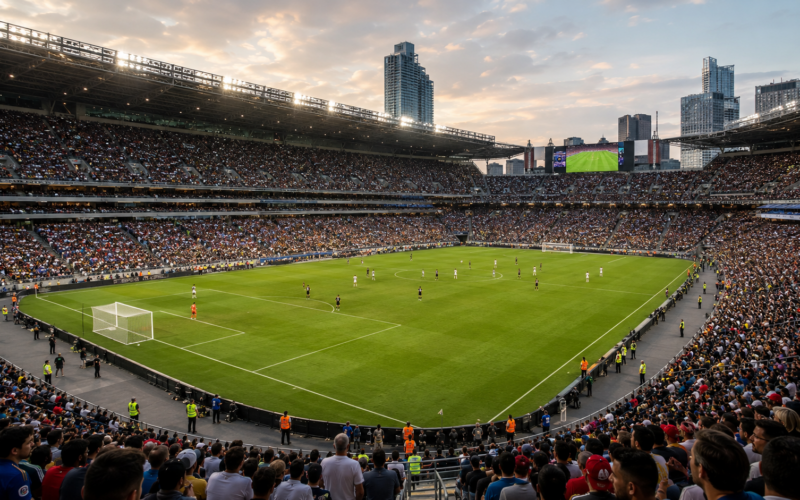
Croatia defeated Panama 1-0 at Toronto Stadium in Toronto on June 23, 2026 local time, with the match concluding early on June 24 in India, as half-time substitute Ante Budimir scored the only goal of a tense FIFA World Cup 2026 Group L contest. Budimir converted Josip Stanišić’s cross in the 54th minute after Marco Pašalić’s backheel opened the route down Croatia’s right side.
Panama created enough opportunities to threaten an equaliser and finished with more total attempts than Croatia. Dominik Livaković made important interventions against José Luis Rodríguez and Carlos Harvey, preserving a clean sheet during Croatia’s most vulnerable periods.
The result carried additional significance for Luka Modrić, who made his 200th senior international appearance. The 40-year-old became only the fourth man to reach that milestone and was honoured by his teammates following the final whistle.
Croatia moved to three points and retained a clear opportunity to qualify for the Round of 32 through their final match against Ghana. Panama were eliminated after a second consecutive 1-0 defeat and remain without a point or goal at the tournament.
Panama vs Croatia FIFA World Cup 2026 match scorecard
Why did Croatia struggle to break down Panama’s defensive system during the first half?
Panama began in a compact 5-4-1 structure designed to crowd the central spaces around Modrić, Mateo Kovačić and Martin Baturina. Thomas Christiansen’s team allowed Croatia to hold possession in less dangerous areas but closed the route into the penalty box.
Croatia repeatedly moved the ball from side to side without increasing the speed of the attack. Panama’s defensive line therefore had enough time to shift across the pitch and protect goalkeeper Orlando Mosquera.
Petar Musa became isolated between three central defenders. Croatia delivered crosses toward him, but Panama possessed the numerical and physical advantage inside the area.
Ivan Perišić attempted to stretch the defence from the left, while Marco Pašalić operated from the opposite side. Neither winger consistently reached the byline during the opening half.
The pattern became predictable. Croatia held the ball, approached Panama’s defensive block and then delivered into an overcrowded area or recycled possession toward midfield.
Panama were more threatening during transitions. Amir Murillo advanced aggressively on the right and created problems for Joško Gvardiol, who had started at left-back.
José Luis Rodríguez and Yoel Bárcenas also looked to release the ball early toward José Fajardo. Panama lacked enough supporting runners around the striker, but the speed of their attacks unsettled Croatia more than the possession numbers suggested.
The first half produced only three total attempts and an expected-goals figure of approximately 0.11. The limited attacking output reflected a contest in which Croatia lacked penetration and Panama lacked numbers during counterattacks.
How close did Panama come to taking the lead before Ante Budimir’s decisive goal?
Panama produced the most dangerous moment of the first half after Murillo advanced down the right in the 23rd minute.
The wing-back reached a forward pass and delivered toward Rodríguez, who attacked the ball with a powerful standing header. Livaković reacted quickly and diverted the effort against the underside of the crossbar.
Croatia managed to scramble the loose ball away before a Panama player could finish the rebound. The intervention became one of the most important moments of the match.
Panama also created threatening situations through Cristian Martínez and Rodríguez, although several crosses travelled into areas where Fajardo was surrounded by Croatian defenders.
The Central American side’s problem was not reaching wide attacking positions. The weakness was the lack of players arriving inside the penalty area to convert those deliveries.
Fajardo frequently competed alone against Marin Pongračić, Josip Šutalo and the recovering full-backs. Even an accurate cross therefore required him to overcome a significant numerical disadvantage.
Panama’s defensive work deserved a lead, but their attacking structure could not consistently support the counterattack. That limitation allowed Croatia to reach half-time level despite producing a poor performance.
The difference between the teams eventually became the ability to place a second attacker near the decisive cross. Croatia corrected that problem through their half-time substitutions, while Panama never fully solved it.
Why did Zlatko Dalić replace Joško Gvardiol and Petar Musa at half-time?
Dalić responded to Croatia’s ineffective opening half by introducing Budimir and Andrej Kramarić.
Musa had struggled to influence the match as the central striker. Panama’s three centre-backs controlled the crosses directed toward him, and he received little support around the second ball.
Budimir offered a more physical penalty-area presence and a willingness to attack the far post. His movement immediately gave Croatia a clearer target when Stanišić advanced from right-back.
Removing Gvardiol was the more surprising decision. The defender had experienced difficulties against Murillo’s forward runs and had not provided sufficient attacking width from the left.
Kramarić’s introduction allowed Croatia to place another technically creative player around Panama’s defensive block. The change also altered the balance of the front line and created more freedom for Perišić and Pašalić.
The substitutions communicated urgency. Croatia could not accept another draw or defeat after losing 4-2 to England in their opening match.
Dalić also understood that repeating the first-half approach would probably produce the same outcome. Panama were comfortable defending predictable crosses toward an isolated striker.
Budimir rewarded the decision within nine minutes. His goal was not an isolated piece of individual brilliance. It resulted directly from Croatia increasing the number of players attacking the penalty area and improving the timing of movement around Stanišić’s delivery.
How did Marco Pašalić and Josip Stanišić create Ante Budimir’s winning goal?
The decisive attack began on Croatia’s right side in the 54th minute.
Pašalić received possession near the touchline and produced a clever backheel into the path of the overlapping Stanišić. The action removed Panama’s nearest defender and allowed the right-back to accelerate into crossing space.
Stanišić delivered firmly across Mosquera and toward the far post. The ball travelled beyond the goalkeeper’s reach and forced Panama’s defenders to turn toward their own goal.
Budimir timed his movement perfectly. He arrived behind the central defenders and directed the cross into the net from close range.
The goal demonstrated what Croatia had lacked during the first half. Pašalić played forward quickly, Stanišić overlapped without hesitation and Budimir attacked a specific space rather than waiting between stationary defenders.
Panama’s compact structure was finally disrupted because Croatia created movement on three different lines. Pašalić attracted attention near the touchline, Stanišić advanced beyond him and Budimir moved toward the unprotected far post.
The attack also showed the continuing value of Croatia’s experienced substitutes. Kramarić and Budimir changed the positions Panama were required to defend, even though only Budimir appeared on the scoresheet.
For a team under severe pressure, the goal delivered both relief and tactical validation. Croatia had not suddenly begun dominating the match, but they had finally produced an attack with enough pace and coordination to defeat Panama’s defensive organisation.
Why did Croatia fail to turn the opening goal into a more comfortable advantage?
Panama were forced to abandon part of their defensive caution after falling behind. That created larger spaces for Croatia to counterattack.
Modrić quickly recognised the change and released Pašalić through the middle in the 57th minute. Mosquera remained patient and prevented the attacker from completing his attempted chip.
The ball returned to Pašalić near the end line, but he sent the second effort over the goal. Croatia had missed an opportunity to make the score 2-0 and reduce the pressure on their defence.
Dalić’s team then became increasingly cautious. Instead of continuing to attack the new spaces, Croatia concentrated on protecting the lead.
The strategy invited Panama forward. Martínez, Murillo and Rodríguez delivered more balls into the area, while Harvey began attacking set pieces and second balls from midfield.
Croatia’s decision was understandable because defeat would have created near-certain elimination. However, defending a one-goal lead for more than half an hour introduced unnecessary risk.
The performance therefore offered only a partial answer after the England defeat. Croatia proved they could manage a difficult match and secure three points, but they did not demonstrate consistent attacking control.
Against Ghana, the same caution may become more dangerous. The Black Stars possess faster forwards and greater ability to punish turnovers near the penalty area.
How important was Dominik Livaković in protecting Croatia’s qualification hopes?
Livaković produced the interventions required whenever Croatia’s defensive structure failed.
His first major contribution came against Rodríguez’s header during the opening half. The goalkeeper adjusted rapidly and diverted the ball against the underside of the crossbar.
Panama created another dangerous sequence in the 68th minute. Martínez kept the attack alive before several attempts were blocked inside the area.
Harvey eventually directed a header toward goal, but Livaković reached the ball and pushed it over the crossbar. He was then required to remain alert during the resulting set-piece pressure.
The goalkeeper’s performance continued his strong individual tournament despite Croatia conceding four goals against England. Several of those goals had resulted from defensive breakdowns rather than simple goalkeeping errors.
Against Panama, his saves carried direct consequences. Croatia scored only once, meaning any successful Panama finish would have changed the qualification picture dramatically.
Livaković also managed the final stages effectively. He collected deliveries, slowed the tempo when appropriate and remained composed as Panama committed additional players forward.
Croatia’s clean sheet should not disguise the defensive concerns identified by Dalić. Panama attempted eight shots and repeatedly found space down the wings despite spending much of the match without possession.
The goalkeeper provided the security required to survive those weaknesses. Croatia will need stronger collective defending against Ghana rather than expecting Livaković to resolve every dangerous situation.
What did Luka Modrić’s 200th Croatia appearance mean on a difficult night?
Modrić became the fourth male footballer to reach 200 senior international appearances, joining Cristiano Ronaldo, Bader Al-Mutawa and Lionel Messi.
The milestone extended a Croatia career that began in 2006 and has included the 2018 World Cup final, third place in 2022 and multiple deep tournament runs.
His influence against Panama was more subtle than dominant. The compact defensive block reduced the space available for his passing, particularly during Croatia’s slow first half.
Modrić became more effective after the opening goal. Panama were required to move forward, creating wider gaps between midfield and defence.
He exploited one of those spaces with the pass that released Pašalić for the opportunity to double Croatia’s lead.
The captain left the match in the 81st minute to a loud ovation from the heavily Croatian crowd in Toronto. His teammates later wore commemorative shirts and lifted him into the air following the victory.
The celebration carried both pride and uncertainty. At 40, Modrić is approaching the end of an exceptional international career, and every World Cup match could become his final appearance on the global stage.
The victory ensured his milestone was not accompanied by elimination. Croatia still have an opportunity to extend both their campaign and Modrić’s tournament career through the decisive match against Ghana.
Why were Panama eliminated despite losing both matches by only one goal?
Panama have competed far more effectively than their zero-point total suggests.
They held Ghana until the fifth minute of stoppage time before losing 1-0. Against Croatia, they created more total attempts and forced the opposition goalkeeper into several decisive interventions.
Christiansen’s defensive organisation has given Panama a realistic opportunity in both matches. The back five protects the penalty area, while the midfield competes aggressively for second balls.
The decisive weakness has been attacking output. Panama have not scored and have placed too few efforts on target despite reaching promising wide positions.
Their structure prioritises defensive protection, which leaves Fajardo isolated during counterattacks. Murillo and Rodríguez can advance, but Panama rarely move enough central players forward to attack the delivery.
The absence of Adalberto Carrasquilla from the starting line-up also reduced the creativity available through midfield. Panama could progress through energy and direct running but lacked a consistent final pass.
Two narrow defeats have therefore produced elimination. The margins were small, but tournament football rewards decisive execution rather than competitive performances alone.
Panama conclude against England with no qualification pressure. The match offers an opportunity to score their first goal of the tournament and pursue the country’s first men’s World Cup victory.
What does the result mean for the FIFA World Cup 2026 Group L qualification race?
England lead Group L with four points and a +2 goal difference. Ghana also have four points but remain second with a +1 goal difference.
Croatia sit third with three points after recovering from their opening defeat. Panama remain fourth with no points and are eliminated.
FIFA World Cup 2026 Group L points table
| Team | P | W | D | L | GF | GA | GD | Pts |
|---|---|---|---|---|---|---|---|---|
| England | 2 | 1 | 1 | 0 | 4 | 2 | +2 | 4 |
| Ghana | 2 | 1 | 1 | 0 | 1 | 0 | +1 | 4 |
| Croatia | 2 | 1 | 0 | 1 | 3 | 4 | -1 | 3 |
| Panama | 2 | 0 | 0 | 2 | 0 | 2 | -2 | 0 |
Croatia will guarantee qualification by defeating Ghana. Victory would take Dalić’s team to six points and move them above the Black Stars.
A draw would leave Croatia on four points and probably require progression through the ranking of third-placed teams. The exact outcome would also depend on England’s result against Panama and the final goal differences.
A defeat would leave Croatia on three points and place their qualification hopes in serious danger.
England will guarantee progression by avoiding defeat against Panama. Ghana will secure a top-two finish by avoiding defeat against Croatia.
Can Croatia improve enough to defeat Ghana in the decisive final group match?
The result solved Croatia’s immediate points problem but did not remove the concerns created by their performances.
They conceded four goals against England and then allowed eliminated Panama to create eight attempts. The defence has looked vulnerable whenever opponents attack quickly from wide positions.
Croatia’s midfield also struggled to accelerate the match against a compact opponent. Modrić and Kovačić controlled possession without consistently progressing into dangerous areas.
Budimir’s impact gives Dalić an important selection question. The striker scored shortly after replacing Musa and provided the physical presence missing during the first half.
Kramarić may also return to the starting line-up against Ghana. His movement and experience could help Croatia create combinations around a defensive side that has not conceded in two matches.
Ghana’s organisation frustrated England and will present another low-block challenge. Croatia cannot afford to repeat the slow and predictable first half from Toronto.
They must also defend transitions involving Antoine Semenyo, Iñaki Williams and Ghana’s wide runners. Committing both full-backs forward without sufficient midfield protection could recreate the problems exposed by Panama.
Croatia remain alive, but the performance level must improve. The narrow victory delivered relief rather than proof that the team have recovered their best tournament form.
Key takeaways from Panama vs Croatia at FIFA World Cup 2026
- Croatia defeated Panama 1-0 at Toronto Stadium on June 23, 2026 local time.
- Ante Budimir scored the only goal in the 54th minute after entering at half-time.
- Marco Pašalić’s backheel released Josip Stanišić, whose cross created the winning goal.
- Zlatko Dalić replaced Joško Gvardiol and Petar Musa during the interval after an ineffective first half.
- Dominik Livaković made important saves from José Luis Rodríguez and Carlos Harvey.
- Panama recorded eight attempts compared with Croatia’s six but placed only one on target.
- Marco Pašalić missed an opportunity to double Croatia’s advantage shortly after Budimir scored.
- Luka Modrić made his 200th international appearance and became the fourth man to reach that milestone.
- Croatia moved to three points and must now face Ghana in a decisive final Group L match.
- Panama were eliminated after consecutive 1-0 defeats and conclude their campaign against England.
Discover more from Business-News-Today.com
Subscribe to get the latest posts sent to your email.