




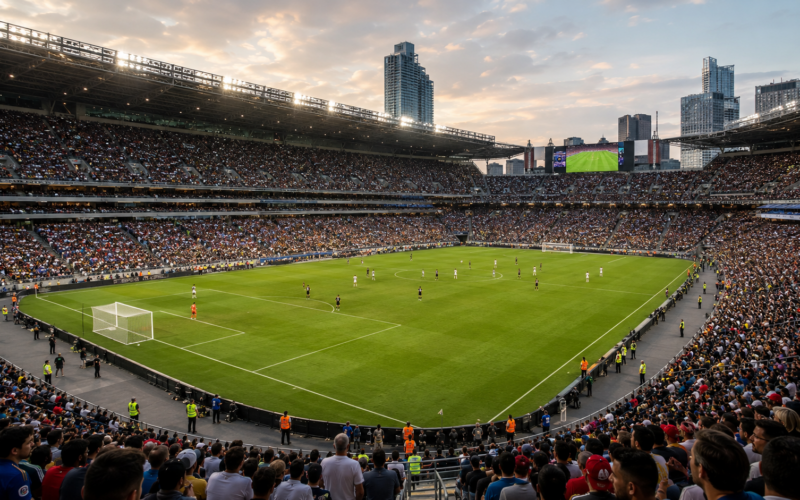
Germany beat Ivory Coast 2-1 at Toronto Stadium on June 20, 2026 local time, ending early June 21 in India, after substitute Deniz Undav scored twice to overturn a first-half deficit and secure qualification for the FIFA World Cup 2026 Round of 32. Franck Kessié gave Ivory Coast the lead in the 30th minute, but Undav equalised with a controlled volley in the 68th before scoring the winner in the fourth minute of stoppage time.
Julian Nagelsmann’s side had two first-half goals disallowed and struggled against Ivory Coast’s speed, direct running and defensive organisation. The contest changed after Undav, Nadiem Amiri and Jamie Leweling entered as part of a triple substitution on the hour.
Amiri created the equaliser with an accurate cross, while Felix Nmecha supplied the pass from which Undav turned and finished the winning goal. The result moved Germany to six points and confirmed their first World Cup knockout-stage appearance since winning the competition in 2014.
Ivory Coast remain second with three points after Ecuador and Curaçao later drew 0-0. Their qualification prospects remain alive, but the late defeat denied them an opportunity to secure the country’s first appearance in the men’s World Cup knockout phase.
Germany vs Ivory Coast FIFA World Cup 2026 match scorecard
How did Deniz Undav transform Germany’s attack after entering from the bench?
Undav entered in the 60th minute with Germany trailing and struggling to convert possession into clean chances. Havertz had worked across the front line, but Ivory Coast’s defenders remained physically strong and denied him consistent space inside the penalty area.
Nagelsmann responded with a triple substitution. Undav provided a more instinctive penalty-area presence, Amiri offered fresh delivery from midfield and Leweling increased Germany’s ability to stretch the defence.
The equaliser arrived eight minutes later. Amiri advanced into space and delivered an accurate cross toward Undav, who controlled his movement and produced a clean volley beyond Fofana.
The finish was important because Germany had become increasingly frustrated. Two goals had already been disallowed, Ivory Coast continued threatening on the counterattack and the opening phase of the second half had not produced the expected response.
Undav’s presence changed how Germany occupied the area. Instead of waiting for the perfect passing sequence, he attacked spaces between the centre-backs and positioned himself for crosses, rebounds and second balls.
His second goal demonstrated a different skill. Nmecha played into Undav with his back toward goal during stoppage time. The striker controlled the ball, turned away from pressure and fired a low finish into the corner before Fofana could adjust.
The combination of movement, strength and rapid finishing gave Germany a quality missing earlier in the contest. Undav had only been on the pitch for approximately 34 minutes but decided the outcome with two clinical actions.
He now has three goals and two assists at FIFA World Cup 2026 after also contributing during the 7-1 victory over Curaçao. Nagelsmann must decide whether that production is sufficient to move him into the starting line-up against Ecuador.
Why did Franck Kessié’s opening goal expose Germany’s vulnerability to fast transitions?
Ivory Coast’s opening goal was created by the speed of Yan Diomande on the left. Germany had pushed players forward and left space behind their defensive structure, allowing Diomande to accelerate before delivering a dangerous low cross.
Amad Diallo met the initial ball and forced Manuel Neuer into a save. The goalkeeper blocked the first effort but could not control the rebound.
Kessié had continued his run from midfield and arrived before Germany could reorganise. The Ivory Coast captain placed the loose ball into the net in the 30th minute.
The goal reflected the tactical threat Nagelsmann had identified before the match. Ivory Coast possessed enough pace to punish Germany whenever possession was lost, particularly in the spaces beside Joshua Kimmich and the central defenders.
Diomande repeatedly caused problems through his direct running. Germany could not always apply immediate pressure after losing the ball, giving Ivory Coast opportunities to attack before the defensive line was settled.
Kessié’s movement was equally important. He did not remain deep after the transition began and recognised that Amad’s initial effort could produce a rebound.
Ivory Coast continued attacking after taking the lead rather than retreating completely. That ambition contributed to an entertaining contest and created further opportunities early in the second half.
The weakness for Germany is significant because stronger knockout opponents will also target their defensive transitions. The comeback demonstrated character, but it did not remove the structural warning Ivory Coast provided.
Why were Germany’s two first-half goals disallowed in Toronto?
Germany believed they had scored twice before half-time, but both efforts were ruled out because of fouls during the attacking sequences.
The first incident followed a short corner. Pavlović reached the ball near Fofana and forced it over the line, but the midfielder was judged to have fouled the goalkeeper during the aerial challenge.
Fofana required attention after the collision, while the German players and supporters expressed frustration with the decision.
Germany found the net again in the 39th minute. Havertz completed the move, but the referee identified a foul by Musiala on Odilon Kossounou during the build-up.
The two decisions contributed to Germany entering half-time behind despite recording eight attempts. Their attacking play had produced pressure but not a valid goal.
The disallowed efforts also demonstrated Ivory Coast’s defensive resilience. Emerse Faé’s team protected the central area, contested every aerial delivery and forced Germany to operate under physical pressure.
Germany could have allowed the decisions to damage their concentration. Instead, they continued attacking and eventually found two legitimate goals after Nagelsmann changed the team.
The key lesson is that Germany created enough pressure to remain competitive even when early moments went against them. Their ability to continue without becoming tactically reckless became central to the comeback.
How did Julian Nagelsmann’s triple substitution change the tactical balance?
Nagelsmann later acknowledged that Germany lacked sufficient control during the opening stages and had also started the second half poorly.
Ivory Coast remained dangerous after the interval and could have extended their lead during a period when Germany’s midfield and defence appeared vulnerable.
The coach responded by making three changes in the 60th minute. Undav, Amiri and Leweling entered to increase Germany’s movement, directness and attacking intensity.
Amiri moved the ball more quickly and supplied the cross for the equaliser. Leweling widened the attack and prevented Ivory Coast from concentrating entirely on Musiala and Florian Wirtz.
Undav occupied the defenders more aggressively than Germany’s earlier attacking structure had managed. His central positioning gave Amiri and the wide players a clearer target.
The substitutions also allowed Germany to take greater risks. Their midfielders began moving closer to the penalty area, while the full-backs advanced more frequently.
That pressure created opportunities but left Germany exposed. Simon Adingra nearly found a late opening for Ivory Coast, while Nathaniel Brown forced Fofana into an important save during the end-to-end closing minutes.
The decisive moment came because Germany continued seeking victory rather than protecting the draw. Nmecha played forward, Undav turned and finished, rewarding Nagelsmann’s aggressive approach.
The match strengthened Germany’s bench as a strategic advantage. Knockout matches are often decided after the starting plans have stopped working, and Nagelsmann now knows several substitutes can transform the tempo.
Why will Ivory Coast consider this one of the tournament’s most painful defeats?
Ivory Coast were minutes away from taking four points from their opening two fixtures and moving close to a historic knockout appearance.
They had defeated Ecuador 1-0 and then led Germany for much of the Toronto contest. Their defensive organisation, midfield strength and attacking pace caused substantial problems for one of the tournament favourites.
Kessié controlled important areas, Diomande repeatedly threatened from the left and Fofana made five saves. The team also survived Germany’s pressure without receiving a single yellow card.
The equaliser was damaging but did not end Ivory Coast’s ambition. Faé introduced Adingra, Seko Fofana and Evann Guessand as the team attempted to regain the lead.
Adingra found space inside Germany’s penalty area during the closing stages but could not produce the decisive shot. Germany immediately attacked at the other end, creating the pressure that eventually produced Undav’s winner.
The stoppage-time goal turned a potentially valuable point into defeat. It also allowed Germany to qualify while leaving Ivory Coast exposed to the final-round calculations.
The performance should still generate confidence. Ivory Coast competed evenly with Germany, created the opening goal and remained dangerous until the end.
Their challenge is now psychological as well as tactical. They must recover from the late disappointment and defeat Curaçao without allowing frustration to influence their finishing or decision-making.
What does Germany’s victory mean for the FIFA World Cup 2026 Group E table?
Germany lead Group E with six points after victories over Curaçao and Ivory Coast. Their +7 goal difference gives them a substantial advantage before the final match against Ecuador.
Ivory Coast remain second with three points and a neutral goal difference. Ecuador and Curaçao each have one point following their goalless draw.
FIFA World Cup 2026 Group E points table
| Team | P | W | D | L | GF | GA | GD | Pts |
|---|---|---|---|---|---|---|---|---|
| Germany | 2 | 2 | 0 | 0 | 9 | 2 | +7 | 6 |
| Ivory Coast | 2 | 1 | 0 | 1 | 2 | 2 | 0 | 3 |
| Ecuador | 2 | 0 | 1 | 1 | 0 | 1 | -1 | 1 |
| Curaçao | 2 | 0 | 1 | 1 | 1 | 7 | -6 | 1 |
Germany have qualified and require a draw against Ecuador to guarantee first place. Their superior goal difference also means they could remain top despite a narrow defeat.
Ivory Coast will guarantee at least four points by drawing with Curaçao, but victory would provide a far stronger route to the Round of 32. Six points could also allow them to challenge Germany for first place if Ecuador produce an upset.
Ecuador can reach four points by defeating Germany. Curaçao can also reach four by beating Ivory Coast, although their damaged goal difference creates a major disadvantage.
The final-round matches therefore remain meaningful for all four teams. Germany are safe, but first place is unresolved. Ivory Coast control second position, while Ecuador and Curaçao retain qualification routes.
Why does Germany’s victory carry importance beyond the Group E standings?
Germany entered FIFA World Cup 2026 carrying the weight of two consecutive group-stage eliminations in 2018 and 2022.
Reaching the Round of 32 with one match remaining ends that negative sequence and provides Nagelsmann with an opportunity to manage players before the knockout phase.
The manner of qualification may be equally important. Germany were behind, had two goals disallowed and faced an opponent capable of exposing their defensive weaknesses.
Rather than losing control, they continued attacking and received a decisive contribution from the bench. That resilience reflects the tournament mentality Germany have historically been associated with.
The performance was not complete. Ivory Coast were the stronger side during important periods, Germany remained vulnerable during transitions and the starting attack lacked efficiency.
Undav’s impact provides the clearest positive. Germany now possess a forward capable of deciding matches even when the established attacking structure is struggling.
The editorial view is that Germany strengthened their title credentials through character rather than dominance. They showed they can survive adversity, but the defensive spaces Ivory Coast exposed will require attention before the knockout rounds.
Key takeaways from Germany vs Ivory Coast at FIFA World Cup 2026
- Germany beat Ivory Coast 2-1 at Toronto Stadium on June 20, 2026 local time to qualify for the FIFA World Cup 2026 Round of 32.
- Franck Kessié gave Ivory Coast the lead in the 30th minute after Manuel Neuer saved Amad Diallo’s initial effort.
- Germany had two first-half goals disallowed, with Aleksandar Pavlović and Kai Havertz denied because of fouls.
- Deniz Undav entered in the 60th minute as part of a triple substitution and scored twice.
- Nadiem Amiri supplied the cross for Undav’s 68th-minute equaliser.
- Felix Nmecha created the stoppage-time winner, which Undav controlled, turned and finished in the 94th minute.
- Germany recorded 16 attempts and seven shots on target, while Ivory Coast produced nine attempts and two on target.
- Germany have six points and a +7 goal difference after two Group E matches.
- Ivory Coast remain second with three points and next face Curaçao in a decisive qualification fixture.
- Germany reach the World Cup knockout stage for the first time since winning the tournament in 2014.
Discover more from Business-News-Today.com
Subscribe to get the latest posts sent to your email.



