

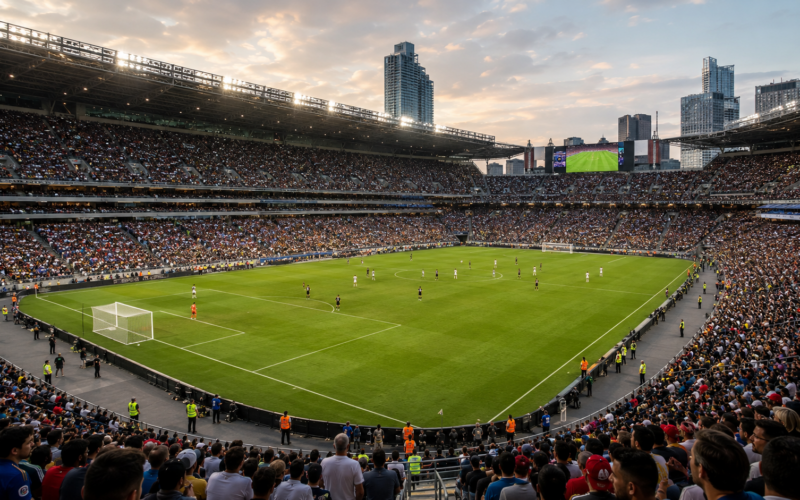
Ecuador were held to a 0-0 draw by Curaçao at Kansas City Stadium on June 20, 2026 local time, ending early June 21 in India, as goalkeeper Eloy Room produced 15 saves to secure the Caribbean nation’s first point in men’s World Cup history. Ecuador dominated possession, registered 27 attempts and placed 15 shots on target, but repeatedly failed to convert opportunities against the inspired 37-year-old goalkeeper.
Enner Valencia missed Ecuador’s clearest late chance after breaking through in the 84th minute, while Piero Hincapié headed over from close range and Angelo Preciado struck the crossbar during the closing stages. Curaçao also threatened a remarkable victory when Juninho Bacuna forced Hernán Galíndez into an important save during a dangerous counterattack.
The result leaves both teams on one point after two FIFA World Cup 2026 Group E matches. Germany have qualified with six points, Ivory Coast remain second with three, while Ecuador sit third ahead of Curaçao on goal difference.
Ecuador must now produce a major final-round result against Germany to maintain a realistic qualification route. Curaçao face Ivory Coast knowing that victory could take them to four points and potentially extend one of the tournament’s most remarkable debut campaigns.
Ecuador vs Curaçao FIFA World Cup 2026 match scorecard
How did Eloy Room produce a record-setting performance against Ecuador?
Room delivered one of the most remarkable goalkeeping performances in recent World Cup history. Ecuador forced him into 15 saves during the 90 minutes, establishing a men’s tournament record for a match completed without extra time.
The goalkeeper’s early interventions helped Curaçao settle after a difficult start. Ecuador immediately attempted to release Valencia behind the defensive line, but Room remained patient, narrowed the angle and prevented the captain from converting.
Several of Room’s initial saves were routine efforts from distance. Their cumulative importance grew as Ecuador became increasingly frustrated and began shooting more quickly rather than building controlled attacks.
His performance became exceptional during the second half. Ecuador attacked from corners, crosses, rebounds and long-range efforts, repeatedly forcing Room to reposition before producing another intervention.
In the 65th minute, Valencia reached a delivery near the far post and directed the ball toward goal. Room moved across his line and made his tenth save of the night.
One minute later, he produced two rapid interventions during the same corner sequence. Curaçao’s defence struggled to clear, but Room blocked both attempts and prevented Ecuador from converting the sustained pressure.
He later denied another powerful effort from outside the area to reach 15 saves. The total placed him one behind Tim Howard’s 16-save performance for the United States against Belgium in 2014, although Howard’s record came across 120 minutes.
Room’s calmness was as important as his shot-stopping. Curaçao’s defenders were under pressure for long periods, but their goalkeeper rarely showed panic or allowed rebounds to fall into dangerous central areas.
The performance was particularly significant because Room plays for Miami FC in the United States’ second division. On football’s largest stage, he delivered the match of his career and became the central figure in Curaçao’s first World Cup point.
Why did Ecuador fail to score despite recording 27 attempts and 15 shots on target?
Ecuador’s attacking volume was extraordinary, but much of it reflected desperation rather than consistent quality.
Sebastián Beccacece’s team controlled almost 75 percent of possession and repeatedly moved the ball into Curaçao’s half. However, their attacks often became predictable once they approached the penalty area.
Curaçao defended with several players behind the ball, reducing the space available between the central defenders and midfield. Ecuador therefore relied heavily on crosses, rebounds and shots from outside the area.
Valencia remained the primary target, but the captain frequently received the ball with defenders close to him. He attempted several finishes without finding the composure required to beat Room.
Gonzalo Plata offered direct running and tested the goalkeeper during the first half. John Yeboah also moved between wide and central positions, but neither attacker consistently created clear shooting opportunities for teammates.
Moisés Caicedo controlled possession and pushed forward more aggressively as the match progressed. His ability to recover second balls kept Curaçao under pressure, but Ecuador still lacked the final pass capable of opening the defensive block.
The South American side also became increasingly anxious. Players began taking shots earlier, appealing for fouls and rushing deliveries as the possibility of another defeat grew.
The 27 attempts therefore told only part of the story. Ecuador created enough opportunities to win, but too many finishes were directed at Room, taken under pressure or produced without the required precision.
That failure has now become the defining issue of their campaign. Ecuador have not scored in two matches despite controlling significant periods against Ivory Coast and Curaçao.
How costly was Enner Valencia’s late miss for Ecuador’s qualification hopes?
Valencia received Ecuador’s clearest chance in the 84th minute when a forward pass released him behind Curaçao’s defence.
The captain appeared to have the space required to score and change the entire Group E race. Room advanced, while a recovering defender applied pressure from Valencia’s side.
Valencia attempted to finish toward the near post but sent the ball well wide. The miss left several Ecuador players holding their heads because the opportunity was far clearer than most of the team’s previous attempts.
The moment carried added weight because Valencia remains Ecuador’s most experienced goalscorer and the player expected to deliver under tournament pressure.
His movement throughout the match remained intelligent, but his finishing reflected the team’s wider anxiety. Ecuador repeatedly reached promising positions without producing the controlled final action required.
Valencia’s miss also allowed Curaçao’s belief to strengthen. The Caribbean side had survived more than 80 minutes and understood that Ecuador’s frustration was becoming increasingly damaging.
Had Valencia scored, Ecuador would have moved to three points and entered the Germany match with a far more manageable qualification position. Instead, they remain on one point and must now pursue an upset against the group leaders.
The miss should not make Valencia solely responsible. Hincapié headed over from approximately six yards, Plata and other attackers were denied by Room, and Preciado later struck the woodwork.
However, tournament campaigns often turn on one clear opportunity. Valencia received Ecuador’s best and failed to convert it.
How close did Curaçao come to converting their defensive stand into a historic victory?
Curaçao spent most of the match defending, but Dick Advocaat’s team did not abandon the possibility of attacking.
Tahith Chong repeatedly carried the ball forward after Ecuador lost possession. His running forced Jordy Alcívar into a tactical foul during the first half and gave Curaçao a method of escaping sustained pressure.
The Bacuna brothers also played important roles. Leandro Bacuna provided leadership and defensive organisation, while Juninho Bacuna looked for shooting opportunities whenever Curaçao reached the final third.
Their strongest attacking sequence arrived around the hour mark. Ecuador had just threatened from a corner when Curaçao counterattacked rapidly.
Galíndez was forced into three saves within seconds as Leandro Bacuna, Livano Comenencia and Jürgen Locadia all attempted to score during a chaotic passage.
The goalkeeper’s interventions prevented a result that would have become one of the biggest shocks in World Cup history.
Juninho Bacuna created another major opportunity in the 75th minute. He found space near the edge of the penalty area and struck powerfully toward goal.
Galíndez appeared partially unsighted but reacted quickly enough to block the shot. The save ensured Ecuador retained at least one point.
Curaçao did not create the same volume as Ecuador, but their chances were meaningful. The debutants were not merely waiting for the match to finish. They continued looking for the counterattack that could produce an extraordinary victory.
The willingness to threaten also prevented Ecuador from committing every player forward without caution. Curaçao’s attacking ambition therefore supported their defensive achievement.
Why did Angelo Preciado’s late crossbar strike increase Ecuador’s frustration?
Preciado entered during the closing stages as Ecuador searched for additional width and more aggressive delivery from the right.
In the 90th minute, he attempted what appeared to be a cross from a deep position. The ball travelled toward the far side of Room’s goal and developed into a direct threat.
Room could only watch as the delivery struck the top of the crossbar and travelled away from danger.
The incident captured Ecuador’s night. Even when Curaçao’s goalkeeper could not intervene, the woodwork protected the historic result.
Preciado’s effort also arrived immediately before five minutes of stoppage time, giving Ecuador one final period of pressure.
Plata drove through the defence and won a corner, while Caicedo and the home-supported Ecuador crowd appealed for a penalty following another crowded sequence.
The referee rejected the appeal, and Curaçao defended the final corner to complete the draw.
Ecuador’s frustration at full time was visible because the match had included nearly every possible route to goal. They had shots saved, headers missed, a one-on-one sent wide and a late effort against the bar.
Curaçao experienced the opposite emotion. Every escape strengthened the sense that the first point was meant to arrive in Kansas City.
What does Curaçao’s first World Cup point mean for the smallest nation at the tournament?
Curaçao entered FIFA World Cup 2026 as the smallest country ever to qualify for the men’s tournament.
Their opening match produced a memorable first goal through Comenencia but ended in a 7-1 defeat by Germany. That result raised questions about whether the debutants could remain competitive against established international teams.
The response against Ecuador was extraordinary. Advocaat’s players defended with organisation, accepted prolonged pressure and remained emotionally composed despite the number of chances created against them.
Room became the hero, but the defenders in front of him also contributed. Jurien Gaari, Sherel Floranus, Armando Obispo and Joshua Brenet repeatedly blocked crosses, contested aerial balls and protected the central area.
Midfielders covered large distances to reduce Ecuador’s passing options. Curaçao’s defensive structure occasionally broke, but players continued recovering and supporting Room.
The point gives the country a permanent place in World Cup history beyond simply qualifying or scoring against Germany.
It also keeps the campaign alive. Curaçao can reach four points by defeating Ivory Coast, a total that could provide a route into the Round of 32.
Their damaged goal difference remains a major disadvantage, but the Ecuador result demonstrates that the team can compete when the tactical plan and individual performances align.
What does the draw mean for the FIFA World Cup 2026 Group E table?
Germany have qualified with six points after beating Curaçao and Ivory Coast. Their +7 goal difference gives them control of the group before facing Ecuador.
Ivory Coast remain second with three points. Ecuador sit third with one point and a -1 goal difference, while Curaçao also have one point but remain fourth because of their -6 goal difference.
FIFA World Cup 2026 Group E points table
| Team | P | W | D | L | GF | GA | GD | Pts |
|---|---|---|---|---|---|---|---|---|
| Germany | 2 | 2 | 0 | 0 | 9 | 2 | +7 | 6 |
| Ivory Coast | 2 | 1 | 0 | 1 | 2 | 2 | 0 | 3 |
| Ecuador | 2 | 0 | 1 | 1 | 0 | 1 | -1 | 1 |
| Curaçao | 2 | 0 | 1 | 1 | 1 | 7 | -6 | 1 |
Germany require only a draw against Ecuador to guarantee first place. Even a narrow defeat may leave Nagelsmann’s team top because of their strong goal difference.
Ecuador must beat Germany to reach four points. That result could produce a second-place or third-place qualification route, depending on Ivory Coast vs Curaçao and the relevant tiebreakers.
Ivory Coast can secure six points by defeating Curaçao and would guarantee progression. A draw would move them to four points and leave them in a strong but not completely settled position.
Curaçao must defeat Ivory Coast to reach four points. Their -6 goal difference means a narrow victory may still leave them dependent on the rankings of other third-placed teams.
Why is Ecuador’s scoreless campaign now facing a serious final-round test?
Ecuador entered the tournament after an excellent South American qualification campaign built on defensive organisation, midfield intensity and consistency.
Their World Cup performances have retained much of that structure, but the attack has failed completely. Ecuador have not scored against Ivory Coast or Curaçao despite controlling possession and creating enough chances to produce better results.
Beccacece must now prepare for the strongest opponent in the group. Germany have scored nine goals across two matches and can punish Ecuador if they attack recklessly.
The tactical challenge is severe. Ecuador need victory, meaning they cannot remain conservative, but committing additional players forward could create space for Jamal Musiala, Florian Wirtz, Deniz Undav and Germany’s other attackers.
Valencia’s experience remains valuable, but Ecuador may need greater involvement from Nilson Angulo, Kendry Páez, Kevin Rodríguez or another attacking option capable of changing the rhythm.
The Curaçao result therefore represents more than two points lost. It has placed Ecuador in a position where improvement must arrive immediately against a tournament contender.
Key takeaways from Ecuador vs Curaçao at FIFA World Cup 2026
- Ecuador and Curaçao drew 0-0 at Kansas City Stadium on June 20, 2026 local time, ending early June 21 IST.
- Curaçao earned the first point in their men’s World Cup history after losing 7-1 to Germany in their opening match.
- Eloy Room made 15 saves, establishing a men’s World Cup record for a 90-minute match.
- Ecuador controlled 74.9 percent possession, registered 27 attempts and placed 15 shots on target without scoring.
- Enner Valencia missed Ecuador’s clearest late opportunity after breaking through in the 84th minute.
- Piero Hincapié headed over from close range, while Angelo Preciado struck the crossbar in the 90th minute.
- Hernán Galíndez made three rapid saves during Curaçao’s best counterattacking sequence and later denied Juninho Bacuna.
- Germany lead Group E with six points, while Ivory Coast remain second with three.
- Ecuador and Curaçao have one point each and must win their final matches to strengthen their qualification chances.
- Ecuador next face Germany, while Curaçao meet Ivory Coast in the final Group E round.
Discover more from Business-News-Today.com
Subscribe to get the latest posts sent to your email.