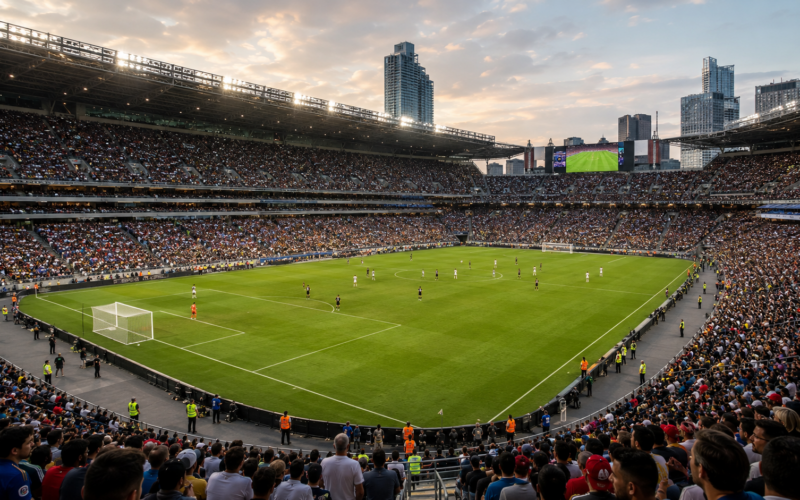
Czechia and South Africa drew 1-1 at Atlanta Stadium on June 18, 2026, after Teboho Mokoena converted an 83rd-minute penalty to keep Bafana Bafana’s FIFA World Cup 2026 qualification hopes alive. Michal Sadílek had given Czechia a sixth-minute lead following a well-worked move that began with a long throw, but Miroslav Koubek’s team failed to convert their early superiority into a second goal.
South Africa controlled more possession after falling behind but struggled to create clear openings until Thapelo Maseko’s late shot struck Pavel Šulc’s arm inside the penalty area. Mokoena sent goalkeeper Matěj Kovář the wrong way from the spot, securing the first point of the tournament for both teams.
Mexico’s subsequent 1-0 victory over Korea Republic leaves the two Group A leaders in stronger positions. Mexico have six points, Korea Republic have three, while Czechia and South Africa enter the final round with one point each and little margin for error.
Czechia must now beat Mexico, while South Africa require victory over Korea Republic to give themselves a realistic route into the Round of 32. South Africa will face that decisive match without Mokoena, who received his second yellow card of the tournament after scoring the equaliser.
Czechia vs South Africa FIFA World Cup 2026 match scorecard
How did Michal Sadílek give Czechia such an effective start in Atlanta?
Czechia entered the match under pressure after losing 2-1 to Korea Republic, but Koubek’s team began with greater aggression than South Africa. Patrik Schick was presented with a headed opportunity inside the opening minute, although he failed to make clean contact.
The breakthrough arrived after six minutes and began with one of Czechia’s most reliable weapons. A long throw unsettled South Africa’s defensive structure and allowed Adam Hložek to collect the ball on the right before reaching the byline.
Hložek pulled the ball toward the edge of the penalty area, where Alexandr Sojka provided a controlled pass into Sadílek’s path. The midfielder struck first time and beat Ronwen Williams to give Czechia the early advantage.
The move exposed South Africa’s lack of concentration. Khuliso Mudau hesitated over whether to follow Hložek or protect the central area, leaving the Czech attackers with enough room to complete the passing sequence.
Czechia produced four attempts during the opening 10 minutes and appeared capable of taking complete control. Their physical advantage, set-piece delivery and direct running caused repeated problems for a South African defence that had already been criticised after the opening loss to Mexico.
However, the early goal changed Czechia’s approach in an unhelpful way. Rather than continuing to press for a second, they gradually retreated and invited South Africa to control possession.
Sadílek later acknowledged that Czechia became too passive after scoring. That change allowed South Africa to recover from a poor start and remain within one goal until the decisive penalty incident.
Why did Czechia fail to convert early control into a match-winning second goal?
Czechia’s main problem was not an absence of chances but an unwillingness to maintain the attacking intensity that had created them. Once ahead, the team defended in a deeper block and increasingly relied on South Africa making mistakes in possession.
The approach initially appeared reasonable because South Africa struggled to create quality in the final third. Oswin Appollis produced a deflected effort that went narrowly wide, while several promising moves ended with inaccurate passes or long-range shots.
However, protecting a one-goal advantage for more than 80 minutes carried considerable risk. Czechia allowed South Africa to remain emotionally engaged and gave Hugo Broos time to adjust his attacking structure.
Kovář also produced an uncertain moment shortly before half-time when he failed to secure Aubrey Modiba’s delivery into the six-yard area. Thapelo Maseko reached the loose ball, but Czech captain Ladislav Krejčí blocked the shot.
Czechia attempted to regain control immediately after the interval. Lukáš Červ tested Williams with a long-range effort, and Schick remained a threat when crosses entered the penalty area.
The pressure did not last. Czechia again became cautious, allowing South Africa to move the ball across midfield and push more players toward the edge of the box.
Koubek’s team still had opportunities during the closing stages. Lukáš Provod fired wide after the equaliser, while Šulc created a dangerous low cross that South Africa managed to clear.
The draw nevertheless reflected Czechia’s failure to turn an excellent start into sustained control. A second goal during their strongest period would probably have ended South Africa’s resistance and transformed the qualification race.
How did Teboho Mokoena’s penalty rescue South Africa from near elimination?
South Africa appeared to be running out of attacking ideas as the match entered its final 10 minutes. They had controlled possession for extended periods but rarely forced Kovář into difficult saves.
The equalising opportunity developed when Maseko moved inside from the right and attempted a shot from outside the penalty area. The ball struck Šulc’s arm after the Czech midfielder had little time to react.
Referee Tori Penso immediately awarded the penalty. Czechia considered the decision strict, but Koubek later accepted that the referee had grounds to interpret the incident as handball.
Mokoena accepted responsibility at a moment when South Africa’s World Cup campaign was close to collapse. He waited for Kovář to move and calmly sent the goalkeeper the wrong way.
The equaliser changed the atmosphere immediately. South Africa, cautious for much of the match, suddenly attacked with urgency and nearly produced a winner during stoppage time.
Evidence Makgopa controlled the ball, turned his defender and created a shooting opportunity, but his attempt lacked the power required to beat Kovář. Aubrey Modiba also found space near the edge of the area before David Zima intervened.
Mokoena’s penalty secured a vital point, but his yellow card created another problem. The midfielder will miss the final group match after accumulating two bookings.
South Africa were already without Themba Zwane, who received an extended suspension following his red card against Mexico. Broos must therefore prepare for Korea Republic without two of his most experienced midfielders.
Why does Mokoena’s suspension seriously weaken South Africa’s final Group A challenge?
Mokoena is central to South Africa’s ability to control midfield, protect the defence and move possession into attacking areas. His absence removes the player most capable of setting the tempo against Korea Republic.
The suspension is particularly damaging because South Africa must win rather than merely defend for a point. Korea Republic possess quick attacking players and have already shown their ability to respond after falling behind, having recovered to beat Czechia in their opening match.
Without Mokoena and Zwane, South Africa may need to depend on younger midfielders such as Relebohile Mofokeng while asking Appollis, Maseko and Makgopa to carry greater attacking responsibility.
Broos abandoned the five-defender system used against Mexico and returned to a four-man defence against Czechia. The change gave South Africa more possession and allowed their wide players to operate further forward.
The performance improved, but the lack of cutting edge remained obvious. South Africa require a victory against Korea Republic, meaning possession without penetration will no longer be sufficient.
Mokoena’s absence may force Broos to use a more direct approach. South Africa could attempt to attack Korea Republic through early crosses, set pieces and the physical presence of Makgopa.
The risk is that committing more players forward will leave space for Korea Republic’s fast transitions. Broos must find a structure that creates chances without exposing the defence to the same counterattacking threat that damaged Czechia in the opening round.
What did the two 74-year-old coaches change after their opening-match defeats?
The match carried a distinctive coaching subplot, with Koubek and Broos both aged 74. It was the first men’s World Cup match in which both head coaches were over 70.
Both managers changed their starting teams after disappointing opening performances. Koubek made five alterations following Czechia’s 2-1 loss to Korea Republic, while Broos abandoned the defensive structure used during South Africa’s 2-0 defeat by Mexico.
The changes initially benefited Czechia. Sadílek, Sojka and Hložek combined for the opening goal, while the team’s physical style and long throws repeatedly unsettled South Africa.
Broos’ adjustment required more time to produce an effect. South Africa began poorly but gradually gained control of possession and looked more comfortable using a back four.
Neither manager fully solved his team’s attacking limitations. Czechia remained dangerous through direct play and set pieces but became passive after scoring. South Africa moved the ball more smoothly but rarely penetrated the Czech penalty area.
The tactical stalemate continued until the handball decision gave South Africa a route back into the contest.
The draw leaves both experienced coaches facing difficult final-round decisions. Koubek must find a way to attack Mexico without leaving Czechia vulnerable, while Broos must build a winning midfield without two suspended senior players.
What does the draw mean for the FIFA World Cup 2026 Group A points table?
Mexico’s victory over Korea Republic later on June 18 gave the co-hosts complete control of Group A. Mexico have six points from two matches and have yet to concede a goal.
Korea Republic remain second with three points, while Czechia sit third ahead of South Africa on goal difference. Both lower-ranked teams have one point.
FIFA World Cup 2026 Group A points table
| Team | P | W | D | L | GF | GA | GD | Pts |
|---|---|---|---|---|---|---|---|---|
| Mexico | 2 | 2 | 0 | 0 | 3 | 0 | +3 | 6 |
| Korea Republic | 2 | 1 | 0 | 1 | 2 | 2 | 0 | 3 |
| Czechia | 2 | 0 | 1 | 1 | 2 | 3 | -1 | 1 |
| South Africa | 2 | 0 | 1 | 1 | 1 | 3 | -2 | 1 |
Mexico are close to securing first place and would remain above Czechia even if they lose the final match by a narrow margin. Czechia’s immediate objective is simply to reach four points and improve their goal difference.
Korea Republic require only a draw against South Africa to remain ahead of Bafana Bafana. A victory would secure their place in the knockout phase regardless of the other match.
South Africa must attack, but their qualification prospects may also depend on goal difference and the results of other third-placed teams. Scoring only once across two matches has left them with little protection in those comparisons.
The simultaneous final fixtures will therefore create pressure across Group A. Czechia and South Africa both need victories, while Mexico and Korea Republic can manage the matches from stronger positions.
Why does the 1-1 result leave both Czechia and South Africa dissatisfied?
The draw prevented immediate elimination, but neither side gained enough to control its own situation comfortably.
Czechia will view the result as a missed opportunity because they scored early and created the better chances during their strongest periods. Their failure to pursue a second goal allowed South Africa to remain in the match.
South Africa will take confidence from the comeback but must confront the consequences of another limited attacking display. They have one goal from two matches, and that goal came from a penalty rather than open play.
Both teams now face stronger opponents in the final round. Mexico have won twice without conceding, while Korea Republic have demonstrated speed, discipline and resilience.
The qualification route remains open because the expanded FIFA World Cup 2026 format allows eight third-placed teams to reach the Round of 32. Four points could be enough, but neither Czechia nor South Africa can reach that total without winning.
The decisive issue will be whether either team can transform possession and territorial pressure into goals. The Atlanta draw showed that both can remain competitive, but neither has yet demonstrated the attacking consistency required to progress confidently.
Key takeaways from Czechia vs South Africa at FIFA World Cup 2026
- Czechia and South Africa drew 1-1 at Atlanta Stadium on June 18, 2026, leaving both teams on one point after two Group A matches.
- Michal Sadílek gave Czechia the lead in the sixth minute after Adam Hložek and Alexandr Sojka combined following a long throw.
- Czechia controlled the opening period but became increasingly passive after scoring and failed to produce the decisive second goal.
- Teboho Mokoena equalised from the penalty spot in the 83rd minute after Thapelo Maseko’s shot struck Pavel Šulc’s arm.
- Mokoena received his second yellow card of the tournament and will miss South Africa’s final group fixture against Korea Republic.
- South Africa will also be without Themba Zwane, who is serving an extended suspension after his opening-match red card.
- Mexico lead Group A with six points after defeating Korea Republic 1-0, while Korea Republic remain second with three points.
- Czechia must beat Mexico and South Africa must defeat Korea Republic to strengthen their chances of reaching the Round of 32.
- The match was the first men’s World Cup fixture in which both head coaches were over 70, with Miroslav Koubek and Hugo Broos both aged 74.
Discover more from Business-News-Today.com
Subscribe to get the latest posts sent to your email.