



Eucalyptus oil has long been recognized as one of the most versatile and widely used essential oils in traditional medicine, modern aromatherapy, and respiratory care. Its cooling, sharp, and refreshing scent is instantly familiar, and it is frequently found in cough rubs, steam inhalation blends, nasal drops, liniments, balms, and massage oils designed to provide relief during congestion, colds, or seasonal breathing discomfort. For students of medicine and health sciences, eucalyptus oil offers a clear example of how a natural product can have meaningful and scientifically explainable physiological effects.
Eucalyptus oil is primarily obtained from the leaves of Eucalyptus globulus and other related species within the botanical family Myrtaceae. These trees originated in Australia but now grow across many temperate and subtropical regions of the world, including India, Portugal, Spain, and the United States. In India particularly, large-scale cultivation of Eucalyptus citriodora—often referred to as the lemon-scented gum—has expanded in states such as Kerala and Tamil Nadu. This variety is valued not only for its medicinal vapors but also for its distinctive citrus-fragrance, which makes it desirable in soaps, perfumes, and natural mosquito-repellent formulations.
To understand why eucalyptus oil continues to play such a central role in respiratory support and herbal pharmacology, it is important to look at how it is produced, what chemical compounds it contains, and how these compounds interact with the human body, particularly the lungs and upper airways.
What is eucalyptus oil and how does its source and plant variety influence its aroma, medicinal value, and commercial use in different regions?
Eucalyptus oil is categorized as a volatile essential oil, which means it evaporates easily and carries a concentrated aromatic scent even at room temperature. These volatile compounds are produced by specialized oil glands within the leaves of the eucalyptus tree. When the leaves are crushed, warmed, or exposed to steam, the oil is released.
The commercial species most recognized for medicinal eucalyptus oil production is Eucalyptus globulus, also known as the blue gum tree. However, the specific aroma and chemical profile of eucalyptus oil can vary depending on the species, soil conditions, altitude, and climate. For example, Eucalyptus globulus produces an oil with a strong camphor-like scent ideal for respiratory therapy, while Eucalyptus citriodora produces an oil high in citronellal, giving it a lemon-like aromatic profile valued in perfumery and insect-repellent applications.
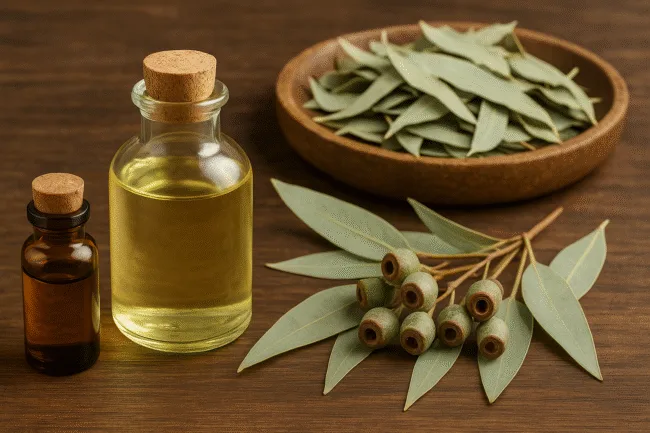
This variation in species and region means that eucalyptus oil can serve different industrial and therapeutic markets. Regions like the Nilgiris in Tamil Nadu have become central hubs for large-scale steam distillation and commercial supply, making eucalyptus oil an important part of local agricultural economies as well as the global natural products trade.
How is eucalyptus oil prepared through steam distillation and what are the critical steps that influence oil purity, aroma, and medicinal potency?
The most common process used to extract eucalyptus oil is steam distillation. This method preserves the delicate aromatic compounds without burning or chemically altering their structure. In the Nilgiri region, where eucalyptus oil production is well established, harvesting typically occurs when trees reach around sixteen years of age, as this is when the oil content in the leaves is most abundant.
Freshly harvested leaves are allowed to dry in shade for a few days. This slow drying reduces water content while preserving volatile compounds. Once dried, the leaves are loaded into a distillation still that contains a perforated copper base. Water is added and steam is passed upward through the leaves.
The heat causes the oil to vaporize along with the steam. The vapor mixture is then cooled in a condenser, where it returns to a liquid form. Since eucalyptus oil is lighter than water, it naturally separates and floats, allowing easy collection.
However, the crude oil obtained at this stage is not yet ready for medicinal use. It undergoes rectification, where it is treated with substances such as sodium hydroxide to remove impurities and acidic components. The final oil is filtered and stored in airtight, dark containers to protect it from oxidation, which can degrade aroma and therapeutic quality.
The finished eucalyptus oil is typically colorless to pale yellow, with a sharp, cooling odor that stimulates the senses almost immediately upon inhalation.
What are the major chemical constituents of eucalyptus oil and how does cineole (eucalyptol) contribute to its respiratory benefits and aromatic profile?
The primary active compound in eucalyptus oil is cineole, also commonly referred to as eucalyptol. Cineole is responsible for the distinctive cooling sensation that occurs when eucalyptus oil vapors come in contact with the mucous membranes of the nose and throat. This compound has well-documented expectorant and airway-clearing effects, which support easier breathing during colds or congestion.
In addition to cineole, eucalyptus oil contains other natural terpenes and aromatic compounds such as pinene, camphene, geranyl acetate, phellandrene, and citronellal. These compounds contribute to the oil’s characteristic smell, its warming-and-cooling sensory profile, and its ability to affect respiratory and skin tissues. Some of these molecules also show antibacterial and antifungal effects, which help explain why eucalyptus oil has traditionally been used in wound care, surface cleansing, and hygiene applications.
Why is eucalyptus oil widely used in respiratory support therapies, steam inhalation, chronic cough management, and antiseptic formulations?
One of the most recognized uses of eucalyptus oil is in respiratory care. When a person inhales eucalyptus vapors—whether via steam inhalation, vapor rub, or nasal application—the cineole content works to reduce the thickness of mucus, making it easier to expel through coughing. This action is particularly helpful in cases of chronic bronchitis, seasonal cough, or mild sinus blockage.
The cooling sensation produced by eucalyptus oil can also provide subjective relief by soothing irritated airway tissues and helping breathe more comfortably. Because of these effects, eucalyptus oil is commonly included in over-the-counter inhalation mixtures, chest rubs, cough lozenges, and herbal decongestant preparations.
The oil’s antiseptic properties support its use in minor skin applications as well. When diluted, it can be applied externally to help soothe muscular aches through counter-irritation, where surface-level warming distracts from deeper discomfort. In topical liniments, eucalyptus is often combined with menthol, wintergreen oil, and camphor to produce a balanced warming-cooling effect.
However, it is essential to emphasize that eucalyptus oil should not be applied undiluted directly to the skin or ingested in concentrated form, as this can cause irritation or systemic toxicity in excessive amounts. Safe use requires dilution and adherence to dosing guidance.
How does understanding eucalyptus oil support modern perspectives on natural medicine, respiratory wellness, and everyday preventive care?
Studying eucalyptus oil provides an important bridge between traditional herbal knowledge and evidence-based pharmacology. It demonstrates how a naturally occurring plant compound can exert measurable physiological effects, particularly in respiratory pathways. For medical learners, eucalyptus oil offers a useful case study in how botanical chemistry translates into therapeutic action.
In everyday life, eucalyptus oil remains relevant due to its accessibility, familiarity, and effectiveness as a complementary supportive measure alongside conventional care. As respiratory challenges associated with seasonal changes, pollution, and viral infections continue to affect daily wellbeing, eucalyptus oil remains a trusted tool for relieving congestion and supporting comfortable breathing.
The key is informed and careful use—understanding the plant’s chemistry, respecting dose and dilution practices, and recognizing that eucalyptus oil acts best as supportive relief, not a cure for underlying illnesses.
Discover more from Business-News-Today.com
Subscribe to get the latest posts sent to your email.