The European Commission (EC) has approved a €9 billion Spanish capacity mechanism designed to support electricity security of supply in Spain over a 10-year period from May 2026. The measure, cleared under European Union (EU) State aid rules, is intended to ensure that Spain has sufficient electricity generation, storage and demand-side flexibility to meet expected demand during periods of system stress. The approval gives Spain a formal framework to remunerate capacity needed for security of supply, while keeping the mechanism open to a range of technologies. The decision comes as European electricity systems face a more complex balancing challenge from renewable power growth, electrification, grid congestion and the need to maintain reliability without slowing the clean energy transition.
Why did the European Commission approve Spain’s €9 billion electricity capacity mechanism?
The European Commission approved Spain’s €9 billion capacity mechanism because the measure was assessed as necessary, appropriate and proportionate under European Union State aid rules. The goal is to ensure that Spain has enough capacity available to meet electricity demand, including during periods when weather-dependent renewable generation may be lower or demand may be higher than expected. The mechanism is designed to support security of electricity supply over 10 years, beginning in May 2026.
The decision reflects a broader European Union policy challenge. Europe is adding more renewable electricity, retiring or reducing reliance on older fossil fuel generation, and electrifying transport, heating and industry. That shift can lower emissions and reduce fossil fuel dependency, but it also makes electricity systems more complex to operate. Capacity mechanisms are one way governments try to make sure there is enough backup, flexibility and firm capacity available when the market alone may not deliver sufficient investment.
For Spain, the issue is particularly important because the country has become one of Europe’s most visible renewable energy markets. Spain has strong solar and wind potential, but a power system with high renewable penetration needs storage, demand response, grid investment and flexible generation to maintain reliability. The European Commission’s approval gives Spain room to manage that transition through a structured mechanism rather than relying only on energy-only market revenues.

How will Spain’s capacity mechanism support power generation, storage and demand flexibility?
The Spanish capacity mechanism is intended to remunerate capacity needed to ensure adequate security of electricity supply. That means the mechanism is not only about paying power plants to remain available. It is also about ensuring that the system can access different forms of capacity, including electricity generation, electricity storage and flexible consumption. This wider design matters because modern electricity security is no longer only a question of how many power stations exist.
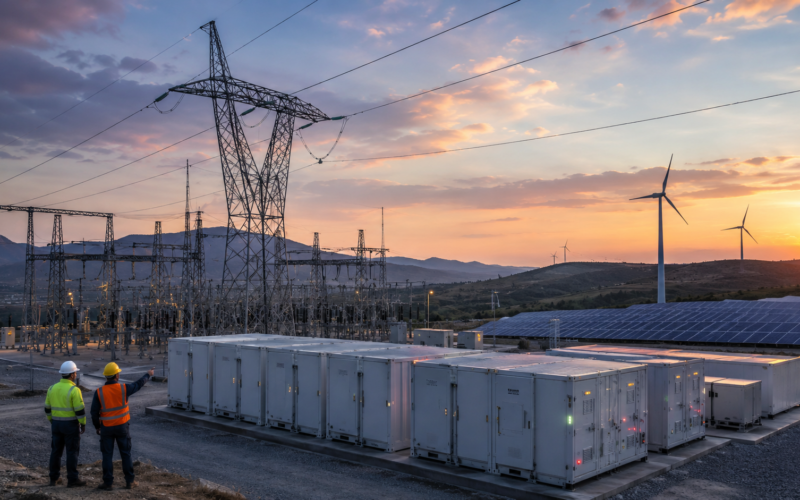
Storage is especially important in a market with growing renewable energy. Batteries, pumped hydro and other storage technologies can absorb electricity when supply is abundant and release electricity when demand rises or renewable generation falls. Demand response can also reduce stress on the system by encouraging large consumers or aggregated smaller users to shift consumption away from peak periods. These resources can reduce the need for more expensive or higher-emission backup capacity.
The design also reflects the European Union’s effort to make capacity mechanisms compatible with the clean energy transition. A poorly designed capacity mechanism can keep older fossil fuel assets alive for longer than necessary. A better-designed mechanism can reward reliability while encouraging cleaner flexibility. The European Commission’s approval suggests that Spain’s scheme met the required State aid conditions, although implementation will determine whether the mechanism accelerates flexible clean capacity or becomes a slow-moving comfort blanket for legacy assets.
Why does Spain need a capacity mechanism when renewable electricity is expanding?
Spain’s renewable electricity expansion is one of the reasons a capacity mechanism has become more relevant, not less. Solar and wind power can deliver large volumes of low-cost electricity, but their output depends on weather conditions and time of day. A system with a high share of renewable energy needs backup tools that can respond when generation patterns do not match demand patterns.
This does not mean renewable power is unreliable in the simplistic sense. It means the system around renewable power must become more flexible. Spain needs enough dispatchable resources, storage, interconnection and demand-side response to manage volatility. Without that flexibility, periods of low renewable output or high demand can create adequacy concerns. Capacity mechanisms try to address that by ensuring resources are paid not only for the electricity they produce, but also for being available when the system needs them.
The strategic question for Spain is how to design the mechanism so that it supports the future grid rather than the old grid. If capacity payments flow mainly to legacy thermal assets, the scheme could face criticism from climate groups and clean energy advocates. If the scheme helps accelerate storage, demand response and flexible low-carbon assets, it could become a bridge between renewable growth and electricity security. Spain’s policy test is therefore not just whether the lights stay on. It is whether the lights stay on while the grid becomes cleaner.
How does the European Commission balance State aid control with electricity security?
The European Commission plays a central role in reviewing national support schemes because European Union State aid rules are designed to prevent member states from distorting competition in the internal market. Electricity security is a legitimate public policy objective, but governments cannot simply hand unlimited support to domestic energy assets without scrutiny. The European Commission must assess whether a measure is necessary, whether it is proportionate, and whether it avoids unnecessary harm to competition and trade within the European Union.
Capacity mechanisms are particularly sensitive because they can affect wholesale markets, investment signals and cross-border electricity flows. If one country overpays for capacity, it could distort market incentives and reduce investment efficiency. If a mechanism excludes certain technologies or foreign participation without justification, it could conflict with European Union market principles. That is why the approval of Spain’s mechanism matters beyond Spain.
The European Commission’s decision signals that Brussels accepts the need for national capacity tools where adequacy concerns exist, but only within a disciplined State aid framework. This balance is likely to become more important as more European Union member states face electricity reliability questions linked to coal phaseouts, gas market volatility, electrification and renewable integration. The European Union wants secure electricity systems, but it also wants to avoid a fragmented subsidy race where every member state builds its own expensive fortress.
What does the Spanish electricity capacity mechanism mean for consumers and industry?
For consumers and industry, the main purpose of the Spanish capacity mechanism is security of supply. Electricity outages or tight supply conditions can carry high costs for households, factories, data centres, transport systems and public services. A capacity mechanism aims to reduce that risk by ensuring sufficient resources are available when electricity demand and supply conditions become difficult.
The potential trade-off is cost. Capacity payments are generally funded through the electricity system, which can ultimately affect consumers or taxpayers depending on the national design. If the mechanism is well targeted, the cost can be justified by avoiding more expensive supply disruptions. If the mechanism overprocures capacity or pays resources that are not genuinely needed, it could add unnecessary costs to bills. That is why the European Commission’s assessment of proportionality is important.
For Spanish industry, the approval may offer some reassurance. Industrial competitiveness increasingly depends on reliable and affordable electricity, especially as manufacturing, data infrastructure and clean technology production become more power-intensive. Spain wants to benefit from abundant renewable energy and attract investment linked to electrification. A credible capacity mechanism can strengthen that proposition, provided it does not undermine the cost advantage that renewable power is supposed to create.
How could the decision affect Spain’s wider clean energy and grid investment strategy?
The €9 billion capacity mechanism should be seen as one part of a broader electricity system strategy. Spain’s clean energy ambitions require renewable generation, grid expansion, storage deployment, interconnection, permitting reform and market flexibility. Capacity payments can support reliability, but they cannot replace the need for grid investment or faster integration of flexible resources.
The most important policy question is whether the mechanism encourages the right kind of investment. Spain needs flexible resources that can respond quickly to system needs, especially as solar output rises during the day and falls in the evening. Batteries and demand response could play a larger role if auctions or remuneration rules recognise their value properly. Gas-fired generation may still have a role in security of supply, but the long-term policy direction points toward cleaner flexibility.
The European Commission approval also gives Spain a clearer investment signal. Developers of storage, demand response platforms and flexible generation now have a framework within which they can assess revenue opportunities. That could help mobilise private capital if the mechanism is predictable, transparent and technologically open. The phrase “capacity mechanism” may not make hearts race, admittedly, but investors do like something almost as exciting: bankable revenue visibility.
Why does Spain’s approval matter for Europe’s wider electricity market design debate?
Spain’s approval matters because the European electricity market is entering a period where adequacy, flexibility and affordability are all under pressure at the same time. Europe wants to decarbonise quickly, reduce exposure to imported fossil fuels and protect consumers from price shocks. At the same time, electricity demand is expected to rise as heat pumps, electric vehicles, data centres and industrial electrification expand. This makes market design one of the central policy battles of the energy transition.
Capacity mechanisms are controversial because they sit between market logic and public intervention. Supporters argue that energy-only markets may not provide enough revenue certainty for resources that are essential but run infrequently. Critics argue that capacity payments can distort markets and slow the exit of fossil fuel assets. Spain’s scheme will therefore be watched as a practical test of whether capacity mechanisms can support reliability while remaining compatible with European Union climate and competition rules.
The wider European lesson is that renewable deployment cannot be treated as a standalone metric. A country can build a large amount of renewable capacity and still face system adequacy concerns if flexibility, storage and grids lag behind. Spain’s €9 billion mechanism shows that the next phase of Europe’s energy transition is not only about building more clean generation. It is also about building the reliability architecture around it.
What are the key takeaways from the European Commission approval of Spain’s €9 billion capacity mechanism?
- The European Commission has approved a €9 billion Spanish capacity mechanism under European Union State aid rules, allowing Spain to support electricity security of supply over a 10-year period from May 2026.
- The Spanish mechanism is intended to ensure that sufficient electricity capacity is available to meet expected demand, including through generation, storage and flexible electricity consumption during periods of system stress.
- The European Commission assessed the measure as necessary, appropriate and proportionate, which is central to approval under European Union State aid rules for national electricity security support schemes.
- Spain’s approval comes as European electricity systems face growing balancing challenges from renewable energy expansion, electrification, storage needs, demand-side flexibility and the retirement or reduced use of older fossil fuel assets.
- The scheme may support investment visibility for flexible resources, including storage and demand response, but its long-term impact will depend on how Spain designs auctions, eligibility rules and technology participation.
- The approval matters beyond Spain because other European Union member states are also dealing with electricity adequacy questions as clean energy deployment, grid constraints and security of supply concerns increasingly overlap.
- The central policy test for Spain is whether the capacity mechanism strengthens reliability while supporting cleaner flexibility, rather than locking in unnecessary dependence on older high-emission backup assets.
- For consumers and industry, the mechanism is designed to reduce reliability risk, but its cost-effectiveness will depend on whether Spain procures the right amount and type of capacity over the 10-year period.
Discover more from Business-News-Today.com
Subscribe to get the latest posts sent to your email.