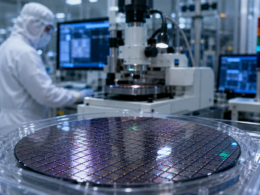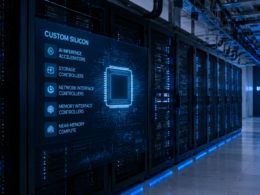




E&R Engineering Corporation (TPEX: 8027) is shifting part of its semiconductor packaging-material production to Malaysia as the Taiwanese equipment and materials supplier expands capacity closer to Southeast Asia’s large assembly, testing and packaging industry. Its new subsidiary, E&R Semiconductor (Malaysia) Sdn. Bhd., is scheduled to formally open on October 13 at Phase III of the Batu Berendam Free Trade Zone in Melaka, with sample testing and customer qualification already under way and mass production targeted for early 2027. The facility will manufacture embossed carrier tapes and cover tapes while also housing field service engineers supporting E&R Engineering’s semiconductor equipment customers. The expansion arrives while E&R Engineering’s revenue is growing strongly, but profitability remains under pressure, making successful localization, utilization and margin improvement more important than the new factory’s headline capacity alone.
The Malaysian operation is expected to create about 50 local jobs and represents a deliberate shift in E&R Engineering’s packaging-materials strategy rather than the closure or replacement of its Chinese production base. Management said the company’s China operations continue to grow, while part of the production focus is being moved to Malaysia as overall capacity expands. The dual-purpose structure is commercially notable because E&R Engineering is placing both manufacturing and after-sales engineering closer to customers, potentially shortening material lead times while improving response times for semiconductor equipment support.
Why is E&R Engineering moving semiconductor packaging-material production closer to Malaysian customers?
Malaysia already occupies a significant position in the global semiconductor back end, particularly in assembly, testing and packaging. Bank Negara Malaysia estimates the country accounts for about 13% of global assembly, testing and packaging activity, while Malaysian authorities are pushing the industry toward higher-value areas including advanced packaging, integrated-circuit design and increasingly automated manufacturing.
That makes local production strategically useful for a company supplying materials consumed by semiconductor and electronic-component manufacturers. E&R Engineering’s new plant will initially focus on embossed carrier tapes and cover tapes, products used to protect and transport electronic components while allowing automated pick-and-place equipment to handle them reliably during manufacturing and assembly.
Carrier tape may appear less glamorous than advanced lithography or artificial intelligence accelerators, but poor dimensional accuracy, electrostatic protection or component positioning can interrupt high-speed manufacturing processes. E&R Engineering says its carrier tapes are designed with precise pockets for different component geometries, while conductive and non-conductive variants address different handling requirements.
Producing those materials closer to Southeast Asian customers can therefore reduce more than freight distance. Local manufacturing could shorten replenishment cycles, give customers greater flexibility when component specifications change and make technical adjustments easier to coordinate. Those benefits become more valuable as semiconductor packaging becomes more complex and component formats continue to diversify.
What exactly will the Melaka plant manufacture, and how does it fit advanced semiconductor packaging?
The new Malaysian factory should not be confused with an outsourced semiconductor assembly and test plant. E&R Engineering will not be packaging finished chips for customers at the site in the same way as an OSAT provider. Its primary role is to manufacture supporting packaging materials, particularly embossed carrier tapes and cover tapes, while providing local technical services.
That distinction is important because the company’s announcement connects the facility with advanced packaging trends such as miniaturization and chiplet integration. E&R Engineering participates in that ecosystem by supplying equipment and materials that semiconductor manufacturers and packaging companies use around increasingly sophisticated components, rather than by operating a chiplet packaging line itself.
As components become smaller or more structurally complex, tolerances around transportation and automated handling become increasingly important. Carrier tape pockets must hold components securely without creating excessive movement, rotation or tilt that can disrupt pick-and-place operations. Cover tape must protect the components while remaining compatible with downstream production equipment.
E&R Engineering has manufactured carrier-tape products since the late 1990s and already operates packaging-material capacity in China. Adding Malaysia therefore extends an existing business rather than creating an entirely new product category. The more consequential question is whether localization allows the company to win greater share from customers that increasingly want shorter, geographically diversified supply chains.
Why could Malaysia become more valuable as semiconductor companies diversify Asian supply chains?
Semiconductor supply chains are becoming more geographically distributed as chip companies balance cost, customer proximity, geopolitical exposure and resilience. Malaysia benefits from an established electronics manufacturing base, skilled workforce and long history in semiconductor assembly and testing, giving suppliers an existing customer ecosystem rather than requiring them to create one from scratch.
The country is simultaneously trying to move further into advanced packaging and higher-value semiconductor processes. Malaysian Investment Development Authority initiatives in 2026 have emphasized smart manufacturing, advanced packaging and supply-chain integration, while companies including major global OSAT and equipment suppliers continue adding Malaysian production capacity.
For E&R Engineering, this ecosystem can improve the economics of having local materials and service capabilities. A packaging-material plant becomes more valuable when several customers can be served within the same regional cluster, because production volumes, engineering resources and inventory can be spread across a larger addressable customer base.
Localization also reduces the distance between E&R Engineering’s materials operation and its equipment-service business. President KS Chen said the Malaysian facility will serve as a hub for semiconductor equipment field service engineers, with the company planning to hire locally and build a specialized engineering team.
That second function could prove just as important as carrier-tape production. Semiconductor equipment customers place substantial value on rapid service response because an idle production tool can affect output across an entire manufacturing line. A regional engineering team can therefore strengthen customer relationships even when equipment itself is manufactured elsewhere.
How does the Malaysia investment fit E&R Engineering’s wider global expansion strategy?
E&R Engineering has been expanding its international footprint while broadening the technologies it targets. The Kaohsiung-based company develops semiconductor laser and plasma equipment alongside flexible printed circuit equipment, automation systems and tape-and-reel products. It has also been increasing its presence in advanced packaging applications tied to artificial intelligence, high-performance computing, co-packaged optics and next-generation substrates.
Malaysia is only one element of that globalization. E&R Engineering established a new United States subsidiary in 2025 as it sought to strengthen support for semiconductor customers and Taiwanese suppliers expanding into North America. The company has also continued investing in Taiwan, including a new facility at Qiaotou Science Park, while retaining production operations in China.
The resulting strategy is less about moving manufacturing wholesale from one country to another and more about building regional nodes around major semiconductor markets. Taiwan remains central to technology development and manufacturing, China continues contributing packaging-material production, the United States provides access to customers expanding there, and Malaysia now adds Southeast Asian manufacturing and field support.
That network can make E&R Engineering more responsive, but it also raises fixed costs. New factories, subsidiaries and engineering teams require capital before they generate full revenue, placing pressure on management to fill the additional capacity quickly enough to justify the investment.
What do E&R Engineering’s 2026 financial results say about the timing of the expansion?
The Malaysia opening comes during a sharp recovery in revenue. E&R Engineering reported first-half 2026 consolidated sales of TWD1.009 billion, up 46.4% from TWD689.4 million in the comparable period of 2025. Second-quarter revenue alone reached TWD627.1 million, compared with TWD374.5 million a year earlier.
The improvement has continued into the second half. Cumulative revenue through August reached approximately TWD1.352 billion, up 47.35% year on year, while August revenue of TWD152.9 million increased 37.29% from the same month in 2025. Earlier monthly disclosures linked part of the stronger revenue performance to customers expanding production capacity and increasing equipment demand.
Revenue growth has not yet translated into consistent bottom-line profitability. E&R Engineering recorded a first-half net loss attributable to shareholders of approximately TWD49.0 million, although that was a substantial improvement from a loss of nearly TWD179.6 million a year earlier. Basic loss per share narrowed to TWD0.46 from TWD1.71.
Gross profit reached TWD300.1 million in the first six months, but gross margin declined to 29.73% from 33.99% a year earlier. The group also recorded an operating loss of approximately TWD87.7 million. Those figures show that rising sales are improving scale, but the company still needs stronger operating leverage and margin conversion before rapid top-line expansion becomes consistently profitable.
The Malaysia plant therefore arrives at an important stage. Additional capacity could support further revenue growth, but new production and service infrastructure can initially increase depreciation, staffing and operating expenses. The economic success of the investment will depend on how rapidly customer qualifications translate into production orders and whether local manufacturing improves costs sufficiently to offset the expense of running another site.
Why could local carrier-tape production improve supply-chain economics for OSAT customers?
Packaging materials are relatively low in value compared with advanced semiconductor equipment, but they are consumed continuously and must meet consistent specifications. That makes reliability, delivery speed and inventory management commercially important.
A customer sourcing carrier tape from a distant factory may need longer order lead times and larger safety inventories. Producing the same materials within Malaysia potentially allows E&R Engineering to replenish customers faster and respond more quickly when component designs or production schedules change.
There is also a qualification advantage once a facility is approved by customers. Semiconductor supply chains typically involve extensive validation because changes in materials can create downstream manufacturing risks. E&R Engineering’s plant is currently going through sample testing and qualification, indicating that commercial scale depends on customers accepting products from the new manufacturing source.
Mass production scheduled for early 2027 should therefore be treated as a target rather than an indication that full commercial utilization has already been secured. The strongest evidence will come from customer qualification completion, revenue contribution from Malaysia and any disclosure showing additional capacity being absorbed by regional demand.
What does E&R Engineering’s share price signal before the Malaysia plant announcement reaches the market?
E&R Engineering shares closed at TWD213.50 on October 2, gaining 1.91% during the final trading session before the Malaysia announcement. The stock had closed at TWD177 on September 3, meaning it advanced about 20.6% over the following month before the plant news was released.
Its 52-week range stood at approximately TWD83.20 to TWD297, indicating that the shares have already experienced substantial volatility. The October 2 close remained below the annual high even after the strong September advance.
Because the Malaysia announcement was issued after the October 2 close and ahead of the next Taiwan trading session, that earlier share-price movement cannot be attributed to the new plant. Any post-announcement market reaction needs to be separated from the rally that was already under way.
The stock’s recent strength coincides with improving revenue momentum, but the financial picture remains mixed. Investors are balancing much faster sales growth against continuing operating losses and lower first-half gross margins. The Malaysia facility can strengthen the growth story if it produces incremental revenue and better customer proximity, but opening another factory does not by itself resolve the profitability question.
What will determine whether E&R Engineering’s Malaysia plant becomes a meaningful earnings driver?
The first measurable milestone is customer qualification. The facility is still undergoing sample testing and approval processes, so commercial production depends on customers validating the new source. Completion of that process would allow E&R Engineering to move toward its early-2027 mass-production target.
Utilization will be the second test. A new factory creates value when sufficient orders absorb its equipment, employees and overhead. Low utilization can pressure margins even when the strategic rationale for the investment remains sound.
The third test is whether the facility generates cross-selling opportunities for E&R Engineering’s semiconductor equipment business. Housing field service engineers at the same location could deepen relationships with OSAT and semiconductor customers that may also require laser, plasma, automation or other equipment solutions.
Margin performance will provide the clearest financial evidence. First-half revenue growth of more than 46% demonstrates strong demand momentum, but a 29.73% gross margin and continuing operating loss show that greater sales volume still needs to translate more effectively into profit.
Malaysia gives E&R Engineering another platform from which to participate in Southeast Asia’s expanding semiconductor ecosystem. The factory’s strategic case is strongest not simply because it adds capacity, but because it combines recurring packaging-material production with localized equipment support inside one of the world’s most important semiconductor assembly and testing markets. The next proof point will come when customer qualifications turn into sustained production volumes and the additional scale begins showing up in margins rather than revenue alone.
What are the key takeaways from E&R Engineering’s new semiconductor plant in Malaysia?
- E&R Engineering Corporation is establishing E&R Semiconductor (Malaysia) Sdn. Bhd. in the Batu Berendam Free Trade Zone in Melaka.
- The new facility is scheduled to formally open on October 13, 2026.
- Sample testing and customer qualification are already under way, with mass production targeted for early 2027.
- The plant will manufacture embossed carrier tapes and cover tapes for semiconductor and electronic-component customers.
- It will also operate as a local base for E&R Engineering semiconductor equipment field service engineers.
- The company expects approximately 50 local jobs to be created.
- Malaysia accounts for about 13% of global semiconductor assembly, testing and packaging activity.
- E&R Engineering reported first-half 2026 revenue of TWD1.009 billion, up 46.4% year on year.
- Cumulative revenue through August increased 47.35%, although the company remained loss-making during the first half.
- E&R Engineering shares closed at TWD213.50 on October 2, before the Malaysia announcement, after gaining about 20.6% from September 3.
- Customer qualification, plant utilization, service cross-selling and margin improvement will determine whether the Malaysian expansion becomes a meaningful earnings contributor.
Discover more from Business-News-Today.com
Subscribe to get the latest posts sent to your email.