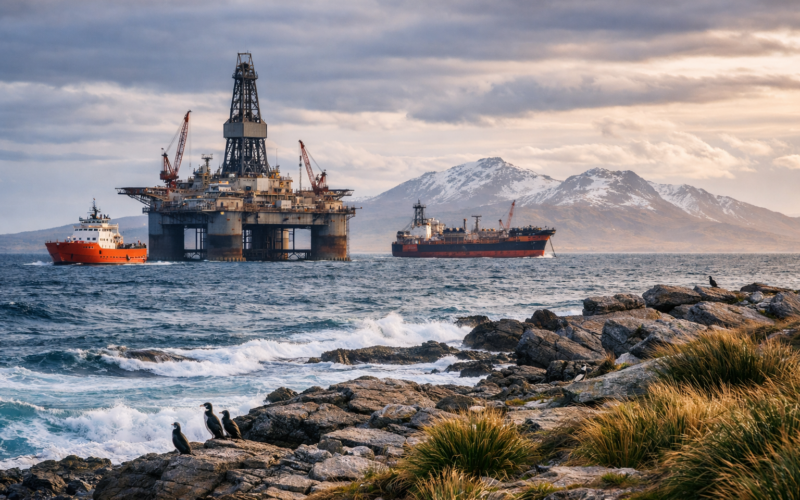
Equinor ASA (NYSE: EQNR, OSE: EQNR) has used its Capital Markets Day 2026 to double its planned share buyback for 2026 to USD 3 billion, while setting a more predictable shareholder return framework from 2027. The Norwegian energy group also aims to grow quarterly cash dividends per share by more than 5% annually, lift production to 2.3 million barrels of oil equivalent per day by 2030, and generate more than USD 40 billion in free cash flow from 2026 to 2030. The strategy marks a sharper focus on oil and gas, the Norwegian continental shelf, international upstream growth, integrated power and trading, rather than a simple renewables-led transition narrative. Equinor’s U.S.-listed ADR traded near $33.80 on June 16, 2026, below its 52-week high of $43.46 but still materially above its 52-week low of $22.26, giving investors a timely but complicated cash-return story. The message is clear enough for markets: Equinor wants to be valued less as a cautious transition experiment and more as a disciplined cash-generating energy major.
Why is Equinor doubling its 2026 share buyback while energy markets remain volatile?
Equinor’s decision to raise the 2026 buyback target from USD 1.5 billion to USD 3 billion is a direct signal that management sees enough balance-sheet strength, commodity price support and medium-term cash visibility to increase returns without abandoning investment. The move is also a useful confidence marker after a period in which European energy companies have been pulled between investor pressure for payouts and political pressure to fund the energy transition. Equinor is effectively telling shareholders that the company can do both, although the new plan clearly gives near-term capital discipline a louder microphone.
The timing is strategically useful because energy security has returned to the centre of European policy thinking. Oil and gas demand has remained more resilient than many transition models assumed, while geopolitical shocks have kept investors focused on reliable supply rather than only long-dated decarbonisation targets. Equinor’s position as a major supplier of oil, piped gas and liquefied natural gas to Europe gives it a geopolitical premium that not every integrated energy company can claim. That premium becomes more valuable when governments want energy affordability, investors want distributions and customers want supply security without heroic assumptions.
The risk is that buybacks funded by high commodity prices can quickly look less impressive if prices fall. Equinor’s framework for future annual buybacks of USD 2 billion to USD 4 billion from 2027 is tied to oil prices of USD 60 to USD 80 per barrel, European gas prices of USD 7 to USD 11 per million British thermal units, balance-sheet strength and the macro outlook. That conditionality matters. Equinor is not promising a blank-cheque capital return machine. It is trying to make distributions more predictable while preserving room to adjust if the cycle turns. Investors usually like predictability. Commodity markets, bless them, do not always return the favour.
How does Equinor’s 2030 production target change the energy transition debate?
Equinor’s plan to grow production by 150,000 barrels of oil equivalent per day to 2.3 million barrels of oil equivalent per day by 2030 changes the tone of its transition strategy. This is not a retreat from all lower-carbon investment, but it is a clear rejection of the idea that Equinor should replace oil and gas growth with renewables growth at any cost. The company is positioning oil and gas as a core cash engine for the rest of the decade, not as a fading legacy business waiting to be managed down.
The Norwegian continental shelf remains the backbone of the strategy. Equinor expects production there to reach 1.35 million barrels of oil equivalent per day in 2030 and 1.3 million barrels of oil equivalent per day in 2035. Around 60% of capital expenditure from 2028 to 2030 is expected to go to the Norwegian continental shelf, with the company pointing to subsea tiebacks, increased recovery and low break-even opportunities. That gives Equinor a structurally different profile from peers that depend more heavily on politically complex or higher-cost international production.
The second-order implication is important for energy policy. Europe’s transition debate has often treated oil and gas supply as something that would naturally decline as renewable capacity expanded. Equinor’s new strategy suggests the transition is becoming more layered. Power demand from electrification and artificial intelligence is rising, intermittency remains a challenge, and gas continues to play a role in system reliability. Equinor is betting that energy markets will reward companies that can supply molecules, electrons and trading flexibility, rather than companies that try to win approval with a single transition slogan.
Why is Equinor scaling power growth without keeping a hard renewable capacity target?
Equinor’s shift from a hard renewable capacity target to a broader power production target is one of the most telling parts of the strategy reset. The company now expects power production to grow more than fourfold to over 20 terawatt hours by 2030, mainly from projects already in execution. That is still a meaningful power ambition, but it is framed around output, integration and returns rather than headline gigawatts. In practical terms, Equinor wants investors to judge power investments by cash generation and portfolio fit, not by a trophy target.
This matters because the economics of offshore wind and renewable power have become more difficult across several markets. Inflation, supply-chain costs, permitting delays, grid bottlenecks and auction design have forced energy companies to reassess how quickly renewable investments can earn acceptable returns. Equinor’s plan to allocate around 10% of capital expenditure to the power business from 2028 to 2030 signals that power remains part of the portfolio, but not the dominant capital sink. That is a major change in emphasis from the more aggressive renewable expansion narratives that once defined European energy transition ambitions.
The risk is reputational as much as financial. Investors focused on cash returns may welcome the discipline, while climate-focused stakeholders may see the shift as another example of oil and gas companies softening transition commitments when fossil fuel returns improve. Equinor will need to show that its power business is not just a public-policy accessory. If the company can deliver returns above 10% from selected power projects, integrate generation with trading and storage, and support system flexibility, the strategy could look pragmatic. If not, the power business may be seen as a smaller, less convincing transition hedge.
What does Equinor’s strategy mean for the Norwegian continental shelf and European energy security?
Equinor’s stronger emphasis on the Norwegian continental shelf reinforces Norway’s role as a critical energy supplier to Europe. Since Europe began reducing dependence on Russian energy, reliable Norwegian gas and oil production has carried strategic value beyond ordinary commodity economics. Equinor’s plan to increase production outlook for the Norwegian continental shelf by 100,000 barrels of oil equivalent per day in 2030 is therefore not only a corporate production target. It is part of Europe’s wider energy security architecture.
The industrial logic is also compelling. The Norwegian continental shelf offers established infrastructure, operating experience, regulatory stability and lower emissions intensity compared with many global production basins. Equinor is focusing on subsea tiebacks, improved recovery and project standardisation, all of which can extend the life of mature assets while reducing the need for large standalone developments. That can support quicker paybacks and lower execution risk, provided reservoir performance and cost discipline hold up.
The trade-off is concentration. A stronger Norwegian continental shelf strategy gives Equinor resilience, but also increases exposure to regional policy choices, taxation, offshore service costs and long-term European demand assumptions. If Europe’s gas demand falls faster than expected after 2030, some of today’s energy security premium could fade. If demand remains resilient, Equinor’s position could become even more valuable. The company is making a timed bet that reliable European supply will command strategic value for longer than many transition optimists once expected.
How should $EQNR investors read the stock reaction and valuation signal?
Equinor’s stock context is more nuanced than the headline buyback suggests. The U.S.-listed ADR traded near $33.80 on June 16, 2026, compared with a 52-week range of $22.26 to $43.46. The share price was down on the day, even as the capital return message improved, but the broader year-to-date performance remained strong after energy price volatility supported earnings expectations. That means the market is not ignoring the buyback. It is testing whether the strategy is already priced in after a major rally.
For income and value-oriented investors, the attraction is obvious. A USD 3 billion buyback in 2026, a USD 2 billion to USD 4 billion annual framework from 2027, dividend growth above 5% annually and free cash flow of more than USD 40 billion through 2030 create a credible shareholder return package. The company is also targeting return on average capital employed above 15% annually from 2026 to 2030. Those are not small ambitions, especially for a state-backed energy major operating across commodity cycles.
For growth and transition investors, the debate is harder. Equinor’s pivot toward oil and gas growth may support cash flow, but it could narrow the investor base if climate-focused funds view the strategy as less aligned with accelerated decarbonisation. The company’s state ownership also adds a special wrinkle. The Norwegian state owns 67% of Equinor, and state participation in buybacks affects how capital returns are structured. In plain English, the payout mechanics are not a simple U.S. shale-style buyback story. There is a policy lens, a national ownership lens and a European energy security lens sitting on top of the equity case.
What are the biggest risks to Equinor’s 2030 cash-flow and return ambitions?
The first risk is commodity price dependence. Equinor’s return framework is built around oil, gas and power market assumptions that may look reasonable today but can shift quickly. Oil prices can weaken if supply returns, demand slows or geopolitical risk fades. European gas prices can compress if storage remains comfortable, liquefied natural gas supply expands or winter demand disappoints. Equinor has a stronger balance sheet than many peers, but no upstream company is immune to the cycle.
The second risk is execution. Production growth to 2.3 million barrels of oil equivalent per day by 2030 requires project delivery, reservoir management, tieback execution, cost control and international portfolio performance. Equinor’s plans for 6 to 8 new tieback projects annually toward 2035 on the Norwegian continental shelf are operationally sensible, but they require a disciplined offshore supply chain. Cost inflation in offshore services could erode the return profile if too many companies chase the same capacity at the same time.
The third risk is political legitimacy. Equinor is trying to grow oil and gas production while also maintaining ambitions to reduce operated emissions by 50% toward 2030 and lower net carbon intensity by 2035. That balancing act may be defensible, but it will remain contested. Climate policy, European regulation and investor scrutiny will continue to shape how the strategy is judged. The company’s challenge is to prove that it can deliver reliable energy and lower operational emissions without appearing to use energy security as a permanent excuse for slower transition.
Why could Equinor’s trading and market optimisation business become more important?
Equinor’s strategy also puts more emphasis on marketing, trading and market optimisation. The company aims to increase adjusted operating income from trading and market optimisation by 25% to around USD 500 million per quarter by 2030. That is strategically important because integrated energy companies are increasingly making money not only from producing energy, but from moving, timing, balancing and optimising energy across volatile markets.
This is where Equinor’s broader energy mix becomes useful. Oil, piped gas, liquefied natural gas, power, storage and trading capabilities can create optionality when markets are dislocated. Volatility is uncomfortable for policymakers and consumers, but it can create value for asset-backed traders with physical positions and risk controls. Equinor is signalling that trading is not a side desk. It is part of the value engine.
The risk is that trading income can be harder for investors to value than production-led cash flow. Strong trading performance may be praised in volatile periods and discounted in calmer ones. Equinor will need transparency and risk discipline to convince investors that trading growth improves through-cycle returns rather than simply adding earnings noise. In an energy market where electrons, molecules and geopolitics increasingly collide, that capability could still become a genuine strategic advantage.
Key takeaways on what Equinor’s $3 billion buyback and 2030 strategy mean for investors
- Equinor is using its Capital Markets Day 2026 to shift the investor story toward cash returns, energy security and disciplined oil and gas growth.
- The planned doubling of the 2026 share buyback to USD 3 billion gives $EQNR investors a clearer near-term shareholder return catalyst.
- The annual USD 2 billion to USD 4 billion buyback framework from 2027 makes distributions more predictable, but it remains conditional on commodity prices, balance-sheet strength and board approvals.
- Equinor’s 2030 production target of 2.3 million barrels of oil equivalent per day signals that oil and gas remain the company’s core cash engine.
- The Norwegian continental shelf is becoming even more central to Equinor’s long-term strategy because of infrastructure strength, lower emissions intensity and European energy security demand.
- The removal of a hard renewable capacity target may please cash-return investors, but it could increase scrutiny from climate-focused funds and policy stakeholders.
- Equinor’s power business is still expected to grow to more than 20 terawatt hours by 2030, but capital allocation will be more selective and return-driven.
- The company’s more than USD 40 billion free cash flow ambition for 2026 to 2030 depends heavily on commodity prices, project execution and cost discipline.
- Trading and market optimisation could become a larger value driver as energy markets become more volatile and cross-commodity flexibility becomes more valuable.
- For $EQNR investors, the central question is whether Equinor can combine bigger payouts with credible transition discipline, rather than being forced to choose between the two.
Discover more from Business-News-Today.com
Subscribe to get the latest posts sent to your email.