


Eni S.p.A. (Borsa Italiana: ENI; NYSE: E), the Italian integrated energy company, reported third-quarter adjusted net profit of €2.8 billion, more than double the year-earlier level and above the €2.5 billion analyst consensus cited by Reuters. Pro forma adjusted EBIT doubled to €6.0 billion, underlying hydrocarbon production increased 7% to 1.83 million barrels of oil equivalent per day and adjusted cash flow from operations before working capital reached €4.29 billion. Eni shares rose about 4% to €27.15 on October 23, approaching their highest level since 2007.
Management responded by increasing its 2026 share-repurchase programme to €3.8 billion from the already revised €3.4 billion and declaring an extraordinary dividend of €0.46 per share, equivalent to approximately €1.3 billion. The buyback is now more than two-and-a-half times the €1.5 billion programme initially contemplated, while the special distribution sits alongside the planned ordinary dividend of €1.10 per share.
The numbers invite a simple conclusion that high oil prices are producing a shareholder windfall, but Eni’s quarter is more complicated. Refining profit improved sharply, upstream volumes expanded and lower-carbon businesses Enilive and Plenitude also generated stronger earnings, while portfolio transactions reduced pro forma gearing to only 9%. The investor question is therefore how much of the new cash generation would survive if commodity and refining conditions normalise.
How did Eni more than double quarterly profit?
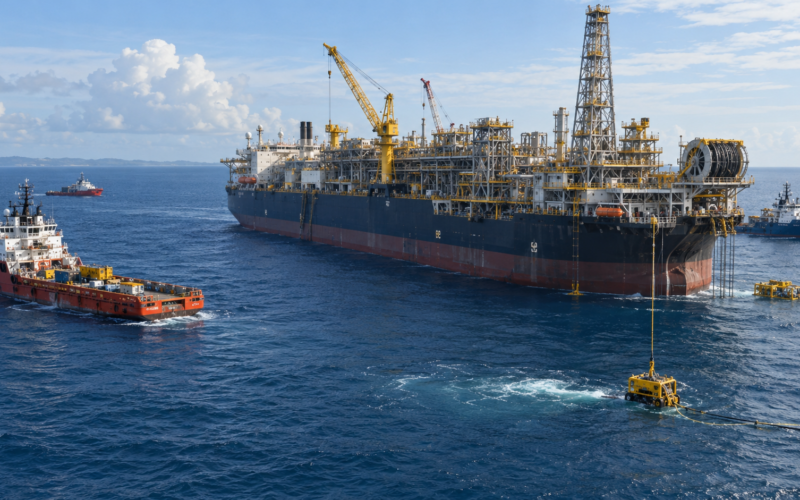
Exploration and Production generated €4.63 billion of pro forma adjusted EBIT, up 76% year over year, supported by volume growth, portfolio mix and stronger realised commodity prices. Projects in West Africa, Mexico and Norway contributed, while the Searah joint venture with Petronas added production.
Refining was another major contributor, generating €730 million of pro forma adjusted EBIT as plant utilisation improved in a strong margin environment. Higher shipping costs and less favourable crude differentials provided partial offsets, demonstrating that the division benefited substantially from market conditions rather than simply internal efficiency.
Gas, Global Portfolio and Power generated €450 million of pro forma adjusted EBIT, while the gas portfolio alone improved by 46% year over year. This diversification helped Eni capture volatility across several parts of the energy system rather than relying entirely on crude production.
The result is therefore a mixture of higher physical output, supportive market prices and operational execution. Investors attempting to forecast 2027 need to separate those drivers because commodity prices can reverse much faster than new production volumes.
Why did the buyback increase from €1.5bn to €3.8bn?
Eni links shareholder distributions explicitly to cash flow and commodity conditions. The company’s policy allocates a large part of cash-flow upside above its original planning assumptions back to shareholders, which means rising oil, gas and refining margins automatically create room for larger distributions if balance-sheet targets remain protected.
Management now expects adjusted cash flow from operations of €16.5 billion for 2026, compared with an earlier €15 billion forecast and an original budget framework built around materially lower cash generation. Net capital expenditure is expected below €4.5 billion, while pro forma gearing remains around the bottom of the company’s 10% to 15% target range.
That creates unusually large excess cash after investment. Increasing the buyback rather than allowing cash to accumulate can improve per-share economics and signal confidence that investment opportunities are adequately funded.
The obvious risk is procyclicality. Repurchasing large quantities of shares during a high-energy-price environment creates value only if the stock is still attractively priced and the company does not subsequently need the same cash during a downturn.
Is the €1.3bn special dividend recurring income?
No. Eni describes the €0.46-per-share payment as an extraordinary dividend linked to cash-flow upside under its remuneration policy rather than a permanent addition to the ordinary annual dividend. The payment is scheduled for December 9, subject to the specified record-date mechanics.
The ordinary 2026 dividend remains €1.10 per share, up 5% from 2025. Investors evaluating long-term yield should therefore separate the recurring ordinary distribution from the special payment generated by an unusually favourable year.
This distinction becomes especially important if oil prices fall. Eni’s remuneration formula is deliberately designed so variable distributions rise during high-cash-flow periods rather than forcing management to defend an unsustainable fixed dividend later.
That structure can make total shareholder returns more volatile from year to year while protecting the balance sheet through the cycle.
How much of Eni’s performance is now coming from businesses outside conventional oil and gas?
Enilive and Plenitude generated €1.8 billion of adjusted EBITDA during the first nine months, up 20% year over year. Enilive’s Q3 pro forma adjusted EBIT increased 80% to €410 million, while Plenitude’s rose 95% to €190 million.
Enilive benefits from biorefining and mobility, while Plenitude combines renewable generation with energy retail and electric-mobility activities. These operations remain much smaller than upstream oil and gas but are beginning to make a more visible contribution to group profitability.
Eni also changed the financial structure around Plenitude through an agreement with Ares that reduced its interest from 70% to 65% and resulted in deconsolidation from Eni’s balance sheet. Management argues that the structure allows Plenitude to fund more of its growth independently.
This satellite model is central to Eni’s strategy. Rather than financing every growth business entirely inside the parent company, Eni can bring in external capital, monetise partial interests and recycle proceeds into higher-return projects.
Why does 9% gearing matter to the shareholder-return story?
Low gearing provides a cushion against commodity volatility. Eni ended Q3 with net debt of approximately €6.7 billion and pro forma gearing around 9%, giving management considerably more capacity to absorb weaker oil prices than a heavily leveraged producer.
This is important because buybacks can look irresponsible when a company distributes cash while carrying excessive debt. Eni’s current leverage suggests the enhanced distributions are being made from a relatively strong balance-sheet position.
Portfolio monetisation contributed to that strength. The company received €1.8 billion from a long-term partnership around an upstream infrastructure portfolio and completed several partial asset sales designed to recycle capital.
The model effectively attempts to turn exploration success and mature infrastructure into cash before Eni must fund every asset to full ownership. Execution becomes crucial because repeated asset sales only create value if pricing exceeds the long-term economic value shareholders surrender.
Is Eni benefiting too much from unusually high refining margins?
Refining contributed €730 million of pro forma adjusted EBIT during Q3, a dramatic improvement from a year earlier. High product margins and stronger utilisation supported performance as disruptions in global energy markets tightened refined-fuel economics.
Refining is famously cyclical, making current earnings dangerous to extrapolate directly. New capacity, weaker demand or changes in crude availability can compress margins rapidly.
Eni’s advantage is that refining represents only one part of the portfolio. Higher upstream production, gas optimisation and growth at Enilive and Plenitude mean the Q3 earnings increase is not exclusively a refinery windfall.
Still, investors should assume some normalisation rather than treating €730 million of quarterly refining profit as a permanently recurring baseline. Management’s own sensitivity framework recognises that cash generation changes materially with oil and refining margins.
What should investors watch after Eni shares approached a 20-year high?
Production is the first variable because Eni raised expected 2026 growth to 6% to 7%. Continued project ramp-ups would provide a more durable earnings contribution than commodity-price movements alone.
Cash flow is the second because the enhanced payout depends on actual financial generation. If the €16.5 billion outlook holds, investors receive unusually high distributions while leverage remains low.
Performance at Enilive and Plenitude provides a third test of whether Eni’s transition strategy is becoming financially material. The stronger those businesses become, the less the company’s valuation must rely exclusively on hydrocarbons.
The central question after the rally is therefore not whether Eni has enough cash in 2026. It clearly does. Investors need to determine how much of the cash engine comes from structural portfolio improvements that can continue after today’s exceptional energy-price environment fades.
Discover more from Business-News-Today.com
Subscribe to get the latest posts sent to your email.