

Kering S.A. (Euronext Paris: KER), the French luxury group behind Gucci, Saint Laurent and Bottega Veneta, reported third-quarter revenue of €3.35 billion, down 1% on a comparable basis despite stable reported sales. Gucci generated €1.29 billion and fell 6% comparably, while the wider Fashion & Leather Goods division declined 3%, leaving the group’s largest brand unable to produce the recovery investors have been anticipating. Kering shares plunged 16% on October 23, putting them on course for their worst one-day decline on record as management confirmed that the Gucci turnaround remains gradual rather than imminent.
The sharp reaction matters because several parts of Kering are performing considerably better than Gucci. Saint Laurent, Bottega Veneta, Brioni, Kering Eyewear and Kering Jewelry all showed stronger momentum, while retail sales excluding Gucci increased 2%. That divergence means Kering’s problem is increasingly concentrated inside the one brand whose historical economics and scale remain large enough to dominate the group’s valuation.
Chief Executive Officer Luca de Meo is responding with a wider restructuring that includes accelerating store closures, with Reuters reporting a target of 125 closures by year-end. The logic is to reduce exposure to underperforming locations while improving product architecture, pricing, quality and time to market at Gucci, but store reduction also carries a financial trade-off because closing weak sites can help margins while removing physical points through which a recovery would eventually be monetised.
Why is Gucci still shrinking despite new collections and lower-price initiatives?
Gucci’s comparable revenue fell 6% during Q3, with Kering saying traffic remained the principal constraint even though conversion, average price and average ticket improved. That combination suggests customers who enter Gucci stores may be responding better to the product, but not enough consumers currently feel motivated to visit or engage with the brand. Management described ongoing improvements in handbags while acknowledging that ready-to-wear and shoes remain areas requiring additional work.
Creative renewal takes time because luxury brands do not operate like ordinary retailers that can immediately change promotions or assortment. New creative direction must pass through design, production, marketing, wholesale and retail cycles before consumers see a sufficiently broad collection to judge the new identity.
Reuters reported that management sees progress in restoring brand desirability as being at a very early stage, while the main challenge remains weak footfall, particularly in China. That assessment is consistent with a turnaround in which internal product metrics improve before top-line sales visibly recover.
The investor problem is that Kering has already spent years promising a Gucci recovery. Each additional quarter of contraction reduces the market’s willingness to value future improvements before they become visible in actual sales.
Why does Gucci matter so much more than Kering’s other improving brands?
Gucci historically generated a disproportionate share of Kering’s revenue and profit, giving the brand much greater importance than its current group revenue percentage alone implies. The economics of luxury can be especially concentrated because a globally scaled brand with strong pricing power generates substantially higher margins than a smaller house that still requires global stores, marketing and creative investment.
Saint Laurent and Bottega Veneta are helping diversify the group, but they cannot quickly replace the earnings power Gucci generated near its peak. Q3 directly operated retail sales outside Gucci increased 2%, demonstrating that consumers have not rejected Kering’s entire brand portfolio.
This strengthens the case that Gucci’s difficulties are partly brand-specific rather than simply a reflection of every luxury consumer disappearing. Yet the wider market is undeniably weak, with Hermès reporting its slowest quarterly sales growth since 2020 and LVMH also facing softer Chinese demand.
The turnaround therefore has to overcome two problems simultaneously. Gucci needs to improve its own desirability while doing so during one of the least supportive macroeconomic environments the luxury industry has faced in years.
Can closing 125 stores actually improve Gucci’s economics?
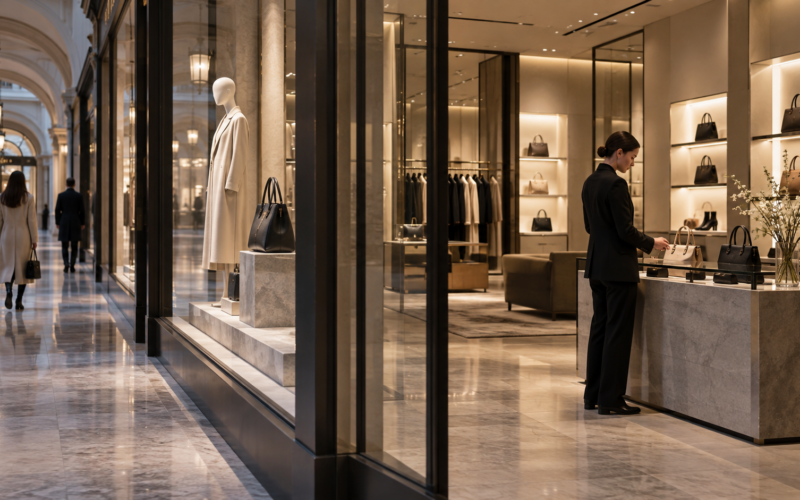
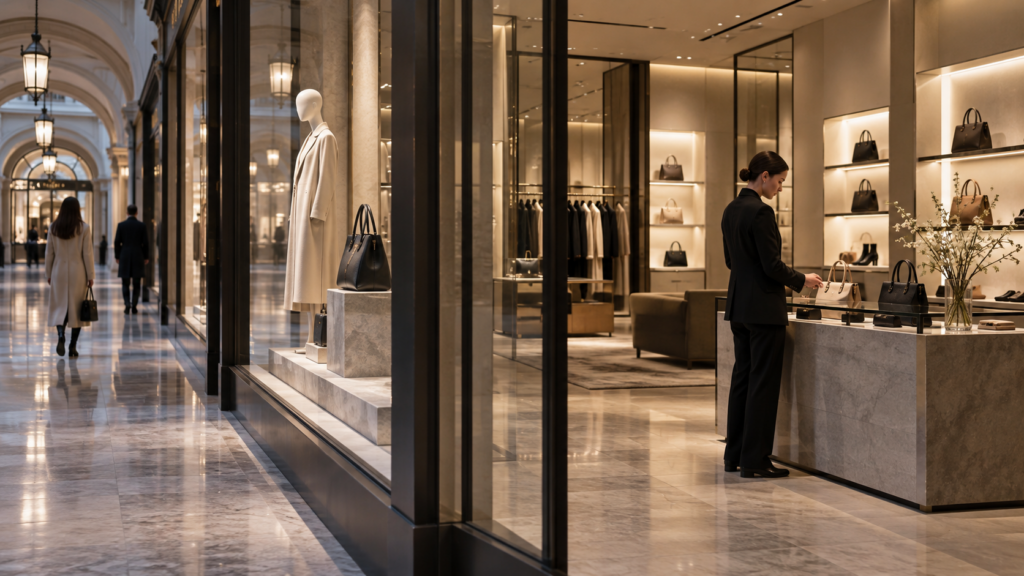
Closing underperforming stores can improve fixed-cost efficiency because luxury boutiques require premium rents, highly trained staff, inventory and substantial visual investment. Locations producing weak sales can therefore destroy margin even if they contribute some revenue, making portfolio rationalisation a sensible part of a turnaround.
The benefits depend on which stores close and how much customer demand migrates elsewhere. Closing overlapping or structurally weak locations can improve profitability with limited revenue loss, while removing strategically important stores could reduce brand visibility and future growth capacity.
The store plan also interacts with Gucci’s attempt to improve exclusivity. Luxury brands can damage desirability when distribution becomes too broad or when underperforming stores resort to discounting and excess inventory. A smaller, more productive network can strengthen brand control if management simultaneously improves product.
Yet store closures alone cannot create demand. Gucci ultimately needs consumers to want the handbags, clothing and shoes enough to pay premium prices, which is why the creative and product turnaround remains more important than the real-estate programme.
How much of Gucci’s weakness comes from China?
China remains one of the most difficult luxury markets because slower economic growth, property-market weakness and government scrutiny of conspicuous wealth have damaged confidence among consumers who previously drove substantial category expansion. Reuters reported that China’s tougher environment remains a particular challenge for Gucci and other luxury groups.
Kering’s finance chief identified weak traffic as especially problematic in China, implying that merchandising improvement alone cannot solve the issue if fewer consumers enter luxury stores. A macroeconomic recovery would therefore help the turnaround, but management cannot build a strategy that depends entirely on external conditions improving.
Pricing is another important issue. Gucci had moved aggressively upmarket during its strongest years, and de Meo’s turnaround includes making parts of the range more accessible to middle-class luxury consumers. That creates a delicate balance because lowering entry prices may restore volume while risking perceptions of reduced exclusivity.
The best outcome would involve a broader pricing ladder rather than blanket discounting. Iconic products can preserve high pricing while selected entry categories attract customers who may later trade up within the brand.
Why are even Hermès and LVMH now being pulled into Kering’s selloff?
Kering’s problems are more severe, but October 23 became a wider luxury-sector stress event. Reuters reported Hermès shares down around 4% and LVMH about 1.5%, while Hermès’ valuation reached its lowest level in years after its own Q3 slowdown.
High oil prices and geopolitical disruption are adding new pressure on discretionary spending. Consumers facing more expensive fuel, travel and household expenses have less money available for aspirational purchases, while conflict and unrest can also reduce tourist flows into luxury shopping hubs.
The sector had already experienced several years of extraordinary pricing increases, leaving entry-level luxury goods materially more expensive than before the pandemic. Investors are now asking whether pricing moved faster than the purchasing power of marginal customers.
Kering is exposed most acutely because Gucci needs those customers to return at the same moment the entire industry is discovering the limits of premiumisation.
Why is a 16% stock decline rational after only a 6% Gucci sales fall?
Stocks react to changes in expected future cash flow rather than simply the size of the latest sales decline. Gucci’s 6% contraction matters because markets had hoped the brand would be moving closer to stabilisation, meaning continued weakness pushes the recovery further into the future.
Kering’s valuation also depends heavily on how much profit Gucci can eventually recover. A small revision to long-term sales or margin assumptions can therefore produce a much larger change in equity value than the latest quarterly revenue movement alone would imply.
The October plunge additionally reflects accumulated frustration. Investors have heard several iterations of the Gucci recovery story, making them less willing to give management credit for early qualitative improvements before sales respond.
The market is effectively demanding proof. New collections, store rationalisation and pricing changes will matter only if they eventually produce positive comparable sales and stronger margins.
What should investors watch during the next phase of Kering’s turnaround?
Gucci store traffic is the clearest leading indicator because management has already said conversion and average transaction measures are improving. If traffic stabilises while those metrics remain healthy, comparable sales should become easier to repair.
Handbag performance is another critical variable because leather goods often carry strong margins and play a central role in luxury-brand identity. Management says product transformation is increasingly visible there, giving investors a measurable category in which to test the new strategy.
Store closures should be evaluated through productivity rather than simply the number completed. Revenue per store, inventory levels and profitability will reveal whether a smaller network is genuinely better.
The October 23 collapse creates a harsh but clear performance standard for Luca de Meo. Investors no longer appear willing to price Gucci on promised desirability; they want evidence that people are walking back into stores and buying the products.
Discover more from Business-News-Today.com
Subscribe to get the latest posts sent to your email.