





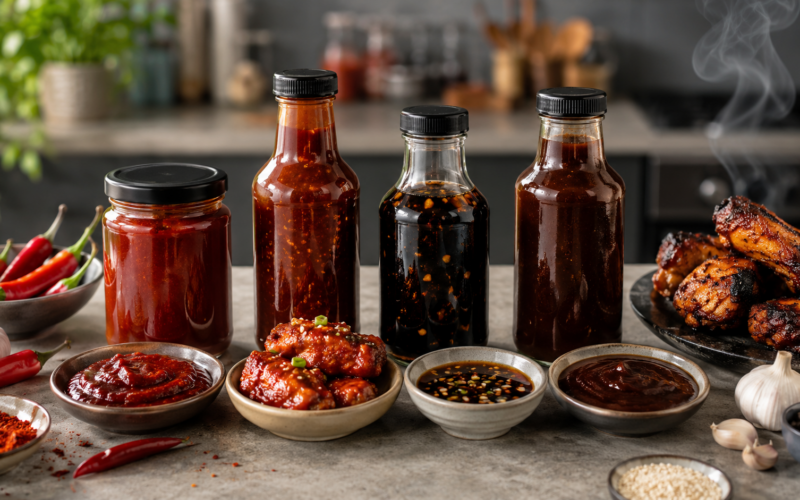
ECOLINE CO., LTD. has launched four Korean-style sauce products as the South Korean sauce manufacturer attempts to convert the global “swicy” flavor trend into a broader retail growth opportunity. The new lineup includes a gochujang-based hot sauce, Korean Chicken Sauce, Garlic Soy Sauce, and Smoky Charcoal BBQ Sauce, with the company positioning the range around sweetness, heat, convenience, and adaptability for international home cooking. The launch follows ECOLINE CO., LTD.’s recent expansion in the United States and the United Kingdom, where the company has secured distribution through H-Mart in North America and premium retail channels in the United Kingdom. The strategic relevance is clear: ECOLINE CO., LTD. is not merely selling Korean sauces, it is testing whether K-food can move from restaurant-led discovery and ready-made meals into everyday pantry use across Western kitchens.
Why is ECOLINE CO., LTD. using the swicy trend to reposition Korean sauces for global consumers?
ECOLINE CO., LTD.’s product strategy reflects a practical reading of where global flavor preferences are moving. The “swicy” combination of sweet and spicy has become increasingly visible in sauces, snacks, drinks, quick-service restaurant menus, and retail condiments, with sweet heat now functioning less like a novelty and more like a mainstream flavor bridge. That matters for Korean sauces because gochujang already carries a naturally layered profile, combining fermented depth, chili heat, and sweetness in a way that fits the global shift toward more complex but still accessible flavors.
The key commercial move by ECOLINE CO., LTD. is not to push extreme heat as the selling point. The company is instead softening the intensity of gochujang with sweetness, which could make the sauce more acceptable to Western consumers who want flavor adventure without turning dinner into a competitive sport. This is important because the international hot sauce market is no longer just about Scoville bragging rights. Consumers are increasingly looking for sauces that work across pizza, chicken, burgers, rice bowls, marinades, noodles, roasted vegetables, and meal kits.
That adaptability gives ECOLINE CO., LTD. a more scalable opportunity than a single cuisine-bound product. A jar of traditional paste may appeal to committed Korean food consumers, but a ready-to-use sweet and spicy sauce can be added to familiar dishes with lower friction. In retail terms, that makes the product less dependent on consumers knowing how to cook Korean food and more dependent on whether they want Korean flavor notes inside meals they already understand.
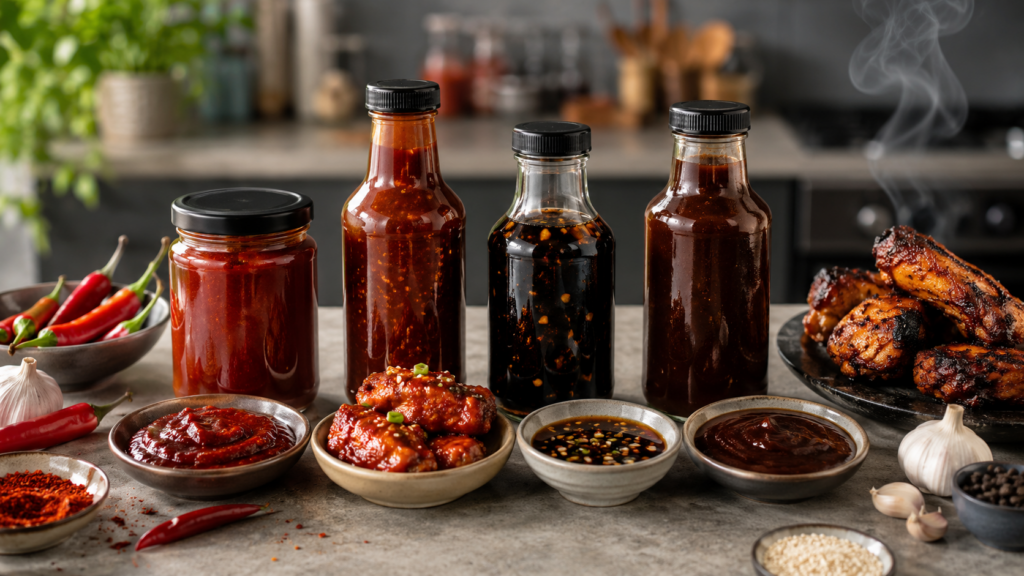
How does ECOLINE CO., LTD.’s U.S. and U.K. traction change the global K-sauce opportunity?
ECOLINE CO., LTD.’s expansion through H-Mart gives the company an important early foothold in the United States because H-Mart has become one of the most influential retail gateways for Asian and Korean food discovery in North America. H-Mart describes itself as the largest Asian supermarket chain in America, with more than 97 stores across the United States, making it a meaningful channel for brands that want to reach both Korean diaspora consumers and a wider audience of adventurous mainstream shoppers.
The distribution strategy also suggests that ECOLINE CO., LTD. is following a two-step expansion model. First, the company can validate products with consumers already inclined toward Korean food. Second, it can use that acceptance to move toward wider grocery, specialty retail, foodservice, and e-commerce channels. That path is not guaranteed, but it is more realistic than trying to jump directly into mass-market supermarkets without evidence of repeat demand.
The United Kingdom piece is equally important. ECOLINE CO., LTD. said it has supplied products to premium food retail channels in the United Kingdom and is discussing expansion with distributors in France and Germany. That signals an ambition to treat Europe not as a single market, but as a set of localized retail systems with different taste thresholds, pricing expectations, and regulatory requirements. For a sauce manufacturer, that matters because sweetness, heat level, packaging size, ingredient labeling, and usage occasions may need to be adjusted by region.
Why are sauces becoming a more strategic export format for K-food companies?
Korean food has already achieved global visibility through restaurant dishes, frozen foods, snacks, ramyeon, kimchi, and social media-driven food culture. Sauces are the next logical export layer because they allow consumers to recreate fragments of Korean flavor without committing to a full recipe. This is commercially powerful because condiments and cooking sauces often sit at the intersection of convenience, repeat purchase, and household experimentation.
Recent industry reporting has shown that Korean sauce exports reached $410 million in 2025, up 4.6 percent from 2024, with product categories expanding beyond traditional condiments into meat marinades, tteokbokki sauce, chicken sauce, and broader cooking applications. That growth supports ECOLINE CO., LTD.’s decision to frame K-sauce as a flexible category rather than a niche ethnic food product.
The broader strategic shift is that K-food companies are trying to move from cultural curiosity to pantry permanence. A ready meal may be purchased occasionally. A sauce, if it works, can become a weekly habit. That is the difference between trend participation and household penetration. ECOLINE CO., LTD.’s challenge is to make its sauces useful enough to survive after the first curiosity purchase.
Can ECOLINE CO., LTD. compete as global sauce shelves become more crowded?
The competitive landscape is not soft. ECOLINE CO., LTD. is entering a global sauce market where hot honey, Thai sweet chili sauce, Mexican chamoy-inspired products, Japanese-style barbecue sauces, American barbecue variants, peri-peri sauces, and chili crisp formats are all fighting for consumer attention. The swicy trend gives ECOLINE CO., LTD. an opening, but it also means many brands are chasing the same flavor language.
This makes differentiation critical. ECOLINE CO., LTD. can lean on Korean culinary credibility, professional-grade sauce manufacturing experience, and product versatility. However, those advantages must translate into clear shelf communication. Western consumers may understand “Korean BBQ” more easily than “gochujang,” while more advanced consumers may actively seek gochujang authenticity. The company will likely need packaging, product naming, and usage cues that work for both groups.
The strongest opportunity may sit in the middle of the market, where consumers want authenticity but not complexity. A Korean Chicken Sauce or Garlic Soy Sauce can travel across local meals more easily than a product requiring detailed knowledge of Korean cooking. The Smoky Charcoal BBQ Sauce also gives ECOLINE CO., LTD. a bridge into grilling, barbecue, and protein-based meals, which are familiar usage occasions in North America and Europe.
What execution risks could limit ECOLINE CO., LTD.’s global K-sauce ambitions?
The biggest risk is that swicy becomes an overused label before ECOLINE CO., LTD. fully scales distribution. Flavor trends can help brands get noticed, but they can also commoditize quickly when every condiment aisle starts speaking the same language. If “sweet and spicy” becomes too broad, ECOLINE CO., LTD. will need stronger product-specific positioning around Korean fermentation, meal versatility, ingredient quality, and repeat-use convenience.
A second risk is retail velocity. Securing distribution is only the first test. The harder test is whether consumers buy the product again after the first trial. For sauces, repeat purchase depends on taste balance, price point, packaging convenience, serving flexibility, and whether the product becomes part of everyday cooking. If a sauce is too niche, it may sit in the refrigerator door until it becomes a small monument to good intentions.
A third risk is regional adaptation. North American consumers, British shoppers, French retailers, and German distributors may not respond identically to sweetness, heat, smokiness, garlic intensity, or Korean branding. ECOLINE CO., LTD.’s official comment indicated that the company developed the products after analyzing global dietary habits and flavor preferences, and that it intends to expand with region-specific, trend-driven sauces. The logic is sound, but execution will require disciplined localization rather than a one-size-fits-all export play.
What does ECOLINE CO., LTD.’s K-sauce launch signal about the future of Korean food globalization?
ECOLINE CO., LTD.’s launch signals that the next phase of K-food globalization may be less about introducing consumers to Korean dishes and more about embedding Korean flavor systems into everyday cooking. That is a more durable opportunity because sauces can travel across cuisines. A consumer may not prepare a traditional Korean meal every week, but they may use a gochujang-based hot sauce on chicken, fries, tacos, noodles, eggs, or sandwiches.
This is where the swicy trend becomes commercially useful. It lowers the adoption barrier by giving consumers a familiar entry point into Korean flavor. Sweetness provides comfort, spice provides excitement, and fermentation adds depth. ECOLINE CO., LTD.’s task is to make that balance feel both Korean and globally usable.
The broader industry implication is that K-food companies may increasingly compete not only with other Korean exporters, but also with global condiment companies that are already fast at trend absorption. If Korean sauce brands do not build distribution, pricing discipline, and strong consumer education quickly, larger food companies could borrow the flavor cues and dominate mainstream shelves. ECOLINE CO., LTD.’s early moves in H-Mart, the United Kingdom, and potential European markets suggest it understands that speed and channel credibility matter.
Key takeaways on what ECOLINE CO., LTD.’s K-sauce strategy means for global food markets
- ECOLINE CO., LTD.’s four-product K-sauce launch shows how Korean food companies are moving from exporting cuisine to exporting flexible flavor systems.
- The swicy trend gives ECOLINE CO., LTD. a timely entry point because sweet heat is already gaining mainstream visibility across sauces, snacks, and restaurant menus.
- The gochujang-based hot sauce is strategically important because it translates a traditional Korean flavor base into a more approachable format for Western palates.
- Distribution through H-Mart gives ECOLINE CO., LTD. a credible U.S. entry channel, especially among consumers already open to Korean and Asian food products.
- The company’s U.K. traction and distributor discussions in France and Germany suggest a broader European play, but localization will be crucial.
- Sauces may offer stronger repeat-purchase potential than ready-made Korean meals because they can be integrated into everyday home cooking.
- The main competitive risk is that swicy becomes crowded, forcing ECOLINE CO., LTD. to differentiate through Korean authenticity, taste balance, and usage versatility.
- The execution test will be retail velocity, not just distribution wins, because sauces must become habitual purchases to build durable export value.
- The launch reflects a wider K-food shift toward pantry staples, where Korean flavor can become part of global cooking rather than remain a restaurant-led trend.
Discover more from Business-News-Today.com
Subscribe to get the latest posts sent to your email.
