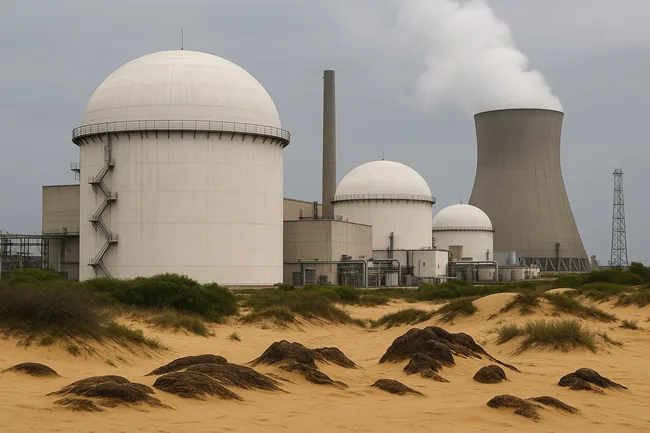
Drax Group (LSE: DRX) has agreed to acquire Bluefield Solar Income Fund (LSE: BSIF) through its subsidiary Drax Smart Generation Holdco in a recommended all-cash deal that values the renewable infrastructure investor at about £548 million, rising to roughly £561 million once a permitted interim dividend is included. Bluefield Solar Income Fund shareholders will receive 92.574 pence per share in cash and retain a 2.25 pence second interim dividend, for total consideration of 94.824 pence per share. The offer carries a premium of around 31 percent to the 72.2 pence closing price on 4 November 2025, the last trading day before Bluefield Solar Income Fund entered an offer period, while sitting roughly 9 percent below the fund’s most recently reported net asset value of 104.52 pence. Drax Group chief executive Will Gardiner described the transaction as potentially the largest acquisition the company has ever made, a clear signal of how central renewable generation has become to its strategy beyond biomass. Structured as a court-sanctioned scheme of arrangement, the deal would hand Drax Group close to 0.9 gigawatts of operating solar and wind capacity alongside a multi-gigawatt development pipeline.
Why is Drax Group paying a 31 percent premium for Bluefield Solar Income Fund right now?
The premium looks generous against the undisturbed share price but tells a more disciplined story when measured against asset value. Bluefield Solar Income Fund had been trading at a persistent discount to net asset value, closing near 78.8 pence and on a discount of around 25 percent in the week before the announcement, which is why a headline 31 percent premium still leaves Drax Group paying roughly 9 percent below the 104.52 pence net asset value reported at 31 March. In other words, Drax Group is acquiring operating renewable assets at a discount to their stated worth while simultaneously offering income-fund holders the cleanest exit available to them.
The strategic logic sits with Drax Group’s stated capital allocation framework, which earmarks up to £2 billion of incremental investment weighted towards flexible and renewable generation. Buying an established, cash-generative portfolio is materially faster than greenfield development and removes years of planning, grid connection, and construction risk. For a company still defined publicly by its biomass-fired Drax Power Station in North Yorkshire, the acquisition diversifies the generation base towards intermittent renewables backed by a development runway.
There is also a timing dimension. Bluefield Solar Income Fund launched a formal sale process in November 2025 after shareholders rejected an earlier proposal, effectively putting the assets in play. Drax Group emerged from a shortlist of bidders, which suggests competitive tension on price but also that the eventual clearing level reflects what a strategic buyer, rather than a financial sponsor, was willing to pay for operating UK renewables in the current rate environment.
What does the Bluefield Solar Income Fund portfolio add to Drax Group’s generation mix?
The operational prize is a fleet of roughly 852 to 900 megawatts of solar and wind capacity spread across more than 200 sites in England, Scotland, Wales, and Northern Ireland. That geographic spread reduces single-site and single-technology exposure, and it slots into a UK power system increasingly reliant on dispatchable and renewable capacity working in tandem. For Drax Group, the immediate effect is a step change in installed renewable capacity rather than an incremental bolt-on.
Beyond the operating base, Bluefield Solar Income Fund carries a development pipeline that Drax Group has framed at more than 1 gigawatt, with the wider pipeline cited by the fund at close to 2.8 to 2.9 gigawatts including earlier-stage projects. The value here is optionality. Drax Group has indicated it will assess the pipeline after taking control and apply its own capital allocation discipline rather than committing to build everything, which is the sensible posture given grid connection queues and shifting subsidy economics.
The financial contribution is concrete. For the financial year ended 30 June 2025, Bluefield Solar Income Fund generated EBITDA of approximately £130 million and free cash flow from operations of around £118 million. Critically, the fund has no employees, with operations and maintenance delivered under contracts that Drax Group expects to continue, which means the earnings arrive with a lean cost base and limited integration overhead compared with acquiring an operating company.
How will Drax Group fund the £561 million acquisition without straining its balance sheet?
Drax Group intends to fund the purchase using bridge financing, a standard structure that buys time to arrange permanent funding once the scheme completes. The company has reiterated a net debt target of around two times adjusted EBITDA, and with net debt reported at £784 million at the most recent full-year results against adjusted EBITDA of £947 million, there is headroom to absorb the consideration without breaching that ceiling, particularly once Bluefield Solar Income Fund’s own cash generation is consolidated.
The more telling capital signal is the decision to pause the existing share buyback programme until the deal closes. That pause prioritises balance-sheet strength over near-term shareholder returns and tells investors where management’s order of preference now sits. Drax Group has been careful to say it remains committed to dividends and longer-term capital returns, but the buyback suspension is a concrete trade-off rather than a rhetorical one.
There is a second-order consideration for Drax Group’s own equity story. The company reported adjusted earnings per share up 7 percent to 137.7 pence for 2025 and lifted its dividend by 11.5 percent, while also booking impairments on Canadian operations and the proposed carbon capture project at Drax Power Station, and consulting on cutting up to 350 roles. Layering a large acquisition onto a business already restructuring its cost base raises the bar on integration execution, even with a target that comes essentially employee-free.
What does the discount to net asset value reveal about the UK renewable fund sector?
The fact that one of the longest-established UK renewable income funds has accepted a bid below its own stated net asset value is the most instructive feature of this transaction. Renewable infrastructure investment trusts have spent much of the past two years trading at wide discounts as higher interest rates lifted discount rates applied to long-dated cash flows and made bond-like yields more competitive. Bluefield Solar Income Fund’s 25 percent pre-deal discount was not an outlier within the sector.
For shareholders, the board’s unanimous recommendation reflects a pragmatic judgement that a cash exit at a healthy premium to the depressed market price is preferable to waiting for the discount to close on its own. Chair Michael Gibbons framed the outcome as an opportunity to crystallise value in cash, which is a candid acknowledgement that the listed structure had stopped delivering for holders. The opposed earlier proposal that triggered the sale process underlines how much pressure the board was under to act.
The wider read-across is that strategic and infrastructure buyers can now acquire seasoned UK renewable portfolios at below replacement and below reported asset value, which is likely to encourage further consolidation. Other discounted renewable trusts become more visible targets once a deal like this sets a reference point, and boards facing similar shareholder discontent will be watching how the Bluefield Solar Income Fund process is judged.
How are Drax Group and Bluefield Solar Income Fund shares responding to the deal?
Bluefield Solar Income Fund shares reacted sharply on announcement, jumping by as much as 16 percent towards the offer level as the market priced in the cash exit, moving from around 78.8 pence to near 91.7 pence. That move closes most of the gap to the 94.824 pence total consideration, leaving a modest spread that reflects timing and completion risk on the scheme of arrangement rather than doubt about the headline terms.
Drax Group shares moved only marginally on the news, firming by under one percent. That muted reaction is consistent with a buyer the market views as paying a fair but not aggressive price, funded in a way that protects the balance sheet. Drax Group has traded within a 52-week range of roughly 616.5 pence to 937.5 pence and sat in the mid-800 pence area in late May, comfortably off its lows but still below the highs and below an average analyst price target in the high-900 pence range, against a broadly neutral consensus rating.
The divergence in the two share-price reactions is itself the signal. The target rallies because shareholders are being handed certainty at a premium to a beaten-down price, while the acquirer barely moves because the deal is large but not transformational to its valuation in the immediate term. The market is effectively reserving judgement on Drax Group until it sees how the pipeline is developed and how the funding is termed out.
What execution and regulatory risks could complicate the Drax Group takeover of Bluefield Solar Income Fund?
The transaction remains conditional on Bluefield Solar Income Fund shareholder approval and customary regulatory clearances, and a scheme of arrangement requires both a high vote threshold and court sanction. With the board unanimously recommending acceptance and the shares already trading close to terms, approval looks probable, but the structure introduces a timetable over which financing costs and power prices can move.
Integration risk is lower than in a typical corporate acquisition because the target has no staff and outsourced operations, yet the development pipeline is where value can be created or destroyed. Converting more than a gigawatt of pipeline into operating capacity depends on grid connection availability, planning consent, and the future shape of UK renewable support, none of which Drax Group fully controls. The company’s stated intention to assess rather than automatically build the pipeline is a prudent hedge against that uncertainty.
Finally, the deal sharpens Drax Group’s exposure to UK power market and policy risk at a moment when it is also managing the wind-down economics of biomass support and impairments on its carbon capture ambitions. The bridge-to-permanent financing path leaves the company sensitive to credit conditions until it refinances, and a prolonged completion period would extend the buyback pause that shareholders are currently being asked to accept. Each of these is manageable individually, but together they raise the importance of clean and timely execution.
Key takeaways on what the Drax Group acquisition of Bluefield Solar Income Fund means for the company, its competitors, and the sector
- Drax Group is acquiring operating UK renewables at roughly 9 percent below net asset value, so the headline 31 percent premium overstates how richly it is paying relative to underlying assets.
- The deal adds close to 0.9 gigawatts of operating solar and wind plus a multi-gigawatt pipeline, materially diversifying Drax Group’s generation base away from biomass.
- Bluefield Solar Income Fund delivers EBITDA of about £130 million and free cash flow near £118 million with no employees, giving Drax Group earnings with minimal integration cost.
- Funding via bridge financing and a paused share buyback signals that Drax Group is prioritising balance-sheet strength over near-term shareholder returns.
- A net debt target of around two times adjusted EBITDA, against £784 million net debt and £947 million EBITDA, leaves enough headroom to absorb the consideration.
- The board’s acceptance below net asset value confirms that listed renewable income funds remain structurally challenged by elevated discount rates.
- The transaction sets a reference valuation likely to accelerate consolidation among discounted UK renewable infrastructure trusts.
- For Bluefield Solar Income Fund holders, a cash exit at a premium to a depressed price crystallises value the listed structure had failed to deliver.
- Execution risk now centres on pipeline development and the timing of permanent refinancing rather than on integrating people or systems.
- Drax Group’s muted share reaction shows the market views the deal as fair but not transformational, reserving rerating until pipeline delivery is proven.
Discover more from Business-News-Today.com
Subscribe to get the latest posts sent to your email.