


Dilip Buildcon Limited (NSE: DBL; BSE: 540047) has been selected by REC Power Development and Consultancy Limited for a ₹1,151.47 crore intra-state transmission project in Yavatmal district, Maharashtra, moving the infrastructure contractor deeper into long-duration electricity-network ownership rather than conventional build-and-exit EPC work. The project covers establishment of the 400 kV air-insulated Yavatmal (Babhulgaon) system under the tariff-based competitive bidding framework, with a 24-month construction period followed by a 35-year operating tenure from commercial operation.
The development is structured on a Build, Own, Operate and Transfer basis, meaning Dilip Buildcon’s responsibility extends far beyond delivering a substation and collecting an EPC payment. The company will have to develop the asset, arrange financing, commission it on schedule and maintain transmission availability for decades before the system is ultimately transferred under the concession framework.
Why is a 35-year transmission concession strategically different from Dilip Buildcon’s traditional road EPC work?
Traditional EPC revenue is finite. A contractor builds an asset, recognises revenue as construction milestones are completed and eventually moves equipment and personnel to the next project.
A transmission concession creates a longer economic relationship. After construction, the owner continues operating the asset and receives tariff-linked revenues subject to availability, regulatory and contractual requirements over a period measured in decades.
That can make earnings more predictable once construction is complete, but it also ties capital to the project for longer. Dilip Buildcon therefore has to balance the benefit of recurring infrastructure cash flow against the financing burden and operating obligations associated with asset ownership.
The shift also broadens the company away from roads and highways, where revenue has historically depended heavily on government construction programmes and project execution. Power transmission offers exposure to another infrastructure cycle supported by renewable integration, industrial demand and network reinforcement.
What does ₹1,151.47cr actually cover in the Yavatmal project?
The disclosed bid project cost is ₹1,151.47 crore, excluding GST according to industry reporting. The core scope involves development of a 400 kV air-insulated substation system at Yavatmal’s Babhulgaon area and the associated transmission infrastructure required under the Maharashtra intra-state network programme.
The figure should not be treated as 35 years of revenue. It represents the bid project cost associated with development and construction, while operational cash flows will depend on the tariff structure emerging from the competitive bidding process.
This distinction matters because long-duration transmission projects are often valued on the present value of future tariff cash flows rather than simply on construction cost.
The company has not disclosed enough information in the announcement to calculate project equity internal rate of return, debt-service coverage or expected annual operating cash flow. Investors will need financing and tariff detail before determining how attractive the concession is relative to ordinary EPC work.
Why does Maharashtra need another 400 kV transmission asset in Yavatmal?
India’s power investment cycle is increasingly constrained by grid infrastructure rather than generation alone. Renewable projects, industrial loads, urban growth and new thermal capacity all require substations and high-voltage lines capable of moving electricity between generation zones and demand centres.
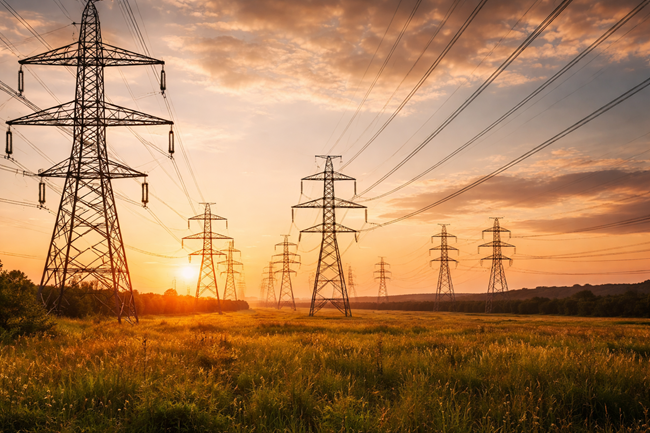
A 400 kV system operates at bulk-transmission scale, allowing substantially larger power flows than local distribution infrastructure. Building such assets can relieve network bottlenecks, improve redundancy and provide additional capacity for future generation connections.
Maharashtra is particularly important because it combines large industrial electricity demand with growing renewable procurement and multiple generation corridors.
Yavatmal’s location in eastern Maharashtra also positions the project within a region experiencing wider transmission investment. The strategic value therefore lies less in one substation than in how the asset strengthens the state’s ability to move electricity as generation and consumption patterns change.
How meaningful is ₹1,151cr relative to Dilip Buildcon’s existing order book?
Dilip Buildcon reported an outstanding order book of approximately ₹28,829.65 crore at March 31, 2026. The Yavatmal project therefore equals about 4% of that year-end backlog on a simple comparison, making it material without becoming overwhelmingly concentrated.
The company also announced another Maharashtra project on September 28, emerging as L1 for a ₹688.23 crore elevated corridor in Solapur. Together, the two fresh opportunities approach ₹1,840 crore, although road and transmission projects have different business models and should not be analysed as one homogeneous order.
The transmission award is strategically more interesting because it expands recurring ownership exposure rather than merely adding construction revenue.
A larger concession portfolio can eventually change how investors value Dilip Buildcon, but it also requires substantial equity commitments and project debt. Growth in owned infrastructure is therefore not automatically less risky than EPC growth; it simply moves risk from order replenishment toward long-term financing and operating performance.
What financing risks come with a 24-month build followed by 35 years of operation?
The project must consume capital before operating tariff revenue begins. During the 24-month construction window, Dilip Buildcon needs to fund engineering, equipment procurement, civil works, transformers, switchgear, transmission infrastructure and financing costs.
Project debt can cover part of the requirement, but lenders will scrutinise construction milestones and the tariff framework because delayed commissioning postpones the start of operating cash flow.
Once the asset is operational, revenue stability improves, but availability becomes critical. Transmission concessions typically depend on the system remaining operational within prescribed reliability standards, making maintenance and outage management economically important.
Interest rates also matter because long-duration infrastructure returns are highly sensitive to financing cost. A tariff that appeared attractive when borrowing rates were lower can become less compelling if debt is priced during a tightening cycle.
This is particularly relevant in late September 2026, when Indian corporate borrowers are accelerating debt issuance amid expectations that inflation and high oil prices could prompt tighter monetary policy.
Why did Dilip Buildcon shares fall despite the Yavatmal win?
Dilip Buildcon shares closed at approximately ₹406.90 on September 28, down about 1.35% from ₹412.45 on September 25. The stock traded between ₹402.60 and ₹412.45 during the session.
The weak reaction should be interpreted alongside the broader market. Indian equities fell sharply on September 28 as rising crude prices and bond yields pressured risk sentiment, making it difficult to isolate the transmission award as the cause of the stock move.
Investors may also be waiting for financial details. Winning a ₹1,151 crore BOOT project is not equivalent to immediately earning ₹1,151 crore of profit, while the 35-year operating responsibility creates both recurring revenue potential and long-term capital commitments.
The next milestones will therefore be more important than the announcement itself: SPV transfer, financing closure, construction mobilisation and eventual disclosure of tariff economics. If Dilip Buildcon can commission the asset within 24 months and establish predictable operating cash flows, Yavatmal could become evidence that the company is evolving from an EPC contractor into a broader owner-operator of Indian infrastructure.
Discover more from Business-News-Today.com
Subscribe to get the latest posts sent to your email.