






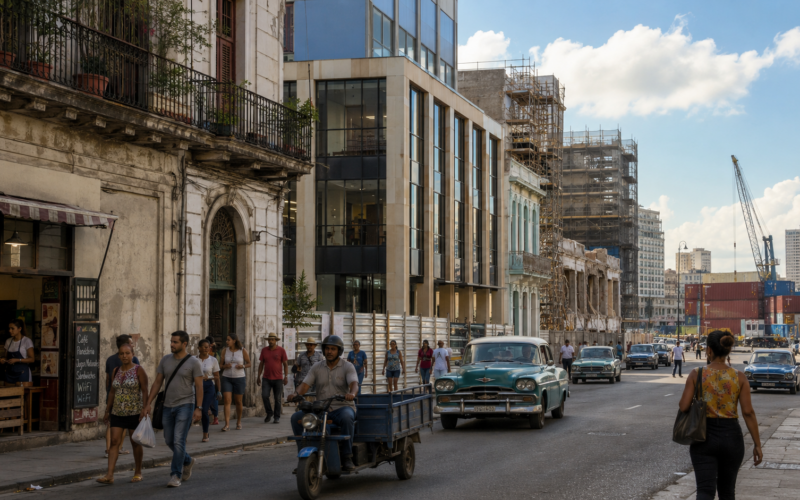
Cuba has approved its most extensive market-oriented economic reforms since the 1959 revolution, opening large parts of the state-dominated economy to private banking, foreign investment, direct international trade and expanded private enterprise. The National Assembly unanimously approved more than 175 measures on June 18, 2026, after the Communist Party of Cuba backed an emergency package intended to address deepening fuel shortages, prolonged electricity blackouts, declining production and financial isolation.
The reforms would allow private companies to import and export without mandatory state intermediaries, permit entrepreneurs to own multiple businesses and remove the existing ceiling that prevents private firms from employing more than 100 people. Private banks could enter a financial system long controlled by the state, while Cubans living abroad and foreign investors could purchase selected state assets and participate more directly in the economy.
State-owned companies would receive greater control over wages, profits, trade and partnerships with private businesses. Municipal governments would gain wider authority to approve businesses, conduct trade and manage foreign-currency revenue, while Cuba would gradually reduce some universal subsidies and move more products towards market-based pricing.
President Miguel Díaz-Canel and Prime Minister Manuel Marrero have insisted that Cuba is not abandoning socialism. The government describes the reforms as an attempt to preserve the political system by changing how the economy allocates capital, rewards production and attracts investment.
The transformation is substantial on paper. Its success will depend on implementation, access to fuel and foreign currency, confidence among investors and whether United States sanctions continue limiting companies that might otherwise enter the Cuban market.
Why has Cuba approved its biggest economic opening since the 1959 revolution?
Cuba’s leadership is attempting to respond to an economic emergency that can no longer be managed solely through state allocation, rationing and administrative controls.
The island has experienced years of shortages involving food, medicine, fuel and basic consumer products. The crisis has worsened as electricity generation has become less reliable, foreign-currency reserves have weakened and tourism revenue has failed to recover sufficiently.
Blackouts have reportedly lasted as long as 20 hours in some areas, affecting homes, hospitals, schools, public transport and businesses. Limited fuel availability has reduced industrial output and disrupted the movement of goods between farms, warehouses, shops and urban centres.
Cuba’s state-led system has also struggled with low productivity and bureaucratic delays. Government agencies have traditionally determined which companies can operate, what they can import, how they obtain foreign currency and which prices they may charge.
The new package acknowledges that the state cannot efficiently control every production, investment and trade decision. Manuel Marrero presented the market as a mechanism that could allocate resources more effectively, a notable change in language for Cuba’s communist leadership.
The government has not embraced political liberalisation or competitive multiparty government. Instead, Cuba is attempting to separate economic control from political control by expanding private activity while preserving the Communist Party’s constitutional authority.
Miguel Díaz-Canel has compared the strategy with elements of the Chinese and Vietnamese models, where ruling communist parties maintained political power while allowing market competition, foreign investment and private wealth creation.
The strategic calculation is clear. Cuba’s leadership believes the socialist state may be more likely to survive if the economy becomes less dependent on direct state management.
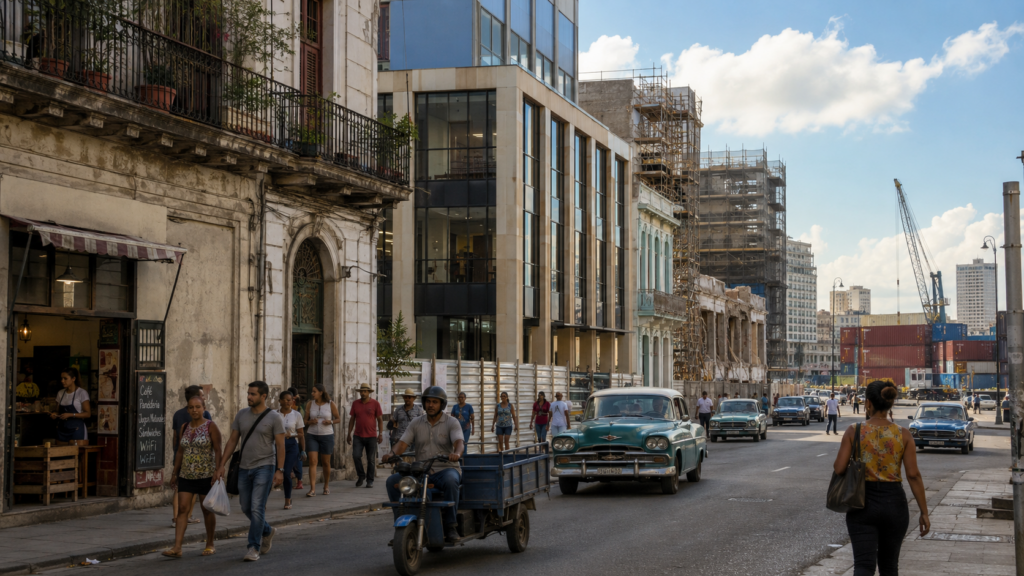
How will private businesses gain greater freedom under Cuba’s economic reform package?
Private businesses could receive freedoms that would have been politically difficult to imagine during earlier periods of the Cuban revolution.
Small and medium-sized enterprises would be permitted to import supplies and export goods directly rather than relying on state trading companies that currently control access, impose fees and frequently delay transactions.
Direct trade could help Cuban businesses purchase machinery, food ingredients, replacement parts and raw materials more efficiently. It could also allow competitive companies to sell products abroad and retain a greater share of foreign-currency earnings.
Entrepreneurs would be allowed to operate multiple businesses. Current limitations have prevented individuals from building broader business groups or expanding into complementary sectors.
The restriction preventing private companies from employing more than 100 people would also be removed. Larger employers could emerge in food production, tourism, logistics, construction, technology, retail and professional services.
The change could create employment outside the state sector and increase competition for skilled workers. It could also widen inequality between entrepreneurs with access to foreign capital and citizens who remain dependent on state salaries.
International restaurant and retail chains may also receive permission to establish operations in Cuba. Their arrival could create jobs, develop supply networks and increase consumer choice, although domestic businesses may struggle to compete with better-financed foreign companies.
Private-sector growth will still operate under government licensing, taxation and regulation. The Cuban state is not removing itself from the economy. It is changing from the dominant producer and employer into a regulator, partner, owner and tax collector.
The unanswered question is whether officials accustomed to controlling economic activity will allow private companies to make independent decisions when those companies begin accumulating capital and influence.
Could private banks and a digital foreign-exchange market solve Cuba’s currency crisis?
Allowing private banks represents one of the package’s most significant changes because Cuba’s financial system has long been dominated by state institutions.
Private banks could help businesses obtain credit, process payments and access financial services more quickly. A more competitive banking sector may also improve the allocation of savings and investment.
The government plans to retain regulatory oversight, meaning private financial institutions would operate within rules established by the Cuban state. Authorities would likely impose capital requirements, lending restrictions and controls intended to protect financial stability.
Cuba also plans to introduce a real-time digital foreign-exchange market involving authorised participants. The measure is intended to narrow the gap between the official exchange system and the informal market used by many citizens and businesses.
Foreign currency is essential because Cuba must import fuel, food, medical supplies, industrial equipment and consumer goods. Businesses cannot expand direct trade if they cannot legally and reliably obtain dollars, euros or other convertible currencies.
A functioning exchange market could improve price discovery and reduce dependence on street-level currency trading. However, a digital platform cannot create foreign currency that the country does not possess.
Cuba still needs export revenue, tourism income, remittances and foreign investment. Without those inflows, the formal market could face shortages similar to the existing state system.
Currency reform may also involve depreciation of the Cuban peso. A weaker official exchange rate could make exports more competitive but increase the local cost of imported food, fuel and equipment.
Private banking and digital foreign exchange can improve financial plumbing. They cannot independently solve Cuba’s shortage of energy, investment and internationally accepted currency.
How will state-owned companies change under Cuba’s new market-oriented model?
Cuba’s approximately 2,000 state-owned enterprises would remain important, but they could receive greater commercial autonomy.
Companies would be allowed to design their own compensation systems rather than relying exclusively on centrally determined salary structures. This could help productive enterprises reward skilled employees and retain workers who might otherwise move to private companies or leave the country.
State businesses could distribute and reinvest profits with fewer administrative restrictions. They could also import and export more directly and form partnerships with cooperatives and private enterprises.
Some state companies may be transformed into commercial entities with shares or equity interests. This could enable outside investment while allowing the government to retain partial or controlling ownership.
The sale of selected state properties to Cuban, foreign and expatriate investors would mark another major change. The state has traditionally maintained extensive control over land, buildings, industry and commercial infrastructure.
Private real-estate development could help restore deteriorating buildings, create housing and revive underused tourism or commercial sites. It could also produce disputes over ownership rights, valuations, transparency and the distribution of valuable property.
Commercial autonomy will expose state companies to greater financial discipline. Enterprises that previously survived through government transfers may need to reduce costs, change management or close.
The reform package therefore creates both opportunity and risk. Efficient state businesses may attract capital and expand. Weak companies may lose protection and shed workers.
Cuba will need clear rules governing valuation, bankruptcy, asset sales and competition. Without transparent procedures, restructuring could favour politically connected investors or transfer valuable public assets without adequate scrutiny.
Why is Cuba gradually reducing subsidies and moving more goods towards market prices?
Cuba’s revolutionary social contract has relied heavily on subsidised food, transport, utilities, healthcare and education. These protections provided a basic level of security even when wages remained low.
The government can no longer afford to subsidise every household and product at the same level. Fuel shortages, weak production and limited foreign currency have increased the financial burden of maintaining controlled prices.
The reforms would gradually phase out some broad subsidies and move food and other products towards market pricing. The government is expected to replace parts of the universal system with more targeted assistance for vulnerable households.
Targeted support can be less expensive because resources go to people who need them most rather than every citizen regardless of income.
The transition is politically dangerous. Market prices may rise faster than salaries and pensions, leaving households unable to afford food, electricity, transport or water.
Private companies may also charge prices based on imported input costs and informal currency rates. This can improve product availability while placing goods beyond the reach of workers paid in Cuban pesos.
The government plans to develop a revised taxation system that would require state-owned, private, domestic and foreign businesses to contribute more directly to public services.
The success of that model depends on tax collection, business profitability and administrative capacity. Cuba cannot finance social protection from private enterprise unless companies earn enough income and the state can collect revenue efficiently.
Economic reform may increase the quantity of available goods while reducing equal access. Managing that contradiction will be one of the government’s most difficult challenges.
Can foreign investors enter Cuba while United States sanctions remain in place?
Cuba wants investment from international companies and Cubans living abroad, but United States sanctions create a significant obstacle.
Foreign businesses that operate in Cuba can face restrictions involving the United States banking system, dollar transactions, travel rules, insurance and access to American markets. Companies with substantial operations in the United States may decide that investment in Cuba creates excessive legal and financial risk.
The recent tightening of American restrictions has increased pressure on Cuba’s energy imports and business relationships. Sanctions against major Cuban entities have also affected tourism partnerships and international companies operating on the island.
The reforms allow foreign investors to do more inside Cuba, but Havana cannot remove external restrictions imposed by Washington.
Miguel Díaz-Canel has maintained that the package was not negotiated with the United States and should not be understood as a concession demanded by Washington.
Nevertheless, the timing is closely connected to American economic pressure. Cuba needs investment precisely when sanctions make that investment more difficult.
Investors will also seek guarantees concerning property rights, profit transfers, dispute resolution, currency conversion and the ability to exit projects.
Cuba has previously opened sectors to private or foreign participation and later introduced restrictions or delayed approvals. That history may cause investors to wait until implementation rules become clear.
Companies from countries with fewer concerns about United States sanctions may move first. However, they will still need reliable electricity, banking, transport and access to imported equipment.
The economic opening is therefore necessary but not sufficient. Cuba must improve domestic conditions while seeking relief from external financial restrictions.
Could the Chinese and Vietnamese economic models work under Cuban conditions?
China and Vietnam used market reforms to expand exports, attract foreign manufacturing investment and integrate into global supply chains while maintaining one-party political systems.
Cuba hopes to adopt selected elements of that approach, including private enterprise, foreign capital, decentralised decision-making and commercially managed state companies.
The comparison has limits.
China and Vietnam possess larger populations, extensive manufacturing bases and stronger connections to regional supply chains. Their reforms also unfolded during periods when Western companies were actively seeking lower-cost production centres.
Cuba is a smaller island economy with ageing infrastructure, limited fuel, weak logistics and extensive United States sanctions. Geography provides tourism and maritime opportunities, but it does not automatically create an industrial export platform.
Cuba also faces substantial demographic pressure because many younger and working-age citizens have emigrated. The loss of skilled workers can weaken entrepreneurship, public services and industrial recovery.
The island does have advantages. Cuba has an educated population, established healthcare and biotechnology capabilities, tourism assets and proximity to major markets in North America and the Caribbean.
A Cuban model may therefore depend more heavily on services, tourism, agriculture, renewable energy, biotechnology, logistics and expatriate investment than the manufacturing-led strategies used by China and Vietnam.
The government must also decide how much wealth accumulation and business independence it will tolerate. Market reform can produce influential private employers whose interests do not always align with state planning.
Cuba wants the productivity benefits of capitalism without surrendering communist political control. Whether that balance can be maintained will depend on how institutions respond when economic liberalisation creates new centres of power.
What implementation risks could prevent Cuba’s historic reforms from changing daily life?
The largest risk is bureaucratic resistance. Cuban authorities have introduced smaller market reforms before, only for licensing delays, changing regulations and institutional caution to limit their impact.
Government ministries and state companies may resist losing control over imports, currency, property and employment. Officials who benefit from existing administrative systems may have little incentive to accelerate competition.
The package is also extremely broad. More than 175 measures require legislation, regulations, administrative instructions, digital systems and trained personnel.
Cuba has not published a complete timetable explaining when each reform will begin or how investors and businesses can apply.
Electricity remains another constraint. Businesses cannot increase production if factories, refrigeration, payment systems and transport networks lose power for extended periods.
Fuel shortages limit delivery vehicles, agricultural machinery, tourism and public transport. Banking reform cannot compensate for an economy that lacks reliable energy.
Inflation and currency weakness could also reduce the benefits. Higher business activity may increase nominal income while the real purchasing power of wages continues declining.
Public confidence presents a final challenge. Many Cubans have experienced repeated reform announcements without sufficient improvement in food availability, housing, transport or salaries.
The government will be judged by visible outcomes rather than ideological language. Longer shop inventories, shorter blackouts, more jobs and improved wages will matter more than the number of reforms approved.
Cuba has opened a door that remained politically closed for decades. The harder task is building an economy capable of moving through it.
What are the key takeaways from Cuba’s historic market-oriented economic reforms?
- Cuba’s National Assembly unanimously approved more than 175 economic reforms on June 18, 2026, creating the island’s largest formal shift towards market-based activity since the revolution led by Fidel Castro in 1959.
- The package would allow private banks, private real-estate development, direct imports and exports, wider foreign investment and the sale of selected state assets to domestic, foreign and expatriate investors.
- Cuban entrepreneurs would be allowed to own multiple businesses and employ more than 100 workers, potentially creating larger private companies in sectors including tourism, construction, food production, logistics and retail.
- State-owned companies would gain greater authority over wages, profits, international trade and partnerships, while some enterprises could be reorganised as commercial companies with shares and outside equity participation.
- Municipal governments would receive more control over business approvals, trade and foreign-currency revenue, reducing the concentration of economic decision-making within Cuba’s national ministries and central agencies.
- Cuba plans to reduce some universal subsidies and move more goods towards market pricing, creating potential fiscal savings but also increasing inflation and affordability risks for low-income households and pensioners.
- President Miguel Díaz-Canel and Prime Minister Manuel Marrero insist the reforms are intended to preserve and update socialism rather than replace one-party rule with political or institutional liberalisation.
- Implementation remains uncertain because United States sanctions, fuel shortages, blackouts, weak foreign-currency reserves and bureaucratic resistance could prevent the approved measures from producing rapid improvements in daily economic life.
Share this:
Discover more from Business-News-Today.com
Subscribe to get the latest posts sent to your email.

