



Critical Metals plc (LSE: CRTM) has secured a £2.5 million convertible loan-note commitment from majority shareholder NIU Invest SE to support the Molulu Copper/Cobalt Project, potential mining acquisitions and corporate working capital. The financing carries annual interest of 10%, matures 18 months after each tranche is issued and can be converted into Critical Metals shares at 10.25 pence each. However, the full £2.5 million will not arrive immediately, with £1.1 million due by the end of December 2026, £1 million due by May 2027 and £400,000 allocated to repay an earlier NIU facility. The arrangement gives Critical Metals a claimed funding runway of at least 12 months, but it also increases dependence on a shareholder that already controls more than 60% of CRTM and could strengthen that position if the debt converts.
Why is Critical Metals raising another £2.5 million from its controlling shareholder?
Critical Metals remains a development-stage mining company whose principal asset has not yet established dependable commercial cash flow. The company owns a 70% interest in the Molulu Copper/Cobalt Project in the Democratic Republic of Congo and has repeatedly described the brownfield asset as capable of returning to production with relatively modest capital. The financing requirement shows that the journey from existing infrastructure to sustainable mineral sales remains incomplete.
The latest commitment follows a £2.1 million convertible instrument created in December 2025. Critical Metals said some notes under that facility had still not been issued and were expected to be subscribed by NIU Invest at par by the end of September 2026. The new commitment must therefore be considered alongside earlier funding rather than viewed as an isolated capital injection.
NIU Invest has become Critical Metals’ primary source of financial support. The investor initially provided convertible funding, acquired debt from other creditors, subscribed for new equity and ultimately became the company’s controlling shareholder during 2025. The latest agreement continues that progression from outside financier to majority owner and now to the principal funder of the next operational phase.
This support reduces immediate liquidity risk because Critical Metals does not need to seek a deeply discounted public placing in a weak market. However, it also concentrates financial power. When one shareholder controls the equity, supplies the debt and holds conversion rights, minority investors become increasingly dependent on that shareholder’s continued willingness to fund the business on acceptable terms.
The financing therefore solves an important problem while creating a strategic dependency. Critical Metals gains time to restart Molulu and assess acquisitions, but NIU Invest’s role becomes even more central to the company’s future direction.
How much of the £2.5 million facility represents immediate new cash for CRTM?
The headline value of £2.5 million overstates the amount of immediately available liquidity. NIU Invest has agreed to subscribe for £1.1 million of notes on or before December 31, 2026 and another £1 million on or before May 31, 2027. Those commitments provide future funding visibility, but they do not place the entire amount on Critical Metals’ balance sheet at once.
A further £400,000 will be applied to repay sums due under a facility provided by NIU Invest in July 2025. This portion effectively refinances an existing obligation rather than creating additional spending power. It simplifies the debt relationship but does not contribute fresh cash to drilling, mining or acquisitions.
The practical liquidity position therefore depends partly on the remaining notes under the December 2025 instrument. Critical Metals expects those notes to be subscribed by the end of September 2026 and has said the combined funding should cover at least 12 months. Investors will need clearer disclosure of the amount still undrawn, the timing of receipts and the division between committed cash and refinancing.
The staged arrangement may benefit NIU Invest by limiting the amount of capital exposed before operational milestones are delivered. It may also encourage Critical Metals to maintain expenditure discipline. However, staged funding can constrain management if drilling, equipment procurement or acquisition opportunities require cash before scheduled subscription dates.
Critical Metals has not simply received £2.5 million to deploy at management’s discretion. It has obtained a timetable of support, part of which replaces existing debt and part of which is not due for several months.
What dilution could the convertible notes create for Critical Metals shareholders?
The conversion price of 10.25 pence is above CRTM’s approximately 9 pence closing level before the weekend. This means conversion would not currently be economically attractive based solely on the market price, although the investment decision may reflect strategic control and longer-term expectations rather than immediate trading value.
Conversion of the £2.5 million principal at 10.25 pence would create approximately 24.4 million new shares. Critical Metals currently has around 101.8 million shares outstanding, meaning principal conversion alone could increase the share count by close to 24% before considering interest or any outstanding notes under the earlier instrument.
If the full £2.5 million remained outstanding for 18 months, annual interest of 10% would add approximately £375,000. Conversion of principal and this illustrative interest amount at 10.25 pence would require roughly 28 million shares. The actual figure will depend on issue dates, repayment decisions, conversion timing and whether interest is converted or paid in cash.
NIU Invest previously disclosed ownership of around 70.8 million shares, representing approximately 69.6% on the measure used in that announcement. If NIU converted the entire new principal while the wider share count remained unchanged, its holding could rise to approximately three-quarters of the enlarged equity. Including accumulated interest could move the percentage modestly higher.
The final ownership position could differ because Critical Metals may issue other shares, repay some notes in cash or refinance the obligations. Nevertheless, the direction is clear. Debt conversion would further reduce the proportion of the company owned by minority shareholders.
Dilution is not automatically destructive when new capital creates project value greater than the equity issued. The concern is that Critical Metals has not yet demonstrated the commercial production and cash flow needed to prove that the earlier dilution created a self-financing business.
Does the 10.25 pence conversion price protect minority CRTM investors?
The conversion price provides some protection because it is above the current market level and substantially above the 2 pence price used during NIU Invest’s 2025 equity subscription. NIU cannot convert the new principal into shares at a steep discount to the latest market price under the disclosed terms.
A fixed conversion price also allows minority investors to understand the potential share count more easily than a floating-price instrument. Variable conversion arrangements can become increasingly dilutive as the share price falls because more shares are required to settle the same debt. The Critical Metals notes avoid that particular financing spiral.
However, the protection is incomplete. If CRTM rises above 10.25 pence, NIU Invest could convert at a discount to the prevailing market price and strengthen its ownership position. If the shares remain below the conversion price, the notes may instead mature as cash liabilities carrying accumulated interest.
This creates two different risks. A successful Molulu restart could increase the share price and make conversion attractive, producing dilution precisely when the investment case improves. A failed or delayed restart could leave Critical Metals owing principal and interest without sufficient internal cash generation to repay the notes.
The company may then need to refinance, issue equity or negotiate revised terms with NIU Invest. Because NIU already controls the shareholder vote, minority investors have limited ability to influence the economic outcome.
The 10.25 pence price is more disciplined than a heavily discounted immediate placing, but it does not remove financing risk. It merely determines whether that risk eventually appears as dilution or debt repayment pressure.
Can the Molulu Copper/Cobalt Project finally produce dependable commercial cash flow?
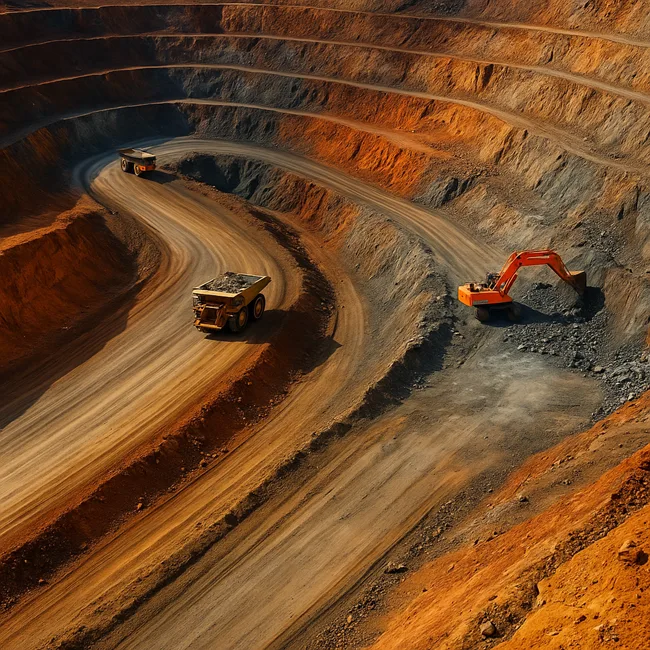
Molulu is located in the Katangan Copperbelt, one of the world’s most important copper and cobalt regions. Critical Metals acquired its interest in 2022, increased its indirect ownership to 70% and began limited mining activity in January 2023. The project benefits from existing access infrastructure and proximity to processing and smelting capacity around Lubumbashi and Likasi.
The company’s original strategy centred on exploiting a known brownfield deposit rather than funding a long exploration cycle. Molulu had previously been worked by artisanal miners, and Critical Metals believed the asset could provide near-term production with comparatively low capital requirements.
Critical Metals also established an offtake arrangement covering at least 20,000 tonnes of copper oxide ore. This offers a potential route to market if the company can produce material meeting the required grade, specification and delivery schedule.
The difficulty has been moving from small-scale mining and technical work into a consistent commercial operation. Capital constraints, management changes and the need for additional drilling have repeatedly pushed the expected cash-flow timeline forward. The company was previously targeting first mineral sales around the middle of 2026, making the next operational update particularly important.
Investors will need evidence of tonnes mined, copper and cobalt grades, recoveries, stockpiled material, transport arrangements, customer acceptance and realised pricing. Statements about restarting production are not equivalent to cash receipts.
Molulu’s brownfield status lowers some development barriers, but it does not eliminate geological uncertainty, equipment requirements or working-capital needs. A mine can have roads, an offtake agreement and nearby smelters while still failing to generate dependable margins.
Why is Critical Metals considering acquisitions before Molulu is fully established?
Part of the financing may be used to explore additional mining acquisitions. Critical Metals was created as an investment vehicle targeting low-capital brownfield opportunities in strategic metals, meaning portfolio expansion has always formed part of its mandate.
Acquiring another asset could diversify the company beyond Molulu and provide access to a project with faster cash generation, stronger geology or a less complex operating profile. NIU Invest has also stated ambitions to build a broader international mining portfolio, which may give Critical Metals access to opportunities unavailable to an independent micro-cap company.
However, acquisition activity would increase complexity before the core asset has proved itself. Critical Metals currently has a market capitalisation of approximately £9 million and remains dependent on shareholder funding. Even a relatively small transaction could be material compared with the company’s existing resources.
A new acquisition may require additional equity, seller financing, royalties or project-level debt. Each structure could create further dilution or financial obligations. Management would also need to oversee due diligence and integration while restarting a mine in the Democratic Republic of Congo.
The best acquisition would be one that accelerates cash flow without diverting capital from Molulu. The worst would consume the new funding, broaden management’s workload and leave both assets undercapitalised.
Critical Metals must therefore explain whether acquisitions are an active near-term priority or simply an option. A 12-month runway sounds less comfortable if a substantial part of the money may be committed to another transaction.
What governance risks arise when NIU Invest controls both equity and financing?
NIU Invest’s support has allowed Critical Metals to continue operating during a period of limited liquidity. Independent shareholders approved a waiver in 2025 that allowed NIU to exceed the normal takeover threshold without making a mandatory offer for the remaining shares. The investment subsequently gave NIU effective control of the company.
The new loan-note agreement is formally classified as a material related-party transaction because of that ownership position. This classification recognises that the lender and controlling shareholder are the same party, creating potential conflicts between creditor interests and the interests of minority equity holders.
As lender, NIU Invest benefits from 10% interest, redemption rights and the ability to convert into equity. As majority shareholder, NIU benefits if the company’s projects appreciate. These interests may often align with minority shareholders, particularly when funding preserves the company’s ability to operate.
Conflicts could emerge during a refinancing, acquisition or restructuring. A controlling creditor may have greater influence over repayment priorities, conversion timing, asset security or the terms of future capital. Minority holders may face an outcome that preserves the business while materially reducing their economic participation.
Independent directors therefore have an important role in evaluating future transactions. The board must demonstrate that related-party arrangements are commercially reasonable, properly disclosed and preferable to realistic alternatives.
The market will also examine whether management’s acquisition strategy reflects the interests of Critical Metals as a listed company or the wider portfolio ambitions of NIU Invest. Control is not inherently negative, but transparency becomes more important when one investor occupies several positions around the negotiating table.
What does CRTM’s weak share performance reveal about investor sentiment?
Critical Metals shares ended July 3 around 9 pence, leaving the company with an equity value of roughly £9 million. The financing announcement arrived only shortly before the market closed, limiting the time available for a meaningful immediate reaction.
The shares had fallen approximately 12.5% over the preceding week and around 22% across one month. Available market data placed the 52-week trading range between approximately 3 pence and 21 pence, meaning CRTM remained well above its annual low but more than 55% below its peak.
This performance suggests that investors recognise the value of NIU Invest’s financial support but remain uncertain about the speed of Molulu’s development. The share price also sits below the 10.25 pence conversion level, indicating that the market has not yet assigned a clear premium to the new funding commitment.
CRTM is a thinly traded micro-cap stock, so individual transactions can produce disproportionately large movements. Bid and offer spreads may also differ from the last traded price, making short-term percentage changes less informative than they would be for a liquid large-cap company.
The more important signal is the declining trend since the stock traded above 20 pence. Investors appear to be demanding operational evidence before valuing the company on the strategic importance of copper and cobalt.
The financing prevents an immediate liquidity crisis, but the market is unlikely to reward the company simply for obtaining another loan. Sustainable revaluation requires production data, sales receipts and a clearer path to funding operations without repeated shareholder support.
How do Democratic Republic of Congo risks affect the Molulu investment case?
The Democratic Republic of Congo is central to global cobalt supply and one of the world’s most important copper-producing jurisdictions. Its mineral endowment attracts large international mining groups, trading companies and strategic investors seeking exposure to electrification, energy infrastructure and advanced manufacturing.
This geological advantage is accompanied by regulatory, infrastructure and governance risk. Mining companies must manage licence compliance, taxation, customs, local partnerships, community relations and changes in government policy. Smaller operators generally have fewer resources to absorb delays or disputes than established multinational producers.
Molulu’s proximity to the established Katangan mining ecosystem is an advantage. The region has experienced contractors, transport routes, processing facilities and potential customers. However, road conditions, power availability and seasonal weather can still affect operating costs and production schedules.
Critical Metals owns 70% of the project rather than the entire asset, which means local partnership arrangements and minority interests remain relevant to decision-making and value allocation. The company must maintain effective relationships with project stakeholders while meeting its obligations to London-listed shareholders.
Copper and cobalt prices add another layer of risk. Strong prices can improve project economics and financing access, while weaker prices can reduce the value of low-grade material and make transport or third-party processing uneconomic.
The investment case therefore depends on more than the presence of mineralisation. Critical Metals must demonstrate that it can mine, process or sell Molulu material consistently within the commercial and regulatory realities of the Democratic Republic of Congo.
What must Critical Metals deliver during its new 12-month funding runway?
The first priority is clarity on funding receipts. Investors need confirmation when the remaining December 2025 notes are subscribed, how much cash enters the company and how the proceeds are divided between Molulu, corporate expenses and acquisition work.
The second requirement is measurable operating progress at Molulu. Critical Metals should disclose drilling results, resource interpretation, equipment readiness, mine planning, expected production volumes and the timetable for first commercial deliveries.
The third requirement is proof that the offtake route remains active. Investors need to know whether the original arrangement is still enforceable, whether pricing terms remain economic and whether the customer is ready to accept planned production.
The fourth requirement is stronger financial disclosure. Critical Metals should distinguish expenditure that advances the project from recurring corporate costs. The 10% interest burden will become increasingly relevant if commercial cash flow does not begin before the notes mature.
Management must also define its acquisition criteria. Any transaction should improve the probability of self-funded growth rather than merely enlarge the collection of assets requiring capital.
The new facility gives Critical Metals time, but the staged structure means that time is not accompanied by unlimited cash. The company must use the runway to convert Molulu from a strategic-metal narrative into an operating business.
If commercial sales begin and cash margins are demonstrated, the 10.25 pence conversion price may prove acceptable because the enlarged company could be worth substantially more. If production remains delayed, the financing may simply move the next balance-sheet decision into 2027.
Key takeaways on what Critical Metals’ NIU financing means for CRTM investors
- Critical Metals has secured a £2.5 million convertible loan commitment from controlling shareholder NIU Invest SE.
- Only £2.1 million represents scheduled future subscriptions, while £400,000 will repay an earlier NIU facility.
- The funding is staged through May 2027 rather than being immediately available in full.
- The notes carry 10% annual interest and mature 18 months after each tranche is issued.
- Conversion of the £2.5 million principal at 10.25 pence could create approximately 24.4 million shares.
- Conversion including illustrative 18-month interest could require roughly 28 million shares.
- NIU Invest already controls more than 60% of Critical Metals and could increase that position further.
- The financing removes immediate liquidity pressure but does not prove that Molulu can generate commercial cash flow.
- Potential acquisitions could diversify Critical Metals, but they may also consume capital before the core project is established.
- CRTM’s next meaningful rerating will depend on drilling, production, offtake deliveries and cash receipts rather than additional financing announcements.
Discover more from Business-News-Today.com
Subscribe to get the latest posts sent to your email.