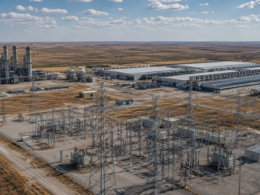



Cenovus Energy Inc. (NYSE: CVE, TSX: CVE) reported a 161% increase in third-quarter net earnings to C$3.36 billion as record oil production, stronger refining margins and substantial cash generation reinforced the Canadian energy producer’s financial position. The company surpassed one million barrels of oil equivalent per day in quarterly production for the first time, generated C$3.57 billion in free funds flow and returned C$1.9 billion to shareholders through dividends and share repurchases.
The results mark an important milestone for Cenovus Energy Inc., which is expanding its oil sands operations while preparing to acquire Athabasca Oil Corporation in a transaction carrying an implied enterprise value of C$5.7 billion. With net debt falling to approximately C$3 billion and the company seeking authorisation for additional share repurchases, investors are evaluating whether stronger production, refining profitability and acquisition-driven growth can sustain shareholder returns amid volatile global crude oil markets.
Why Cenovus Energy’s record oil production and 161% earnings growth signal stronger operating performance
Cenovus Energy Inc. reported third-quarter net earnings of C$3.36 billion, compared with C$1.29 billion during the corresponding period of 2025. Diluted earnings per share increased to C$1.83 from C$0.72, reflecting substantially stronger profitability as the company’s upstream and downstream operations benefited from higher production volumes and improved operating margins.
Adjusted funds flow more than doubled to C$5.02 billion from C$2.47 billion a year earlier. Free funds flow increased to C$3.57 billion from C$1.31 billion, representing growth of approximately 172%. These improvements demonstrate the company’s ability to convert operating performance into substantial cash generation, an important consideration for investors assessing dividends, share repurchases and future capital investment.
The most significant operational milestone was quarterly upstream production of approximately 1.024 million barrels of oil equivalent per day. Production increased by more than 50,000 barrels of oil equivalent per day compared with the second quarter, allowing Cenovus Energy Inc. to exceed the one-million-barrel threshold for the first time.
Chief Executive Officer Jon McKenzie indicated that the milestone reflected sustained operational execution and improvements across the company’s asset portfolio. He also emphasised the importance of maintaining safe operations and using the company’s integrated business model to support long-term value creation.
Oil sands production reached a record 833,000 barrels of oil equivalent per day, supported by quarterly production records at Foster Creek, Christina Lake and Sunrise. The performance demonstrates the growing contribution of the company’s Canadian oil sands assets following investments in production optimisation and facility development.
Operating costs also improved. Cenovus Energy Inc. reported oil sands operating expenses of C$10.23 per barrel, a reduction of more than C$0.50 per barrel compared with the second quarter. Lower unit costs can strengthen profitability by allowing the company to retain a greater portion of revenue generated from each barrel of production.
However, higher production does not eliminate exposure to commodity price fluctuations. Oil sands operations remain sensitive to crude oil benchmarks, transportation costs and the price differentials affecting Canadian heavy crude. Sustaining profitability will therefore require continued operating discipline alongside favourable market conditions.
How Cenovus Energy’s refining margins and oil sands expansion supported record quarterly cash generation
Cenovus Energy Inc.’s downstream business delivered a substantial improvement in profitability during the third quarter. Downstream operating margin increased to approximately C$1.79 billion from C$953 million in the second quarter, supported by stronger refining economics and operational performance.
The company’s refineries processed approximately 437,000 barrels of crude oil per day, representing an overall utilisation rate of 92%. Although throughput declined from approximately 451,500 barrels per day during the second quarter, the business generated stronger financial returns from its refining activities.
US refining operations recorded an adjusted market capture rate of 88%, compared with 67% in the previous quarter. This improvement reflected stronger refining margins and other factors influencing the company’s ability to capture available market opportunities.
However, the company indicated that certain non-operational items, including small refinery exemption waivers, contributed to the reported market capture performance. Excluding these items, the adjusted market capture rate would have been approximately seven percentage points lower, an important distinction when evaluating recurring refining profitability.
US refining crude throughput declined to approximately 317,000 barrels per day from 350,000 barrels per day because of a planned turnaround at the Lima Refinery. The maintenance programme was completed in October, positioning the facility to resume operations following the scheduled work.
The integrated nature of Cenovus Energy Inc.’s business provides an important strategic advantage. Its upstream operations produce crude oil, while downstream facilities refine petroleum into transportation fuels and other products. This structure can provide a degree of diversification because upstream and downstream profitability may respond differently to changes in crude oil prices and refining margins.
The company’s oil sands expansion projects also remain important to its future production outlook. At Christina Lake North, a fifth steam generator entered service ahead of schedule, while redevelopment drilling continued according to plan. The facility expansion project remains scheduled for completion in 2028.
At Sunrise, an optimisation project reached its production growth target of 70,000 barrels per day one year ahead of schedule. This achievement demonstrates how operational improvements at existing facilities can support production growth without relying exclusively on major new developments.
For investors, these projects provide opportunities to sustain or increase production while improving asset efficiency. Nevertheless, future returns will depend on construction costs, operating performance, commodity prices and the company’s ability to maintain disciplined capital spending.
Why Cenovus Energy’s C$5.7 billion Athabasca Oil acquisition could reshape its Canadian oil sands portfolio
Cenovus Energy Inc.’s proposed acquisition of Athabasca Oil Corporation represents one of the most significant developments in its growth strategy. The company entered into a definitive arrangement agreement in October to acquire Athabasca Oil Corporation through a cash-and-stock transaction carrying an implied enterprise value of approximately C$5.7 billion.
The transaction values Athabasca Oil Corporation shares at approximately C$12 each and is expected to close in December 2026, subject to shareholder approval, court authorisation and other customary conditions.
The acquisition is expected to add approximately 45,000 barrels of oil equivalent per day of production, based on estimated year-end 2026 output, and approximately 1.3 billion barrels of oil equivalent in proved plus probable reserves.
These additions could strengthen Cenovus Energy Inc.’s production base and provide further opportunities to optimise oil sands development. The acquired assets may also complement the company’s existing technical capabilities and infrastructure, although the financial benefits will depend on integration and future operating performance.
The transaction is particularly relevant because Cenovus Energy Inc. has demonstrated substantial production growth following earlier portfolio expansion. Its ability to apply operational expertise across a larger asset base could support efficiency improvements and development opportunities.
However, acquisitions introduce risks involving financing, integration costs and capital allocation. The cash component of the Athabasca Oil Corporation transaction could increase debt or reduce available liquidity, potentially affecting the pace of future shareholder distributions.
The acquisition also increases the company’s exposure to Canadian oil sands production, making crude oil prices and regional market access important determinants of financial performance.
For investors, the strategic rationale will ultimately be evaluated through production growth, operating costs, reserve development and returns on invested capital. A larger portfolio can create opportunities for scale efficiencies, but transaction size alone does not guarantee stronger shareholder value.
How Cenovus Energy’s C$1.9 billion shareholder returns and falling net debt strengthen its financial position
Cenovus Energy Inc. returned approximately C$1.9 billion to shareholders during the third quarter, including C$1.5 billion through common share repurchases and C$403 million through dividends. The substantial capital returns demonstrate management’s willingness to distribute cash generated by the company’s operations.
The company repurchased approximately 34 million common shares during the quarter. Share repurchases can potentially support earnings per share by reducing outstanding equity, although their financial effectiveness depends on the prices paid and the company’s future profitability.
The board also declared a quarterly base dividend of C$0.22 per common share, payable on December 31, 2026, to shareholders of record on December 15. The dividend provides an additional source of shareholder returns alongside the company’s repurchase programme.
Cenovus Energy Inc.’s existing normal course issuer bid is scheduled to expire in November. Management has received board approval to apply for a replacement programme permitting repurchases of up to approximately 126.5 million common shares, representing roughly 10% of its public float.
The proposed programme remains subject to the necessary approvals and should not be interpreted as a commitment to repurchase the entire authorised amount. Actual purchases will depend on market conditions, capital requirements and management’s assessment of shareholder value.
The company’s balance sheet improved substantially during the quarter. Net debt declined to approximately C$3 billion from C$5.39 billion at the end of the second quarter, a reduction of approximately C$2.39 billion.
This improvement is particularly significant because the company is preparing for a major acquisition. A stronger balance sheet provides greater flexibility to manage transaction financing, maintain operating investments and support future shareholder distributions.
However, the proposed Athabasca Oil Corporation acquisition could increase financial obligations following completion. Investors should therefore distinguish between the company’s current net debt position and its expected capital structure after the transaction.
The combination of strong free funds flow, lower net debt and substantial shareholder distributions provides a constructive indication of financial flexibility. Sustaining these benefits will depend on continued cash generation and disciplined capital allocation.
What Cenovus Energy’s record production and refining performance mean for NYSE CVE investors
Cenovus Energy Inc.’s latest earnings announcement presents several encouraging indicators for investors following NYSE-listed and Toronto-listed CVE shares. Record production, substantially higher net earnings and stronger free funds flow demonstrate significant improvements in the company’s operating and financial performance.
The company’s integrated upstream and downstream operations also provide exposure to different parts of the petroleum value chain. Higher crude oil prices can support upstream earnings, while favourable refining margins can strengthen downstream profitability. However, these relationships are not guaranteed, and market conditions can create periods of pressure across both businesses.
The reduction in net debt to approximately C$3 billion represents another important development. Lower leverage can improve financial flexibility and reduce exposure to borrowing costs, particularly when energy markets experience volatility.
Nevertheless, the proposed Athabasca Oil Corporation acquisition introduces additional considerations. The transaction could expand production and reserves, but its financial success will depend on the purchase price, integration execution and future commodity market conditions.
The company’s substantial share repurchases also deserve attention. Returning C$1.5 billion through buybacks in a single quarter demonstrates a significant commitment to shareholder distributions, but investors must evaluate whether repurchases are being conducted at attractive valuations.
A definitive assessment of the immediate market reaction to CVE shares would require verified trading data, including share price movements, trading volumes and updated analyst expectations. The financial results provide a constructive fundamental backdrop, but they do not independently establish whether the shares are undervalued.
One potential risk is the cyclical nature of oil and gas markets. Changes in global crude oil demand, production decisions by major exporting countries and geopolitical developments can influence benchmark prices. Canadian heavy crude differentials and transportation constraints can also affect realised pricing for oil sands producers.
Refining profitability introduces another source of uncertainty. Strong margins can generate substantial cash flow, but they may fluctuate with fuel demand, refinery utilisation, maintenance schedules and changes in crude oil supply.
The company’s future performance will therefore depend on maintaining production efficiency while managing exposure to volatile commodity markets. Continued progress at Christina Lake North, Sunrise and other assets could support operational growth, while the Athabasca Oil Corporation acquisition may provide additional development opportunities.
From an investment perspective, Cenovus Energy Inc. has demonstrated that its expanded asset portfolio can generate substantial cash flow and support significant shareholder returns. The challenge will be sustaining those benefits while integrating new assets and maintaining financial discipline.
The third-quarter results strengthen the company’s operating outlook, particularly because record production was accompanied by lower oil sands unit costs and stronger downstream margins. However, investors should continue monitoring free funds flow, net debt and capital allocation to determine whether the company’s recent financial performance can translate into durable shareholder value.
Key takeaways on Cenovus Energy’s record oil production, C$5.7 billion acquisition and shareholder returns
- Cenovus Energy Inc. reported third-quarter net earnings of C$3.36 billion, increasing approximately 161% year over year.
- Upstream production reached a record 1.024 million barrels of oil equivalent per day, exceeding one million for the first time.
- Free funds flow increased to C$3.57 billion, while adjusted funds flow reached C$5.02 billion.
- The company returned C$1.9 billion to shareholders through C$1.5 billion in buybacks and C$403 million in dividends.
- Net debt declined to approximately C$3 billion from C$5.39 billion during the quarter.
- The proposed C$5.7 billion Athabasca Oil Corporation acquisition is expected to add approximately 45,000 barrels of oil equivalent per day of production.
- Investors will be monitoring crude oil prices, refining margins, acquisition integration and future capital returns.
Discover more from Business-News-Today.com
Subscribe to get the latest posts sent to your email.