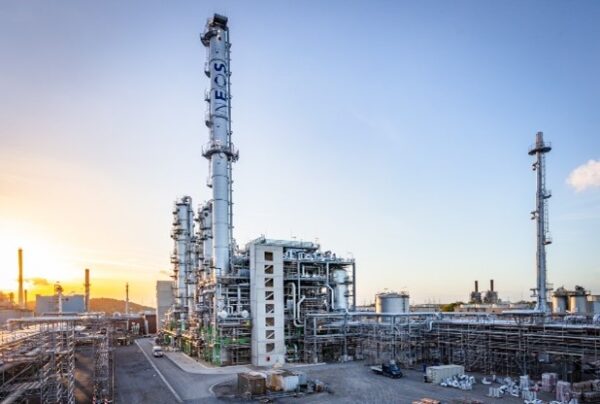




Why is Celanese closing its Lanaken, Belgium acetate-tow plant in 2026?
Celanese Corporation (NYSE: CE), the global specialty chemicals and materials giant headquartered in Dallas, has confirmed it will permanently cease operations at its acetate-tow production facility in Lanaken, Belgium during the second half of 2026. The company said the move would impact approximately 160 employees, including manufacturing and support staff.
The decision followed an internal strategic review and is attributed to three primary factors: a long-term decline in acetate-tow demand, an increasingly unpredictable regulatory environment across Europe, and a high-cost operating footprint at the Lanaken site. Celanese described the operations as no longer economically viable given current and projected market conditions.
This is not an isolated optimization. It signals a broader rebalancing of the company’s global manufacturing network. As European energy and labor costs climb and regulatory scrutiny intensifies, multinationals like Celanese are being forced to rethink their European exposure. The decision to shut down the Lanaken facility shows that even well-established operations are vulnerable in a structurally weaker demand environment.
What is acetate tow and why is demand weakening in global markets?
Acetate tow is a fibrous material primarily used in cigarette filters, among other niche filtration applications. Global demand for acetate tow has been declining steadily due to a combination of anti-smoking legislation, shifting consumer preferences, and regulatory clampdowns on single-use plastics. As end-use volumes contract, manufacturers have been forced to consolidate production.
Celanese’s acetate tow business has historically supported high-margin, cash-generative operations, but the company has faced growing difficulty justifying fixed investments in underperforming European assets. With emerging markets shifting consumption patterns and new ESG pressures building on filtration supply chains, demand for acetate-based materials has begun to plateau and, in many regions, decline.
By exiting the Lanaken site, Celanese appears to be pre-emptively managing the long tail of its tow business lifecycle rather than waiting for further volume erosion to erode profitability.
How does the Belgian site closure fit Celanese’s global restructuring?
The Lanaken announcement continues a string of footprint rationalizations initiated by Celanese over the past 18 months. In March 2024, the company also announced the shutdown of its Mechelen, Belgium engineered-materials compounding site, a legacy asset from the 2022 DuPont Mobility & Materials acquisition. That closure alone carried a cost of between USD 60 million and USD 75 million, comprising accelerated depreciation and site wind-down expenses.
More recently, Celanese confirmed shutdowns of manufacturing sites in Canada and Switzerland in August 2025, citing persistent demand softness and a need to prioritize cash flow and return on invested capital. These moves collectively reflect a consistent pattern: withdrawal from higher-cost or lower-growth regions in favor of capacity consolidation and cost-optimized asset utilization.
The Lanaken closure stands out in both scale and signaling power. While not the largest of its global assets, it reinforces the message that Celanese is accelerating its structural repositioning, even at the cost of significant headcount reductions.
What is the financial and operational impact of this shutdown?
Approximately 160 jobs are expected to be cut as a result of the Lanaken facility’s closure. Celanese noted that the site will continue to fulfill existing contractual obligations during the transition and that formal consultation with employees and local authorities is underway.
Though the company has not released a specific cost estimate for the Lanaken wind-down, analysts expect it to be broadly in line with previous closures. Assuming a similar range of USD 60 million to USD 75 million, the total cost impact may be significant in the short term but accretive to long-term margin control.
From a balance sheet and operations standpoint, the move is expected to reduce fixed cost burden, simplify the acetate-tow supply chain, and improve overall capital efficiency. However, the near-term effect on Celanese’s earnings may be modestly negative until savings begin to materialize in the latter half of 2026 or early 2027.
How is the stock market responding and what is the analyst sentiment?
Celanese Corporation’s stock (NYSE: CE) has underperformed in recent months amid weak demand signals and conservative earnings guidance. As of late October 2025, shares were down over 12% month-to-date and more than 70% on a year-to-date basis, reflecting widespread investor caution across the chemicals and engineered-materials sectors.
Analyst coverage remains mixed. According to MarketBeat data, the company has received 20 ratings recently, with 7 buys, 10 holds, and 3 sells. The average 12-month price target stands at around USD 56.11, indicating upside potential of approximately 29% from recent levels in the low USD 40s.
BofA Securities reiterated its “Buy” rating on October 14, 2025, assigning a target of USD 55.66, roughly 38% above its trading price at the time. However, institutional investor flows have reportedly declined in recent quarters, and retail interest remains limited. AI-based forecasting platforms like StockInvest have flagged CE as a short-term technical buy on oversold signals, though longer-term trend momentum remains bearish.
In essence, the market views Celanese’s footprint optimization efforts as strategically necessary but insufficient on their own to drive a sustained re-rating until end-market recovery or operating margin expansion becomes visible.
What does this closure signal for Europe’s broader chemical manufacturing outlook?
Celanese’s decision to exit the Lanaken facility underscores a larger reality confronting European chemical producers: many legacy manufacturing bases are no longer competitive under current conditions. Soaring energy prices, decarbonization mandates, aging infrastructure, and sluggish end-market growth—particularly in automotive, building materials, and electronics—are eroding the case for European chemical production unless backed by strong innovation or localization incentives.
Companies like BASF, Clariant, and Covestro have all flagged capacity rationalization, and even specialty players are rebalancing toward North America and Asia-Pacific. The closure of high-cost, low-margin plants is not merely a response to cyclical weakness but a longer-term secular trend.
Celanese’s exit from Belgium therefore mirrors the continent’s chemical manufacturing contraction. It also casts a spotlight on industrial policy debates across the EU about how to retain advanced manufacturing while complying with net-zero commitments and managing global competitiveness.
What is the long-term outlook for Celanese’s acetate-tow and engineered materials strategy?
From a product strategy lens, the writing is on the wall: acetate-tow, especially in its traditional applications, is in secular decline. Celanese will likely focus future investments on growth-oriented engineered materials, high-performance polymers, and specialty applications with better volume and pricing dynamics.
The company’s 2022 acquisition of DuPont Mobility & Materials was aimed at capturing more defensible margins in automotive, electronics, and industrial materials. But execution has been challenged by sluggish market conditions and integration costs. Celanese has publicly committed to improving its earnings quality and capital discipline, and the Lanaken shutdown is a step in that direction.
Looking forward, analysts expect Celanese to continue shedding legacy or underperforming assets while consolidating manufacturing into its most cost-effective hubs. M&A activity may slow unless opportunistic tuck-ins appear. The focus remains squarely on restoring investor confidence and improving return on capital employed (ROCE) metrics over the next 12 to 24 months.
What are the key takeaways from Celanese’s Belgian plant closure
– Celanese Corporation (NYSE: CE) will close its Lanaken, Belgium acetate-tow plant in H2 2026, impacting 160 jobs.
– The shutdown reflects weak global demand for acetate tow, high energy costs, and regulatory uncertainty in Europe.
– This follows other recent closures in Belgium, Canada, and Switzerland, part of a broader cost-optimization strategy.
– The stock (CE) remains under pressure, with mixed analyst sentiment and limited institutional buying.
– The move signals accelerating contraction in Europe’s chemical manufacturing sector and strategic refocus by multinationals.
– Long-term, Celanese is likely to pivot further into high-margin engineered materials and streamline its global asset base.
Discover more from Business-News-Today.com
Subscribe to get the latest posts sent to your email.