






What is catharanthus roseus and why is it used in modern and traditional medicine?
Catharanthus roseus, also known as the Madagascar Periwinkle or Sadabahar in Hindi, is a medicinal plant with both ornamental beauty and potent pharmaceutical properties. Though native to Madagascar, this hardy herb is now cultivated across tropical regions, especially in India, where it blooms with delicate pink, white, or purple-red flowers. Beyond its aesthetic value in home gardens and landscapes, this plant holds immense significance in both traditional healing systems and modern clinical oncology.
Known by various regional names such as Nayantara in Bengali, Ushamalari in Malayalam, and Billaganneru in Telugu, Catharanthus roseus has historically been a staple in folk medicine. However, it rose to global prominence when researchers isolated powerful cancer-fighting compounds from its leaves and roots. These compounds, vincristine and vinblastine, are now integral to chemotherapy protocols for a wide range of cancers. At the same time, Catharanthus continues to be used in herbal medicine for managing blood sugar, calming the nervous system, and aiding digestion, demonstrating its multidimensional therapeutic potential.
What phytochemicals in catharanthus roseus make it effective for treating cancer?
The key to Catharanthus roseus’s medicinal power lies in its unique alkaloid profile. Among the several bioactive compounds present in the plant, two stand out for their clinical relevance: vincristine and vinblastine. These compounds are classified as vinca alkaloids, a group of naturally occurring substances that possess cytotoxic properties. In simpler terms, they are capable of targeting and destroying rapidly dividing cells—a hallmark feature of cancerous growth.
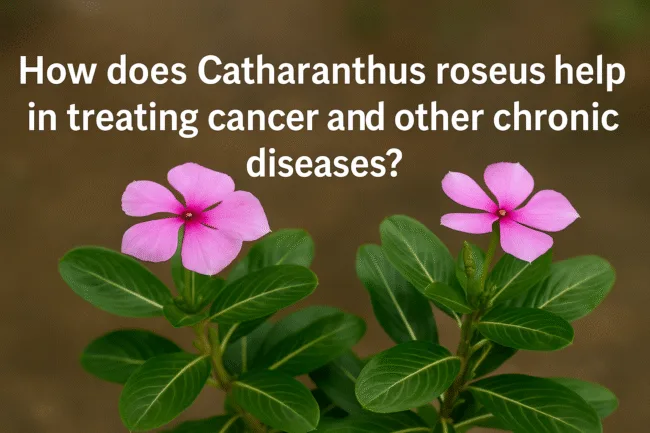
Vincristine and vinblastine work by interfering with the mitotic spindle formation during cell division. By binding to tubulin proteins, they disrupt microtubules, which are essential for chromosome segregation. This action halts the mitotic cycle and triggers programmed cell death, or apoptosis, in cancer cells. Because of this specific mechanism, vinca alkaloids are among the most effective chemotherapeutic agents used in modern oncology. Vincristine is often administered for leukemia and lymphomas, while vinblastine is used to treat Hodgkin’s disease, testicular cancer, and breast cancer, among others.
The discovery of these compounds in Catharanthus roseus revolutionized cancer treatment in the latter half of the 20th century. It also highlighted the potential of ethnobotanical knowledge as a source of life-saving pharmaceutical innovations.
How are vincristine and vinblastine used differently in chemotherapy regimens?
Though vincristine and vinblastine share structural similarities and originate from the same plant, their clinical applications differ based on their toxicity profiles and therapeutic targets. Vincristine is particularly neurotoxic, which means it can affect the nervous system if not carefully dosed. However, it shows high efficacy against blood-related cancers like acute lymphoblastic leukemia and various types of lymphoma. It is a core component of widely used chemotherapy regimens such as the CHOP protocol for non-Hodgkin’s lymphoma.
Vinblastine, on the other hand, has a stronger impact on bone marrow and blood cell production. This makes it more suitable for conditions like Hodgkin’s disease and certain solid tumors. While both drugs are administered intravenously and require clinical supervision, vinblastine generally has a different dosing schedule and side effect profile compared to vincristine. In either case, these compounds represent cornerstone therapies in cancer treatment and continue to be used in hospitals worldwide.
What are the traditional and non-oncological medicinal uses of catharanthus roseus?
Although its anti-cancer benefits are the most scientifically documented, Catharanthus roseus also holds a long-standing place in traditional medicine. Indigenous medical systems such as Ayurveda and Unani, as well as local healing practices in India and Africa, have used various parts of the plant for centuries. Traditional healers often prepare decoctions from its leaves and roots to treat ailments that range from diabetes and hypertension to indigestion and stress.
One of the most common non-oncological uses of Catharanthus is for managing diabetes. The plant is believed to have hypoglycemic effects, meaning it can help lower blood sugar levels. Preliminary studies suggest that its phytochemicals may improve insulin activity or mimic insulin’s role in the body. Though these claims require further clinical validation, they align with anecdotal reports from communities where the plant is used routinely for metabolic health.
Catharanthus is also known for its calming properties. Decoctions from the leaves are traditionally consumed to relieve anxiety and promote restful sleep. This sedative effect is thought to stem from the plant’s influence on neurotransmitters, although modern science has not fully explored this action yet. Additionally, the plant is used in various cultures as a remedy for stomach aches, where it acts as a stomachic agent that enhances digestion and relieves cramps.
How is catharanthus roseus prepared for medicinal use in different systems of medicine?
The preparation and use of Catharanthus roseus vary significantly between traditional and modern medical systems. In traditional medicine, the plant is typically used in its whole or crude form. Healers may crush the leaves and roots to extract juice or boil them into a decoction. These are then consumed directly or mixed with other herbal ingredients for more complex formulations. In rural areas, it is not uncommon to see Catharanthus used as a home remedy for minor ailments, though such practices should be approached with caution due to the plant’s potent bioactive content.
In clinical pharmacology, vincristine and vinblastine are chemically extracted and purified under stringent laboratory conditions. These compounds are then formulated into injectable drugs, which are administered in precise dosages under medical supervision. The purity and concentration of these pharmaceutical preparations are tightly controlled to minimize toxicity and maximize therapeutic benefit. It is crucial to understand that self-administering crude Catharanthus extracts for cancer or any serious condition is dangerous and strongly discouraged.
What are the safety considerations when using catharanthus roseus or its compounds?
While Catharanthus roseus is a natural product, it is not inherently safe for unsupervised use. The same alkaloids that make it effective against cancer can be toxic to normal cells when consumed inappropriately. Common side effects of vincristine and vinblastine include nausea, hair loss, neuropathy, and bone marrow suppression. In traditional settings, incorrect dosing of Catharanthus decoctions could lead to vomiting, diarrhea, or more severe complications.
Due to these risks, any therapeutic use of Catharanthus should be guided by qualified practitioners. In modern medicine, patients undergoing chemotherapy are closely monitored for blood counts, liver function, and neurological symptoms. The margin between a therapeutic and toxic dose is narrow, especially with vincristine, which can cause irreversible nerve damage if overdosed. This is why the plant’s use in clinical settings is strictly regulated and not open to home experimentation.
How is catharanthus roseus being explored in scientific research and biotechnology?
Catharanthus roseus continues to attract scientific interest, not just for its established alkaloids but also for its broader potential in pharmacognosy. Researchers are studying the plant’s lesser-known compounds for possible applications in treating infections, inflammation, and metabolic disorders. In biotechnology, there is growing interest in developing genetically modified yeast or bacteria that can produce vincristine and vinblastine through fermentation. This approach could offer a more sustainable and scalable alternative to extracting these drugs from large quantities of plant biomass.
Additionally, scientists are experimenting with plant cell cultures to increase the yield of medicinal compounds. By manipulating growth conditions and nutrient levels in bioreactors, it may be possible to produce consistent quantities of therapeutic alkaloids without depending on climate, soil, or agricultural labor. These developments point to a future where Catharanthus roseus plays an even more central role in drug discovery and biomanufacturing.
Why is catharanthus roseus considered a model plant in pharmacognosy and clinical oncology?
Catharanthus roseus serves as a powerful case study in the field of pharmacognosy—the study of medicinal substances derived from natural sources. It bridges the gap between traditional plant-based remedies and scientifically validated pharmaceuticals. The fact that two of the most potent chemotherapy agents were discovered in a common garden plant highlights the enormous potential hidden in Earth’s biodiversity. For medical students, Catharanthus offers an example of how ethnobotanical knowledge can lead to groundbreaking medical advances when studied through the lens of modern science.
In oncology, the plant has become almost symbolic of nature’s contribution to medicine. Despite advances in synthetic drug development, vincristine and vinblastine remain essential in treatment protocols for several cancers. Their continued relevance decades after discovery underscores the importance of conserving medicinal plants and investing in botanical research.
How can catharanthus roseus contribute to future treatments and public health strategies?
As the global health community grapples with rising cancer rates, antibiotic resistance, and chronic metabolic disorders, plants like Catharanthus roseus may hold keys to novel therapies. Its proven anticancer benefits and promising applications in diabetes and stress management make it a candidate for integrated healthcare strategies that combine traditional wisdom with evidence-based medicine.
More importantly, Catharanthus challenges us to reconsider the value of natural resources in solving modern health problems. From rural herbalists to cutting-edge laboratories, this one plant has influenced health systems across cultures and time periods. Whether through direct medicinal use or biotechnological innovation, Catharanthus roseus remains a vital link between nature and healing.
Discover more from Business-News-Today.com
Subscribe to get the latest posts sent to your email.

