





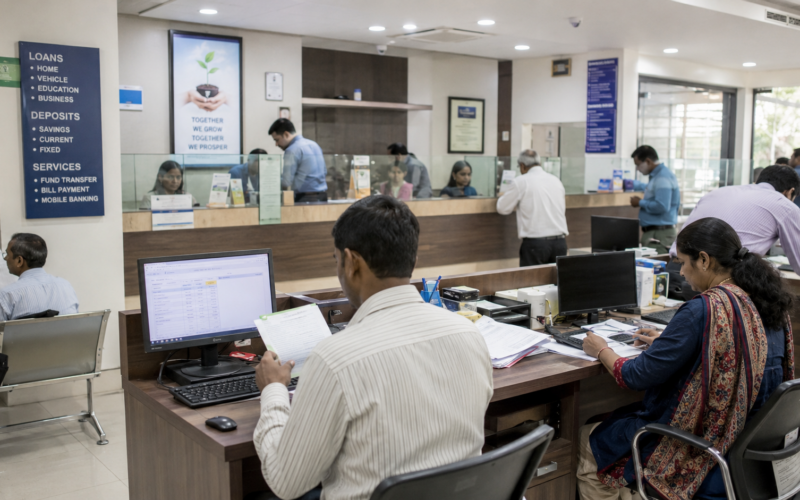
The Reserve Bank of India is likely to approve fresh licences for urban co-operative banks after keeping new licensing largely paused since 2004. The move would reopen a tightly watched part of India’s banking architecture that serves urban and semi-urban customers outside the full reach of large commercial banks. The policy shift comes after regulatory standards, supervision mechanisms and sector-level support systems for urban co-operative banks have improved over the past two decades. Its immediate relevance lies in the balance the Reserve Bank of India must strike between financial inclusion, local credit access, governance discipline and depositor protection.
Why would the Reserve Bank of India restart urban co-operative bank licensing after two decades?
The Reserve Bank of India’s likely decision to revive urban co-operative bank licensing marks a meaningful regulatory reset rather than a simple return to old policy. The central bank had stopped fresh licensing in 2004 after several newly licensed urban co-operative banks became financially weak within a short period. That earlier experience made the regulator cautious because the co-operative banking model combines deposit-taking, local ownership, political sensitivity and governance structures that can be difficult to supervise when standards are weak.
The case for reopening licences now rests on a different operating environment. Urban co-operative banks have come under a more structured regulatory framework, supervisory standards have improved and the sector has seen a stronger emphasis on capital, risk management and technology. The creation of sector-level support institutions also gives smaller banks a potential route to handholding in areas such as technology, compliance and capital planning. In plain language, the Reserve Bank of India appears more comfortable because the plumbing is better than it was in 2004.

The policy signal also reflects a broader question in Indian finance: how should credit reach smaller borrowers in dense urban and semi-urban markets without relying only on large private banks, public sector banks and non-bank lenders? Urban co-operative banks can play that role because they often understand local customers, small traders, housing societies, small businesses and neighbourhood-level credit needs better than larger institutions. The risk is that proximity can become concentration, and relationship banking can become related-party banking if governance does not keep pace.
How large is India’s urban co-operative bank sector and why does it still matter?
India had 1,457 urban co-operative banks as of March 2025, with assets of Rs 7.38 lakh crore and deposits of Rs 5.84 lakh crore. That is not small, even if the sector’s share of the broader banking system is far below that of scheduled commercial banks. The sector matters because it sits between formal banking and community finance, serving customers who may be too small for large-ticket relationship managers but too important for the economy to be pushed entirely toward informal credit or high-cost lending channels.
Urban co-operative banks are particularly relevant in states with strong co-operative traditions, dense small-business clusters and local depositor networks. They can support merchants, salaried households, small entrepreneurs, housing-linked borrowers and local institutions that need accessible banking. If fresh licensing is reopened selectively, it could encourage larger and better-run co-operative credit societies to formalise into regulated banking entities.
The challenge is that scale alone does not guarantee resilience. Depositor trust in co-operative banks has been tested in the past by governance failures, weak boards, connected lending, poor technology systems and delayed corrective action. The Reserve Bank of India’s likely approach therefore appears to be selective rather than expansionary for its own sake. New licences may be used to admit only institutions that already demonstrate capital strength, operating history and governance quality. This is not expected to be a free-for-all licence mela. Thankfully, banking regulation is one place where queues are better than stampedes.
What capital and governance filters could define the next phase of UCB licensing?
The Reserve Bank of India’s January discussion paper proposed a high entry bar, including a possible minimum capital requirement of Rs 300 crore for eligible applicants. Industry feedback has reportedly pushed for a lower threshold, but the central policy intent is clear: the regulator does not want weak, thinly capitalised entities entering the banking system merely because there is demand for licences. Capital is the first line of defence in banking, and the Reserve Bank of India is unlikely to reopen UCB licensing without making that message loud enough.
Governance is likely to be just as important as capital. Co-operative banks are structurally different from shareholder-owned commercial banks because members, depositors, borrowers and local institutional interests can overlap. That can be a strength when incentives are aligned, but it can become a risk when boards lack independence, professional depth or risk-management discipline. New licensing norms will probably focus on board capability, technology readiness, audit quality, internal controls and the ability to comply with modern banking supervision.
The technology requirement could become a quiet but decisive filter. Banking is now digital, data-driven and cyber-risk exposed. Any new urban co-operative bank will need systems capable of handling core banking, digital payments, regulatory reporting, fraud monitoring and cybersecurity. A local banking franchise without modern technology is no longer charmingly traditional. It is just a risk with a branch signboard.
How could fresh UCB licences support financial inclusion and local credit markets?
Fresh urban co-operative bank licences could support financial inclusion by allowing stronger co-operative credit societies to become regulated deposit-taking banks. This matters because many urban and semi-urban communities still need relationship-driven financial institutions that can serve small-ticket borrowers, local enterprises and households with irregular or modest cash flows. Large banks may have reach, but they do not always have the same appetite for granular local underwriting.
The move could also add competition in micro and small enterprise lending. Small businesses often need working capital, transaction banking, secured loans and local credit assessment that does not always fit standardised corporate lending models. Urban co-operative banks can fill that gap if they are well governed and technologically competent. In local markets, knowing the borrower can still matter, provided the bank also knows how to say no.
The second-order benefit could be greater formalisation. If credit societies upgrade into licensed banks under strict conditions, more deposits and loans move into a regulated structure. That supports depositor safety, improves transparency and brings more financial activity under supervisory oversight. The Reserve Bank of India’s challenge is to encourage this formalisation without lowering entry standards in the name of inclusion.
What are the main risks if India adds new urban co-operative banks?
The biggest risk is governance failure. Urban co-operative banks have historically faced concerns around board quality, local influence, insider lending and uneven professional management. If new licences go to institutions that are large but not well governed, the sector could recreate the weaknesses that led to the licensing pause in the first place. The Reserve Bank of India will therefore need to treat governance as a live condition, not a one-time approval checklist.
The second risk is capital fragility. Co-operative structures can find it harder to raise growth capital compared with listed banks or private banks with institutional shareholders. If a new urban co-operative bank grows quickly but cannot raise capital at the same pace, asset quality stress can become a depositor-protection issue. This is why the debate over minimum capital is not academic. It goes directly to how much shock absorption new entrants should have before they begin taking public deposits.
The third risk is technology underinvestment. Banking failures today do not come only from bad loans. They can come from weak cybersecurity, poor data controls, inadequate fraud detection and fragmented core banking systems. If newly licensed urban co-operative banks are not required to invest meaningfully in technology, the sector could become vulnerable to operational risk even if credit risk is managed reasonably well.
How could the licence restart affect public sector banks, private banks and small finance banks?
Fresh urban co-operative bank licences are unlikely to threaten large public sector banks or private banks at a national level. The sector is too localised for that. However, new urban co-operative banks could sharpen competition in specific urban and semi-urban clusters, especially in deposits, small-business lending and local community banking. The effect would be less visible in national market share data but more relevant in district-level or city-level credit markets.
Small finance banks could feel the comparison more directly. Both small finance banks and urban co-operative banks target inclusion-oriented banking segments, although their ownership structures and regulatory frameworks differ. If new urban co-operative banks are allowed to expand with stronger supervision and technology support, they could compete for customers who value local relationships and branch-based trust.
For public sector banks, the impact may be mixed. Stronger urban co-operative banks could take some local deposits and small loans, but they could also deepen formal financial activity in markets where public sector banks already operate. The bigger competitive issue is not immediate market share. It is whether India’s banking system becomes more multi-layered, with different institutional formats serving different customer needs under tighter regulatory supervision.
Why does this matter for India’s broader banking reform agenda?
The Reserve Bank of India’s likely move fits into a broader regulatory philosophy: allow diversity in banking formats, but only when risk controls have matured. India already has public sector banks, private banks, small finance banks, payments banks, regional rural banks, non-bank finance companies and co-operative banks. The system is diverse, but diversity without supervision can turn into fragmentation.
Reviving UCB licensing would show that the central bank is willing to reopen closed doors when sector conditions improve. That is important because regulatory freezes are often easier to impose than to reverse. If the Reserve Bank of India now believes the sector has stronger rules, better monitoring and improved institutional support, reopening licences becomes a test of regulatory confidence.
The move also reflects India’s need for localised credit delivery. As formalisation deepens through digital payments, tax systems, credit bureaus and regulatory reporting, smaller borrowers need institutions that can convert local knowledge into responsible lending. Urban co-operative banks can help do that, but only if they are built as modern banks rather than legacy clubs with deposit counters.
What should policymakers, depositors and banking executives watch next?
The first thing to watch is the final licensing framework. The Reserve Bank of India will need to clarify eligibility norms, capital thresholds, governance standards, technology expectations, geographic scope and transition rules for eligible co-operative credit societies. The details will decide whether the new regime admits a meaningful number of applicants or only a narrow set of highly qualified institutions.
The second thing to watch is how the regulator handles industry feedback on the Rs 300 crore capital proposal. A lower threshold could widen participation, but it may also increase supervisory risk. A higher threshold protects the system but could limit inclusion by excluding smaller but well-run institutions. The Reserve Bank of India has to find a middle path that does not confuse accessibility with looseness.
The third thing to watch is depositor protection. Any new UCB licence must be judged not only by how much credit it can deliver, but by how safely it can manage deposits. For a depositor, a friendly neighbourhood banker is useful only until the money is stuck. The next generation of urban co-operative banks will need to earn trust through governance, transparency and technology, not just familiarity.
Key takeaways on what RBI’s likely UCB licence restart means for Indian banking
- The Reserve Bank of India’s likely move to approve fresh urban co-operative bank licences would reopen a banking channel that has been largely paused since 2004.
- The policy shift reflects improved regulatory standards, stronger supervision and a more structured framework for urban co-operative banks after years of sector reform.
- India’s 1,457 urban co-operative banks held Rs 7.38 lakh crore in assets and Rs 5.84 lakh crore in deposits as of March 2025, making the sector meaningful despite its limited national market share.
- Fresh licences could support financial inclusion by allowing stronger co-operative credit societies to become regulated banks serving small businesses, households and local communities.
- The biggest policy challenge is preventing a return of past weaknesses such as poor governance, capital fragility, insider influence and weak board oversight.
- The proposed Rs 300 crore minimum capital threshold shows that the Reserve Bank of India wants stronger entrants, although industry feedback may influence the final number.
- Technology readiness will be a major test because modern banking requires core banking systems, cyber controls, fraud monitoring and reliable regulatory reporting.
- New urban co-operative banks may not disrupt large commercial banks nationally, but they could sharpen competition in local deposits and small-business lending markets.
- The final framework will decide whether this becomes a narrow reform for strong applicants or a broader opening for the co-operative banking sector.
- The broader signal is that India’s banking regulator is willing to expand institutional diversity, but only if governance, capital and depositor protection remain at the centre of the model.
Discover more from Business-News-Today.com
Subscribe to get the latest posts sent to your email.

