


As the global energy landscape accelerates toward decarbonisation, long-term liquefied natural gas contracts remain a pillar of capital allocation in fossil-linked infrastructure. From Europe to Asia, energy firms and infrastructure investors continue to sign LNG agreements with durations stretching into the 2040s, raising a provocative question: in a world chasing net-zero emissions, do these multi-decade commitments offer enduring stability or emerging risk?
The tension is playing out in real time across global markets. According to the International Energy Agency, long-term contracts still dominate the LNG market structure. Despite volatile pricing and growing environmental scrutiny, global buyers contracted over 70 million tonnes per annum of long-term LNG in 2023 alone, with more than half of those deals extending beyond 2040. For infrastructure investors seeking steady returns amid uncertain energy policy landscapes, long-term LNG remains a dependable asset class. But that perception is increasingly being tested by regulatory, reputational, and demand-side headwinds.
Recent moves by institutional investors such as Centrica plc and Energy Capital Partners, who together acquired the Grain LNG terminal in the United Kingdom for £1.5 billion, reflect confidence in the contractual backbone that LNG assets can provide. Yet this is occurring at a time when the European Union, Canada, Japan, and other large LNG consumers are revising climate targets and introducing regulations that could curb gas use dramatically in the next two decades. This contradiction lies at the heart of the investment dilemma: can LNG’s long-term economics truly survive the energy transition?
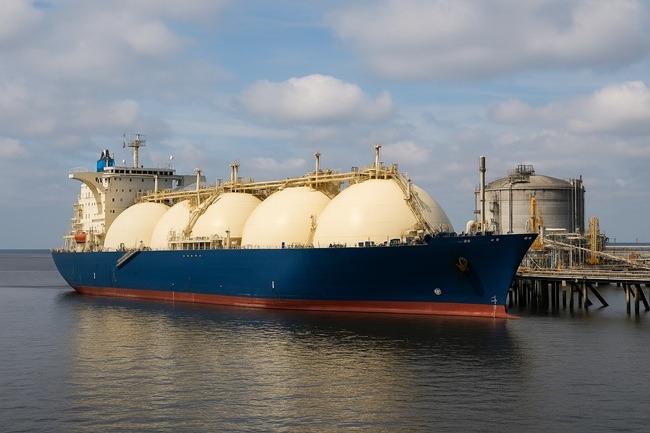
Why long-term LNG deals remain the backbone of global gas supply strategies
Despite an aggressive pivot toward renewable energy sources, long-term LNG contracts continue to dominate the energy portfolios of many import-reliant countries. These deals often span 15 to 25 years, offering not only price stability through oil-linked or hybrid pricing structures but also supply security, a critical factor in energy systems vulnerable to geopolitical disruption or domestic production deficits.
Countries such as China, India, South Korea, and even some European buyers have expanded their long-term LNG portfolios since the onset of the Russia-Ukraine conflict. This renewed focus on LNG diversification underscores its perceived role as a transitional fuel, a bridge between coal and renewables that maintains base load capacity while countries phase in cleaner sources.
From an investor standpoint, these contracts underpin the business model of LNG terminals and regasification infrastructure. Assets like the Isle of Grain terminal in the UK are typically 100 percent contracted for a decade or more. In the case of Grain LNG, more than 70 percent of its capacity is already locked in through 2038, providing the sort of long-duration, inflation-linked income streams that appeal to infrastructure funds and yield-focused investors.
Developers also see long-term contracts as essential for financing. Multi-billion dollar liquefaction projects in Qatar, the United States, and Australia often rely on firm offtake agreements to secure non-recourse project financing. Without these long-term commitments, banks and investors are far less likely to back capital-intensive gas infrastructure.
Can evolving contract terms offer flexibility without killing investor security?
The traditional LNG contract was built for a different world: destination clauses, oil-linked pricing, and rigid terms defined the market for decades. But the past few years have brought significant innovation in contract design, with buyers increasingly seeking flexibility to hedge against policy and demand risk.
New long-term deals are now more likely to include destination flexibility, portfolio aggregation, and partial spot market exposure. Buyers want optionality, not obligation, in a future where demand may contract due to electrification, efficiency improvements, or alternative fuels. On the seller side, this has translated into hybrid commercial models that balance predictable revenue with adaptive delivery.
The flexibility embedded in these modern LNG agreements makes them more resilient to demand variability. For example, TotalEnergies and Shell have structured several recent long-term contracts with clauses allowing for volume adjustment based on regulatory shifts or market conditions. These contracts still provide the financial visibility needed for infrastructure investors but reduce the stranded-asset risk that comes with rigid fixed-volume commitments.
Even sovereign-backed projects like QatarEnergy’s North Field Expansion have adopted more dynamic contracting frameworks, allowing volumes to be rerouted across regional hubs based on real-time economics. This trend toward modularity in LNG contracts could allow them to remain relevant even as the world moves closer to net-zero timelines.
Are shifting demand forecasts and climate policy undermining LNG’s long-term value?
Yet the confidence propping up long-term LNG rests on uncertain foundations. In Europe, gas demand is expected to decline sharply through 2040 as countries ramp up electrification, hydrogen development, and green heating solutions. According to IEEFA and other independent think tanks, several LNG terminals in Eastern Europe are already operating below design capacity and that trend may expand westward if renewable deployment continues to accelerate.
Moreover, the regulatory landscape is tightening. The European Union’s Taxonomy for Sustainable Activities has created uncertainty around what qualifies as green investment. While gas was included as a transitional activity, it is under strict conditions that could shift over time. Several institutional investors have started divesting fossil-linked infrastructure out of ESG compliance concerns, even when such assets offer reliable yield.
In Asia, the outlook is more mixed. Countries like Japan and South Korea have signaled plans to reduce fossil gas reliance by 2050, but current policy support still favors LNG as a clean alternative to coal. India continues to grow its LNG import capacity, but pipeline bottlenecks and domestic pricing distortions have slowed actual offtake growth.
The question, then, is not whether LNG demand will disappear, it is whether the duration and volume assumptions built into long-term contracts will continue to hold true over their lifetime. For infrastructure investors, this raises questions about residual asset value, refinancing risk, and future regulatory exposure.
How investors are weighing yield stability against stranded-asset risk today
From a capital markets perspective, long-term LNG contracts are still attractive. They offer low-volatility cash flows, inflation-linked revenue, and defensive exposure during commodity cycles. Infrastructure funds, pension pools, and sovereign wealth funds have continued to pour money into LNG terminals and shipping assets on the assumption that decarbonisation will be slow, uneven, and fossil-flexible.
Projects like the Grain LNG acquisition demonstrate this logic. With contracts running well into the 2040s, the asset offers a stable EBITDA profile. Centrica expects around £100 million annually from its 50 percent share, alongside growth optionality through potential hydrogen and ammonia handling. The deal’s IRR guidance of 9 percent unlevered and over 14 percent equity-aligned suggests that investors are being compensated for perceived transition risks.
But not all capital providers are equally bullish. Credit rating agencies have started incorporating stranded-asset risk into LNG project evaluations. Some banks have added transition-risk premiums to LNG debt packages, while others have quietly restricted fossil-infrastructure lending due to climate mandates. The financing structure around LNG is evolving, and more due diligence is being placed on demand durability, counterparty quality, and carbon-mitigation pathways.
A growing number of asset managers are now demanding future-proofing clauses in infrastructure investment memos. Can the terminal be repurposed? Does it have ammonia import compatibility? Is there green-hydrogen adjacency? These are the kinds of questions that will shape LNG’s investability through 2030 and beyond.
Discover more from Business-News-Today.com
Subscribe to get the latest posts sent to your email.
