




Europe’s Critical Raw Materials Act is moving from policy architecture into a harder financial test as lithium developers seek to convert strategic status into investable projects. The European Union has set 2030 benchmarks for domestic strategic raw material capacity, including 10% of annual needs from extraction, 40% from processing and 25% from recycling, while also seeking to limit dependence on any single third country at key stages of the supply chain. Rock Tech Lithium Inc.’s Guben Converter in Germany and Sibanye Stillwater Limited’s Keliber lithium project in Finland show why the policy matters, but also why project finance, price protection and industrial demand will decide whether Europe can build a battery materials base that is more than aspirational. The central question is no longer whether Europe understands its lithium vulnerability; it is whether the European Union can make critical minerals projects bankable before China’s processing dominance becomes even harder to dislodge.
Why is the Critical Raw Materials Act becoming a financing test for Europe’s lithium ambitions?
The Critical Raw Materials Act was designed to reduce Europe’s exposure to fragile and concentrated supply chains for materials needed in electric vehicles, renewable energy, digital infrastructure, defence and aerospace. Lithium sits near the centre of that agenda because electric vehicle manufacturing depends not only on battery cell plants, but also on reliable supplies of battery-grade lithium hydroxide and lithium carbonate. Without local or allied processing capacity, Europe risks building the visible end of the battery supply chain while remaining dependent on external refining capacity for the most important chemical inputs.
That is why the Act’s processing target matters more than it first appears. Europe does not merely need more geological resource statements or exploration projects. It needs chemical conversion, refining, recycling and customer-qualified battery materials capacity. The European Commission has framed the Act around secure and sustainable supply, while its 2030 benchmarks make clear that Europe wants a meaningful portion of strategic raw material processing to take place within the bloc. The target of 40% domestic processing is especially relevant for lithium because refining has historically been one of the weakest links in the European battery ecosystem.
The financing challenge is that strategic importance does not automatically translate into commercial bankability. A lithium converter or refinery requires large upfront capital, long development timelines, predictable operating costs, customer qualification and price assumptions that can survive commodity volatility. Public policy can accelerate permitting and signal political support, but investors still need confidence that a project can generate returns through the cycle. That gap between strategic necessity and financial certainty is now becoming the central test for the Critical Raw Materials Act.
This is where Europe’s policy language meets boardroom reality. Strategic project status may reduce permitting friction and improve access to financing discussions, but it does not erase commodity price risk or guarantee commercial demand. For lithium developers, the label helps. It does not replace the need for offtake agreements, cost discipline, balance-sheet support and credible execution milestones.

How does Rock Tech Lithium’s Guben Converter show the opportunity and limits of EU strategic project status?
Rock Tech Lithium Inc.’s Guben Converter has become one of the clearest examples of how the Critical Raw Materials Act can elevate a lithium processing project from corporate development pipeline to European industrial strategy. The planned facility in Guben, a German-Polish border town in Brandenburg, is designed to process lithium-bearing ore and recovered lithium from recycled batteries into battery-grade lithium hydroxide. Rock Tech Lithium Inc. has said the project is fully permitted and has been recognized as a Strategic Project under the European Union’s Critical Raw Materials Act.
The project matters because Germany has one of Europe’s most important automotive manufacturing bases, but Europe’s battery materials supply chain remains incomplete. Automakers can localize electric vehicle assembly and battery cell production, but they still need qualified lithium chemicals. A converter such as Guben is therefore not merely a supplier facility. It is part of the industrial plumbing Europe needs if it wants electric vehicle manufacturing to be less exposed to imported battery materials.
Rock Tech Lithium Inc. has positioned the Guben Converter as a 24,000-tonne-per-year battery-grade lithium hydroxide project, with the company linking the output to potential supply for more than 500,000 electric vehicles. The company has also tied the project to circular economy principles by planning to process recycled lithium materials alongside primary feedstock. That makes the project relevant to both Europe’s processing target and its recycling ambitions under the Critical Raw Materials Act.
Yet Guben also illustrates the limits of strategic project recognition. A permitted and strategically designated project still requires financing, competitive power supply, construction execution and customer qualification. Rock Tech Lithium Inc.’s recent move to prepare for a potential NASDAQ dual listing and file a base shelf prospectus shows that capital markets access remains central to the story. The policy tailwind is real, but the company still needs to translate that tailwind into institutional capital, project funding and operating credibility.
Why does Sibanye Stillwater’s Keliber project reveal the harder economics behind Europe’s lithium strategy?
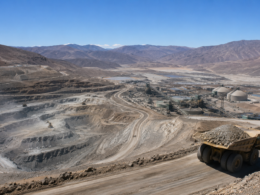
Sibanye Stillwater Limited’s Keliber project in Finland adds a more uncomfortable but important dimension to Europe’s lithium strategy. The project has been described as Europe’s first large-scale lithium mining and processing operation, with ore extraction at the Syväjärvi open-cast mine beginning in February 2026 and planned spodumene concentrate production of around 140,000 metric tonnes annually. Sibanye Stillwater Limited is also considering whether to commission a refinery capable of producing 15,000 tonnes of battery-grade lithium hydroxide per year, with a decision expected later in 2026.
The fact that Sibanye Stillwater Limited is seeking European Union concessions is highly revealing. The company is not asking whether lithium matters strategically. It is asking whether Europe is willing to share enough risk to make strategic lithium investment financially rational. The reported requests include protections against price volatility and unfair competition, including potential mechanisms such as price floors and trade protections under the Critical Raw Materials Act.
That is the real pressure point for Europe. If lithium prices are weak or Chinese oversupply keeps global prices below the level needed for Western projects to earn acceptable returns, strategic projects can stall even when policymakers want them built. This is not a contradiction. It is the unavoidable economics of trying to build high-standard, higher-cost industrial capacity in markets where lower-cost incumbents already dominate key processing segments.
Keliber therefore becomes a test case for whether the Critical Raw Materials Act can evolve from permitting and project designation into a broader investment shield. If Europe wants domestic lithium hydroxide production, it may need to consider tools that make projects financeable during downturns. These could include price-support mechanisms, long-term offtake coordination, preferential procurement, loan guarantees, customer-backed contracts or trade remedies against distortive oversupply. Without those tools, Europe may approve projects that still struggle to reach final investment decisions or commissioning.
Can Europe reduce dependence on China without creating new market distortions?
Europe’s dependence problem is not theoretical. China has built a dominant position in critical minerals processing, especially across battery materials and rare earth supply chains. The risk for Europe is that local mining or recycling will not solve the problem if the crucial processing steps still happen elsewhere. That is why the Critical Raw Materials Act includes processing and recycling benchmarks rather than focusing only on extraction.
The difficulty is that reducing dependence can create policy trade-offs. If Europe supports local lithium refining through price floors, subsidies or trade measures, critics may argue that it is distorting markets or raising costs for downstream battery manufacturers. If Europe does not intervene, strategic projects may remain vulnerable to commodity cycles and lower-cost global competition. The European Union is therefore trying to solve a problem that markets alone have not solved, while avoiding a protectionist structure that makes its own electric vehicle industry less competitive.
The recent United States-European Union critical minerals cooperation shows how quickly this discussion is moving toward coordinated industrial policy. The two sides have formalized cooperation on critical minerals and are exploring tools such as standards-based markets, border-adjusted price floors, offtake coordination, investment coordination, crisis response strategies and stockpiling. That matters because Europe’s lithium problem is not only a European problem. It is part of a wider Western effort to build supply chains that are less exposed to Chinese control over processing and trade leverage.
The challenge will be execution. Europe can identify strategic projects. It can streamline permits. It can coordinate with the United States. But to reduce dependence in practice, it must make enough projects commercially durable through price cycles. That is much harder than announcing a target and considerably less photogenic than a ribbon-cutting ceremony.
Why does Europe need processing and recycling capacity, not just mining projects?
The Critical Raw Materials Act is important because it recognizes that mining alone cannot deliver supply-chain sovereignty. Europe’s 2030 targets cover extraction, processing and recycling because each stage solves a different vulnerability. Extraction gives access to primary resources. Processing turns those resources into usable industrial inputs. Recycling reduces long-term exposure to raw material imports by recovering strategic materials from used products and manufacturing scrap.
For lithium, the processing stage is especially important. Electric vehicle batteries require highly specified lithium chemicals, not just ore. A mine in Finland, Portugal or elsewhere in Europe can improve raw material availability, but without conversion capacity, Europe remains dependent on external refiners. That is why lithium hydroxide converters such as Rock Tech Lithium Inc.’s Guben project are strategically relevant even if they do not look like traditional mining assets.
Recycling adds another layer. Europe has a strong regulatory and industrial incentive to capture value from end-of-life batteries and production scrap. Over time, recycled lithium could reduce pressure on primary mining, support circular battery supply chains and improve the environmental profile of European electric vehicles. But recycling also needs processing infrastructure. Recovered materials still require refining and qualification before they can re-enter the battery supply chain.
This is why Europe’s battery materials strategy increasingly looks like an infrastructure strategy. The bloc needs mines, converters, recycling plants, qualification labs, grid connections, transport links, financing vehicles and customers willing to sign long-term contracts. A single lithium discovery is not enough. A single converter is not enough. What Europe needs is a functioning system, and that is exactly where policy coordination becomes decisive.
What are the biggest risks if the Critical Raw Materials Act falls short?
The first risk is that Europe builds battery manufacturing capacity without securing the material base underneath it. Gigafactories, electric vehicle platforms and green industrial policy all depend on stable access to lithium, nickel, graphite, cobalt and rare earths. If processing remains concentrated elsewhere, Europe’s downstream industrial strategy remains exposed to external shocks.
The second risk is that strategic projects remain trapped between political importance and weak economics. Lithium developers may receive recognition, permits and public attention, but still fail to secure attractive financing if investors believe prices are too volatile or competitive conditions are too uncertain. Sibanye Stillwater Limited’s request for concessions around Keliber is a warning sign, not a footnote. It suggests that even large, serious operators may hesitate unless Europe helps reduce downside risk.
The third risk is time. The Critical Raw Materials Act targets 2030, but industrial projects do not move at app speed. Permitting, financing, construction, commissioning and qualification can take years. If projects are delayed by local opposition, power constraints, cost inflation or weak market pricing, Europe could reach the end of the decade with strong policy architecture but insufficient operating capacity.
The fourth risk is strategic overreach. Europe cannot domesticate every part of every mineral supply chain at once. The more realistic objective is resilience, not autarky. That means building enough domestic and allied capacity to reduce single-country dependence, while still participating in global trade. The Act’s rule that no more than 65% of annual needs for each strategic raw material at any relevant processing stage should come from a single third country captures that logic.
How could the Critical Raw Materials Act become more effective for lithium developers?
The Critical Raw Materials Act can become more effective if it moves beyond project identification and creates a clearer route from strategic designation to financing. Developers need to understand what strategic status actually unlocks. If the answer is only faster permits and visibility, that helps but may not be sufficient. If the answer includes coordinated finance, offtake support and price-risk mitigation, the Act becomes much more powerful.
One obvious area is offtake coordination. European automakers and battery manufacturers need secure lithium chemicals, but individual customers may hesitate to sign long-term contracts if prices are falling. The European Union and member states could play a convening role by helping align strategic projects with downstream buyers, development banks and national industrial funds. This would not eliminate market risk, but it could improve bankability.
A second area is price-risk management. Sibanye Stillwater Limited’s Keliber case shows that developers may seek protection from extreme price volatility and unfair competition. Price floors are politically sensitive, but the idea is likely to remain part of the conversation because strategic resilience has a cost. Europe will need to decide whether it is willing to pay some premium for supply-chain security, just as countries have historically done in energy, defence and food security.
A third area is energy cost competitiveness. Lithium conversion is energy-intensive, and European industrial power costs can be a major burden. Rock Tech Lithium Inc.’s partnership with ENERTRAG SE for sustainable energy supply at the Guben lithium hydroxide converter highlights how power cost visibility can become part of the bankability equation. If Europe wants local processing, energy strategy and raw materials strategy cannot be treated as separate silos.
What does this mean for investors watching Europe’s battery materials sector?
For investors, the Critical Raw Materials Act creates a more structured policy backdrop, but it does not remove the need for company-level discrimination. Not every strategic project will become a successful operating asset. The strongest candidates are likely to be those with permits, credible technology, competitive energy plans, feedstock access, downstream customer relationships and financing optionality.
Rock Tech Lithium Inc. offers exposure to the converter model, especially through the Guben project and its link to European battery materials localization. Sibanye Stillwater Limited offers a different profile through Keliber, where the company is advancing a mining and processing project but is openly confronting the challenge of price volatility and competitive protection. Both cases show that Europe’s lithium opportunity is real, but the investment case is tied to execution and policy design.
Investors should be careful not to treat strategic project status as a valuation shortcut. It is a positive signal because it can indicate policy alignment, permitting priority and potential access to coordinated support. But the real value still depends on whether a project reaches construction, secures financing, qualifies its product, signs customers and operates at competitive cost.
The broader investment takeaway is that Europe is trying to turn critical minerals into an investable industrial category. That could create opportunities across lithium converters, recycling companies, engineering contractors, power suppliers, industrial landowners and downstream battery manufacturers. But it could also expose weaker projects that rely too heavily on policy headlines and too little on bankable fundamentals.
Why Europe’s lithium strategy now depends on turning policy into investable execution
Europe has correctly diagnosed the lithium problem. It knows that battery sovereignty requires more than electric vehicle factories. It needs extraction, processing, recycling and diversified supply chains. The Critical Raw Materials Act gives the European Union a framework to act on that diagnosis, and the recognition of strategic projects such as Rock Tech Lithium Inc.’s Guben Converter shows that policy is beginning to connect with specific industrial assets.
The harder phase begins now. Europe must prove that strategic project status can help projects raise capital, manage price risk and reach commercial operation. Sibanye Stillwater Limited’s Keliber project shows that even first-mover projects may need additional support before committing fully to refining capacity. That is not a failure of the policy. It is a reminder that critical minerals security is not free.
If the Critical Raw Materials Act succeeds, Europe could build a more resilient battery materials base and reduce its exposure to concentrated processing supply chains. If it falls short, the continent may remain dependent on imported refined materials even as it expands electric vehicle and battery manufacturing. That would leave Europe with the factories of the energy transition, but not enough control over the materials that feed them.
The next test for Europe is therefore not whether it can name strategic projects. It is whether it can make them financeable. In the lithium race, policy status opens the door. Bankable economics decide who walks through it.
Key takeaways on Europe’s Critical Raw Materials Act and lithium project financing
- The Critical Raw Materials Act sets 2030 benchmarks for European extraction, processing and recycling of strategic raw materials, including lithium.
- The Act is especially important for lithium because Europe’s weakness lies not only in mining, but in battery-grade processing and refining.
- Rock Tech Lithium Inc.’s Guben Converter shows how strategic project status can elevate lithium processing assets inside Europe’s industrial policy agenda.
- Sibanye Stillwater Limited’s Keliber project shows that strategic importance does not automatically solve price volatility, competition or financing risk.
- Europe may need to combine faster permitting with offtake coordination, price-risk protection and access to finance if it wants lithium projects to reach operation.
- China’s dominance in critical minerals processing is pushing Europe and the United States toward deeper cooperation on supply-chain resilience.
- Lithium converters are likely to become strategic infrastructure assets because they link raw materials with battery and electric vehicle manufacturing.
- Investors should view strategic project status as a positive signal, but not as proof of project bankability.
- The strongest European lithium projects will be those that combine permits, feedstock security, customer demand, competitive power and disciplined financing.
- Europe’s critical minerals strategy will be judged by operating capacity, not policy announcements.
Discover more from Business-News-Today.com
Subscribe to get the latest posts sent to your email.