




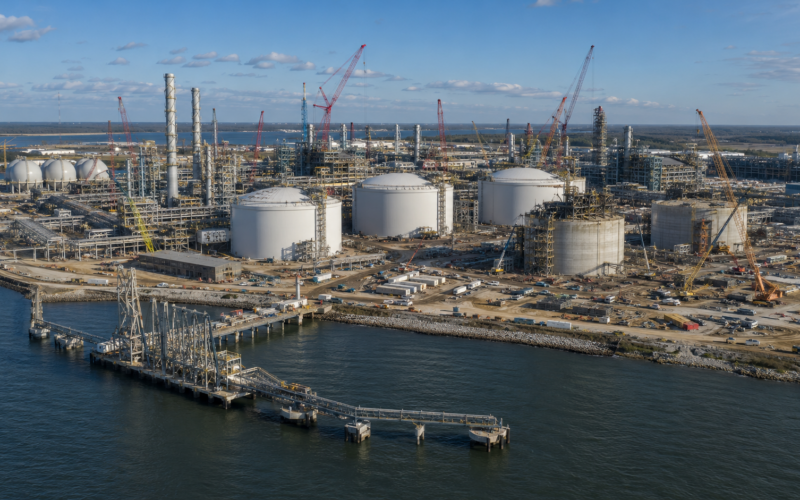
Cheniere Energy Partners, L.P. (NYSE: CQP) has awarded Bechtel Energy, Inc. a $4.69 billion lump-sum turnkey engineering, procurement and construction contract for the first phase of the Sabine Pass LNG expansion project in Cameron Parish, Louisiana. The contract covers Train 7, a boil-off gas re-liquefaction unit, supporting infrastructure and tie-ins to the existing Sabine Pass LNG terminal. The move is strategically important because it advances one of the most closely watched U.S. liquefied natural gas expansion projects at a time when global buyers are seeking flexible, long-term gas supply from politically stable exporters. For Cheniere Energy, Inc. (NYSE American: LNG), the parent-linked market story is equally significant because investors are weighing near-term regulatory and financing risk against the company’s ambition to extend its U.S. LNG export leadership.
Why does Bechtel’s $4.69 billion Sabine Pass LNG contract matter for U.S. export capacity?
The Bechtel Energy contract matters because it moves the Sabine Pass expansion from planning momentum into early execution discipline, even though the final investment decision remains subject to regulatory approvals and financing arrangements. Cheniere Energy Partners has issued a limited notice to proceed, allowing early engineering and procurement work to begin before the full project clears all remaining gates. That sequencing is important in LNG infrastructure because long-lead equipment, contractor mobilisation and engineering design can determine whether a project meets commercial timelines or slips into costlier development cycles.
The first phase of the Sabine Pass expansion is designed to add more than 6 million tonnes per annum of liquefied natural gas production capacity, including estimated debottlenecking. The broader expansion plan could ultimately involve up to three large-scale liquefaction trains with total peak production capacity of around 20 million tonnes per annum. In practical terms, this means Cheniere Energy Partners is not merely adding incremental volume to an existing terminal. It is attempting to extend the useful life, commercial relevance and export scale of one of the United States’ most important LNG facilities.
The timing is also commercially sensitive. Global LNG buyers are balancing energy security, decarbonisation pressure and supply diversification. European utilities continue to reduce reliance on Russian pipeline gas, while Asian buyers are still looking for flexible cargoes that can support power demand, industrial consumption and portfolio balancing. U.S. LNG has benefited from this environment because it combines deep upstream gas supply, flexible commercial structures and Atlantic and Pacific market optionality. Sabine Pass sits directly inside that global contest for long-term supply reliability.
For Bechtel Energy, the award reinforces its position as one of the preferred contractors for large U.S. LNG infrastructure. That matters because LNG construction is not normal industrial contracting with a hard hat and a prayer. It requires cryogenic systems, marine logistics, gas pretreatment, complex integration with existing assets and tight safety execution. Cheniere Energy Partners is choosing continuity and technical familiarity, which may reduce execution uncertainty but does not eliminate cost, permitting or schedule risk.
How does the Sabine Pass expansion strengthen Cheniere’s long-term LNG platform?
Cheniere Energy Partners already owns the Sabine Pass LNG terminal, which has more than 30 million tonnes per annum of LNG production capacity in operation. The terminal also has regasification facilities, five LNG storage tanks, vaporizers and three marine berths. The strategic value of expansion at an existing terminal is that Cheniere Energy Partners can build around established marine, pipeline and operating infrastructure instead of starting with a blank map, a permitting mountain and a very expensive dream board.
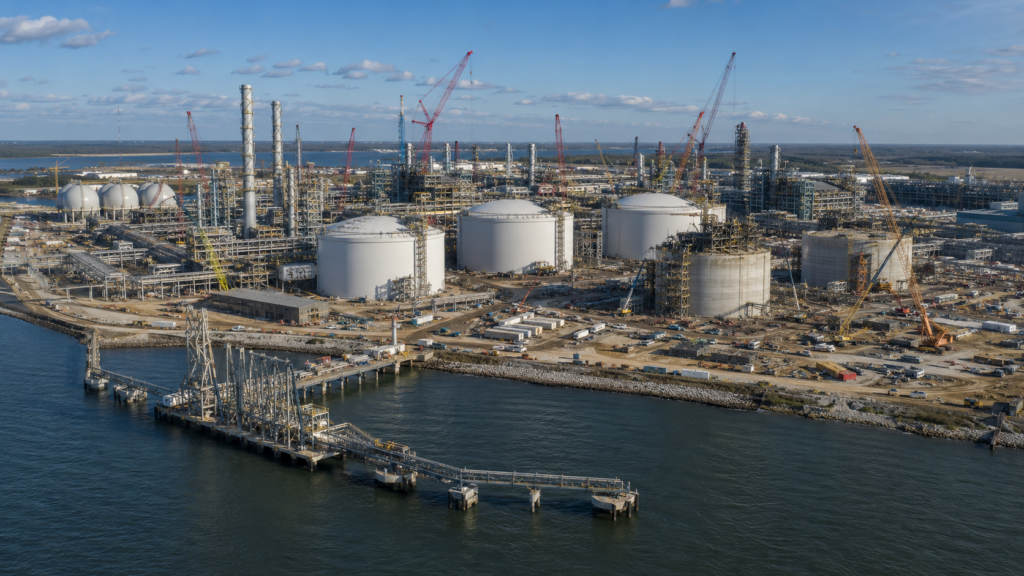
This brownfield-style advantage is central to the investment case. Existing terminals can often offer better execution visibility than greenfield LNG projects because they already have pipeline connectivity, trained operating teams, storage infrastructure and established relationships with regulators, contractors and local stakeholders. That does not make expansion easy, but it can make it more bankable if commercial contracts, regulatory approvals and financing align.
The inclusion of a boil-off gas re-liquefaction unit also signals an effort to improve operational efficiency around the expanded liquefaction system. Boil-off gas management matters because LNG terminals must handle vaporisation losses across storage, loading and process operations. By integrating re-liquefaction capacity into the expansion package, Cheniere Energy Partners is not just adding a production train. It is also addressing operational optimisation around the terminal’s larger system.
The bigger strategic picture is that Cheniere Energy Partners is trying to protect its role as a scale exporter in a market where capacity additions are accelerating. Qatar, the United States, Canada, Mozambique and other LNG supply hubs are all part of a widening project pipeline. Cheniere Energy Partners’ advantage is its operating track record and commercial base. Its risk is that global LNG markets may be less forgiving by the time new capacity enters service if demand growth, shipping economics or commodity spreads shift.
What regulatory and financing risks still stand between Sabine Pass and final investment decision?
The biggest caveat in the Sabine Pass expansion story is that the contract award does not equal a full final investment decision. Cheniere Energy Partners has said the first phase remains subject to necessary regulatory approvals and acceptable financing arrangements. The Federal Energy Regulatory Commission application for authorisation to site, construct and operate the expansion remains pending, while the Department of Energy application for export authorisation to non-free trade agreement countries is also pending.
That regulatory layer is critical because U.S. LNG projects sit at the intersection of energy policy, climate politics, trade strategy and industrial investment. Even when commercial demand is strong, export projects can face scrutiny over emissions, local environmental impacts, pipeline interconnections and long-term implications for domestic gas prices. For investors, the permitting process is not just bureaucracy. It is a timeline variable, a cost variable and, in some cases, a political risk variable.
Financing is the second major gate. A $4.69 billion EPC contract creates a clear cost anchor for the first phase, but LNG projects require careful capital structuring because returns depend on long-term offtake agreements, construction timing, interest rates, debt market appetite and commodity-linked commercial exposure. Cheniere Energy Partners has indicated that Phase 1 is commercially supported by long-term agreements with creditworthy counterparties. That helps, but lenders and investors will still evaluate the full risk package before treating the project as a fully de-risked growth asset.
The early 2027 final investment decision target gives Cheniere Energy Partners a defined timetable, but also raises the visibility of near-term execution pressure. The company must advance engineering, preserve contractor readiness, manage regulatory engagement and hold commercial support together. If these pieces line up, Sabine Pass expansion can move into a stronger construction phase. If one leg wobbles, the schedule could stretch, and LNG schedules have a habit of making spreadsheets look optimistic in hindsight.
Why does Cheniere Energy stock sentiment matter as LNG investors assess this expansion?
Cheniere Energy, Inc. stock recently traded at $241.07, with a market capitalisation of about $50.75 billion, based on live market data. The stock was up 2.43% in the latest session, with an intraday range between $234.00 and $241.41. That market context suggests investors are still treating Cheniere Energy, Inc. as a major U.S. LNG platform with strong long-term relevance, even while near-term earnings can be distorted by derivative accounting and commodity-linked contract mechanics.
The stock’s valuation debate is tied to three questions. First, can Cheniere Energy, Inc. continue turning global LNG demand into contracted cash flows? Second, can the company expand capacity without losing the capital discipline that energy investors now demand? Third, can it defend its premium position as more LNG supply enters the market later in the decade? The Sabine Pass expansion contract answers part of the second question, but not all of it.
For investors, Bechtel Energy’s role may reduce perceived execution risk because the contractor has deep history with Cheniere’s LNG platform. However, the market will still focus on regulatory milestones, final investment decision timing, financing terms and whether incremental capacity supports distributable cash flow or strains balance-sheet flexibility. In other words, the construction award is good news, but it is not yet a cheque clearing in the shareholder return account.
Sentiment around Cheniere Energy, Inc. also benefits from the broader geopolitical premium attached to U.S. LNG. Buyers are not only purchasing molecules. They are buying optionality, diversification and contractual flexibility. That gives U.S. exporters a strategic narrative that many energy assets lack. The question is whether that narrative remains strong enough to support new capital deployment if global LNG supply becomes more competitive after the current wave of projects reaches the market.
How could the Bechtel contract affect the U.S. construction and energy infrastructure market?
The Bechtel Energy contract is also a major signal for the U.S. construction market because LNG terminals sit among the most complex and capital-intensive industrial projects in North America. A $4.69 billion EPC award creates demand for engineering talent, specialised equipment, modular fabrication, craft labour, marine construction support, electrical systems, compressors, process equipment and logistics coordination. The downstream supply chain effect can be significant, especially in Gulf Coast industrial corridors.
This matters at a time when construction labour availability, cost escalation and project sequencing remain major concerns across U.S. infrastructure. Data centres, manufacturing plants, energy projects and public infrastructure are all competing for skilled labour and specialised contractors. LNG projects add another layer of pressure because they require highly specific expertise and safety standards. If the Sabine Pass expansion accelerates, it could tighten competition for the same project-management and field-execution talent already in demand across Gulf Coast industrial construction.
For Bechtel Energy, the contract reinforces the strategic value of repeat-client megaproject delivery. Construction firms that can prove execution capability on one LNG phase often gain an advantage on later phases because the owner already understands their systems, risk controls and project culture. That continuity can improve coordination, but it also increases concentration risk. If execution problems arise, both contractor and owner have more reputational exposure because the partnership is highly visible.
The wider industry takeaway is that energy infrastructure is not fading from the U.S. construction pipeline despite intense public focus on clean energy and digital infrastructure. LNG, power transmission, data centres, semiconductor plants and port upgrades are all part of the same industrial buildout story. The country is not building one transition. It is building several at once, and the labour market is being politely asked to do the impossible before lunch.
Can Sabine Pass help Cheniere defend its position as LNG competition intensifies?
Sabine Pass remains strategically important because scale matters in LNG. Large export platforms can support commercial flexibility, portfolio optimisation and cost advantages that smaller or less integrated projects may struggle to match. By expanding at an existing site, Cheniere Energy Partners is trying to deepen a platform that already has operating history, customer familiarity and Gulf Coast logistics advantages.
However, the competitive landscape is not static. Qatar is expanding aggressively, U.S. competitors are moving forward with new export capacity, and Canada’s LNG sector is entering a more active phase. Buyers will compare contract terms, destination flexibility, emissions intensity, project reliability and seller balance sheets. Cheniere Energy Partners cannot rely on existing scale alone. It must show that new Sabine Pass capacity can arrive on time, at acceptable cost and with contracts that protect long-term economics.
The expansion also has a policy dimension. U.S. LNG has become part of the broader debate over energy security and global influence. Projects such as Sabine Pass allow U.S. gas to reach allies and trading partners, but they also raise questions about long-term fossil fuel infrastructure in a decarbonising world. That tension is unlikely to disappear. For Cheniere Energy Partners, the commercial case may be strong, but the public-policy case must be managed continuously.
If the project reaches final investment decision by early 2027, Cheniere Energy Partners would strengthen its long-term capacity pipeline at a moment when global energy markets remain volatile. If approval or financing slips, rivals with faster-moving projects could capture commercial windows. In LNG, timing is not everything, but it is close enough to make chief financial officers sweat.
Key takeaways on what Bechtel’s Sabine Pass LNG contract means for Cheniere, U.S. LNG and construction markets
- The $4.69 billion Bechtel Energy contract moves Cheniere Energy Partners closer to expanding Sabine Pass, but the first phase still depends on regulatory approvals, financing and a final investment decision expected by early 2027.
- The first phase of the expansion would add Train 7 and more than 6 million tonnes per annum of expected LNG capacity, strengthening one of the most important U.S. LNG export platforms.
- The broader Sabine Pass expansion could eventually add up to around 20 million tonnes per annum of peak production capacity, making it a strategically meaningful project for global LNG supply.
- Bechtel Energy’s repeat role reduces some execution uncertainty because of its history with Cheniere’s LNG infrastructure, but large-scale LNG construction still carries schedule, labour and cost risks.
- The project gives Cheniere Energy Partners a brownfield-style advantage because Sabine Pass already has storage tanks, marine berths, operating capacity and pipeline connectivity.
- Regulatory approvals from the Federal Energy Regulatory Commission and Department of Energy remain key milestones, especially because LNG export policy continues to sit inside broader U.S. energy and climate debates.
- For Cheniere Energy, Inc. investors, the contract supports the long-term growth story, but market confidence will depend on financing terms, capital discipline and the durability of LNG demand.
- The project could have wider implications for Gulf Coast industrial construction by increasing demand for specialised labour, modular fabrication, engineering services and energy infrastructure supply chains.
- The Sabine Pass expansion reflects a broader U.S. infrastructure trend in which LNG, data centres, manufacturing and power systems are competing for capital, contractors and skilled labour.
- Cheniere Energy Partners’ biggest strategic challenge is not whether LNG demand exists today, but whether new capacity can arrive at the right cost and timing as global competition intensifies.
Discover more from Business-News-Today.com
Subscribe to get the latest posts sent to your email.

