Bondada Engineering Limited (BSE: 543971) has secured a ₹1,338 crore engineering, procurement and construction award from NTPC Renewable Energy Limited for a 250 MW solar project paired with a 50 MW/200 MWh battery energy storage system in Sitapur, Uttar Pradesh. The contract, valued inclusive of goods and services tax, is scheduled for completion within 18 months and includes design, equipment supply, installation, testing, commissioning and project-level performance obligations. The project will be developed on approximately 850 acres of vacant defence land and is intended to strengthen electricity security for defence establishments across Uttar Pradesh. For Bondada Engineering, the award is strategically significant because it expands the company’s solar EPC portfolio while lifting its battery storage order book to around 1.1 GWh. The investment case now rests on whether Bondada Engineering can execute a contract equal to roughly one-third of its market value without sacrificing margins, working-capital discipline or delivery quality.
Why is Bondada Engineering’s ₹1,338 crore NTPC order more than a routine solar EPC contract?
The Sitapur contract combines three infrastructure layers that are often tendered separately: utility-scale solar generation, grid-scale battery storage and power-evacuation integration. Bondada Engineering will therefore be responsible for more than installing photovoltaic modules. Its scope extends across engineering, site preparation, equipment procurement, civil works, battery integration, electrical systems, testing and delivery of the completed project to defined performance standards.
That integrated responsibility increases the commercial value of the contract, but it also concentrates execution risk with Bondada Engineering. When an EPC contractor controls the complete package, the customer has fewer interface disputes between module suppliers, battery vendors, inverter manufacturers and civil contractors. The contractor, however, becomes responsible when equipment arrives late, systems fail to communicate or performance falls below the agreed threshold.
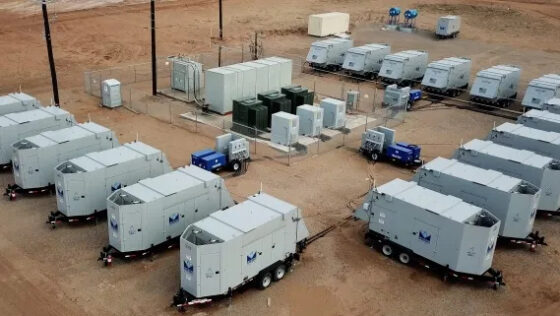
The battery component is particularly important because the 50 MW/200 MWh configuration provides four hours of rated storage. This allows the project to shift solar electricity beyond daylight generation periods, respond to changes in demand and provide a more dependable power profile than a standalone solar farm.
A 250 MW solar project can produce substantial energy during favourable daytime conditions, but the battery system gives the asset greater operational flexibility. The project can store part of the afternoon generation and release it during evening demand, when solar output has declined and electricity prices or system requirements may be stronger.
The order also strengthens Bondada Engineering’s transition from a conventional solar balance-of-system contractor into a broader power-infrastructure integrator. Solar EPC competition is intense, and margins can be compressed when contractors compete mainly on module procurement, civil costs and installation speed. Battery integration adds technical complexity and could create greater differentiation, provided Bondada Engineering develops durable engineering and service capabilities rather than merely coordinating third-party equipment.
The contract therefore matters both as revenue visibility and as evidence of strategic repositioning. A successful commissioning would provide Bondada Engineering with a large reference project combining solar generation and four-hour storage, a qualification that could help it compete for similar contracts from utilities, renewable developers and government customers.

How does the Sitapur project turn unused defence land into strategic energy infrastructure?
The Ministry of Defence has described the Sitapur development as India’s first large-scale solar and battery storage project on vacant defence land. The project is planned across approximately 850 acres at the former Sitapur cantonment and will be implemented through NTPC in coordination with the Integrated Headquarters of the Ministry of Defence, the Indian Army and the Directorate General Defence Estates.
The land-use model is strategically relevant because government departments control substantial property that may not be required for immediate operational use. Converting appropriate parcels into electricity-generating assets can create economic value without forcing the government to purchase new land or compete with agricultural and industrial development.
For the defence establishment, the project could reduce long-term exposure to conventional grid-power costs. The electricity will still operate within the broader transmission system, but the project creates a dedicated renewable-generation arrangement linked to the power requirements of defence facilities across Uttar Pradesh.
The battery component improves the value of that supply. Standalone solar output is concentrated during the day, while defence installations require electricity throughout the evening and night. Four-hour storage cannot make the entire project continuously self-sufficient, but it can extend renewable supply into higher-demand periods and provide greater flexibility in managing consumption.
The project may also become a template for other government-owned properties. Military estates, railway land, public-sector industrial sites and government campuses could support renewable projects where land availability, grid connectivity and security requirements are compatible.
However, replication will depend on project economics rather than symbolism. Government land can reduce acquisition complexity, but developers still need clear tenure arrangements, transmission access, environmental approvals and commercially viable power contracts. A successful Sitapur project would demonstrate that these institutional interfaces can be managed at scale.
Security and site-management requirements may also be stricter than for a conventional private solar park. Bondada Engineering will need to coordinate workforce access, construction logistics, equipment movement and digital systems around defence-related protocols. These requirements could increase administrative complexity, although they may also create barriers to entry that favour contractors with stronger compliance systems.
What performance obligations make the 200 MWh battery system commercially demanding?
NTPC Renewable Energy’s tender requires the contractor to design, size, install, integrate, test and commission the battery system to meet project-level guarantees. The disclosed technical requirements include minimum monthly round-trip efficiency of 80%, including auxiliary consumption, and monthly availability of 98%.
Round-trip efficiency measures how much electricity can be recovered after charging and discharging losses. An 80% minimum means the system must return at least 80 units of usable electricity for every 100 units charged, after accounting for defined auxiliary consumption.
The efficiency requirement creates procurement and operating implications. Battery chemistry, inverter performance, cooling systems, cable losses, transformer efficiency and software controls all influence the final result. Bondada Engineering must select and integrate equipment that can achieve the guarantee not only during initial testing but throughout the applicable contractual period.
The 98% monthly availability obligation is equally demanding. Battery containers, power-conversion systems, transformers, control platforms and communication networks must remain ready for dispatch with minimal downtime. A failure in one component can reduce available capacity even when the battery cells themselves remain functional.
High temperatures, dust and seasonal weather can affect equipment performance in Uttar Pradesh. Thermal management will be critical because excessive heat can reduce battery efficiency, accelerate degradation and increase safety risk. Cooling systems themselves consume electricity, which can weaken measured round-trip efficiency if not designed carefully.
Fire detection and suppression will also attract scrutiny. Utility-scale battery projects require cell-level monitoring, ventilation, gas detection, compartmentalisation and emergency-response systems. A serious incident could create financial liabilities and damage Bondada Engineering’s ability to win additional storage contracts.
The four-hour configuration also means the battery must sustain output over an extended period rather than provide only short bursts of grid support. That places greater emphasis on usable energy capacity, degradation assumptions and long-term augmentation planning.
These requirements make the project a genuine test of Bondada Engineering’s system-integration capabilities. Completing civil works and installing containers will be the visible part of execution. Achieving efficiency, availability and safety targets over time will determine whether the contract becomes a profitable reference or an expensive lesson.
Can Bondada Engineering manage the working-capital pressure created by an 18-month EPC schedule?
The ₹1,338 crore contract is large relative to Bondada Engineering’s scale. The company’s market capitalisation stood at approximately ₹3,929 crore based on its June 19 closing price, meaning the contract value represents about 34% of its equity-market value.
The award is also equivalent to roughly 47% of Bondada Engineering’s reported financial-year 2026 revenue of approximately ₹2,843 crore. That comparison highlights the potential revenue contribution, although the order will be recognised across the execution period rather than immediately.
Large EPC contracts can create substantial working-capital requirements. Bondada Engineering may need to place advance orders for modules, battery systems, inverters, transformers, mounting structures and electrical equipment before receiving corresponding customer payments.
The financial outcome will depend on milestone billing, customer advances, retention requirements and supplier-credit terms. An order can appear highly attractive on the income statement while still consuming cash if receivables grow faster than payments to vendors and employees.
NTPC Renewable Energy is a government-backed counterparty, which reduces customer-credit risk compared with an unknown private developer. Payment timing still matters, however, particularly when documentation, testing or milestone certification delays the release of invoices.
Module and battery prices could move during the 18-month period. Falling equipment costs may improve margins if Bondada Engineering has not fully locked procurement prices. Rising costs, currency depreciation or supply-chain disruption could create the opposite result if the contract does not provide adequate escalation protection.
Execution timing also affects profitability. Delays can increase labour costs, site overheads, equipment-storage expenses and financing charges. Bondada Engineering may also face liquidated damages if it fails to meet contractual milestones for reasons within its control.
The company’s challenge is therefore to balance growth with capital discipline. Winning a large order is useful, but bidding too aggressively can convert backlog into low-margin revenue. Investors should monitor operating cash flow, receivables, inventory and short-term borrowings as the Sitapur project moves into procurement and construction.
Why does the order strengthen Bondada Engineering’s solar and battery backlog at a critical time?
The Sitapur contract expands Bondada Engineering’s solar EPC portfolio to approximately 5.5 GWp and its battery-storage order book to around 1.1 GWh. These figures position the company within a rapidly expanding segment of India’s power-infrastructure market.
India is moving from renewable capacity addition toward renewable integration. Utilities can no longer evaluate new solar projects only by their lowest daytime generation cost. They increasingly need projects that can manage evening demand, transmission constraints and variability across the grid.
Battery storage is becoming one of the principal tools for that transition. NTPC Green Energy and its subsidiaries have issued tenders covering several gigawatt-hours of battery capacity at renewable parks in Rajasthan and Gujarat, including Khavda, Fatehgarh and Bikaner.
This pipeline creates a large addressable market for contractors with solar, electrical and storage capabilities. Bondada Engineering’s Sitapur award can improve its eligibility for future tenders by demonstrating experience with a combined generation and storage package.
The company must still distinguish between announced order capacity and executable backlog. Large infrastructure order books can include projects with different notice-to-proceed dates, land readiness, transmission status and customer approvals. Revenue visibility is strongest when sites are available, engineering is approved and procurement has started.
Sitapur appears to have stronger institutional backing than many speculative renewable projects. It has defence approval, NTPC implementation responsibility, defined land and a completed EPC award. These factors reduce some early-stage development risks, although execution and grid-integration risks remain.
The contract could also create follow-on operations and maintenance opportunities. Long-term service arrangements would produce recurring revenue and allow Bondada Engineering to deepen its technical understanding of battery performance. The disclosed award, however, should be evaluated primarily as an EPC project unless the company confirms a separate long-term service scope.
How should investors interpret Bondada Engineering’s stock performance after the NTPC award?
Bondada Engineering shares closed at ₹351.85 on June 19, 2026, gaining 2.24% during the session. The stock rose approximately 9.4% over the five trading sessions from June 12 and about 4.8% from its May 19 closing level.
The shares remained within a 52-week range of ₹215 to ₹503 and were trading about 30% below the annual high. This indicates that the recent order-driven recovery had not fully reversed the broader decline from the stock’s earlier peak.
The market response appears constructive but not euphoric. Investors recognise that the ₹1,338 crore contract is large relative to Bondada Engineering’s size, yet the stock has not been rerated as though the full order value will flow directly into profit.
That caution is appropriate. EPC revenue is not the same as economic value. The project’s contribution will depend on gross margins, financing costs, working-capital requirements, execution speed and whether performance guarantees create future liabilities.
Bondada Engineering’s financial-year 2026 revenue increased strongly to about ₹2,843 crore, while net profit reached approximately ₹211 crore. This provides a larger financial base for project execution than the company had several years earlier, but the pace of expansion increases the need for internal controls and capital management.
Promoters held approximately 61.6% of the company as of March 2026, while institutional ownership remained limited. That shareholding profile suggests the stock continues to depend heavily on promoter credibility and retail investor sentiment rather than deep institutional sponsorship.
The valuation therefore carries both opportunity and risk. Successful delivery of Sitapur and other large projects could strengthen earnings visibility and support a higher market assessment. Cost overruns, delayed customer payments or weaker margins could expose the gap between order-book excitement and cash-flow reality.
In my assessment, the order is strategically more important than the initial share-price move suggests, but its value will emerge over several reporting periods. The most meaningful market catalyst will be evidence that revenue growth is being converted into operating cash and stable margins.
What construction milestones will determine whether the Sitapur project stays on schedule?
The first milestone will be detailed engineering and site mobilisation. Bondada Engineering must complete topographical surveys, geotechnical investigations, land grading and final layout planning before large-scale module and battery installation begins.
Procurement will then become the main schedule driver. Solar modules, battery containers, inverters, transformers, switchgear and mounting structures must arrive in the correct sequence. Early delivery can create storage and security costs, while late delivery can leave civil teams and installation equipment idle.
Battery-system design should progress alongside the solar plant rather than being treated as a late addition. The control architecture, electrical protection and energy-management platform must be compatible with the project’s switchyard and NTPC Renewable Energy’s dispatch requirements.
Power evacuation represents another critical interface. The project includes a 33/220 kV switchyard, while terminal-bay and associated transmission works are to be undertaken through Uttar Pradesh Power Transmission Corporation on a deposit-work basis.
This creates a split responsibility. Bondada Engineering may complete the generating facility on time, but commercial operation could still be delayed if external grid works are not ready. Coordination between NTPC Renewable Energy, Bondada Engineering and the transmission utility will therefore be essential.
Testing will involve more than confirming that individual equipment operates. The project must demonstrate plant output, battery charging and discharging, round-trip efficiency, monthly availability, protection coordination and response to grid instructions.
The final milestone will be sustained commercial operation rather than ceremonial commissioning. Bondada Engineering needs the plant to meet contractual performance after handover, particularly if warranties and performance guarantees extend beyond the construction period.
An 18-month schedule is achievable for a project of this type, but it leaves limited room for procurement disruption or grid delays. The company’s reporting over the next several quarters should clarify whether site mobilisation, equipment ordering and civil work remain aligned with the contractual timeline.
What are the key takeaways from Bondada Engineering’s NTPC solar and battery award?
- Bondada Engineering has won a ₹1,338 crore EPC contract for a 250 MW solar project with a 50 MW/200 MWh battery system in Sitapur.
- The four-hour battery configuration makes the development more valuable to the grid than a conventional standalone solar project.
- The project will use approximately 850 acres of vacant defence land and supply renewable electricity supporting defence establishments across Uttar Pradesh.
- The contract represents roughly 34% of Bondada Engineering’s market capitalisation and around 47% of its financial-year 2026 revenue.
- Bondada Engineering’s scope includes solar modules, battery integration, civil work, electrical systems, testing and commissioning.
- NTPC Renewable Energy requires minimum monthly battery round-trip efficiency of 80% and availability of 98%.
- The award lifts Bondada Engineering’s solar EPC portfolio to around 5.5 GWp and its battery-storage backlog to approximately 1.1 GWh.
- Bondada Engineering shares gained about 9.4% over five trading sessions but remained roughly 30% below their 52-week high.
- Working capital, procurement prices, grid readiness and performance guarantees will determine whether the order produces attractive margins.
- Successful execution could position Bondada Engineering for further solar-plus-storage contracts across India’s expanding utility battery market.
Discover more from Business-News-Today.com
Subscribe to get the latest posts sent to your email.