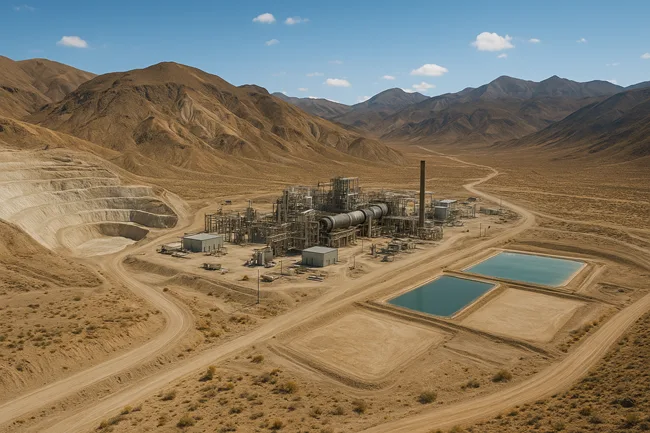
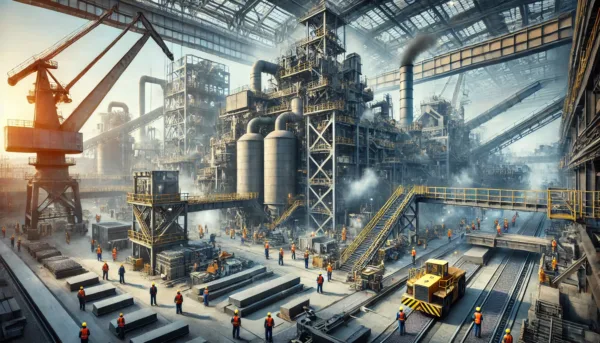
BHP Group Limited (ASX: BHP; LSE: BHP; NYSE: BHP) has begun progressively restarting its Escondida operation in Chile after production was halted following a fatal maintenance accident on September 23. BHP confirmed that an employee was fatally injured and said it was supporting the worker’s family while cooperating with Chilean authorities. Reuters reported that operations were subsequently being restored gradually while safety assessments continued.
The disruption carries significance far beyond one mine because Escondida is the world’s largest copper operation and increasingly central to BHP’s growth strategy. BHP produced approximately 1.26 million tonnes of copper at Escondida during fiscal 2026 on a 100% basis, while copper contributed more than half of the group’s underlying EBITDA for the first time.
What happened at BHP’s Escondida mine before operations were suspended?
BHP said an employee suffered fatal injuries at the Escondida operation in northern Chile on Wednesday, September 23, while conducting maintenance work. The company suspended operational activities following the incident and began working with relevant local and national authorities.
The company has not publicly assigned responsibility for the accident in the material reviewed, making it important to distinguish the confirmed fatality from any eventual conclusions about its cause. Investigations into industrial fatalities can examine equipment, work procedures, isolation controls, contractor arrangements, supervision and whether safety protocols operated as intended.
Escondida later said activities were being resumed progressively while assessments continued, according to Reuters. That staged restart suggests individual parts of the mine are being returned to operation only after safety reviews rather than immediately returning the entire complex to normal production.
BHP has repeatedly emphasized safety as one of its core operating priorities, making any fatality particularly consequential to management. Chief Executive Brandon Craig had already highlighted another fatal incident within BHP’s Australian coal operations during the company’s August results, saying such events sharpened the group’s focus on controls intended to protect employees and contractors.
Why does even a short Escondida shutdown matter to global copper markets?
Escondida’s scale makes disruptions unusually important. The mine produced around 1.26 million tonnes during BHP’s 2026 financial year, equivalent to a significant share of global mined copper production from one operation. BHP owns 57.5% of Escondida, while the mine’s two open pits feed multiple concentrators and leaching facilities producing copper concentrates and cathodes.
Copper markets are already sensitive to supply because demand is expected to rise from electricity grids, renewable-energy infrastructure, electric vehicles and artificial-intelligence data centres. Each of those applications requires significant copper for cables, motors, transformers and electrical equipment.
A short shutdown at Escondida is unlikely by itself to create a global shortage, particularly if production returns quickly. Persistent disruptions would matter considerably more because replacement supply cannot simply be brought online elsewhere at short notice.
Large copper mines require years of exploration, permitting and construction, making existing tier-one operations unusually valuable. That scarcity explains why BHP is committing billions of dollars to extend and improve Escondida rather than relying exclusively on new projects.
How important has copper become to BHP’s earnings and long-term growth plans?
Copper generated a record approximately $18 billion of underlying EBITDA for BHP during fiscal 2026, accounting for more than half of group EBITDA for the first time. Strong copper prices combined with operational performance and valuable by-products such as gold and silver to make the division the largest contributor to BHP earnings.
BHP has consequently placed copper at the centre of its capital programme. The company spent $10.3 billion on capital expenditure and exploration during fiscal 2026 and said its project pipeline across Chile, Australia and Argentina could lift group copper production by around 40% by fiscal 2035.
Escondida remains critical within that strategy. BHP has approved approximately $500 million of pre-commitment spending for a potential new concentrator ahead of a final investment decision expected during calendar 2027 or 2028. A new concentrator could help offset declining ore grades and sustain output from the giant resource base over a much longer period.
The company expects Escondida production to decline to around 1.0 million to 1.1 million tonnes during fiscal 2027 largely because of lower grades, even before considering any temporary operational disruptions.
Why are declining grades becoming a bigger issue at the Escondida copper mine?
Large mature mines frequently experience declining grades as the highest-quality sections of ore bodies are depleted. Lower grade means miners must move and process more material to produce the same quantity of copper, increasing demand for trucks, crushers, concentrators, electricity and water.
Escondida’s average concentrator feed grade fell from approximately 1.02% in fiscal 2025 to around 0.90% in fiscal 2026, according to BHP. Production declined about 3% despite record material mined and record concentrator throughput, illustrating how operational improvements are being used partly to compensate for geological deterioration.
That creates a powerful incentive for productivity improvements and new processing infrastructure. BHP can sustain copper output by increasing throughput, improving recoveries and extracting more metal from lower-grade material, but doing so requires continuous investment.
Copper prices also become increasingly important because lower grades can push costs higher over time. BHP benefits from Escondida’s enormous scale and valuable by-products, which reduce effective unit costs, but geology ultimately places limits on what operational efficiency can achieve.
How did BHP shares react when the Escondida shutdown was announced?
BHP shares fell more than 2% during Australian trading on September 24 following the operational suspension, although broader commodity prices and market conditions also influence the stock and the entire movement cannot be attributed solely to Escondida. Australian market reporting showed shares trading around A$60.62 during the morning session, roughly 12% below their August high.
The sensitivity is understandable because copper has become BHP’s largest profit engine. Events affecting Escondida therefore carry more financial significance than they would have when iron ore represented a much larger portion of group earnings.
A progressive restart reduces immediate production concerns, but investors will watch whether safety investigations require additional shutdowns or operational changes.
The greater significance will depend on duration. A brief interruption may have limited financial consequences. A longer disruption at a mine producing more than one million tonnes of copper annually could affect both BHP earnings and the wider copper balance.
What should determine the significance of the Escondida restart from here?
The first issue is safety. Chilean authorities and BHP need to establish what caused the fatal incident and whether corrective measures are required elsewhere across the operation.
Production will be the second issue. Escondida is already expected to deliver lower fiscal 2027 volumes because of declining grades, meaning any prolonged operational loss would compound an expected year-over-year decline.
The third issue concerns BHP’s long-term growth investment. If management continues committing capital to new concentrator capacity and improved recoveries, Escondida can remain one of the company’s most important assets even as the ore body matures.
The mine’s restart therefore restores more than copper output. It returns one of the central engines of BHP’s portfolio to operation at a time when the company is increasingly defining its future around the metal.
Discover more from Business-News-Today.com
Subscribe to get the latest posts sent to your email.