




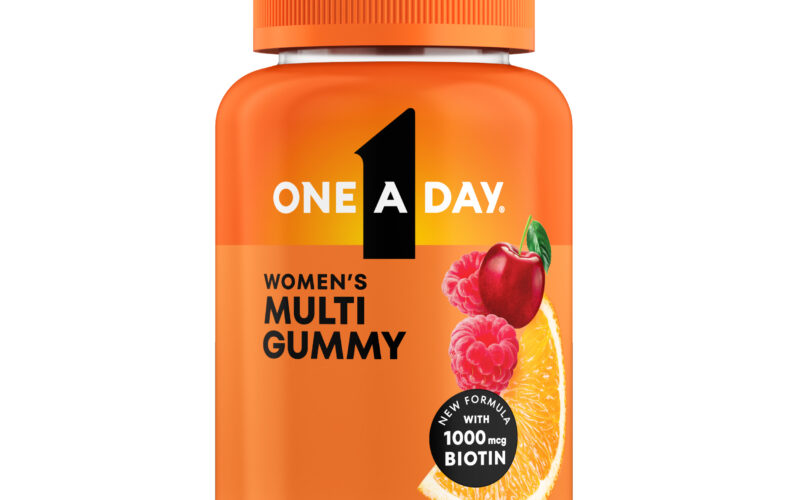
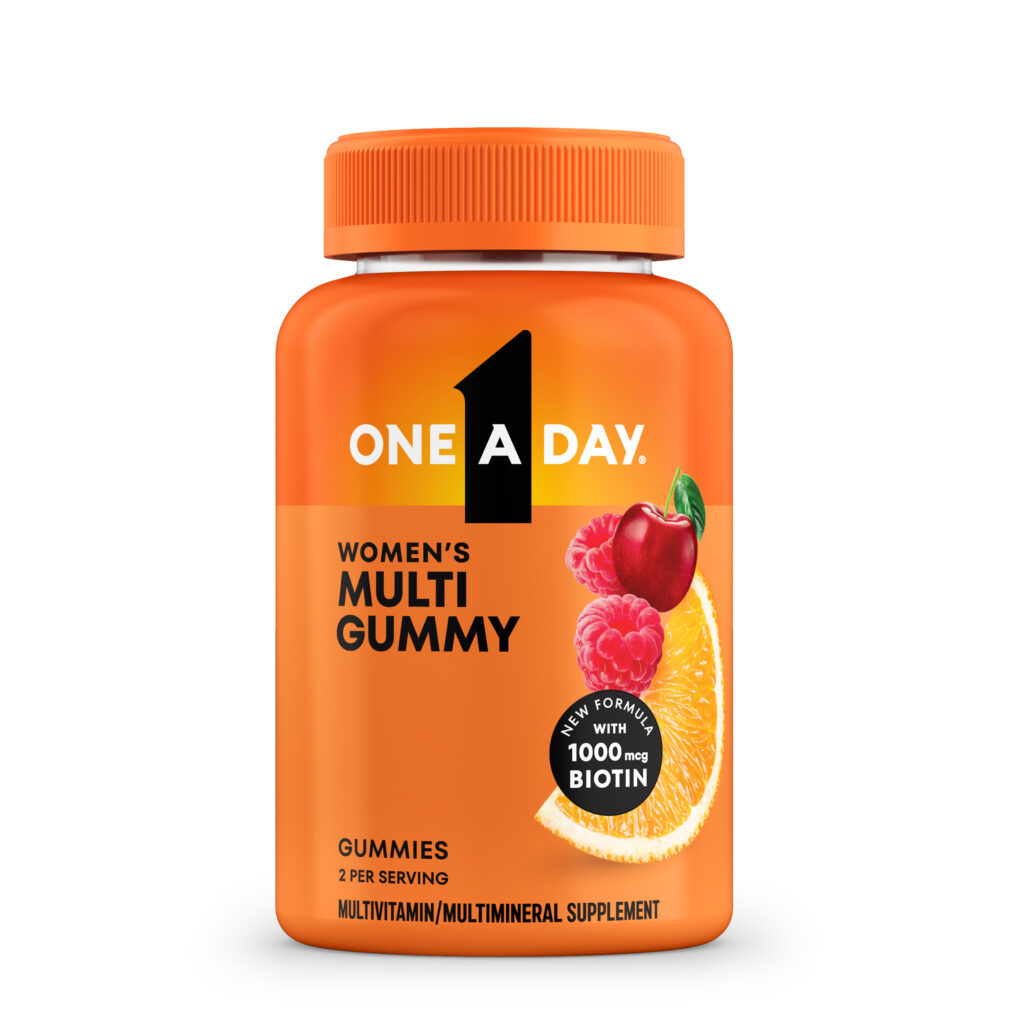
Bayer AG (Xetra: BAYN) has introduced a new United States formula for One A Day Women’s Multi Gummy containing 1,000 micrograms of biotin in each two-gummy serving. The reformulated product, now available through Walmart stores and online, combines the increased biotin content with vitamins A, C and E and zinc to support the brand’s hair, skin and nail positioning. For Bayer’s Consumer Health division, the launch represents a targeted attempt to convert growing consumer interest in beauty-oriented supplements into a broader daily multivitamin purchase. The central tension is whether a high-dose biotin message can create meaningful differentiation in a crowded wellness aisle without allowing consumer expectations to move beyond what the scientific evidence supports.
What has changed in the One A Day Women’s Multi Gummy formula and why does the biotin dose matter?
The revised One A Day Women’s Multi Gummy provides 1,000 micrograms of biotin per serving, equivalent to 3,333% of the Daily Value shown on the product’s latest Supplement Facts panel. Consumers are instructed to chew two gummies daily, which also provide vitamin D, folic acid, vitamin B12, iodine and several other nutrients intended to support everyday nutritional needs.
Bayer has positioned the increase as a competitive distinction. The company said the new formula contains 1,000 micrograms of biotin compared with 150 micrograms in several named competing women’s multivitamin gummies, including products marketed by Olly, Nature Made and Vitafusion. That comparison gives One A Day a simple shelf-level message that consumers can understand quickly, even when the wider nutritional differences between rival formulations are more complex.
The reformulation also preserves One A Day’s broader multivitamin proposition. Bayer associates the product with bone health through vitamin D, immune support through vitamins A, C, D and E and zinc, energy metabolism through B vitamins, and heart-health support through folic acid and vitamins B6 and B12. The company explicitly states that its heart-related positioning is not a replacement for medication and that the supplement is not intended to diagnose, treat, cure or prevent disease.
This breadth is strategically important. A dedicated hair, skin and nail supplement competes largely on one beauty benefit, while a multivitamin can be marketed as a routine-consolidation product. Bayer is effectively asking consumers to replace multiple wellness purchases with one familiar product, a proposition that may appeal to shoppers facing crowded cabinets, complicated supplement schedules and rising household costs.
Why is Bayer combining women’s multivitamins with beauty-oriented supplement positioning?
Beauty-from-within products occupy a commercially attractive space between traditional nutrition, personal care and lifestyle wellness. Consumers may initially enter the category through a visible concern such as hair condition or nail strength, but manufacturers can use that interest to introduce a broader package of vitamins and minerals.
Lisa Perez, Bayer’s general manager and vice president of marketing, said women were increasingly seeking products that simplified their wellness routines while addressing changing health and beauty priorities. She presented the reformulated gummy as a way to combine daily nutritional support with hair, skin and nail positioning in one serving.
That explanation reveals the business logic behind the launch. Bayer is not merely increasing an ingredient quantity. It is reorganising the product’s consumer proposition around convenience, visible wellness and habit formation.
Gummies are especially suited to that strategy because they can reduce some of the behavioural friction associated with conventional tablets. Taste and format may encourage routine use, although they also create formulation trade-offs. The latest label shows that a two-gummy serving contains 10 calories and two grams of added sugar, while the product contains gelatin and wheat. Those details may matter to consumers with dietary restrictions or shoppers comparing gummies with sugar-free tablets and capsules.
Bayer also says the formulation contains no artificial sweeteners, high-fructose corn syrup or Food, Drug and Cosmetic colour additives. The full ingredient panel identifies juice concentrates used for colour and monk fruit extract among the other ingredients. This supports a cleaner-label narrative, but success will depend on whether consumers value the combination of format, taste, ingredient profile and brand familiarity enough to remain repeat buyers.
How could the Walmart rollout help Bayer strengthen One A Day distribution in the United States?
The new formula is being launched nationwide through Walmart, giving Bayer immediate access to a large physical and digital retail audience. Walmart can provide broad consumer visibility, substantial sales volumes and rapid feedback on whether the high-biotin message improves conversion compared with the previous formula.
A major retailer also allows Bayer to communicate the reformulation at several stages of the purchasing process. The updated biotin level can appear in search results, product descriptions, packaging, promotional displays and price comparisons. That repeated exposure matters in a category where consumers may make decisions within seconds and where apparently similar bottles compete for limited shelf attention.
However, strong distribution does not guarantee incremental demand. Some existing One A Day users may simply migrate to the new formula, creating product replacement rather than genuine category growth. Bayer will need the reformulation to attract new users, improve retention, support premium pricing or defend market share for it to generate more than a temporary sales lift.
The launch could also provide a testing ground for future portfolio changes. Should the formula perform well, Bayer may apply similar beauty-led positioning to other age-specific or life-stage products. One A Day already markets multivitamins across women’s, men’s, pregnancy, teenage and older-adult segments, giving the company several potential routes for extending successful claims or formats.
How does the new One A Day formula fit Bayer Consumer Health’s financial position in 2026?
The timing is commercially relevant because Consumer Health entered 2026 with uneven regional momentum. Bayer reported first-quarter Consumer Health sales of €1.491 billion, representing currency-and-portfolio-adjusted growth of 5.3%. Nutritionals sales rose 12.5% on the same basis to €375 million, making the category one of the division’s stronger performers during the quarter.
North America remained more challenging. Consumer Health sales in the region declined 1.4% on a currency-and-portfolio-adjusted basis and 11% on a reported basis to €493 million. Bayer attributed the wider weakness partly to a soft cold season and a difficult United States market environment.
The Women’s Multi Gummy reformulation therefore addresses an identifiable strategic need. Bayer has category-level momentum in Nutritionals, but it still needs stronger United States execution. An established brand, a prominent retailer and a clear ingredient-based message provide a relatively low-risk way to pursue that objective without acquiring a business or building an entirely new consumer brand.
The financial contribution of one reformulated product will be small relative to Bayer’s global operations. Consumer Health generated €5.802 billion in 2025 sales and €1.341 billion of EBITDA before special items, while Bayer Group sales reached €45.6 billion. The importance of the launch lies less in immediate group revenue and more in what it indicates about Bayer’s ability to refresh mature brands, respond to consumer trends and produce repeatable organic growth.
Consumer Health’s first-quarter EBITDA before special items declined 1.5% to €337 million, with the margin easing from 22.8% to 22.6%. Bayer said foreign-exchange pressure and increased marketing investment in innovative products weighed on earnings. This means product launches must eventually deliver enough volume, pricing or market-share improvement to justify the promotional spending supporting them.
What does the scientific evidence say about high-dose biotin and hair, skin and nail claims?
The commercial appeal of the formula should be separated from the strength of the underlying evidence. The National Institutes of Health identifies 30 micrograms as the average recommended daily amount of biotin for adults, meaning the One A Day serving provides roughly 33 times that benchmark. Biotin deficiency is considered rare in the United States because most people obtain sufficient amounts through food.
The National Institutes of Health also says biotin-containing supplements are frequently promoted for hair, skin and nail health, but that there is little scientific evidence supporting these claims among the general population. Some small studies and case reports have suggested benefits in particular deficiency-related or uncommon conditions, but the agency says further research is required before biotin can be recommended for these broader uses.
This does not make the product’s positioning automatically inappropriate. Bayer frames the formula as providing nutritional support rather than treating hair loss, nail disease or a medical condition. The distinction is important because United States dietary supplements are not approved by the Food and Drug Administration for safety and effectiveness before being marketed in the same way as medicines. Manufacturers remain responsible for ensuring that their products are safe, properly labelled and supported by truthful, non-misleading substantiation.
High biotin intake can also interfere with certain laboratory tests. The National Institutes of Health warns that supplements containing biotin above recommended amounts may produce false results in tests measuring some hormones, including thyroid hormone. It advises consumers to inform physicians, pharmacists and other healthcare providers about the supplements they use.
The product label similarly advises people who are pregnant, breastfeeding, taking medication or managing a medical condition to consult a health professional before use. Clear communication of these details will be important because the formula’s headline ingredient is present at a level far above ordinary dietary requirements.
Will the new formula create meaningful value for Bayer AG shareholders or remain a modest brand refresh?
Bayer shares were trading near €47.03 around the July 28 close, giving the company a market capitalisation of approximately €46.4 billion. The stock was about 1.2% below its July 21 level but roughly 2.2% above its June 29 price. It remained around 12.8% below its 52-week high of €53.92 while standing almost 90% above the 52-week low of approximately €24.81.
There is no basis for attributing those movements to the One A Day announcement. Bayer’s valuation is influenced by much larger factors across Pharmaceuticals, Crop Science, legal liabilities, debt reduction and group cash generation. The gummy reformulation is operationally relevant but financially insufficient to change the investment case by itself.
Its significance is cumulative. Consumer health companies rarely transform performance through a single product refresh. They build value through numerous launches, packaging changes, channel expansions and formulation upgrades that strengthen shelf presence and increase household penetration over time.
The next measurable proof points will be Nutritionals growth in North America, Consumer Health margins, marketing productivity and any evidence that new products are gaining market share. Bayer is scheduled to publish its first-half 2026 results on August 4, which will provide a broader assessment of whether the division’s first-quarter nutritionals momentum has continued.
The One A Day Women’s Multi Gummy launch improves Bayer’s positioning in an attractive consumer niche and gives the company a clearer beauty-led message. What remains unresolved is whether shoppers will treat the larger biotin dose as a compelling reason to switch, pay more or repurchase consistently. Sustained United States sales growth would strengthen the strategic case, while limited repeat demand would leave the reformulation as little more than a well-packaged shelf refresh.
What are the key takeaways from Bayer’s new One A Day Women’s Multi Gummy formula?
- One A Day Women’s Multi Gummy now contains 1,000 micrograms of biotin per two-gummy serving.
- The latest Supplement Facts panel lists the biotin content at 3,333% of Daily Value.
- Bayer is positioning the product around daily nutrition and hair, skin and nail support.
- The reformulated gummy is available through Walmart stores across the United States and online.
- The launch combines beauty-oriented positioning with broader bone, immune, energy and heart-health support claims.
- Bayer’s Nutritionals business grew strongly during the first quarter of 2026, but North American Consumer Health sales remained under pressure.
- Scientific evidence supporting biotin supplements for hair, skin and nails in the general population remains limited.
- Consumers should disclose high-biotin supplement use before certain laboratory tests because it may interfere with results.
- The product is unlikely to affect Bayer AG’s valuation independently, but it may contribute to broader organic growth and brand-renewal efforts.
- Walmart sales, repeat purchases, North American Nutritionals growth and Consumer Health margins will provide the clearest commercial evidence.
Discover more from Business-News-Today.com
Subscribe to get the latest posts sent to your email.