



BASF SE (ETR: BAS), the world’s largest chemical producer, is entering the most consequential stretch of its corporate restructuring in a generation. The Ludwigshafen group has just inaugurated its €8.7 billion Verbund site in Zhanjiang, formally separated its Agricultural Solutions division ahead of a 2027 Frankfurt IPO, and absorbed a Q1 2026 hit from the Strait of Hormuz closure that triggered a sharp Q2 guidance warning. Retail investors watching ETR: BAS at €53.80 are now staring at a stock that has run 22 percent in twelve months despite weak European industrial demand, a contested €40 to €63 analyst price target range, and a dividend cut already baked into the latest payout cycle.
What does BASF actually do and why is it different from a generic chemicals producer
BASF runs an integrated production model called the Verbund, where the output of one plant becomes the feedstock of the next and waste heat from one process drives another. Six integrated production sites and around 390 smaller sites span more than 80 countries, with the operating structure split across six segments: Chemicals, Materials, Industrial Solutions, Surface Technologies, Nutrition and Care, and Agricultural Solutions.
The Verbund architecture is the structural moat. A competitor cannot replicate the cost position of Ludwigshafen, Antwerp, or now Zhanjiang without committing tens of billions of euros over a decade. This is why BASF still produces a return on capital that smaller specialty chemicals players cannot match, even when the European cycle is weak. The flip side is that the model is heavily exposed to energy prices, currency moves, and global trade flow disruption. When the Strait of Hormuz closed in March 2026, BASF was structurally more exposed than a smaller, more regional competitor would have been.
For retail investors, the differentiation matters because it tells you what kind of stock this is. BASF is not a high-growth specialty chemicals play. It is a cyclical industrial compounder with an income kicker, and the entire investment thesis right now turns on whether the cycle troughs in 2026 and recovers into 2027.
How does the Agricultural Solutions IPO in 2027 change the equity story for BASF shareholders
This is the single biggest structural catalyst on the BASF horizon. The Agricultural Solutions division, which generated €9.8 billion in sales in 2024 and includes crop protection, seed treatment, and digital farming, is being carved out as a Societas Europaea structure and prepared for a partial Frankfurt listing by 2027. NKP M&A Insights has reported that Goldman Sachs and Deutsche Bank are advising on the process, with the unit potentially valued above €20 billion. BASF will remain the majority shareholder post-IPO.
The new Management Board for the standalone agriculture business, led by Livio Tedeschi, took office on May 1, 2026. Tedeschi has been elevated to the BASF Group Board of Executive Directors simultaneously, signalling that the parent intends to run the transition through full integration with group strategy rather than letting it drift. The 2026 AGM has already approved the carve-out structure.
For shareholders, the IPO matters in two ways. First, it crystallises hidden value. If the agriculture unit lists at a valuation closer to pure-play peers like Corteva or FMC, the implied multiple is materially higher than what BASF currently trades at on a sum-of-the-parts basis. Second, it gives BASF a capital allocation tool, since proceeds from the partial listing can be redeployed into the core chemicals businesses or returned to shareholders. The risk is execution. Agricultural Solutions is still being separated into its own legal entities outside North America, and the new SAP environment must be live globally by early 2027 for the IPO timetable to hold. Any slippage pushes the catalyst into a different macro window.
Why is the Zhanjiang Verbund inauguration considered the most important operational milestone in BASF history
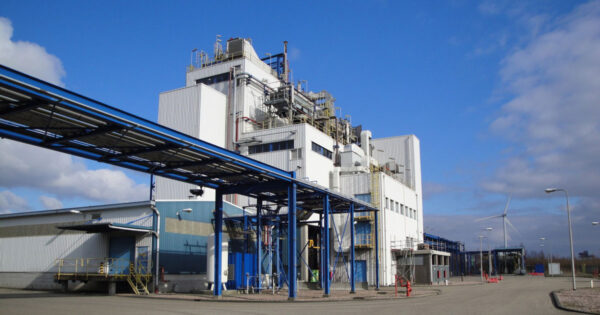
On March 26, 2026, CEO Dr. Markus Kamieth officially inaugurated the Zhanjiang Verbund site in Guangdong Province. Total investment to date is €8.7 billion, completed on schedule and under the original budget, with peak construction headcount of around 13,000 workers managed by Fluor Corporation as the lead engineering, procurement, and construction partner. Mechanical completion ran for more than 75 million work hours without a Lost Time Injury.
The site is now BASF’s third-largest Verbund globally, after Ludwigshafen and Antwerp. The steam cracker at the core has an ethylene capacity of one million metric tons per year and is the first such cracker worldwide to run its main compressors on 100 percent renewable electricity. Eighteen plants are operating across 32 production lines, generating more than 70 products, with output flowing mainly to Chinese customers in transportation, electronics, consumer goods, and personal care.
The strategic logic is local-for-local manufacturing. China is the world’s largest and fastest-growing chemical market, and BASF generated approximately €8.2 billion in regional sales in 2025. Without a flagship integrated site inside China, BASF was structurally disadvantaged versus Sinopec and the emerging Chinese petrochemical majors. Zhanjiang reverses that. It also gives BASF a geopolitical insulation layer, because much of the China business no longer needs to flow through European or Middle Eastern shipping lanes. The risk is utilisation. A new Verbund site at this scale only earns its cost of capital once it runs near full capacity, and that ramp will take quarters, not weeks. Q2 and Q3 2026 will be the first real read.
What does the Q1 2026 result tell retail investors about earnings momentum and Middle East risk
BASF reported Q1 2026 sales of €16,020 million, slightly below the prior year, with net income rising to €927 million and basic earnings per share of €1.06 compared with €0.91 the year before. EBITDA before special items came in at €2.4 billion. Management maintained full-year 2026 guidance of €6.2 billion to €7.0 billion in adjusted EBITDA.
The more important disclosure came from CFO Dirk Elvermann. He described the quarter as having unfolded in two distinct phases: moderate growth in January and February, particularly in China, followed by sharp disruption from March as the Iran conflict intensified and the Strait of Hormuz closed to key energy and chemical flows. Pricing power has strengthened into Q2 as supply tightens, but management has explicitly flagged that a persistently weak US dollar could reduce Q1 operating earnings by as much as €200 million on translation. The Q2 outlook is described as positive, but conditional on how long the Middle East crisis runs.
For a retail investor, this is the most actionable disclosure in the recent flow. BASF is benefiting from higher pricing in the short term as Hormuz disruption removes Middle Eastern competition from European customers, but the same dynamic is pushing input costs higher and creating supply uncertainty across the value chain. The next earnings release on July 29, 2026 will be the moment the market learns whether pricing power outran cost pressure in Q2.
How is the market pricing BASF stock right now versus what the newsflow implies
ETR: BAS closed recently at €53.80, with a market capitalisation of around €48 billion and a 52-week range of €40.75 to €55.05. The stock has run roughly 22 percent over the trailing twelve months and trades approximately 19 percent above its 200-day moving average. P/E sits near 27 on a trailing basis, with forward consensus EPS of €2.58 implying a forward multiple closer to 21. Dividend yield is 4.11 percent based on the €2.25 declared payout for fiscal 2025, with the ex-dividend date on May 4, 2026.
Analyst coverage is unusually split. The Stockopedia consensus is Hold with a price target of €51.80, slightly below the current price. Investing.com data shows ten Buy ratings, five Sell ratings, and an average twelve-month target of €51.79, with a high estimate of €63 and a low estimate of €36. Barclays sits at Underweight with a €40 target, the lowest active broker target on the stock. The 4.11 percent yield is well below BASF’s ten-year average of around 5 percent, partly because the dividend has been recalibrated downward from the €3.40 peak.
The implication for retail investors is that the easy money on the rerating may already be in the price. The stock has run hard on the Zhanjiang completion narrative and the Ag Solutions IPO catalyst. Anyone buying at current levels is paying a forward multiple that already assumes the cyclical recovery materialises. The downside scenario, captured by the Barclays €40 target, is that European industrial demand stays weak, the agriculture IPO slips, and Zhanjiang takes longer than expected to reach utilisation.
What execution risks are most likely to hit the BASF investment thesis between now and the 2027 IPO
Three risks dominate the near-term picture. Currency is the most quantified, with management having already flagged a potential €200 million Q1 operating earnings hit from a weak US dollar. A dollar that stays soft into the second half compresses translated earnings from the Americas and Asia, which together account for the majority of forward growth.
The second is the Middle East. CFO Dirk Elvermann was explicit that Q2 trajectory depends on how long the Hormuz disruption persists. A return to normal shipping flows reverses the short-term pricing tailwind but eases input cost pressure. A prolonged closure compresses margins across the European Verbund sites that depend on Middle Eastern feedstock routes.
The third is portfolio execution. BASF has received multiple offers for its Coatings unit, which is part of Surface Technologies, and the Agricultural Solutions ERP migration is still incomplete outside North America. Both processes are running in parallel with the Zhanjiang ramp. Capital markets generally penalise companies that run too many strategic transitions simultaneously, and BASF is currently running three.
Why are German retail investors and DAX-focused income funds still buying BASF despite the cyclical concerns
The retail investor case for BASF rests on three pillars that institutional analysts often underweight. First, the dividend continuity record. BASF has paid a dividend for 25 consecutive years and has not cut it since the early 2000s. The yield is below historical averages but still attractive in a low-rate European context, and the company is supplementing dividends with a share buyback programme announced earlier in April 2026.
Second, the directors’ dealings. Executives reported multiple share purchases through 2025, which is consistently read by German retail platforms as a confidence signal. Insider buying at a German DAX 40 industrial is rare enough to attract attention on the StocksGuide and Ad-Hoc-News forums.
Third, the technical setup. BASF crossed above its 200-day moving average in early May 2026 and is now trading with positive momentum across short, medium, and long-term technical signals. Retail flow on German broker platforms tends to follow these crossover events, and the stock’s position above key moving averages has attracted momentum buyers alongside the traditional income holders.
The conversation on X cashtag $BAS and on German-language forums skews toward dividend defence and IPO speculation rather than aggressive growth narratives. The retail thesis is not that BASF will compound at 20 percent a year. It is that the stock pays you to wait through a cyclical trough and then rerates as the agriculture spin-off and Zhanjiang ramp deliver visible value.
What are the key takeaways from the BASF investment case heading into the 2027 IPO window
- BASF SE (ETR: BAS) trades near €53.80 with a market cap of around €48 billion, a 4.11 percent dividend yield, and an analyst target range from €40 to €63, signalling a contested cyclical recovery thesis.
- The Agricultural Solutions IPO planned for the Frankfurt Stock Exchange in 2027 is the dominant value-unlock catalyst, with the unit potentially valued above €20 billion and Goldman Sachs and Deutsche Bank advising.
- The €8.7 billion Zhanjiang Verbund site, inaugurated on March 26, 2026 by CEO Dr. Markus Kamieth, is the largest single investment in BASF history and now the company’s third-largest production site globally.
- Q1 2026 net income rose to €927 million on sales of €16,020 million, but CFO Dirk Elvermann flagged Strait of Hormuz disruption from March onwards and a potential €200 million currency headwind from a weak US dollar.
- Execution risk concentrates on three parallel transitions: the Agricultural Solutions ERP migration, the Coatings unit divestment, and the Zhanjiang capacity ramp, any of which could slip and push the equity rerating into a later window.
- The next earnings release is scheduled for July 29, 2026, which will be the first clean read on whether pricing power outran cost pressure in Q2 and whether the Zhanjiang ramp is tracking the management trajectory.
Discover more from Business-News-Today.com
Subscribe to get the latest posts sent to your email.