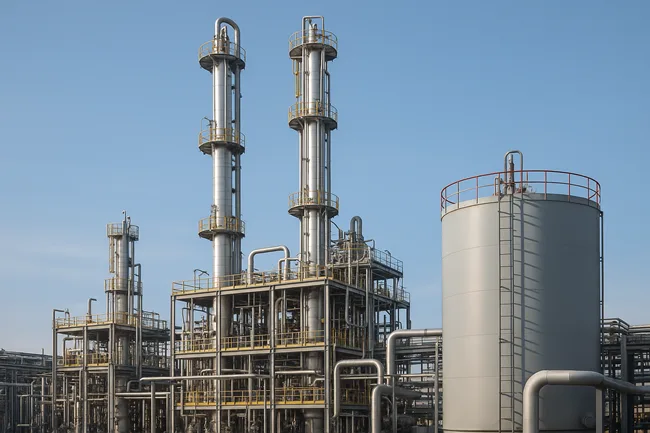




BASF SE (Frankfurt: BAS) has confirmed exploratory discussions with Evonik Industries AG and major shareholder RAG-Stiftung regarding a potential takeover of the German specialty chemicals producer, moving months of industry consolidation speculation into a formal corporate process. BASF SE stressed that both the progress and eventual outcome remain open, while Evonik Industries has said it received a non-binding approach directed toward a possible voluntary public takeover offer for the company’s shares.
The market immediately began pricing the asymmetry typical of a potential acquisition. Evonik Industries shares finished September 25 around 7% higher, while BASF SE declined roughly 3.6%, reflecting enthusiasm around a possible premium for the target and greater caution around the financing, integration and valuation burden facing the prospective acquirer.
Why would BASF consider buying Evonik Industries at this point in the cycle?
Europe’s chemicals industry has spent several years navigating expensive energy, subdued industrial demand, Chinese competition and pressure to simplify sprawling portfolios. BASF SE generated approximately €60 billion of sales in 2025 and has increasingly focused its portfolio around Chemicals, Materials, Industrial Solutions and Nutrition & Care, alongside its standalone Surface Technologies and Agricultural Solutions businesses.
Evonik Industries offers a different mix, with stronger concentration in specialty chemicals and businesses serving higher-value applications. A combination could therefore give BASF SE additional specialty exposure while creating opportunities to reduce overlapping corporate, manufacturing, procurement and commercial costs.
The strategic logic nevertheless has to overcome the size and complexity of the transaction. Evonik Industries was valued by the market at roughly €9 billion around the approach, while RAG-Stiftung controls approximately 43% of the company. Any successful transaction would therefore require agreement around a meaningful control premium as well as support from a shareholder whose long-term interests extend beyond a short-term takeover price.
How does Evonik’s restructuring programme affect a possible BASF transaction?
Evonik Industries is already attempting to simplify itself. The company has outlined another restructuring phase beginning in 2027 while pursuing disposals including Oxeno and Syneqt, as management tries to concentrate resources around businesses offering stronger returns and growth prospects. The restructuring follows an earlier programme launched in 2024 and has included a substantial reduction in organisational complexity and staffing.
That creates both opportunity and complication for BASF SE. A more focused Evonik Industries could be easier to integrate and may contain fewer businesses that BASF SE considers non-core. On the other hand, buying the company before all planned disposals and restructuring measures are completed could leave BASF SE responsible for executing both Evonik Industries’ internal transformation and a much larger combination simultaneously.
Competition scrutiny would also matter. BASF SE and Evonik Industries participate across multiple chemical value chains, meaning regulators would need to examine product-level overlaps rather than simply comparing the groups at the corporate level. Selected disposals could therefore become part of any eventual transaction structure.
What does the BASF and Evonik share reaction reveal about investor expectations?
Evonik Industries jumped as much as approximately 11% during September 25 trading before finishing around 7% higher, while BASF SE ended sharply lower. That divergence suggests investors believe a credible takeover process could deliver additional value to Evonik Industries shareholders, but that the price BASF SE would need to pay remains a central question.
This is particularly important because takeover discussions often become less attractive for an acquirer as expectations rise. Once the target’s share price incorporates a significant probability of a transaction, management needs to demonstrate that strategic benefits and synergies can justify paying an additional premium without weakening returns on invested capital.
The wider European chemicals sector will therefore watch the process closely. A successful BASF SE acquisition of Evonik Industries could encourage further consolidation among companies confronting excess capacity, weak European industrial growth and increasingly capable Asian competitors. A failed approach, however, would underline how difficult it remains to translate consolidation logic into transactions that satisfy sellers, shareholders and regulators simultaneously.
For now, the development remains exploratory rather than a signed acquisition. The most important next milestone is whether BASF SE moves from discussions to a firm offer with disclosed valuation, financing and strategic commitments.
Discover more from Business-News-Today.com
Subscribe to get the latest posts sent to your email.