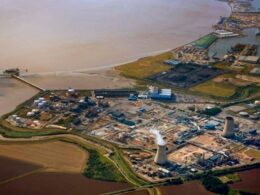

The Chemours Company (NYSE: CC), DuPont de Nemours, Inc. and Corteva, Inc. have reached a $455 million settlement with North Carolina and 11 local entities covering litigation tied to PFAS and other historical discharges from Chemours’ Fayetteville Works facility as well as certain state claims involving PFAS sources outside the site, including aqueous film-forming foam. Payments are scheduled over 15 years, with Chemours responsible for 50% and DuPont and Corteva collectively responsible for the remaining half under their 2021 cost-sharing memorandum. Chemours estimates the net present value of its payment share at approximately $180 million and says the amount is covered by existing accruals, while approximately $50 million of Chemours cash payments are expected during the next 12 months. The agreement creates meaningful liability visibility around a major group of North Carolina claims, but it does not eliminate all remaining PFAS litigation, personal-injury claims, property claims or future remediation risks.
The settling local entities include Bladen, Brunswick, Columbus, Cumberland, New Hanover, Robeson and Sampson counties alongside several municipalities and water organizations near Fayetteville Works. The parties had been excluded from the nationwide public-water-system class settlement approved in 2024, making this agreement a separate resolution of their claims. The settlement also acknowledges progress under Chemours’ 2019 North Carolina consent order and sets procedures around some remaining off-site drinking-water obligations.
How large is Chemours’ real economic burden compared with the $455 million headline?
Chemours is responsible for half of the nominal settlement payments, which equates to $227.5 million before considering timing. Because payments are spread over 15 years, the company calculates the net present value of its share at approximately $180 million.
That difference illustrates why a long-dated environmental settlement should not be evaluated as though the full nominal amount leaves the balance sheet immediately. Chemours expects approximately $50 million of payments over the next 12 months, equal to roughly 7.5% of the $671 million of unrestricted cash and cash equivalents it reported at June 30.
The $50 million near-term figure is also equivalent to roughly 44% of Chemours’ $114 million of second-quarter free cash flow on a simple comparison. That does not mean settlement payments consume 44% of annual free cash flow because quarterly cash generation varies and the settlement schedule extends for many years. It does show that the first year of payments is financially relevant rather than immaterial.
Chemours says the net present value is covered by existing accruals, reducing the likelihood of a new earnings charge equivalent to the full economic burden solely because the agreement was signed. Cash flow remains a separate issue because accrued liabilities still have to be paid over time.
What exactly does the settlement resolve, and which PFAS risks remain outside it?
The agreement resolves litigation from North Carolina and the 11 settling local entities involving Fayetteville Works PFAS and other historical discharges. It also addresses the state’s claims involving certain PFAS contamination unrelated to Fayetteville Works, including aqueous film-forming foam, with $18 million of the total settlement attributed to those non-Fayetteville allegations.
The scope is important because Chemours continues to face PFAS matters outside these covered claims. Its own settlement announcement identifies potential pending or future litigation involving North Carolina subdivisions not included in the agreement, personal injury, property damage and natural-resource damages, alongside continuing remediation obligations.
Chemours’ June 30 filing also showed ongoing individual lawsuits from residents near Fayetteville and other PFAS-related proceedings. That means the $455 million settlement is a major step toward defining part of the liability landscape rather than a complete legal endpoint.
For investors, this distinction prevents a common analytical error. Greater certainty around one large cluster of claims can reduce the risk premium around Chemours even while the company continues carrying substantial legacy environmental exposure elsewhere.
Why does the 2019 Fayetteville Works consent order still matter after the new settlement?
Chemours has operated under a North Carolina consent order since 2019 that required measures to reduce PFAS emissions and address off-site impacts around Fayetteville Works. The new settlement acknowledges that several provisions have been completed and establishes procedures for certain remaining obligations, including drinking-water programmes.
That linkage matters because settlement money and remediation spending are not identical. A company can resolve damages claims while remaining responsible for operational controls, monitoring, treatment systems or other environmental work required under separate regulatory obligations.
The three companies have also modified how the settlement interacts with their 2021 cost-sharing memorandum. For purposes of qualified spending under that framework, the settlement will account for approximately $210 million, and future contributions to the memorandum escrow account are considered satisfied, including a $50 million Chemours contribution that otherwise would have been due in September 2026.
The cancelled future escrow contribution partially offsets the immediate liquidity interpretation of the new settlement. Chemours is assuming scheduled settlement payments, but one previously expected funding obligation under the same legacy-liability framework is simultaneously being treated as satisfied.
Can Chemours comfortably absorb the settlement while leverage remains elevated?
Chemours reported second-quarter net sales of approximately $1.6 billion and free cash flow of $114 million. At June 30, gross debt stood at $3.9 billion, unrestricted cash was $671 million and total liquidity was approximately $1.6 billion, while net leverage was about 4.4 times trailing adjusted EBITDA.
That liquidity base suggests the approximately $50 million of expected settlement payments over the next year are manageable in isolation. The larger concern is cumulative capital allocation because Chemours is simultaneously managing debt reduction, operating investment and several categories of environmental and litigation exposure.
Management continues to expect full-year 2026 adjusted EBITDA of $775 million to $825 million and sales growth of 1% to 5%. Achieving that range would give the company a stronger earnings base against which to service legacy liabilities, while operating deterioration could make the same fixed settlement schedule more burdensome.
Leverage therefore remains the financial context around the legal milestone. Resolving claims reduces uncertainty, but it does not automatically strengthen the balance sheet until cash payments are absorbed and debt continues declining.
What did Chemours shares do as investors received the settlement details?
Chemours shares closed at $15.02 on September 10, down only 0.13% for the session and about 3% below the September 3 close of $15.48. The stock therefore did not show a dramatic same-day repricing around the latest completed session.
That limited movement should not be treated as proof that the market considers all PFAS exposure resolved. Investors have been assessing legacy PFAS liabilities for years, and substantial accruals and previous settlements mean part of the risk is already embedded in expectations.
The clearer valuation benefit from the North Carolina agreement is improved quantification. Chemours now has a defined 15-year schedule for this group of claims and an estimated $180 million net present value for its share rather than another open-ended litigation process.
The next proof points will be court dismissals required to finalize the settlement, execution of remaining consent-order obligations and evidence that additional PFAS matters can be resolved without materially undermining deleveraging.
Key takeaways on the $455 million North Carolina PFAS settlement
- Chemours, DuPont and Corteva have agreed to $455 million of settlement payments.
- Payments will be spread over 15 years.
- Chemours is responsible for 50% of the settlement.
- Its nominal half equals $227.5 million.
- Chemours estimates the net present value of its share at approximately $180 million.
- Around $50 million of Chemours payments are expected over the next 12 months.
- The settlement resolves claims from North Carolina and 11 local entities.
- It also addresses certain state PFAS claims unrelated to Fayetteville Works.
- Other PFAS litigation and remediation exposure remain outside the agreement.
- Chemours had $1.6 billion of liquidity and 4.4 times net leverage at June 30.
Discover more from Business-News-Today.com
Subscribe to get the latest posts sent to your email.