

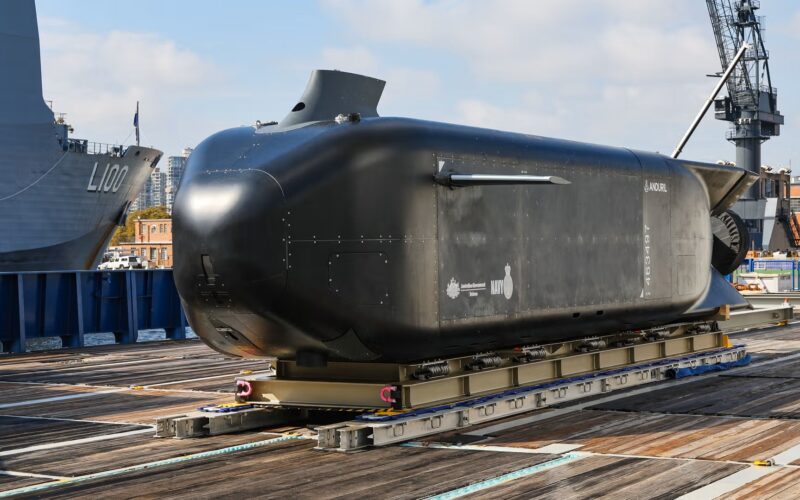
Anduril Industries, Inc. has reached a new milestone in its A$1.7 billion Ghost Shark programme after the Australian Government disclosed three mission payloads for the autonomous undersea vehicle, expanding its potential role in naval warfare, surveillance and distributed maritime operations. The October 19 announcement confirmed the integration and development of sea mines, underwater logistics caches and ALTIUS uncrewed aerial vehicles, with some associated technologies scheduled for demonstration during the AUKUS Maritime Big Play Pacific exercise in San Diego. The disclosure moves Ghost Shark beyond the industrial challenge of producing large autonomous underwater platforms toward the more demanding task of demonstrating operationally useful military missions. For Anduril, the commercial opportunity now extends beyond supplying underwater vehicles to developing mission payloads, software integration and potentially exportable naval capability, although further procurement and export decisions remain outstanding.
How does Ghost Shark’s new strike capability change Australia’s A$1.7 billion autonomous submarine programme?
The newly disclosed payloads expand the missions that Ghost Shark could perform without exposing a conventional crewed submarine or surface warship to the same level of direct operational risk. Australian Defence Industry Minister Pat Conroy said the platform could carry up to 12 sea mines, deploy underwater logistics caches and launch ALTIUS autonomous aerial vehicles for intelligence, surveillance, reconnaissance and potentially strike missions. These capabilities broaden the system’s application from persistent underwater presence to sea denial, distributed logistics and operations connecting the undersea and aerial domains.
The logistics payload is particularly relevant to Australia’s geography and its requirement to support forces operating across dispersed maritime locations. The Defence Science and Technology Group developed the cache capability to allow equipment and supplies to be stored underwater and recovered when required, potentially creating additional options for sustaining remote operations. Such missions could reduce the need to use larger crewed assets for certain support activities, although their practical usefulness will depend on underwater navigation, communications, retrieval reliability and integration with wider military logistics systems.
ALTIUS integration also broadens the value of a submerged autonomous platform. An underwater vehicle capable of releasing an aerial system can potentially combine concealed positioning with an airborne sensor or effector, complicating an adversary’s surveillance and defensive planning. However, the public announcement establishes the development and integration of these capabilities rather than demonstrating that every mission configuration has completed all operational qualification requirements.
Why is the transition from prototype development to fleet manufacturing important for Anduril Industries?
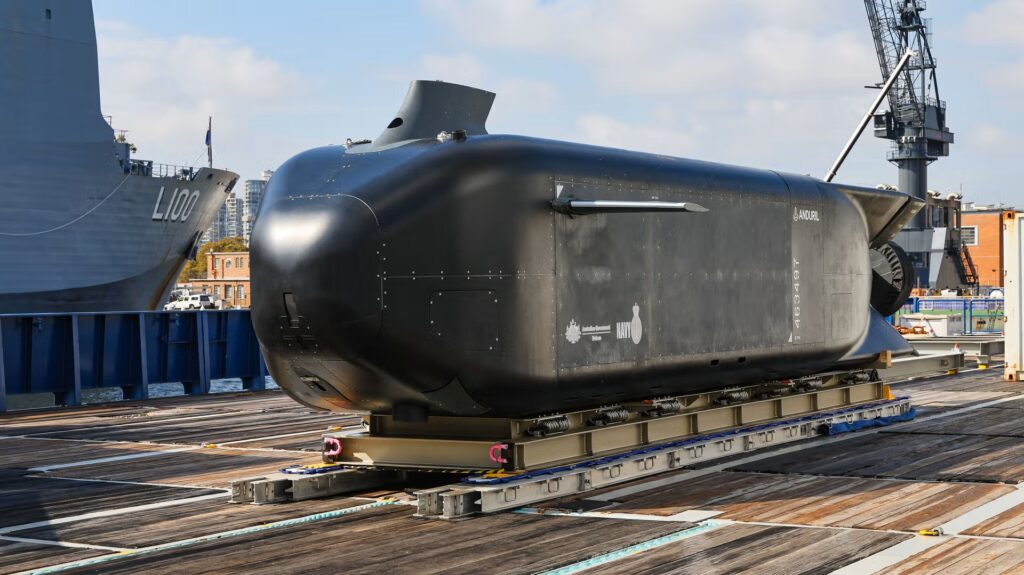
Ghost Shark is one of Anduril’s clearest examples of a defence technology programme progressing from joint development into a funded production framework. Australia awarded the company a A$1.7 billion programme of record in September 2025 after a development process that delivered three prototypes, creating a foundation for fleet acquisition rather than isolated experimentation. By October 2026, Anduril Australia was reporting that its manufacturing programme involved more than 42 Australian suppliers and a local workforce exceeding 350 people.
Anduril Australia chief executive David Goodrich said the first vehicle under the production programme was delivered three months after the contract was signed, demonstrating a comparatively rapid transition into the supply process. Australian officials nevertheless have not disclosed the complete fleet delivery count, and the first vehicle provided to the Navy was intended for testing and acceptance. The distinction is commercially relevant because manufacturing delivery, formal acceptance and operational deployment are separate milestones, each requiring different evidence of programme maturity.
The A$1.7 billion commitment provides substantial programme visibility, but it should not be interpreted as fresh funding announced in October 2026. It represents the earlier fleet acquisition arrangement that now supports development, production and delivery activity. The October milestone instead expands the demonstrated mission portfolio and potentially strengthens the commercial case for future platform orders, payload upgrades and sustainment contracts.
Can Anduril use AUKUS Pillar II cooperation to create an international Ghost Shark export market?
Australia is positioning autonomous undersea technology as an important component of AUKUS Pillar II cooperation with the United States and United Kingdom. The three governments have identified payloads and enabling systems for uncrewed underwater vehicles as an area for joint development, creating opportunities to share technologies even when participating navies choose different vehicle platforms. Australia’s Maritime Big Play participation provides an opportunity to demonstrate those capabilities in a multinational testing environment.
The export opportunity has two distinct components. Anduril could potentially supply complete Ghost Shark platforms to approved overseas customers, while Australian-developed mission payloads and associated technologies could be integrated into other allied underwater systems. The second route may offer a broader addressable market because partner navies are not required to adopt the same autonomous vehicle to benefit from compatible sensors or payloads.
Australian officials have confirmed that they are pursuing international interest in Ghost Shark, but no additional export contract was established by the October 19 announcement. Any future sale would depend on customer procurement decisions, technology-transfer conditions, production capacity and government export approvals. AUKUS cooperation therefore improves the potential route to market without automatically converting interest into contracted revenue.
What manufacturing advantages could Australia gain from producing autonomous underwater vehicles domestically?
The programme is creating an Australian industrial base for large autonomous maritime systems involving vehicle structures, onboard electronics, mission systems, software, testing and specialist supply-chain components. For local companies, participation could extend beyond initial manufacturing into maintenance, engineering changes, payload upgrades and future exports. A production ecosystem that can support multiple vehicle configurations may become more valuable as navies move toward combinations of crewed warships and autonomous platforms.
The A$1.7 billion programme also sits within Australia’s wider plan to invest up to A$5.8 billion over a decade in autonomous and uncrewed undersea warfare capabilities. Those amounts should not be added together as independent commitments, because the Ghost Shark acquisition forms part of the wider spending programme. Nevertheless, the investment establishes a policy framework in which future autonomous maritime purchases could extend beyond the initial Ghost Shark fleet.
Anduril’s competitive advantage rests partly on the modular architecture of its systems, which is intended to permit mission payloads to change without rebuilding the complete platform. This could shorten the time required to introduce new capabilities and support continuing engineering revenue after the first vehicles enter service. Competitors developing autonomous maritime systems will face similar demands for interoperability, reliability and rapid payload integration, making operational adaptability an important area of future competition.
What technical and commercial milestones will determine whether Ghost Shark becomes a larger defence business?
The immediate test is how successfully the Australian Navy integrates and evaluates the announced payloads under realistic operating conditions. Deploying underwater mines, recovering logistics caches and launching airborne systems all impose different demands on vehicle control, navigation, communications and mission safety. Testing during Maritime Big Play Pacific will provide useful evidence, but operational acceptance and sustained fleet use will be more significant indicators of readiness.
Manufacturing consistency is the second test. Delivering prototype vehicles on schedule demonstrates engineering progress, while producing a fleet requires repeatable quality assurance, stable suppliers, adequate production capacity and manageable lifecycle support costs. The Australian Government has not disclosed sufficient information to calculate Ghost Shark’s complete unit economics or compare its cost per operational mission reliably with traditional crewed platforms.
Export conversion is the third test. Anduril has already secured a domestic production programme, but additional overseas customers would improve the scale available to its Australian operations and potentially spread development and manufacturing costs across a larger fleet. The strongest evidence of international commercial success would be approved export contracts identifying customers, vehicle quantities, delivery schedules and funding commitments.
Ghost Shark is increasingly becoming a test of whether autonomous naval systems can progress from technically impressive demonstrations into standard military procurement. Australia has funded the platform, established domestic production and now publicly identified several operational payloads. The next evidence required is successful mission qualification, sustained fleet deliveries and an export order that demonstrates demand beyond the original Australian customer.
What are the key takeaways from Australia’s Ghost Shark programme and Anduril’s export strategy?
- Australia revealed three major Ghost Shark payload categories on October 19, 2026.
- The new capabilities cover sea mines, underwater logistics caches and ALTIUS aerial vehicles.
- The existing A$1.7 billion procurement programme supports Australian fleet production.
- Anduril says more than 42 Australian companies participate in the manufacturing programme.
- Australia plans up to A$5.8 billion in autonomous undersea capability spending over a decade, including Ghost Shark.
- AUKUS Pillar II creates opportunities for sharing compatible undersea payload technology.
- International Ghost Shark exports remain prospective rather than contracted.
- Operational testing, fleet acceptance and repeatable manufacturing are the next major tests.
- Future export orders could expand the commercial value of Australian autonomous naval manufacturing.
Discover more from Business-News-Today.com
Subscribe to get the latest posts sent to your email.