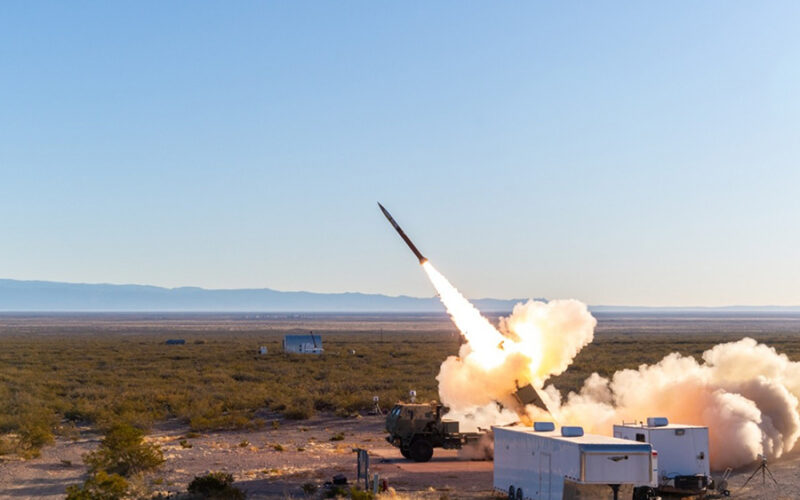
Lockheed Martin Corporation (NYSE: LMT) is advancing its Extended-Range Guided Multiple Launch Rocket System, known as ER GMLRS, toward production and operational fielding after the completion of two United States Army soldier-led test events. The October 19, 2026 announcement follows successful testing of both unitary and alternative-warhead configurations at White Sands Missile Range in New Mexico during September and October. With the United States Army having approved Milestone C, the programme has reached a production-readiness decision rather than remaining confined to development testing. The next commercial challenge for Lockheed Martin is to convert that technical progress into funded production, reliable deliveries and sufficient manufacturing capacity to satisfy American and allied demand for longer-range precision munitions.
How does the 150-kilometre ER GMLRS extend the United States Army’s existing precision-fire capability?
ER GMLRS is designed to provide a range of up to 150 kilometres while retaining compatibility with the High Mobility Artillery Rocket System, or HIMARS, and the M270 family of multiple launch rocket systems. That architecture allows military customers to extend the reach of established precision-fire formations without acquiring an entirely new class of launcher. Existing operators can potentially benefit from familiar training, logistics and command arrangements, although the new ammunition will still require appropriate qualification and operational procedures.
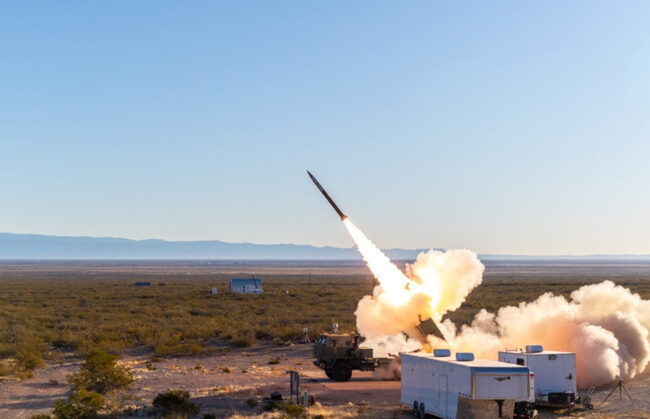
The latest tests involved multiple rockets launched in succession from an M270A2 launcher at White Sands Missile Range. Lockheed Martin said both the unitary and alternative-warhead configurations completed operational testing, demonstrating progress across two payload arrangements intended for different target requirements. The testing is more consequential than an isolated developmental launch because soldier-led events provide evidence of how the system performs when operated within military procedures rather than solely by contractor test personnel.
ER GMLRS also occupies a different part of the United States precision-strike portfolio from the longer-range Precision Strike Missile. The two systems are complementary rather than straightforward substitutes because range, warhead characteristics, inventory availability and target requirements influence weapon selection. A layered portfolio gives military planners greater flexibility while allowing Lockheed Martin to supply multiple munitions families through a partially shared launcher ecosystem.
Why does Milestone C approval matter for Lockheed Martin’s rocket manufacturing strategy?
Milestone C is an important acquisition decision because it permits a programme to proceed into production and deployment activity under the applicable procurement framework. For ER GMLRS, the decision follows operational testing and provides the industrial basis for shifting attention toward manufacturing quantities, supplier capacity and eventual fielding. It does not, by itself, establish that the Army has received a full operational inventory or that all future procurement funding has been committed.
The commercial significance of the milestone depends on orders following that decision. Military contractors can complete expensive research and development work without immediately generating large production revenue, while recurring manufacturing contracts generally provide greater visibility into material purchasing, factory utilisation and workforce requirements. Lockheed Martin has not disclosed a fresh ER GMLRS production contract value or a new delivery quantity in its October 19 announcement, so the milestone should not be presented as an additional multibillion-dollar booking.
The production transition also adds complexity to an already expanding precision-munitions business. Lockheed Martin manufactures GMLRS rockets, the Army Tactical Missile System and Precision Strike Missiles, each with its own technical requirements and supplier network. Increasing output across several weapons families requires sufficient rocket motors, guidance components, electronics, energetic materials and skilled manufacturing capacity, particularly when defence customers are simultaneously seeking faster replenishment of existing inventories.
Could compatibility with HIMARS and M270 systems expand international demand for ER GMLRS?
Existing launcher compatibility gives ER GMLRS a commercially attractive route into the international market because a customer operating suitable HIMARS or M270 systems would not necessarily need to procure another launcher fleet to obtain the longer-range rocket. This potentially reduces the infrastructure required for adoption, particularly for countries already maintaining guided rocket inventories and trained artillery formations. However, ammunition qualification, export authorisation and national procurement decisions remain necessary before the system can enter foreign service.
The United States and allied governments have been investing heavily in precision fires as battlefield requirements increasingly emphasise rapid deployment, accurate engagement and sufficient ammunition stocks. ER GMLRS addresses the demand for greater reach without necessarily requiring every mission to use a more expensive or longer-range missile. Its competitive position will depend on procurement cost, availability, reliability and how effectively it integrates into existing military targeting networks.
Lockheed Martin’s broader rocket portfolio also creates opportunities for common manufacturing investment and supplier development. Some improvements in process automation, component sourcing and production scheduling may benefit more than one product family, although separate qualification rules constrain how freely parts can be substituted. The company therefore has an opportunity to improve manufacturing economics through scale, but the benefit will depend on demonstrated output rather than announced capacity alone.
What does the October 2026 ER GMLRS milestone mean for Lockheed Martin stock?
Lockheed Martin shares closed at approximately $548.23 on October 19, compared with $499.22 on October 7, a gain of about 9.8% over those closing-price reference points. The stock nevertheless remained below its 2026 peak, reflecting how the market continues to balance strong defence demand with execution, contract profitability and programme-specific uncertainties. The increase across the period cannot be attributed exclusively to the ER GMLRS announcement, which was only one development affecting the company.
Lockheed Martin’s July second-quarter results had shown quarterly sales of approximately $20.1 billion and a substantial defence backlog, establishing the financial context for its ongoing manufacturing investments. The central commercial issue is how quickly approved programmes become contracted orders and how effectively the company converts expanding production activity into cash flow. Missile programmes can support multi-year revenue growth, but factory expansion, inventories and supplier commitments can absorb working capital before finished weapons are delivered.
The forthcoming quarterly financial update will also provide a broader assessment of production economics across Lockheed Martin’s missiles and other operating segments. Investors will be looking for evidence that higher demand is being translated into funded orders and sustainable margins rather than merely larger theoretical procurement opportunities. ER GMLRS strengthens the company’s technical portfolio, but its incremental financial contribution cannot be quantified from the October 19 disclosure alone.
What should happen next before ER GMLRS can become a major recurring revenue contributor?
The next programme evidence should include specific production awards, procurement quantities and delivery schedules from the United States Army. Operational fielding will provide another test as military units begin incorporating the longer-range ammunition into their existing artillery formations. Subsequent testing and readiness assessments may also clarify how both warhead variants perform under broader operational conditions.
On the industrial side, manufacturing throughput will matter as much as weapons performance. A programme that has completed qualification but cannot deliver sufficient quantities would provide less near-term benefit than its technical achievement suggests. Lockheed Martin’s ability to establish stable production rates while supporting its other missile commitments will determine the economic value of the transition.
ER GMLRS has moved beyond a significant technical barrier, giving Lockheed Martin another production-ready precision-fire capability that builds on an established launcher network. Its next test is more measurable: the volume of funded rockets ordered, the number delivered to military customers and the manufacturing margins achieved while production expands.
What are the key takeaways from Lockheed Martin’s ER GMLRS production milestone?
- Lockheed Martin announced the successful completion of two soldier-led operational test events.
- The extended-range rocket is designed to reach up to 150 kilometres.
- Both unitary and alternative-warhead configurations completed operational testing.
- The United States Army has approved the programme’s Milestone C production decision.
- ER GMLRS retains compatibility with existing HIMARS and M270 launcher systems.
- Production approval does not represent a newly disclosed multibillion-dollar order.
- Existing international launcher operators represent potential future customers.
- Lockheed Martin shares closed near $548.23 on October 19, 2026.
- Actual procurement quantities, deliveries and manufacturing performance will determine the financial contribution.
Discover more from Business-News-Today.com
Subscribe to get the latest posts sent to your email.