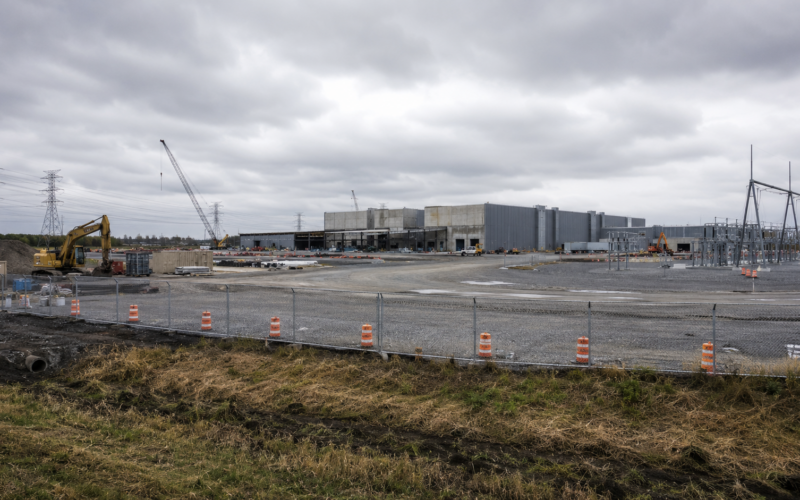
Alphabet Inc. (NASDAQ: GOOGL), through Google, is facing a court-ordered pause on construction activity tied to Project Skyway, a planned data center campus in Pine Island, Minnesota. The dispute places one of the world’s most valuable technology companies inside a widening national debate over artificial intelligence infrastructure, local environmental review, electricity demand and community consent. The immediate issue is procedural, with a Minnesota court allowing a challenge over environmental review and public records to move forward before construction advances. The broader significance is strategic, because the ruling shows that hyperscale data center growth is no longer just a question of capital, land and chips, but also one of local trust, regulatory disclosure and utility capacity.
For Alphabet Inc., the Minnesota pause is unlikely to change the company’s near-term artificial intelligence strategy by itself. Google continues to need enormous data center capacity to support cloud computing, search, advertising systems, Gemini-related workloads and broader enterprise artificial intelligence demand. However, Project Skyway shows that the real estate layer of artificial intelligence is becoming more exposed to legal friction. The court pause does not merely delay a construction timeline. It signals that communities, environmental groups and local governments are becoming active gatekeepers in a sector that previously moved through quieter industrial permitting channels.
That matters because artificial intelligence infrastructure is now being built at a scale closer to heavy industry than conventional digital services. Data centers need land, transmission access, cooling strategy, backup power, water planning and public confidence. A technology company can buy graphics processing units, sign cloud contracts and raise capital with speed, but local environmental review does not always move at hyperscaler tempo. That mismatch is becoming one of the more underpriced risks in the artificial intelligence capital expenditure cycle.
How could the Project Skyway dispute change data center approval risk in Minnesota and beyond?
The Project Skyway dispute centers on whether the environmental review process adequately captured the likely impact of a hyperscale data center campus. The Pine Island project has been described as a 482-acre campus, with at least 100 acres expected to be used for data center development. The Minnesota Center for Environmental Advocacy challenged the adequacy of the review process, while the court order created a pause that gives the legal challenge time to proceed. For developers, the most important lesson is that early-stage ambiguity can become expensive once an end user, electricity load and local footprint become clearer.
This is where the Minnesota case has implications beyond one project. Many data center campuses are initially discussed using broad terms such as technology center, industrial development or campus project. That language may be commercially convenient before customers, tenants and design details are finalized. However, once the project is understood to support hyperscale computing, public scrutiny intensifies quickly. Communities want to know how much power will be required, how much water will be consumed, whether noise and light impacts have been modeled properly, and whether the economic benefits justify infrastructure strain.
The second-order consequence is that data center developers may need to front-load environmental and utility transparency much earlier than they prefer. That could slow some approvals, but it may also reduce litigation risk later. A project that wins local confidence through detailed disclosure may be more bankable than one that moves fast and later faces a court challenge. In the artificial intelligence infrastructure race, speed still matters. Clean process may now matter just as much.

For contractors and engineering firms, the lesson is equally direct. Minneapolis-based Ryan Companies has been associated with Project Skyway as the developer and general contractor. Construction delays on large data center campuses can rapidly create cost exposure through labor scheduling, equipment procurement, site preparation, subcontractor commitments and financing assumptions. Even a temporary restraining order can turn into a commercial planning problem if timelines, utility coordination or tenant commitments are built around aggressive start dates.
What does the Minnesota case reveal about power, water and community pressure around AI data centers?
The Project Skyway dispute lands at a moment when artificial intelligence data centers are under rising scrutiny for their resource intensity. The public debate is no longer limited to whether data centers create construction jobs or expand the local tax base. Communities increasingly want to understand what a facility will require from the grid, how cooling will be handled, whether water usage will be sustainable, and how a project will affect nearby residents. In Pine Island, the concerns around electricity demand, water usage, public records and environmental review are exactly the issues that are now following data center projects across the United States.
The electricity question is especially sensitive because hyperscale artificial intelligence workloads can reshape local utility planning. A single large campus can require power availability that rivals heavy industrial users. If a project depends on major transmission upgrades, new generation, power purchase agreements or utility cost recovery, the benefits and burdens may not be evenly distributed. Local officials may welcome investment, but ratepayers, environmental advocates and regional planners may ask who pays for grid reinforcement and whether the power mix aligns with state climate goals.
Water is the other pressure point. Data center cooling strategies vary, but public trust weakens when communities believe water demand has been understated or poorly explained. Even when a company argues that modern cooling systems are efficient, residents often measure risk through local wells, municipal capacity and drought sensitivity rather than corporate sustainability targets. That gap between technical efficiency and public perception is becoming a central political challenge for hyperscale data center developers.
Community pressure is also becoming more organized. The Minnesota case shows that local opposition is not always symbolic. Environmental groups can use administrative law, public records rules and procedural review standards to slow projects that appear insufficiently transparent. This does not mean every challenge will succeed. It does mean artificial intelligence infrastructure will face a more formalized approval environment, especially in states where water, land use and environmental review laws create openings for litigation.
Why does Alphabet’s stock reaction not fully capture the strategic risk around AI infrastructure?
Alphabet Inc. shares recently traded at $368.53, down 0.94 percent from the previous close, with a market capitalization of about $4.47 trillion. The stock remains far above its 52-week low and below its recent 52-week high, reflecting both investor confidence in Alphabet Inc.’s artificial intelligence positioning and continuing debate over the cost of building enough infrastructure to defend that position. The Minnesota court pause is not large enough on its own to reset Alphabet Inc.’s valuation, but it fits into a bigger question investors are already asking. Can hyperscalers turn massive artificial intelligence capital spending into durable revenue growth without creating new regulatory, environmental and balance sheet pressures?
That is the correct market lens. A single data center delay is not an earnings event for Alphabet Inc. at this scale. Alphabet Inc. has enough financial capacity, technical flexibility and global infrastructure reach to absorb delays in one location. However, if similar permitting disputes multiply across states, the cumulative effect could become more meaningful. Data center buildouts depend on sequencing. Delays in land approvals, power interconnection or utility commitments can ripple into cloud capacity planning, customer commitments and capital deployment schedules.
Investor sentiment around Alphabet Inc. is already tied to whether artificial intelligence spending can generate returns that justify the scale of capital expenditure. Google Cloud growth, advertising resilience and Gemini-related product integration all support the bullish case. Against that, investors worry that artificial intelligence infrastructure may become a margin drag if spending rises faster than monetization. The Project Skyway pause adds a different kind of risk. It suggests that even when capital is available, execution can be constrained by local approval systems.
The market may not price this risk immediately because permitting friction is fragmented and slow-moving. Equity markets prefer clean narratives such as revenue growth, margin expansion, model performance and cloud share gains. Local land use fights are messier. Yet for long-term investors, these disputes deserve attention because they determine whether artificial intelligence infrastructure can scale at the pace implied by current valuations.
How should contractors, utilities and local governments read the Google Project Skyway ruling?
Contractors should treat the ruling as a warning that data center projects are becoming legally complex before construction even begins. Preconstruction work, procurement schedules and workforce planning need to include litigation and permitting contingencies. A general contractor that assumes a smooth path from conditional approval to full mobilization could face avoidable cost exposure. In data center construction, where speed-to-power is often the defining metric, legal readiness is becoming part of project delivery capability.
Utilities should read the case as evidence that power supply agreements and grid planning will face greater public visibility. Xcel Energy has been linked to the broader power supply discussion for the Pine Island project, and utility involvement in data center growth is becoming more strategically important across the United States. Utilities want large-load customers because they can support investment and long-term demand growth. However, they also face questions about reliability, ratepayer burden, clean energy commitments and whether one customer’s load could distort regional planning priorities.
Local governments may face the hardest balancing act. Data center campuses can bring tax revenue, construction employment and regional investment. They can also create voter backlash if residents believe approval processes were rushed or incomplete. The lesson from Pine Island is not that cities should reject data centers. It is that local governments need stronger disclosure practices, more detailed environmental records and clearer public communication before approvals are granted.
For Alphabet Inc. and other hyperscalers, the practical answer is not to retreat from expansion. The answer is to professionalize community strategy at the same level as chip sourcing and cloud architecture. If artificial intelligence is now infrastructure, then the companies building it must behave more like infrastructure developers. That means earlier engagement, more transparent environmental modeling, better utility coordination and fewer assumptions that local approval will follow simply because a project carries a major technology brand.
What happens next if Project Skyway succeeds or becomes a longer legal roadblock?
If Project Skyway moves forward after additional review or legal resolution, the project could become a template for how hyperscale data centers survive public scrutiny. A revised or validated environmental process would give Google, Ryan Companies, Pine Island and utility partners a clearer path to construction. That outcome would also give other developers a useful playbook for handling community concerns without abandoning major projects. In that scenario, the court pause would be painful but manageable, more speed bump than structural obstacle.
If the dispute becomes a longer legal roadblock, the implications become more serious. Alphabet Inc. would still have other data center options, but developers across the sector would likely reassess how much permitting risk exists in smaller communities. Sites that once looked attractive because of land availability, utility access and local economic development interest may be reassessed through a litigation-risk lens. That could push more projects toward regions with clearer permitting frameworks, stronger utility readiness or more established data center zoning regimes.
The risk for communities is that rejecting or delaying data center projects does not automatically reduce artificial intelligence infrastructure demand. It may simply move investment elsewhere. The risk for developers is that treating local concerns as secondary can create exactly the delay they were trying to avoid. The winners will be companies that combine capital strength with regulatory patience and community credibility.
For Alphabet Inc., the Minnesota pause is a reminder that artificial intelligence leadership depends on more than model quality. It depends on physical infrastructure that must be built in real places with real local constraints. The next phase of the artificial intelligence race will not be won only in research labs or cloud dashboards. Some of it will be won in zoning meetings, environmental reviews, utility planning dockets and courtrooms. Glamorous? Not really. Important? Painfully so.
Key takeaways on what Alphabet’s Minnesota data center pause means for AI infrastructure
- Alphabet Inc.’s Project Skyway pause shows that artificial intelligence infrastructure risk is shifting from chip availability and capital spending into local permitting, environmental review and public trust.
- The Minnesota court action is not financially material enough to alter Alphabet Inc.’s investment case by itself, but it highlights a repeatable risk across hyperscale data center development.
- Google’s data center expansion strategy depends on securing land, electricity, cooling capacity and community acceptance at a pace that matches artificial intelligence demand growth.
- Contractors such as Ryan Companies face rising preconstruction risk when large projects are delayed after approval milestones, especially if workforce, procurement and mobilization plans are already in motion.
- Utilities such as Xcel Energy are becoming central actors in the artificial intelligence infrastructure cycle because power availability is now a strategic constraint for hyperscale growth.
- Local governments may need more rigorous disclosure and environmental review practices before approving data center campuses, particularly where water and electricity demand are politically sensitive.
- Investors should not overreact to one project pause, but they should watch whether similar disputes spread across other data center markets.
- Alphabet Inc.’s stock performance continues to reflect confidence in artificial intelligence and cloud growth, but valuation support depends on converting infrastructure spending into profitable demand.
- The broader data center industry may need to treat community engagement as a core execution function rather than a late-stage permitting obligation.
- Project Skyway could still move forward, but the case has already made one thing clear: artificial intelligence infrastructure is now a local policy story as much as a technology story.
Discover more from Business-News-Today.com
Subscribe to get the latest posts sent to your email.