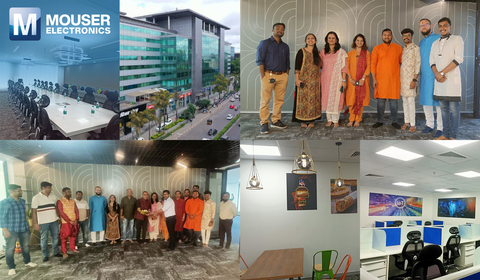



Allied Digital Services Limited reported its highest-ever annual revenue for FY26, with consolidated revenue rising 20% year-on-year to ₹968 crore from ₹807 crore in FY25. The BSE and NSE-listed information technology services company, traded as BSE: 532875 and NSE: ADSL, said fourth-quarter revenue rose 31% year-on-year to ₹268 crore, supported by services growth, international demand and non-government customer traction. The immediate investor question is not whether Allied Digital Services Limited is growing, because the topline says it is, but whether the company can turn that scale into more consistent earnings, cash conversion and margin expansion. The stock recently traded around the ₹122 to ₹125 range, well below its 52-week high of ₹226.55, which suggests the market is still asking for proof rather than applause.
Allied Digital Services Limited’s FY26 performance gives investors a mixed but strategically interesting picture. Consolidated EBITDA, excluding a one-time provision of ₹36 crore, rose 14% year-on-year to ₹112 crore, while adjusted profit before tax increased 33% to ₹81 crore. Full-year profit after tax rose 10% to ₹36 crore, but Q4 FY26 reported a loss of ₹3 crore after the one-time provision. That makes the story less of a clean earnings beat and more of a scale-building year with profitability friction, which is usually where small-cap technology services investors start sharpening their pencils.
Why did Allied Digital Services report record FY26 revenue despite pressure on quarterly profit?
The strongest signal in the FY26 update is the revenue base. Allied Digital Services Limited moved from ₹687 crore in FY24 to ₹807 crore in FY25 and then ₹968 crore in FY26, showing a three-year revenue growth pattern that is hard to ignore. For a company positioned in managed services, workplace technology, cloud enablement, cybersecurity, infrastructure management and smart city solutions, that trajectory suggests demand is not limited to one geography or one customer type.
The growth was also broad enough to matter. Revenue from India increased 17% year-on-year to ₹352 crore in FY26, while revenue from the rest of the world rose 22% to ₹616 crore. This matters because Allied Digital Services Limited is not relying solely on domestic government-led technology projects, a segment that can be lumpy, tender-driven and vulnerable to execution delays. The international revenue mix gives the company better exposure to global managed services demand, though it also adds currency, delivery and customer concentration risks that need disciplined execution.
The customer split is especially revealing. Government revenue fell 6% year-on-year to ₹227 crore in FY26, while non-government revenue rose 31% to ₹741 crore. That shift may improve the quality of the growth story if it reflects deeper enterprise managed services adoption rather than one-off project billing. For investors, the key follow-up question is whether this non-government acceleration can produce repeatable annuity-style revenue, or whether the company is still exposed to project-led volatility disguised as services growth.
How important are managed services, workplace solutions and smart city contracts for Allied Digital Services?
Allied Digital Services Limited said it booked more than ₹166 crore in orders during the quarter, including new wins and renewals for multi-year contracts. The company highlighted a multi-region workplace services engagement for a global deepwater oil and gas drilling company, covering more than 3,000 users across North America, Latin America and Africa. The scope includes a multilingual 24×7 service desk, onsite end-user support and remote support services.
That contract is important because it shows Allied Digital Services Limited pushing beyond conventional IT support into globally distributed workplace operations. In a market where enterprises are still rationalising hybrid work infrastructure, cybersecurity layers, cloud migrations and service desk automation, managed workplace services can become sticky if the provider delivers reliability at scale. The good news is that such contracts can improve recurring revenue visibility. The less comfortable truth is that global delivery models also require strong service-level discipline, staffing efficiency and automation investment to protect margins.
The company also secured an order for a city-wide Integrated Command and Control Centre solution, covering software, field network infrastructure, ancillaries and professional services. This keeps Allied Digital Services Limited tied to India’s smart city and urban governance technology theme, an area where the company has historical positioning through the Pune City Surveillance project. Smart city work can be strategically valuable because it combines systems integration, public infrastructure and long-duration support. However, it can also produce working-capital strain if billing cycles stretch, which makes the company’s debtor-day trend worth watching closely.
Why are margins and debtor days the real investor test after Allied Digital Services FY26 results?
The headline revenue growth looks strong, but margin quality is the area where investors may remain cautious. Allied Digital Services Limited’s adjusted EBITDA margin was 11% in FY26, down from 12% in FY25 and FY24. On a quarterly basis, Q4 FY26 adjusted EBITDA margin stood at 12%, compared with 14% in Q4 FY25. The company is clearly expanding, but it has not yet shown operating leverage strong enough to make scale automatically translate into margin improvement.
The one-time provision of ₹36 crore also complicates interpretation. Excluding that provision, adjusted profit before tax rose sharply, but reported quarterly profit after tax was still negative at ₹3 crore. Investors tend to be forgiving of one-off items when the underlying business is visibly improving. They become less forgiving when one-offs appear alongside weaker margins, rising debt or longer receivable cycles.
That brings us to debtor days, which increased to 96 days in FY26 from 76 days in FY25 and 81 days in FY24. For an IT services and systems integration company, this is not a small footnote. Longer debtor days can indicate slower collections, a heavier project mix, larger government or enterprise billing cycles, or simply timing differences. None of those explanations is automatically alarming, but the direction matters. If Allied Digital Services Limited wants the market to re-rate the stock, revenue growth needs to be backed by stronger cash conversion.
What does Allied Digital Services dividend signal about balance-sheet confidence in FY26?
The board recommended a dividend of ₹1.50 per equity share of face value ₹5 each. For a small-cap technology services company reporting record revenue, the dividend sends a signal of confidence and shareholder return discipline. It also gives the stock a modest income angle, which can matter when market sentiment is cautious and investors are waiting for evidence of earnings consistency.
However, the dividend should not be read in isolation. Allied Digital Services Limited’s net worth rose to ₹671 crore in FY26 from ₹646 crore in FY25, but gross debt increased to ₹117 crore from ₹72 crore. Cash and cash equivalents declined to ₹134 crore from ₹188 crore. The company is not presenting a stressed balance sheet, but the combination of higher debt, lower cash and longer debtor days means investors will look closely at working-capital management in FY27.
The strategic message from management is ambitious. Nitin D. Shah, Chairman and Managing Director of Allied Digital Services Limited, said the company had nearly reached the ₹1,000 crore revenue milestone and aimed over the coming decade to scale the business significantly through global customer engagement, AI-led digital transformation, cloud, cybersecurity, digital infrastructure and managed services. Reworded in investor language, Allied Digital Services Limited is trying to move from a project-and-services IT player into a broader digital infrastructure partner. That is a credible direction, but it is also a crowded road.
How should investors read #ADSL stock performance after the FY26 earnings update?
Allied Digital Services Limited shares have not yet reflected the full optimism implied by the company’s revenue trajectory. Market data showed the stock recently around ₹122.22 to ₹124.56, with a 52-week range of ₹86.27 to ₹226.55. That places the stock far below its 52-week high, even after remaining well above its 52-week low.
This gap between business growth and market pricing is the core sentiment story. On one side, investors can point to 20% annual revenue growth, ₹166 crore-plus quarterly order booking, non-government customer momentum, global workplace services wins and a recommended dividend. On the other side, skeptics can point to lower EBITDA margin, a Q4 loss after provision, rising debtor days, higher gross debt and a share price still trading at a steep discount to its 52-week high. In short, the stock is not being punished for lack of growth. It is being asked to prove quality of growth.
For retail investors, #ADSL now sits in that familiar small-cap zone where one clean year of cash conversion and margin stability could change perception quickly. But this is not a “record revenue equals automatic rerating” story. The next trigger will likely come from whether Allied Digital Services Limited can sustain order wins, reduce debtor days, stabilise margins and demonstrate that AI-led digital transformation is contributing to revenue quality rather than just sounding fashionable in management commentary.
What could decide the next phase of growth for Allied Digital Services Limited in FY27?
The next phase for Allied Digital Services Limited will depend on execution across three areas. First, the company must convert its order book and renewals into predictable revenue without stretching working capital. Second, it must prove that global managed services and workplace solutions can scale profitably. Third, it must show that newer growth areas such as AI-led transformation, cloud, cybersecurity and digital infrastructure can move from strategic language into measurable business contribution.
The competitive landscape is not easy. Larger Indian IT services companies, mid-tier digital engineering firms, cloud infrastructure providers and managed security specialists are all chasing the same enterprise technology budgets. Allied Digital Services Limited’s advantage lies in its systems integration history, smart city credentials, global delivery footprint and managed services positioning. Its challenge is to avoid being squeezed between low-cost IT support providers and high-end transformation specialists.
The FY26 result therefore marks an important milestone, but not the finish line. Allied Digital Services Limited has almost reached the ₹1,000 crore revenue threshold, which gives it greater visibility among investors tracking Indian small-cap IT services stocks. The company’s next job is less glamorous but more valuable: turn record revenue into stronger margins, faster collections and cleaner reported profit. In small-cap markets, growth gets attention. Cash discipline gets respect.
Key takeaways on what Allied Digital Services FY26 results mean for #ADSL investors and the Indian IT services sector
- Allied Digital Services Limited reported record FY26 revenue of ₹968 crore, up 20% year-on-year, bringing the company close to the ₹1,000 crore annual revenue mark.
- Q4 FY26 revenue grew 31% year-on-year to ₹268 crore, showing strong momentum despite a reported quarterly loss after a ₹36 crore one-time provision.
- Non-government revenue rose 31% in FY26, suggesting Allied Digital Services Limited is reducing reliance on more volatile government-linked business.
- International revenue growth of 22% reinforces the company’s global managed services strategy, especially across workplace support and enterprise infrastructure services.
- Adjusted EBITDA margin slipped to 11% in FY26 from 12% in FY25, making operating leverage a key concern for investors.
- Debtor days rose to 96 in FY26 from 76 in FY25, which places working-capital discipline at the centre of the FY27 investment case.
- The ₹1.50 per share dividend signals board confidence, but higher gross debt and lower cash mean shareholder returns must be balanced with balance-sheet caution.
- The stock remains well below its 52-week high, indicating that market sentiment has not fully aligned with the company’s revenue growth narrative.
- The next re-rating trigger for #ADSL may depend on margin stability, cash conversion and evidence that AI-led digital transformation is producing durable revenue.
- Allied Digital Services Limited has a credible growth platform, but the market will likely reward execution quality more than topline milestones from here.
Share this:
Discover more from Business-News-Today.com
Subscribe to get the latest posts sent to your email.