
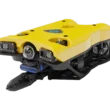



AeroVironment, Inc. (NASDAQ: AVAV) has announced that its wholly owned VideoRay subsidiary is supporting an AEVEX-led team selected for a prototype agreement involving autonomous mine countermeasure technology for the United States Navy. The October 8, 2026 announcement followed competitive demonstrations under the Navy and Defense Innovation Unit’s Mine Countermeasure Modernization Prize Challenge. VideoRay’s underwater robotic technology demonstrated remotely controlled operations from an unmanned surface vessel, supporting the military’s effort to conduct mine-related missions while reducing personnel exposure. The programme strengthens AeroVironment’s presence in maritime autonomy, but the financial significance remains uncertain because the company did not disclose a new production contract value or committed fleet-wide deployment quantity.
The selection demonstrates that commercially developed autonomous systems are increasingly being considered for missions traditionally requiring highly specialised naval equipment and personnel-intensive operations. VideoRay already supplies underwater robotics used in military applications, giving it an existing technical foundation for additional programmes. The latest effort involves integrating an underwater vehicle with an unmanned surface vessel and remote command arrangements to perform a broader mission sequence. Its commercial potential depends on whether the prototype activity progresses into operational procurement and repeatable production orders.
What did AeroVironment’s VideoRay demonstrate during the US Navy mine countermeasure trials?
The competitive demonstrations involved an integrated solution combining a VideoRay remotely operated underwater vehicle with an AEVEX unmanned surface vessel. The surface platform incorporated an autonomous launch and recovery arrangement, allowing the underwater vehicle to be deployed and retrieved without requiring operators aboard the surface vessel. During testing, personnel controlled the mission from a remote ground station while the integrated system performed several stages of the mission sequence. These included vessel transit, station keeping, underwater vehicle launch and recovery, target investigation, simulated neutralisation and post-engagement assessment.
The ability to conduct these tasks over the horizon is commercially and operationally relevant because traditional mine countermeasure missions can expose specialised vessels and personnel to hazardous maritime environments. Unmanned platforms offer the possibility of moving parts of that process away from crewed vessels while maintaining control over underwater operations. However, successful demonstration conditions do not establish that the system can conduct every required mission under all operational conditions. The Navy must still assess factors including reliability, communications resilience, deployment procedures and the integration of equipment into existing naval operations.
The reported simulated neutralisation activity also needs to be distinguished from the destruction of a live mine in an operational setting. The trials demonstrated an integrated mission sequence, but the disclosed information does not establish that the system completed combat deployment or live mine neutralisation during the challenge. This distinction is particularly relevant because mine warfare equipment faces stringent operational reliability and safety requirements. Further development and fleet evaluation will determine how the demonstrated capability translates into deployable mission systems.

How does the AEVEX prototype agreement strengthen VideoRay’s existing US Navy relationship?
AeroVironment said the VideoRay subsidiary is participating as a member of a team led by AEVEX, rather than acting as the prime contractor for the newly selected prototype effort. BlackSea Technologies, now part of AEVEX Maritime Systems, was one of three companies recognised with challenge prizes following successful Navy demonstrations. The subsequent prototype arrangement creates an opportunity for the team to advance its integrated solution through additional development and assessment. The release did not disclose the precise financial share attributable to VideoRay or a new contract value for AeroVironment.
VideoRay’s position is supported by an established United States Navy relationship involving its Mission Specialist Defender underwater robotic platform. In 2024, the Navy awarded VideoRay a five-year contract valued at approximately $92.6 million covering continued production, sustainment and development associated with the platform. Defender is also the basis for the Navy’s MK20 Defender remotely operated vehicle under the Maritime Expeditionary Standoff Response programme. These existing activities provide industrial and operational context for the new prototype effort, although the previously awarded $92.6 million should not be mistaken for additional October 2026 contract revenue.
The current opportunity differs from conventional underwater vehicle procurement because it involves integration across multiple unmanned platforms and mission-control systems. VideoRay supplies the underwater capability, while its partners contribute other elements needed to execute a more complete autonomous mine countermeasure mission. This arrangement could allow AeroVironment to participate in broader naval solutions without independently developing every component. The commercial trade-off is that programme value and technical responsibilities are distributed among multiple suppliers, making the revenue attributable to each participant dependent on future contractual arrangements.
Why is the US Navy increasing interest in autonomous and commercially developed mine warfare systems?
Naval mines can threaten warship movement, commercial maritime traffic and access to strategic waterways, creating operational demands that differ from conventional surface combat missions. Detecting and neutralising mines can be time-consuming and hazardous, particularly where ships must operate close to contested coastal areas. The Navy’s challenge sought mature, rapidly fieldable commercial technologies capable of conducting the mine countermeasure mission while reducing personnel exposure. It also emphasised communications resilience, which becomes important when remotely operated platforms function in environments where communications may be disrupted or constrained.
Commercial robotics companies can offer capabilities developed through industrial inspection, offshore operations, underwater intervention and other applications outside military procurement. These existing technologies may shorten some development timelines when they can be adapted to specific military requirements. However, adapting a commercial system for sustained naval use still involves qualification, maintenance planning, logistics and mission-specific integration. The Navy’s adoption decisions will depend on whether the equipment provides reliable operational capability at a cost and deployment pace compatible with fleet requirements.
An integrated unmanned surface and underwater solution also introduces technical considerations not present in a standalone remotely operated vehicle. Autonomous launch and recovery must function reliably despite vessel movement, variable sea conditions and changing mission requirements. Communications between the surface platform, underwater vehicle and remote operators must remain dependable throughout the mission. These requirements create potential opportunities for software integration, robotics engineering and specialist support providers while increasing the importance of demonstrating whole-system reliability.
How could underwater defence robotics contribute to AeroVironment’s future revenue growth?
AeroVironment entered fiscal 2027 with a larger and more diversified defence technology business following its strategic expansion into additional operational domains. For the fiscal first quarter ended August 1, 2026, the company reported record revenue of $480.5 million, an increase of 6% from the comparable period a year earlier. Quarterly bookings reached approximately $700 million, producing a book-to-bill ratio of 1.4. Funded backlog rose to approximately $1.5 billion, representing growth of 37% year over year.
Those figures demonstrate the scale of the company’s existing operating activity, but the October prototype selection should not automatically be included as a material addition to funded backlog without a disclosed award value. The company has exposure to autonomous aerial systems, loitering munitions, counter-drone technologies, directed energy, space-related platforms and electronic warfare alongside underwater robotics. VideoRay provides another potential avenue for growth within that wider technology portfolio. Its economic contribution will depend on production contracts, programme volumes and the margins achievable on delivered underwater systems.
AeroVironment’s diversified operations also create opportunities to apply engineering and software capabilities across different autonomous defence applications. Experience in sensors, communications and remote mission systems may be relevant to future maritime integration programmes. However, the underwater operating environment imposes distinct technical requirements, meaning common software or engineering capabilities do not automatically establish manufacturing or operating advantages. Evidence of cost competitiveness and repeat orders would be needed before treating the emerging naval opportunity as a major earnings driver.
How did AVAV stock respond to the VideoRay development and what does investor sentiment suggest?
AeroVironment shares closed at $137.11 on October 9, 2026, down approximately 0.36% during Friday’s trading session. The stock had also declined on October 8, when the company announced the VideoRay prototype selection, closing at $137.60. Compared with the October 2 closing price of $140.82, the shares were approximately 2.6% lower at the end of the following week. The movements do not demonstrate that the market rejected the naval opportunity, particularly because no material new contract value was disclosed.
For a company already reporting hundreds of millions of dollars in quarterly revenue and a funded backlog of approximately $1.5 billion, an unquantified prototype selection may not immediately change financial expectations. Institutional and retail investors are likely to place greater emphasis on the timing of meaningful orders, profitability and execution across established programmes. The new maritime opportunity expands the range of potential defence applications for AeroVironment, but its incremental value cannot yet be independently measured. Any future valuation benefit would need stronger evidence that the programme can generate contracted production revenue.
The existing VideoRay relationship with the United States Navy provides a more substantial commercial foundation than a technology demonstration alone. Nevertheless, the latest selection sits at a different stage from an established fleet-wide production arrangement. The company’s subsequent results and programme announcements will provide evidence of whether the technology is moving towards wider procurement. Until then, the operational milestone is best understood as an expansion of competitive positioning rather than a confirmed step-change in near-term sales.
What needs to happen before VideoRay’s mine warfare prototype becomes a larger naval procurement programme?
The next stage involves advancing the selected integrated solution through the prototype process and demonstrating that its capabilities can satisfy the Navy’s operational requirements. Reliability of autonomous launch and recovery, remote control, underwater intervention and post-engagement assessment will be important elements of that evaluation. The Navy will also need to determine how autonomous mine countermeasure kits can be deployed, supported and maintained across relevant operational units. Such decisions could influence the number of systems ultimately procured and the degree of standardisation across the fleet.
Commercial progress would become easier to evaluate if AeroVironment disclosed the financial scope of its participation and any subsequent funded awards. A transition from prototype activity to larger-scale production would strengthen the visibility of VideoRay’s manufacturing pipeline. It could also support additional sustainment, spares and upgrade work associated with deployed underwater systems. Conversely, further technical evaluation or changes to naval procurement priorities could extend the period before a material revenue opportunity emerges.
The October selection strengthens VideoRay’s position within a developing segment of autonomous naval warfare and reinforces AeroVironment’s broader defence technology portfolio. Its next measurable proof point will be a funded programme milestone or procurement decision specifying the scope of future deliveries. Successful integration across unmanned platforms would demonstrate operational value, but only contracted production and sustainment work will establish the scale of the commercial opportunity. That distinction will determine whether underwater autonomy becomes a material growth contributor for AeroVironment rather than a technically successful but financially limited programme.
Key takeaways from AeroVironment’s VideoRay US Navy mine countermeasure programme
- VideoRay is supporting an AEVEX-led team selected for a Navy prototype agreement.
- The selection followed competitive demonstrations under the Mine Countermeasure Modernization Prize Challenge.
- Testing integrated an underwater vehicle with an unmanned surface vessel.
- Operators conducted missions remotely, including simulated mine neutralisation activities.
- The October announcement did not disclose a new production contract value.
- VideoRay already has a separate five-year Navy contract valued at approximately $92.6 million from 2024.
- AeroVironment reported $480.5 million in fiscal first-quarter 2027 revenue.
- AVAV shares closed at $137.11 on October 9, 2026.
- Subsequent funded procurement and fleet integration milestones will determine the new programme’s commercial significance.
Discover more from Business-News-Today.com
Subscribe to get the latest posts sent to your email.