The Boeing Company (NYSE: BA) has secured an approximately $14.7 billion contract action from Lockheed Martin Corporation (NYSE: LMT) to expand production of seekers used in PAC-3 Missile Segment Enhancement interceptors. Announced on October 5, 2026, the seven-year arrangement is intended to support a threefold increase in Boeing’s production of a critical missile guidance component. The programme strengthens Boeing’s position within the Patriot air and missile defence supply chain at a time when the United States and allied countries are seeking greater interceptor availability. However, the award is an undefinitized contract action, and its financial contribution will depend on final contractual terms, manufacturing ramp-up and the profitability of delivered systems.
The contract is commercially distinctive because Boeing is supplying a key component to another major defence prime contractor rather than receiving a standalone missile-system order directly from the military customer. Lockheed Martin Corporation manufactures PAC-3 Missile Segment Enhancement interceptors, while Boeing supplies seekers that enable the missiles to identify and track targets. Expanding seeker output is therefore an essential part of the wider effort to raise completed interceptor production. The relationship also demonstrates how a single weapons programme distributes industrial value across multiple publicly traded defence manufacturers.

What does Boeing’s $14.7 billion Patriot missile seeker agreement actually cover?
The new contract action provides the commercial framework for Boeing to increase production and delivery of seekers for PAC-3 Missile Segment Enhancement interceptors. These specialised components support terminal missile engagement by providing the guidance information required to identify and track a threat during the interception sequence. The broader Patriot system is designed to defend against aircraft, cruise missiles and ballistic missile threats, with PAC-3 MSE providing a particularly important missile interception capability. Boeing’s work is therefore tied to the technical performance and manufacturing requirements of an established American air-defence programme.
Boeing described the October award as an undefinitized contract action, an important qualification when assessing the approximately $14.7 billion headline value. Such arrangements allow work to proceed before every contractual detail has been finalised, meaning investors should not assume that all pricing, delivery or other contractual provisions have already been definitized. The company did not disclose an annual seeker delivery schedule or precise allocation of the contract value between production years. Its statement established a seven-year manufacturing framework and the objective of tripling output, but not an independently calculable schedule of annual sales.
The agreement follows an April 2026 framework between Boeing and the United States Department of War concerning PAC-3 seeker production expansion. That earlier arrangement established the industrial objective, while the October contract action provides a more substantial commercial foundation for work associated with the programme. Boeing had already started production ramp-up and hiring activities before the latest announcement. The sequence suggests that the company is attempting to bring manufacturing capacity into operation ahead of the full period of expected demand rather than waiting until all future contractual milestones are completed.
Why does Lockheed Martin’s PAC-3 production expansion depend on Boeing’s seeker capacity?
Missile production involves multiple specialised manufacturing stages that must operate at compatible rates for finished interceptors to be delivered efficiently. Lockheed Martin Corporation is responsible for integrating the completed PAC-3 MSE interceptor, while Boeing’s seeker production supports one of the weapon’s critical technical functions. A shortage of qualified seekers could constrain completed missile output even if other components and final assembly capacity were available. Conversely, increasing seeker production without matching capacity elsewhere in the supply chain could create inventory imbalances rather than immediately increasing completed interceptor deliveries.
The latest Boeing agreement is connected to a broader expansion of American Patriot interceptor capacity. Lockheed Martin has outlined ambitions to increase annual PAC-3 MSE production substantially as defence procurement shifts towards replenishment and long-term availability. Such increases require coordination across component suppliers, missile integration facilities, test organisations and government acceptance processes. Boeing’s threefold seeker production objective is a necessary contribution to that effort, but it cannot independently establish the total number of completed missiles that will be delivered.
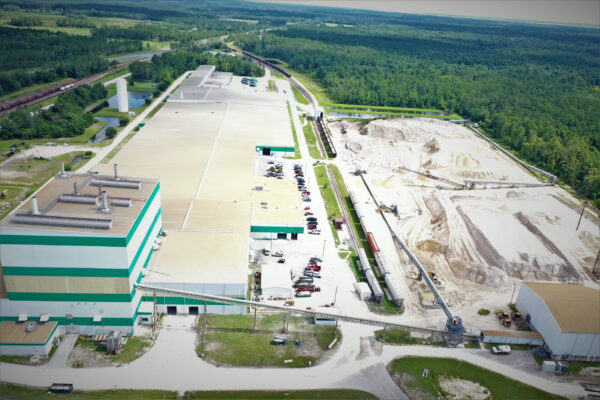
Boeing has stated that the production expansion involves capital investment, modernised facilities and changes to manufacturing processes designed to increase first-time quality. The company has also strengthened supplier relationships to support a more resilient manufacturing network. Hundreds of direct and indirect jobs are expected to be created in the Huntsville, Alabama, region as the programme expands. Those operational commitments create additional economic activity, while also increasing the importance of achieving sufficiently high production volumes to utilise the added capacity efficiently.
How could the $14.7 billion missile agreement affect Boeing’s defence margins and backlog?
Boeing’s latest reported second-quarter financial results demonstrate why the profitability of new defence production is especially relevant. The company’s Defense, Space & Security business generated approximately $7.5 billion in revenue during the second quarter of 2026, an increase of 13% from the comparable period a year earlier. Despite that revenue growth, the division reported an operating loss of approximately $15 million, equivalent to a negative operating margin of 0.2%. The result included $280 million in losses associated with the VC-25B programme, illustrating how difficulties on individual contracts can affect divisional profitability.
The company’s defence backlog stood at approximately $85 billion at the end of the second quarter, with 27% representing orders from customers outside the United States. The new seeker agreement adds another significant source of future manufacturing work, although its precise treatment within reported backlog depends on applicable contractual and accounting requirements. It would be premature to add the entire $14.7 billion headline amount directly to the previously disclosed backlog without a subsequent company reconciliation. Long-term contract value becomes financially useful when it translates into profitable production activity and ultimately into customer payments.
At the consolidated level, Boeing reported second-quarter revenue of $24.6 billion and free cash flow of approximately $600 million. The company nevertheless recorded a GAAP net loss of $428 million, showing that improvements in cash generation were not yet accompanied by consistently positive earnings across all activities. New defence manufacturing contracts may improve revenue visibility, but expansion requires cash for equipment, inventory and production preparation before every completed unit is delivered. The final profitability of the seeker programme will depend on pricing arrangements and whether higher volumes generate operating efficiencies sufficient to offset those requirements.
Can Boeing triple PAC-3 seeker production without sacrificing manufacturing quality?
The most demanding aspect of the new agreement is likely to be the combination of higher production volumes and the technical standards associated with missile guidance components. Defence electronics must satisfy demanding qualification, reliability and traceability requirements because manufacturing variation can affect performance in operational conditions. Increasing throughput may require additional automated inspection, specialised testing equipment and supplier quality controls. Boeing has identified improvements in first-time quality as part of its expansion strategy, suggesting that reducing production rework is an important element of the planned ramp-up.
The industrial implications extend to the Huntsville manufacturing ecosystem, where Boeing expects additional employment and supplier activity. Expanded missile component production could generate demand for precision machining, electronics manufacturing, specialised testing and technical engineering services. Such investment can strengthen domestic supply-chain resilience when supported by sustained procurement orders over several years. However, the final employment and supplier impact remains dependent on the volume and timing of production activity rather than the maximum contract value alone.
The programme also creates an opportunity for Boeing to demonstrate consistent performance in a relatively mature defence manufacturing activity while other parts of its defence business remain exposed to complex development and production programmes. Repeatable component manufacturing can potentially produce more predictable operating results once production processes and supplier deliveries stabilise. Nevertheless, higher production rates do not automatically mean higher margins because the ultimate economics depend on contracted prices, input costs and capital efficiency. The first meaningful financial evidence will come from reported divisional margins and cash conversion as the expanded programme progresses.
What does Boeing’s latest contract mean for BA stock and institutional investor sentiment?
Boeing shares closed at $190.37 on October 9, 2026, approximately 1.4% higher during the final trading session of the week. The stock had closed at $192.72 on October 5, the day the seeker agreement was announced, meaning it finished the week below that reference level despite Friday’s advance. This mixed short-term performance does not establish that investors were unimpressed by the agreement, because commercial aircraft developments, broader market movements and other defence announcements influence Boeing’s valuation. The contract’s seven-year duration also makes its significance difficult to assess through a few trading sessions.
Boeing’s investment case remains heavily influenced by its commercial aircraft production recovery, certification milestones, defence contract execution and overall cash generation. The $14.7 billion seeker arrangement can improve the long-term visibility of one defence manufacturing activity without resolving performance issues elsewhere in the group. Investors assessing the award must therefore distinguish between the economic benefits of the PAC-3 programme and Boeing’s consolidated financial challenges. A favourable assessment would become more defensible if future results demonstrate expanding defence revenue accompanied by sustained improvement in operating margins.
The latest contract gives Boeing a substantial role in one of America’s major missile production expansion programmes. Its most important unresolved variable is not the existence of defence demand but the ability to manufacture qualified seekers at a much higher rate while maintaining satisfactory contract economics. Evidence of timely definitization, successful production ramp-up and stronger divisional profitability would materially strengthen the financial case for the award. Persistent production constraints or weak operating margins would limit how much of the headline opportunity ultimately benefits shareholders.
Key takeaways from Boeing’s $14.7 billion PAC-3 missile seeker agreement
- Boeing received an approximately $14.7 billion contract action from Lockheed Martin.
- The seven-year arrangement supports production of PAC-3 Missile Segment Enhancement seekers.
- Boeing aims to triple seeker manufacturing capacity.
- The award is undefinitized, making final contract terms an important consideration.
- Lockheed Martin integrates the completed interceptors for American and allied defence requirements.
- Huntsville manufacturing operations are expected to expand, supporting hundreds of direct and indirect jobs.
- Boeing’s defence division reported a negative 0.2% operating margin in the second quarter.
- Boeing shares closed at $190.37 on October 9, below their October 5 closing level.
- Production throughput, contractual pricing and divisional margins will determine the award’s lasting financial value.
Discover more from Business-News-Today.com
Subscribe to get the latest posts sent to your email.