




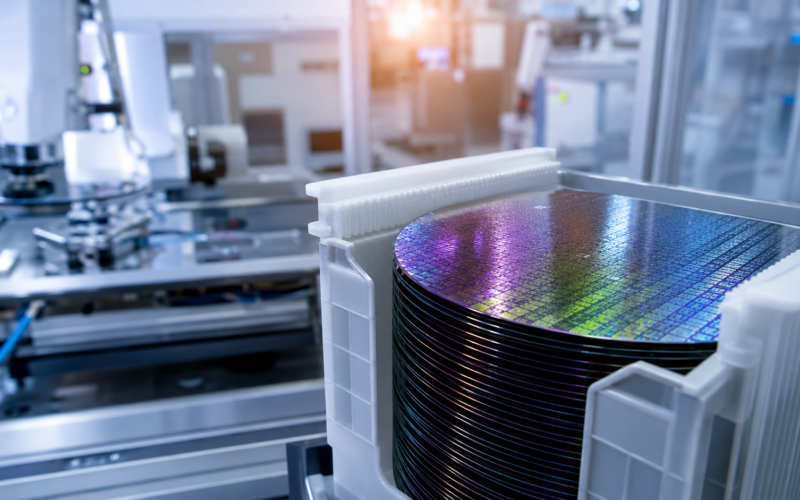
GlobalWafers Co., Ltd. (TPEx: 6488) and Micron Technology, Inc. (NASDAQ: MU) announced a strategic partnership on July 9, 2026 that will see Micron Technology, Inc. provide up to 500 million dollars, or approximately NT$16.1 billion, in strategic financing to GlobalWafers America to expand its 300 millimetre raw silicon wafer manufacturing facility in Sherman, Texas, alongside a 10-year long-term supply agreement that gives Micron Technology, Inc. contracted access to significant United States-based 300 millimetre wafer capacity. The financing and supply agreement together anchor the largest single deal within Micron Technology, Inc.’s broader commitment of up to 3 billion dollars to strengthen the United States semiconductor supply chain, announced in parallel on July 9, 2026 alongside a separate lift of Micron Technology, Inc.’s total United States buildout commitment through 2035 to 250 billion dollars from a previous 200 billion dollars set in June and an original 170 billion dollars.
The GlobalWafers Sherman facility is currently the only CHIPS for America Program-supported project capable of producing advanced 300 millimetre raw silicon wafers domestically, a scarcity position that GlobalWafers Co., Ltd. Chairperson Doris Hsu has repeatedly emphasised gives GlobalWafers America materially privileged access to United States customers seeking supply chain resilience against tariff uncertainty and geopolitical risk. GlobalWafers Co., Ltd. shares closed at 1,205 Taiwan New Dollars on the Taipei Exchange ahead of the announcement, extending a rally that has taken the equity from a 52-week low of 298 Taiwan New Dollars to an all-time high of 1,380 Taiwan New Dollars in June 2026, giving the Hsinchu, Taiwan-headquartered silicon wafer manufacturer a market capitalisation of approximately 638.28 billion Taiwan New Dollars, or roughly 20 billion United States dollars. The deal arrives against an analytical backdrop where the 13-analyst sell-side consensus rating stands at Hold and the average 12-month price target of 768.92 Taiwan New Dollars implies approximately 40 percent downside from the current trading level, reflecting the specific tension between GlobalWafers Co., Ltd.’s privileged commercial positioning and the equity’s aggressive re-rating over the past twelve months.
What does Micron’s $500 million financing and 10-year supply pact actually change for GlobalWafers America
The Micron Technology, Inc. financing and 10-year supply agreement structurally alters the commercial trajectory of GlobalWafers America Sherman in a specific way that is worth understanding in mechanical detail. The 500 million dollar strategic financing commitment is directed toward advancing the development and manufacturing capabilities of the 300 millimetre raw silicon wafer manufacturing facility, and it complements the Sherman plant’s existing capital expenditure program that has already delivered the initial 3.5 billion dollar facility built between 2022 and 2025. The 10-year long-term supply agreement provides GlobalWafers America with a contracted revenue base that supports specific expansion phases, and Micron Technology, Inc. gains contractual priority access to United States-based wafer capacity that would otherwise be allocated across a broader customer base including Samsung Electronics Co., Ltd., Texas Instruments Incorporated, and other United States operating fabs.
The commercial architecture that this contract structure creates is materially different from the historical GlobalWafers Co., Ltd. customer model. Traditional silicon wafer procurement operates through a combination of annual or multi-year contracts and spot purchases, with pricing tied to prevailing supply and demand conditions and customer relationships shaped by the specific fab geography, product mix, and technology roadmap alignment. A 10-year contract with a customer of Micron Technology, Inc.’s scale, at a facility of Sherman’s strategic significance, effectively converts a portion of GlobalWafers America’s capacity from spot-market exposure to contracted revenue with predictable long-term visibility. That structural shift supports higher-quality earnings visibility than the historical GlobalWafers Co., Ltd. business model has delivered.
The read-through to GlobalWafers America’s commercial pipeline is meaningful. GlobalWafers Co., Ltd. has previously indicated that two additional expansion phases at Sherman are planned to boost production capacity beyond the current initial nameplate, and it has separately committed up to 4 billion dollars in additional United States investment beyond the Sherman anchor facility. The Micron Technology, Inc. contract provides one of the specific anchor commitments that supports each of those follow-on expansion decisions, and it demonstrates to United States customers considering long-term silicon wafer procurement arrangements that a scaled contractual relationship with GlobalWafers America is now the established commercial framework. That precedent may support additional 10-year contract discussions with Samsung Electronics Co., Ltd., Texas Instruments Incorporated, and Intel Corporation among others.
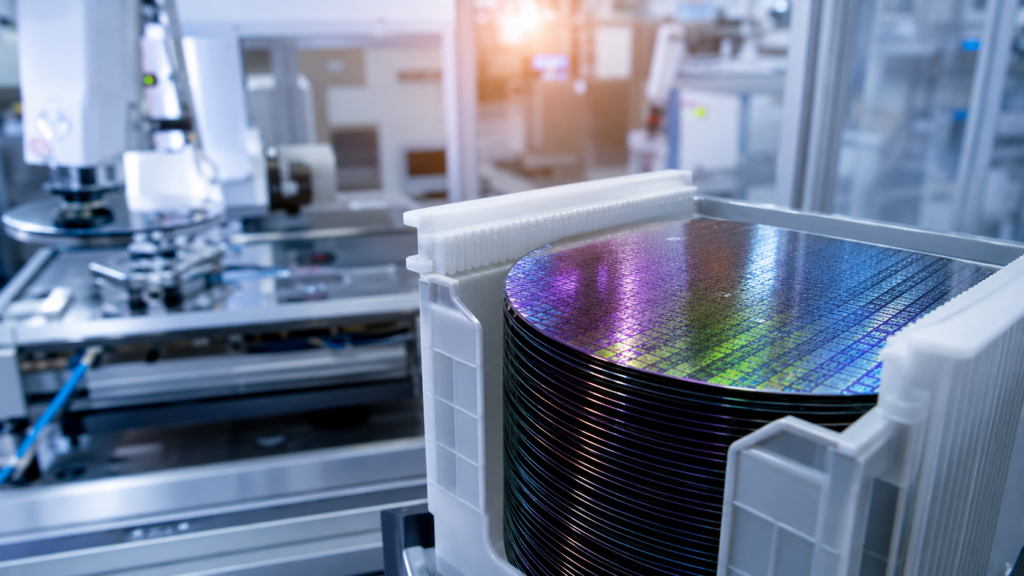
Why is Sherman, Texas the only advanced 300mm wafer plant in the United States, and what does that scarcity command
The Sherman, Texas facility is currently the only participant in the CHIPS for America Program capable of producing advanced 300 millimetre raw silicon wafers domestically, and it is the first advanced wafer plant built in the United States in more than two decades. That scarcity position is the specific structural asset that anchors GlobalWafers Co., Ltd.’s commercial leverage in the United States market. Silicon wafers are the foundation of every semiconductor, and advanced 300 millimetre wafers are the specific format required for leading-edge memory, logic, and analogue chip production. Without domestic 300 millimetre wafer capacity, United States fabs including Micron Technology, Inc. Boise, Micron Technology, Inc. Indiana, TSMC Arizona, Samsung Electronics Co., Ltd. Texas, and Intel Corporation Oregon must import silicon wafers from Japan, Taiwan, Korea, or Europe, which introduces logistics complexity, tariff exposure, and supply chain fragility.
The absence of United States 300 millimetre wafer manufacturing prior to Sherman reflected specific structural factors that have shaped the silicon wafer industry for three decades. Silicon wafer production is capital-intensive with long payback periods, it operates on relatively thin margins compared with semiconductor manufacturing downstream, and the incumbent producers in Japan and Germany had established scale economies that made greenfield United States entry uneconomic. The CHIPS and Science Act enacted in 2022 changed that calculus by providing capital subsidies that offset the greenfield capital cost disadvantage, and GlobalWafers Co., Ltd. moved most aggressively of the major producers to establish United States capacity under the programme.
The pricing power implication of the scarcity position is substantial. As tariff uncertainty around semiconductors builds, United States operating fabs increasingly value the ability to source wafers domestically rather than importing them, and the scarcity of United States 300 millimetre supply means that Sherman-produced wafers command pricing that reflects the supply chain resilience premium rather than the marginal cost of production. Chairperson Doris Hsu has publicly framed this dynamic in customer conversations, noting that United States customers are hoping to secure local supply to reduce potential tariff uncertainties. The specific commercial architecture that Micron Technology, Inc. has now entered validates that GlobalWafers Co., Ltd.’s pricing thesis is being accepted by United States buyers.
How does the Micron partnership fit into GlobalWafers’ broader $4 billion US expansion pipeline
GlobalWafers Co., Ltd. announced in May 2025 that it would invest an additional 4 billion dollars in the United States beyond the initial 3.5 billion dollar Sherman anchor plant, and Chairperson Doris Hsu specifically indicated that United States customers appear to have very strong demand for United States-based production capacity. The Micron Technology, Inc. partnership provides the specific commercial anchor for one of the phases of this broader expansion pipeline, and it reduces the execution risk that would otherwise attach to a speculative capacity addition. The mechanical logic is that GlobalWafers Co., Ltd. can commit capital to Phase 2 and Phase 3 expansions at Sherman with confidence that a portion of the incremental capacity has already been contracted, which materially improves the risk-adjusted return calculation for the expansion investment.
The commercial architecture also creates specific optionality for GlobalWafers Co., Ltd. across the broader semiconductor supply chain. Beyond Sherman, GlobalWafers Co., Ltd. operates 18 production sites across 9 countries in Asia, Europe, and North America, giving it the most geographically diversified footprint in the silicon wafer industry. The Micron Technology, Inc. contract at Sherman does not preclude GlobalWafers Co., Ltd. from expanding capacity at any of its non-United States facilities, and the geographic diversification supports the ability to serve customers across regions with different tariff, geopolitical, and logistical requirements. That structural advantage against competing producers is unlikely to compress even as competitors respond to the current cycle with their own United States expansion plans.
The read-across to the rest of the customer pipeline is analytically important. Beyond Micron Technology, Inc., GlobalWafers Co., Ltd. serves Samsung Electronics Co., Ltd., Texas Instruments Incorporated, TSMC, and Intel Corporation among others, and each of these customers is likely to be evaluating similar 10-year contracted procurement structures for United States wafer supply. If the Micron Technology, Inc. contract becomes the template for additional multi-year Sherman-anchored supply arrangements over the coming 12 to 24 months, GlobalWafers Co., Ltd. could progressively convert a materially larger share of Sherman’s capacity into contracted revenue, which would compress the volatility of the earnings profile and support a re-rating of the equity multiple. Whether that happens depends on both customer pace and GlobalWafers Co., Ltd.’s ability to negotiate similarly favourable terms with other customers.
What role does the CHIPS for America Program play in the GlobalWafers Sherman commercial architecture
The CHIPS and Science Act enacted in 2022 provided capital subsidies that supported the initial Sherman facility construction, and GlobalWafers America was specifically named as a CHIPS for America Program participant. The programme provided GlobalWafers Co., Ltd. with the financial framework that made the initial 3.5 billion dollar greenfield United States investment economically viable against the higher capital cost environment of United States semiconductor manufacturing. That subsidy support is why GlobalWafers America Sherman is the only participant in the CHIPS for America Program capable of producing advanced 300 millimetre raw silicon wafers domestically.
The current status of CHIPS Act disbursements introduces execution risk that GlobalWafers Co., Ltd. must navigate. GlobalWafers Co., Ltd. has publicly indicated that it has not yet received the CHIPS Act funding for which it is approved, and Chairperson Doris Hsu previously communicated that funds were expected to be disbursed in the first half of 2026. The Trump administration has been renegotiating CHIPS Act awards and has publicly criticised the programme, with public commentary in March 2025 suggesting that United States lawmakers should scrap CHIPS Act funding and redirect the proceeds to debt reduction. Reports have indicated potential delays to some upcoming semiconductor disbursements under the ongoing administrative review.
The commercial architecture that has emerged around the Micron Technology, Inc. financing addresses part of this CHIPS Act uncertainty. The 500 million dollar Micron Technology, Inc. strategic financing provides GlobalWafers America with capital that supports the Phase 2 expansion at Sherman independently of CHIPS Act disbursement timing, and it reduces the execution risk that would otherwise attach to expansion decisions dependent on federal grant timing. That is one of the specific reasons the Micron Technology, Inc. commitment carries strategic significance beyond the immediate contracted supply arrangement. It provides GlobalWafers Co., Ltd. with a private-sector financing pathway that partially replicates the strategic capital access that CHIPS Act funding was designed to deliver.
Why does the deal alter the competitive dynamic against Shin-Etsu Chemical, SUMCO, and Siltronic AG
The global silicon wafer industry is dominated by Shin-Etsu Chemical Co., Ltd. of Japan, SUMCO Corporation of Japan, GlobalWafers Co., Ltd. of Taiwan, Siltronic AG of Germany, and SK Siltron Co., Ltd. of South Korea, together commanding the vast majority of global 300 millimetre wafer supply. Shin-Etsu Chemical Co., Ltd. is the largest producer, SUMCO Corporation is the second largest, and GlobalWafers Co., Ltd. has been the third largest with approximately 17 percent global market share in 2025. Each of these five producers is now evaluating expansion strategies against the specific tariff, geopolitical, and supply chain resilience dynamics that are reshaping semiconductor materials procurement.
The Micron Technology, Inc. contract at Sherman gives GlobalWafers Co., Ltd. a specific competitive advantage that Shin-Etsu Chemical Co., Ltd. and SUMCO Corporation currently cannot match. Neither Shin-Etsu Chemical Co., Ltd. nor SUMCO Corporation operates an advanced 300 millimetre wafer facility inside the United States, and their existing United States capacity is limited to older technology or smaller-diameter product. Building a comparable advanced 300 millimetre plant in the United States would take at least three to four years from announcement to production ramp, and the CHIPS Act subsidy environment that supported the GlobalWafers Sherman development may not be available at comparable levels for late-arriving competitors under the current administrative posture. That timing gap gives GlobalWafers Co., Ltd. a multi-year window to establish United States commercial dominance before competitor United States capacity arrives at scale.
The competitive read-through to Siltronic AG and SK Siltron Co., Ltd. is nuanced. Siltronic AG has a partnership relationship with GlobalWafers Co., Ltd. that dates from the abandoned 2022 merger attempt, and both companies continue to operate independently in the global silicon wafer market. SK Siltron Co., Ltd. is expanding its own capacity but faces different geopolitical constraints given its Korean base and the complex geopolitics of the current semiconductor cycle. The emerging Chinese entrants, particularly National Silicon Industry Group, remain a longer-term structural threat to global silicon wafer industry profitability as they scale up 300 millimetre production, though the pace at which they achieve technology parity and customer qualification with leading-edge United States and Korean fabs will determine the timing of that competitive pressure.
How does the 10-year contract structure differ from spot silicon wafer procurement, and why does that matter
The 10-year long-term supply agreement between GlobalWafers Co., Ltd. and Micron Technology, Inc. represents a specific contractual innovation in the silicon wafer industry that differs materially from historical procurement practices. Traditional silicon wafer contracts have typically ranged from single-year annual arrangements through three to five-year framework agreements with pricing tied to volume commitments and rebate structures. A 10-year contract at the volume implied by the Micron Technology, Inc. commercial relationship is unusually long-duration for a semiconductor materials supply arrangement, and it reflects both the strategic significance of United States 300 millimetre wafer supply security and the specific capital investment cycle that the Sherman Phase 2 expansion requires.
The economic implications of the 10-year contract structure are substantial for both parties. For GlobalWafers Co., Ltd., contracted revenue over a 10-year horizon supports the capital investment case for Sherman Phase 2 expansion at capacity levels that would be difficult to justify against spot-market demand uncertainty. For Micron Technology, Inc., the contracted supply provides certainty against the tariff and geopolitical risks that could disrupt imported wafer supply, and it locks in pricing on a foundational input material that supports margin planning across the 10-year horizon. Both parties surrender some optionality against future price movements in exchange for the long-term stability, which is a well-established trade-off in commodity-intensive supply chain relationships.
The read-across to broader silicon wafer market pricing is worth noting. If the 10-year contract structure becomes the industry norm for United States semiconductor materials procurement over the coming years, the effective spot market for silicon wafers in the United States would shrink as capacity is progressively locked into contracted supply. That structural shift would materially reduce the pricing volatility that has historically characterised silicon wafer economics, and it would support higher aggregate industry profitability if the contracted pricing reflects supply chain resilience premiums. Whether that pattern extends to all United States semiconductor materials procurement will define the medium-term profitability trajectory for silicon wafer producers globally.
What are the execution, geopolitical, and pricing risks that could complicate the Sherman ramp
The primary execution risk sits with the Phase 2 expansion timeline at Sherman. Adding significant 300 millimetre wafer capacity requires precise coordination of construction, equipment installation, clean room commissioning, and customer qualification testing, and any friction in these stages can push commercial production timelines by multiple quarters. GlobalWafers Co., Ltd. has committed to accelerating employment additions at Sherman as production ramps, but the specific pace of the ramp depends on how quickly Micron Technology, Inc. begins placing orders and how effectively the technology transfer and process optimisation proceed. The Sherman facility ramp is being closely watched by both United States customers and the broader semiconductor materials industry as a benchmark for United States silicon wafer manufacturing viability.
The geopolitical risk architecture around silicon wafer supply is more complex than a simple tariff pass-through analysis might suggest. Semiconductor tariff policy under the current administration continues to evolve, and the specific treatment of silicon wafers under any future tariff framework will shape both the demand for United States-produced wafers and the competitive pricing dynamics across producers. Taiwan-based producers face additional geopolitical uncertainty around the cross-Strait relationship that could affect long-term Taiwan-based production and shipping, though the specific commercial implications of that risk remain difficult to quantify. GlobalWafers Co., Ltd.’s diversified geographic footprint mitigates some of this risk, but it does not eliminate the exposure to Taiwan-based operations that generate a substantial share of aggregate company revenue.
The financial and equity valuation risks are worth naming explicitly. GlobalWafers Co., Ltd. shares closed at 1,205 Taiwan New Dollars, close to the all-time high of 1,380 Taiwan New Dollars reached in June 2026, and the consensus 12-month price target of 768.92 Taiwan New Dollars implies approximately 40 percent downside from the current trading level. That analytical dispersion between the current share price and the consensus target reflects the specific tension between the improved commercial trajectory that the Micron Technology, Inc. contract validates and the equity’s aggressive re-rating over the past twelve months against 2025 revenue that actually declined 3.24 percent year over year and 2025 earnings that fell 25.74 percent year over year. Whether the equity sustains at current levels depends on the pace at which the contracted revenue architecture translates into visible revenue growth, and any friction in that translation would compress the equity multiple materially.
Key takeaways on what the Micron and GlobalWafers deal signals for silicon wafer investors and US semiconductor policy
- Micron Technology, Inc. announced on July 9, 2026 that it will provide up to 500 million dollars in strategic financing to GlobalWafers America to expand its 300 millimetre raw silicon wafer manufacturing facility in Sherman, Texas, alongside a 10-year long-term supply agreement providing Micron Technology, Inc. contracted access to significant United States-based wafer capacity.
- The GlobalWafers Sherman facility is currently the only CHIPS for America Program-supported project capable of producing advanced 300 millimetre raw silicon wafers domestically, and it is the first advanced wafer plant built in the United States in more than two decades.
- GlobalWafers Co., Ltd. Chairperson Doris Hsu has publicly indicated that United States customers are hoping to secure local supply to reduce potential tariff uncertainties, and the Micron Technology, Inc. contract validates that pricing power thesis is being accepted by United States buyers.
- The Micron Technology, Inc. commitment sits within a broader up-to-3 billion dollar plan to strengthen the United States semiconductor supply chain, announced in parallel with a separate lift of Micron Technology, Inc.’s total United States buildout commitment through 2035 to 250 billion dollars from a previous 200 billion dollars.
- The 10-year contract structure is unusually long-duration for silicon wafer procurement and supports the capital investment case for Sherman Phase 2 expansion, providing GlobalWafers Co., Ltd. with contracted revenue visibility that materially compresses the earnings volatility associated with historical spot-market silicon wafer economics.
- GlobalWafers Co., Ltd. has committed up to 4 billion dollars in additional United States investment beyond the initial 3.5 billion dollar Sherman anchor facility, and the Micron Technology, Inc. anchor contract reduces the execution risk that would otherwise attach to further United States expansion decisions.
- The competitive positioning against Shin-Etsu Chemical Co., Ltd., SUMCO Corporation, Siltronic AG, and SK Siltron Co., Ltd. now favours GlobalWafers Co., Ltd. in the United States market for at least three to four years, until competing producers can establish comparable advanced 300 millimetre United States capacity if they choose to do so.
- The CHIPS Act disbursement uncertainty under the current United States administrative review introduces execution risk that GlobalWafers Co., Ltd. must navigate, though the Micron Technology, Inc. private-sector financing provides a partial alternative capital pathway for the Sherman Phase 2 expansion.
- GlobalWafers Co., Ltd. shares closed at 1,205 Taiwan New Dollars near the all-time high of 1,380 Taiwan New Dollars reached in June 2026, giving the company a market capitalisation of approximately 638.28 billion Taiwan New Dollars or roughly 20 billion United States dollars, and the 13-analyst consensus 12-month price target of 768.92 Taiwan New Dollars implies approximately 40 percent downside from current levels.
- The strategic significance of the Micron Technology, Inc. contract for GlobalWafers Co., Ltd. is substantial, but the equity valuation risk reflects the specific tension between improved commercial trajectory and the equity’s re-rating over the past twelve months against 2025 revenue that declined 3.24 percent year over year, requiring the contracted revenue architecture to translate rapidly into visible top-line growth to sustain the current multiple.
Share this:
Discover more from Business-News-Today.com
Subscribe to get the latest posts sent to your email.