





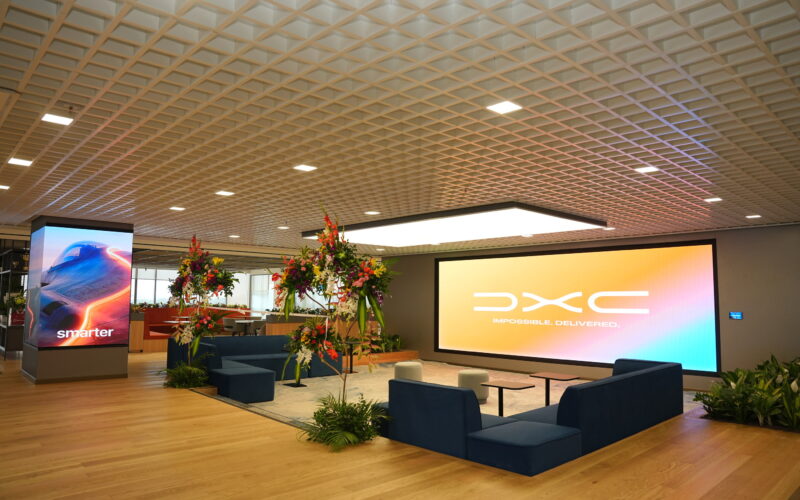
DXC Technology Company (NYSE: DXC) has opened a 200,000-square-foot Customer Experience Center in Bengaluru that combines an artificial intelligence hub with cybersecurity, forensics, network operations and customer co-creation facilities. The site is one of DXC Technology’s largest global delivery hubs and is intended to help enterprise customers move from isolated artificial intelligence pilots to production systems connected with existing technology estates. The opening strengthens DXC Technology’s India delivery footprint at a time when global technology services companies are competing to control the implementation layer of enterprise artificial intelligence. DXC stock traded near $10.52 on July 7, 2026, rising about 4.8% intraday and extending a strong short-term rebound, although the shares remained well below their 52-week high.
Why does DXC Technology’s 200,000-square-foot Bengaluru AI center matter strategically now?
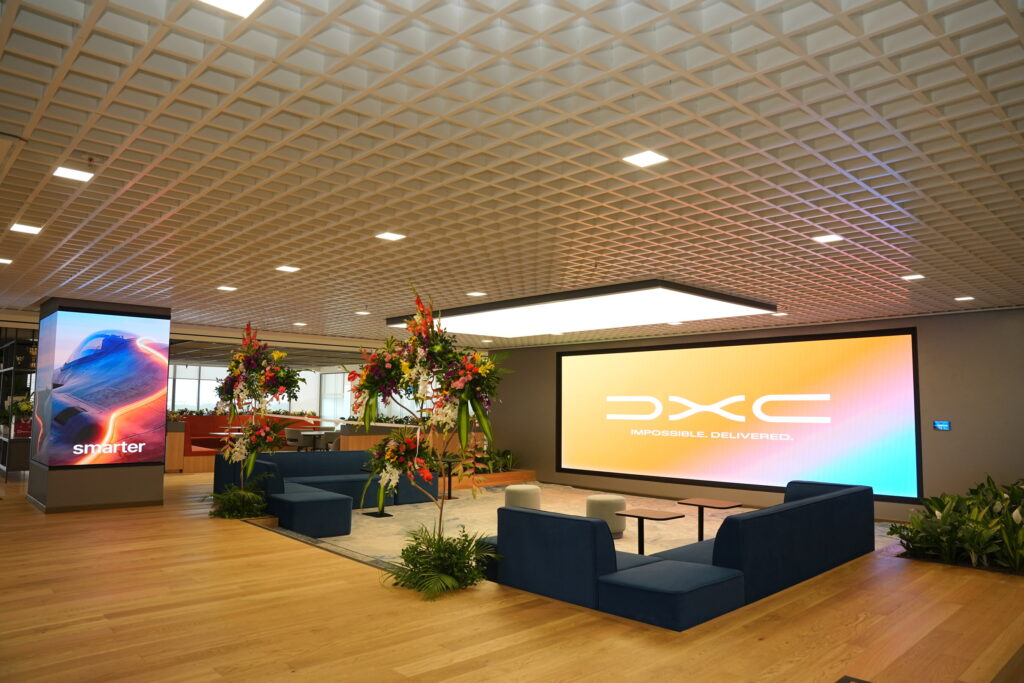
The Bengaluru center is not simply additional office capacity. DXC Technology has designed the facility around the point where many enterprise artificial intelligence programs currently stall: the transition from an attractive demonstration to a governed, secure and economically defensible production deployment. Customer Experience Zones, collaboration hubs, ideation studios, co-creation laboratories and partner areas are intended to shorten the distance between business problem identification, technical design, testing and operational rollout.
That structure matters because enterprise customers increasingly want implementation partners to accept responsibility for outcomes rather than merely provide access to models or produce strategy presentations. DXC Technology already operates infrastructure, applications and industry software inside complex customer environments. By placing artificial intelligence development beside cybersecurity, network operations and production support capabilities, the company can offer a more integrated proposition that covers the entire lifecycle instead of handing the customer a prototype and wishing it good luck.
The strategic opportunity is therefore larger than selling consulting hours. DXC Technology can use the center to originate transformation programs that later generate application modernization, managed infrastructure, cybersecurity and recurring operations revenue. The facility could become a commercial funnel for higher-value work across several business lines, provided customer workshops are converted into signed contracts with measurable scope, pricing discipline and follow-on demand.
How could integrated artificial intelligence, cybersecurity and operations improve DXC Technology delivery?
The combination of a central AI Hub, Cyber Range, Forensics Labs, Security Operations Center and Network Operations Center gives DXC Technology a platform for testing how artificial intelligence behaves inside operational systems rather than in a clean laboratory environment. That is important for banks, insurers, airlines, manufacturers and public-sector organizations, where a model’s accuracy is only one part of the deployment decision. Security controls, access permissions, auditability, resilience, regulatory obligations and integration with legacy systems often determine whether a project proceeds.
An integrated environment could improve delivery economics by reducing handoffs between consulting, engineering and operations teams. Fewer handoffs can mean faster troubleshooting, clearer accountability and more reusable components across customer engagements. DXC Technology may also be able to demonstrate operational monitoring and incident response before a system goes live, making the center more relevant to customers that remain interested in artificial intelligence but cautious about autonomous agents touching critical workflows.
The center also supports a shift from project-based experimentation toward repeatable delivery patterns. DXC Technology can develop reference architectures, governance templates, industry-specific workflows and testing procedures that can be adapted across multiple customers. Reuse is essential if artificial intelligence services are to improve margins rather than become a costly collection of bespoke experiments. The commercial prize lies in standardizing enough of the delivery process to gain efficiency while preserving enough customization to solve genuine enterprise problems.
Why is Bengaluru central to DXC Technology’s attempt to scale enterprise artificial intelligence globally?
Bengaluru gives DXC Technology access to a deep pool of software engineering, cloud, cybersecurity, data and enterprise application talent. The city also hosts technology operations for many multinational customers and partners, making it a practical location for co-development and global delivery. A large flagship center can help DXC Technology bring customer executives into the same environment as engineers who understand both modern artificial intelligence tools and the older systems that continue to run essential business processes.
The location creates both a scale and time-zone advantage. Work designed with customers in Asia can be supported across European and North American operating hours, while global teams can use Bengaluru as a shared engineering base. For DXC Technology, which has more than 115,000 employees across 70 countries, the value of India is not confined to labor costs. The more important advantage is the ability to assemble multidisciplinary teams at sufficient scale and connect them with customer environments around the world.
There are constraints. Bengaluru’s technology labor market is intensely competitive, and experienced artificial intelligence engineers can command higher compensation and change employers quickly. DXC Technology will need to retain scarce specialists, train existing employees and avoid creating a high-profile center that depends on a narrow group of experts. Real estate, infrastructure and talent investments must also translate into utilization. An impressive facility with weak customer conversion would become expensive theatre, and enterprise technology already has enough stages.
How does the Bengaluru center strengthen DXC Technology’s broader Anthropic and agentic AI strategy?
The center opens less than a month after DXC Technology expanded its multi-year alliance with Anthropic to bring Claude-based artificial intelligence into mission-critical enterprise systems. That partnership includes plans to train a large group of certified engineers and embed forward-deployed specialists inside customer environments. DXC Technology has also positioned Claude as a core model within DXC OASIS, its artificial intelligence-native orchestration platform for managed services, which had reached more than 50 joint customers by June 2026.
The Bengaluru facility gives that alliance a physical delivery engine. Certified engineers need places to work with customers, test workflows, integrate models with systems of record and evaluate security controls. The co-creation laboratories and operational facilities can support this progression from model access to deployed industry solutions. Initial use cases in insurance, cybersecurity, application services and modernization are particularly relevant because they match areas where DXC Technology already owns customer relationships and operational responsibility.
However, the partnership also creates concentration and execution questions. DXC Technology must preserve flexibility across models and cloud environments because large customers rarely want their long-term architecture tied to one provider. It must also demonstrate that agentic systems can be governed, monitored and interrupted when necessary. The strongest competitive position would not come from promoting a single model. It would come from proving that DXC Technology can select, integrate and operate appropriate models within each customer’s risk framework.
Can the new Bengaluru AI center help DXC Technology reverse revenue pressure and improve bookings?
The financial context makes commercialization urgent. DXC Technology reported fiscal 2026 revenue of $12.64 billion, down 1.8% on a reported basis and 4.8% organically. Full-year bookings fell 6.2% to $12.4 billion, producing a book-to-bill ratio of 0.98, while Global Infrastructure Services revenue declined more sharply than the company’s other major segments. Free cash flow remained comparatively resilient at $713 million, but fiscal 2027 guidance still points to another organic revenue decline of between 3% and 5%.
The Bengaluru center will not change that trajectory by itself. Its value depends on whether it increases qualified pipeline, raises win rates, accelerates contract conversion and expands the amount of recurring work attached to artificial intelligence projects. Investors should focus on whether management begins reporting larger artificial intelligence-related bookings, stronger Consulting and Engineering Services growth, better cross-selling into managed infrastructure and evidence that DXC OASIS is moving beyond early deployments.
Capital allocation discipline also matters because DXC Technology did not disclose the facility’s investment cost, incremental hiring requirement, customer pipeline or revenue target. The absence of these figures prevents investors from calculating a clear return on the center. That is not unusual for a delivery-site announcement, but it raises the importance of future evidence. The project becomes financially meaningful only when utilization, contract value and margin contribution begin appearing in reported results.
What competitive pressure will DXC Technology face from global and Indian technology services companies?
DXC Technology is entering a crowded contest. Accenture, International Business Machines Corporation, Cognizant Technology Solutions Corporation, Tata Consultancy Services Limited, Infosys Limited, Wipro Limited and HCLTech are all building enterprise artificial intelligence capabilities around consulting, engineering, cloud modernization, cybersecurity and managed services. Many have large Indian delivery networks, established relationships with global chief information officers and access to the same major model and cloud partners.
DXC Technology’s differentiation rests on its position inside mission-critical technology estates. The company often operates systems that customers cannot replace quickly, giving it access to workflows, data structures and operational pain points that newer artificial intelligence specialists may not possess. This can lower the barrier to identifying commercially useful applications. It can also make DXC Technology a trusted implementation partner where reliability and accountability matter more than novelty.
The disadvantage is that legacy exposure can slow growth and absorb management attention. Competitors with faster-growing digital businesses may have greater freedom to invest, recruit and price aggressively. DXC Technology must therefore show that knowledge of complex legacy environments is an asset for artificial intelligence modernization rather than a reason customers associate the company mainly with older outsourcing models. The Bengaluru center is part demonstration site, part sales platform and part attempt to update that market perception.
What does the recent DXC stock rebound reveal about investor sentiment toward the AI strategy?
DXC stock traded around $10.52 during the July 7 session, about 4.8% above the previous close of $10.04. The shares were approximately 18.9% higher than the June 30 close and about 16.8% above the June 5 close, showing a sharp improvement in short-term momentum. Even after the rally, the stock remained roughly 36% below its 52-week high of $16.45 and traded within a 52-week range of approximately $7.90 to $16.45.
This combination suggests improving tactical sentiment without a complete fundamental re-rating. Investors appear more willing to recognize the potential value of DXC Technology’s artificial intelligence partnerships, platform strategy and cost discipline, but the valuation still reflects concern about recurring revenue contraction, uneven bookings and execution risk. A multi-day stock rebound can attract retail attention, yet it does not remove the need for evidence that artificial intelligence investments are creating durable growth rather than a series of announcements.
The prevailing analyst stance remains cautious, with a Hold consensus and average price targets around the low-to-mid teens. That gap between the current share price and consensus targets indicates potential upside if revenue trends stabilize, but it also shows that analysts are not treating the artificial intelligence strategy as proven. The stock could respond positively to bookings acceleration or improved guidance. It could also surrender recent gains if the company’s new centers and alliances fail to produce measurable sales.
What execution risks could prevent the Bengaluru center from generating durable commercial returns?
The first risk is pilot congestion. Customers may visit the center, identify promising use cases and approve prototypes without committing to full deployment. DXC Technology will need strict criteria for prioritizing projects, defining expected outcomes and closing unproductive experiments. A high number of workshops is not the same as a high-quality revenue pipeline.
The second risk is delivery complexity. Artificial intelligence systems connected to core applications can introduce cybersecurity, data privacy, model reliability and operational continuity concerns. Failures in any of these areas could delay projects, increase implementation costs or damage customer trust. The inclusion of cyber and operations facilities is strategically sensible, but those capabilities must be embedded in commercial delivery rather than displayed as separate attractions.
The third risk is margin dilution. Recruiting specialized engineers, maintaining laboratories and supporting customized development can be expensive. DXC Technology needs reusable intellectual property, automation and disciplined staffing to prevent revenue growth from arriving with weak profitability. The fourth risk is organizational coordination. Consulting, engineering, infrastructure and industry software teams must share incentives and customer ownership, otherwise the integrated center could reproduce the internal silos it is supposed to eliminate.
What should customers, competitors and investors watch after the DXC Technology Bengaluru launch?
Customers should watch whether the center produces repeatable solutions that can be deployed inside regulated and mission-critical environments, not merely artificial intelligence demonstrations. Evidence of shorter modernization timelines, stronger security controls, lower operating costs or improved service quality would validate the model. Customers should also examine portability across cloud and model providers because flexibility will remain important as artificial intelligence technology and pricing change rapidly.
Competitors should watch whether DXC Technology uses the center to deepen existing outsourcing relationships and defend accounts that might otherwise shift toward faster-growing digital services firms. A successful model could make incumbent infrastructure contracts a launchpad for artificial intelligence transformation. That would increase pressure on peers to integrate consulting, engineering, security and operations more tightly rather than selling them as separate capabilities.
Investors should watch quarterly bookings, Consulting and Engineering Services growth, Global Infrastructure Services stabilization, DXC OASIS customer adoption and fiscal 2027 guidance. The most persuasive signal would be a pattern of artificial intelligence-led deals that expand from design into recurring managed services. Until that evidence appears, the Bengaluru center should be viewed as a strategically coherent platform with meaningful potential, but not yet as proof that DXC Technology has solved its growth challenge.
What are the key takeaways from DXC Technology’s Bengaluru AI center and stock outlook?
- The 200,000-square-foot Bengaluru center is designed as a commercial delivery platform, not merely an office expansion.
- Combining artificial intelligence, cybersecurity, forensics and network operations could help DXC Technology move customers from pilots to governed production deployments.
- Bengaluru offers engineering scale and global delivery advantages, but talent retention and facility utilization will determine the economics.
- The center gives DXC Technology’s Anthropic alliance and DXC OASIS platform a practical environment for customer implementation.
- DXC Technology can use existing mission-critical customer relationships to cross-sell modernization, security and managed services.
- Fiscal 2026 revenue and bookings declines make conversion of artificial intelligence demand into contracted work an urgent priority.
- The lack of disclosed investment, hiring and revenue targets means returns must be judged through future bookings, utilization and margins.
- DXC stock’s short-term rebound shows improving sentiment, but the large discount to the 52-week high signals continuing execution concerns.
- Competitive pressure from global consulting and Indian technology services companies will remain intense.
- The decisive test is whether the Bengaluru center creates repeatable, profitable and recurring artificial intelligence revenue.
Share this:
Discover more from Business-News-Today.com
Subscribe to get the latest posts sent to your email.