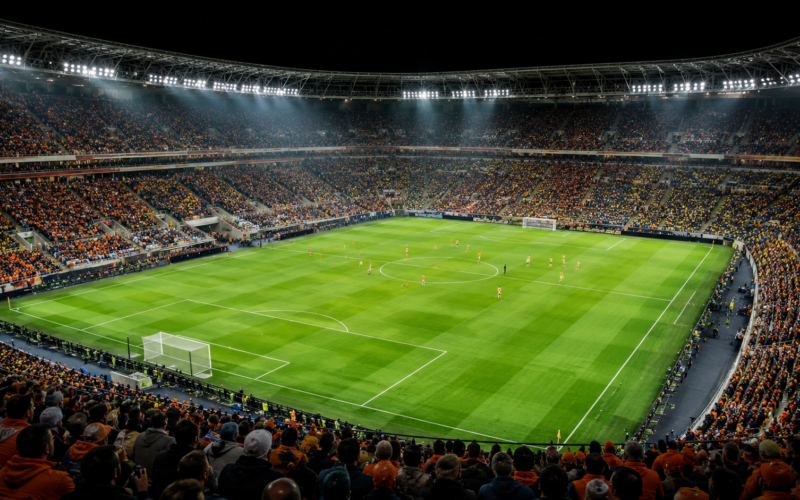
Ecuador came from behind to defeat Germany 2-1 in their decisive FIFA World Cup 2026 Group E match at New York New Jersey Stadium in East Rutherford on Thursday, June 25, 2026. The match began at 4pm local time and concluded during the early hours of June 26 in India, with 80,663 spectators watching Ecuador rescue their tournament campaign.
Leroy Sané gave Germany the lead after only two minutes when Florian Wirtz found him inside the penalty area. Ecuador protested over contact involving Aleksandar Pavlović and Pedro Vite during the build-up, but the referee allowed the goal and no review overturned the decision.
Nilson Angulo equalised in the ninth minute after Vite recovered possession from Felix Nmecha and released the winger. Angulo carried the ball towards the penalty area before driving a low shot beyond Manuel Neuer for Ecuador’s first goal of the tournament.
Gonzalo Plata scored the decisive goal in the 77th minute after substitute Kevin Rodríguez flicked on Vite’s corner. The victory lifted Ecuador to four points and secured qualification as one of the best third-placed teams, while Germany remained Group E winners ahead of Ivory Coast despite suffering their first defeat of the competition.
FIFA World Cup 2026 Ecuador 2-1 Germany full match scorecard and key incidents
How did Germany score after 109 seconds without establishing lasting control?
Germany began with the confidence of a team that had already secured qualification. Julian Nagelsmann’s side pushed both full-backs forward, positioned Wirtz and Jamal Musiala between Ecuador’s midfield and defensive lines and asked Sané to attack the space inside from the right.
The opening goal arrived after only 109 seconds. Pavlović controlled Nathaniel Brown’s throw-in during a disputed challenge with Vite, moved the ball to Wirtz and watched the playmaker deliver a low pass towards Sané.
Sané received inside the penalty area and finished beyond Galíndez. Ecuador protested that Pavlović had fouled Vite in the build-up, but the officials allowed the goal to stand.
Germany’s lead did not produce the control that might normally follow such an early breakthrough. Ecuador continued pressing Germany’s midfield receivers and refused to retreat into a passive defensive block despite the risk of conceding again.
This response was strategically important because Ecuador entered the match needing a result. Allowing Germany to dominate possession without pressure would have made the qualification task increasingly difficult, particularly with Ivory Coast leading Curaçao in the simultaneous match.
Why did Pedro Vite become the central figure in Ecuador’s immediate response?
Vite was involved in both the controversy before Germany’s goal and the move that produced Ecuador’s equaliser. His ability to recover emotionally and tactically after the disputed opening incident became one of the defining features of Ecuador’s performance.
In the ninth minute, Vite pressed Nmecha near midfield and emerged with possession. Rather than slowing the attack, he immediately released Angulo into the space between Germany’s midfield and defensive lines.
Angulo carried the ball towards the penalty area as Germany retreated. He then struck across Neuer from outside the box, finding the far corner and ending Ecuador’s 242-minute wait for a goal at the tournament.
The equaliser changed the emotional balance inside the stadium. A predominantly Ecuador-supporting crowd that had reacted angrily to the opening goal now had evidence that Sebastián Beccacece’s team could compete directly with the four-time champions.
Vite continued to influence Ecuador’s attacks and later delivered the corner that led to Plata’s winner. Although Rodríguez received the official assist for the final touch before the goal, Vite’s set-piece delivery created the decisive sequence.
How did Ecuador defend Germany’s 61% possession without becoming trapped?
Germany completed more passes and controlled 61% of possession, but Ecuador protected the most dangerous central areas with considerable discipline. Moisés Caicedo and Vite remained close enough to prevent Musiala and Wirtz from receiving freely between the lines.
Angulo and John Yeboah also worked backwards from the wide positions, giving Ecuador a compact midfield line when Germany attempted to progress through Kimmich, Pavlović and the attacking midfielders. The defensive shape regularly forced Germany to send the ball towards Raum or recycle possession across the back line.
Germany still generated 11 attempts, but only three were on target and the expected-goals total remained at 0.67. That reflected Ecuador’s success in limiting clear shooting positions despite spending long periods without the ball.
Havertz tested Galíndez in the 25th minute after Raum delivered from the left. Musiala, Nmecha and Wirtz also found shooting opportunities, but Ecuador’s defenders closed the central space quickly enough to reduce the quality of those efforts.
Willian Pacho and Joel Ordóñez were particularly important when Germany attempted to find Havertz between the centre-backs. Piero Hincapié provided aggression from the left, although his booking before half-time increased the risk attached to every subsequent challenge.
Why was Germany’s overturned penalty the tactical and emotional turning point?
Germany appeared to have regained the initiative less than 30 seconds after the interval. Ordóñez challenged Havertz inside the penalty area, and referee Tori Penso initially pointed to the spot.
VAR reviewed the complete attacking phase rather than only the final contact. The review identified that Sané had fouled Vite before the ball reached Havertz, leading the referee to cancel the penalty and award Ecuador a free kick.
The decision prevented Germany from taking a 2-1 lead at the beginning of the second half. More importantly, it reinforced Ecuador’s belief that the match remained available to be won rather than merely survived.
Germany continued to control possession, but their attacking structure became less coherent after the review. Stiller had replaced the booked Pavlović at half-time, while Undav, Thiaw, Beier and Groß were subsequently introduced as Nagelsmann attempted to increase energy and protect key players.
Those substitutions added fresh legs but also disrupted Germany’s combinations. Ecuador, by contrast, used its changes to create a specific attacking pathway that ultimately decided the contest.
How did Kevin Rodríguez change Ecuador’s attack before assisting the winner?
Beccacece introduced Rodríguez and Preciado in the 64th minute, replacing Enner Valencia and Alan Franco. The changes gave Ecuador greater speed in front of Germany’s defensive line and allowed Plata to receive more support around the penalty area.
Valencia had tested Neuer shortly before leaving, but Ecuador needed a forward capable of attacking the spaces created as Germany pushed players forward. Rodríguez offered that movement and immediately challenged the German centre-backs with direct runs.
The winning sequence began after Sané forced Galíndez into a save at the other end. Ecuador moved forward, Rodríguez’s effort was blocked behind and Vite delivered the resulting corner from the right.
Rodríguez attacked the near-post zone and redirected the ball across the six-yard area. Neuer moved to collect it, but Plata reacted first and raised his left foot to poke the ball past the goalkeeper from close range.
The goal demonstrated the value of Ecuador’s substitution strategy. Rodríguez had been on the field for only 13 minutes, yet his movement, initial shot and flicked assist created the decisive moment.
Why did Gonzalo Plata’s performance carry consequences beyond one winning goal?
Plata entered the final group match without a goal at the tournament, but he remained Ecuador’s most dangerous attacker when the team had space to run. His willingness to receive under pressure and carry the ball forward gave Germany’s defenders a different challenge from Valencia’s central movement.
The winner required anticipation rather than a powerful finish. Plata recognised that Neuer expected to collect Rodríguez’s flick and attacked the goalkeeper’s blind side before Germany’s defenders could react.
His goal moved Ecuador from one point to four and transformed their position in the ranking of third-placed teams. A draw would have left Ecuador with two points and almost certainly outside the qualifying places.
Plata was booked in the 89th minute during Germany’s late pressure, but he continued contributing defensively and helped Ecuador manage eight minutes of stoppage time. His performance therefore combined the decisive attacking action with the discipline needed to protect the result.
The goal was also significant historically. Ecuador reached the knockout stage for only the second time and for the first time since the 2006 tournament.
What did Germany’s late pressure reveal before the Round of 32?
Germany responded to falling behind by pushing Raum forward and delivering repeatedly from the left. Groß and Wirtz attempted to find Undav and Beier inside the penalty area, while Musiala moved closer to the forwards.
Ecuador defended with five players across the back line after Félix Torres replaced Yeboah. Pervis Estupiñán had already replaced Hincapié, allowing Beccacece to protect the booked defender and introduce a fresher player on the left.
Germany produced late attempts through Undav and Groß but did not force Galíndez into a decisive stoppage-time save. Ecuador completed 49 clearances compared with Germany’s 16, illustrating how much defensive work was required after Plata’s goal.
The defeat did not remove Germany from first place, but it ended an 11-match winning sequence and exposed several areas requiring attention. Germany were vulnerable when Ecuador pressed the midfield, struggled to create high-quality chances against a compact block and failed to control the decisive set-piece sequence.
Nagelsmann can reasonably point to the rotation and the absence of immediate qualification pressure. However, a knockout opponent will view Ecuador’s success as evidence that Germany can be unsettled by aggression, disciplined spacing and fast attacks after turnovers.
How did Ivory Coast’s victory determine the final Group E qualification order?
Germany and Ivory Coast both finished with six points after the African side defeated Curaçao 2-0 in the simultaneous final-round match. Germany retained first place because their goal difference of plus six was superior to Ivory Coast’s plus two.
Ecuador climbed to four points after recording their first victory. Their record of one win, one draw and one defeat placed them third with an even goal difference, comfortably inside the best-third-place qualification positions.
Curaçao finished fourth with one point. Their historic draw against Ecuador prevented a pointless campaign, but the seven goals conceded against Germany left them with a difficult goal-difference position before their final defeat.
The group therefore produced three qualifiers. Germany advanced as group winners, Ivory Coast progressed as runners-up and Ecuador reached the Round of 32 through the third-place pathway.
FIFA World Cup 2026 Group E final points table
What does qualification mean for Ecuador’s uncertain Round of 32 route?
Ecuador’s four-point record guaranteed progress before every remaining group had been completed. However, the expanded tournament’s third-place allocation system meant their exact opponent, match date and venue could not immediately be confirmed.
The allocation depends on which eight of the 12 third-placed teams qualify. Different combinations place those teams against different group winners, meaning Ecuador could not organise travel until the complete group-stage picture was available.
Tactically, Ecuador will enter the knockout stage with renewed belief. They failed to score against Ivory Coast or Curaçao, but responded to an early deficit against Germany by producing two goals and the higher expected-goals figure.
Beccacece must still address the lack of sustained attacking creation. Ecuador recorded only eight attempts and relied on a turnover and a corner for their goals, although the efficiency and discipline shown against Germany provide a credible foundation.
Germany’s route was clearer. They will play a qualifying third-placed team at Boston Stadium in Foxborough on Monday, June 29, with the opponent dependent on the completion of the outstanding groups.
Key takeaways from Ecuador vs Germany at FIFA World Cup 2026
- Ecuador came from behind to defeat Germany 2-1 and qualify for the Round of 32.
- Leroy Sané opened the scoring after only 109 seconds following an assist from Florian Wirtz.
- Ecuador appealed for a foul during the build-up, but Germany’s opening goal was allowed to stand.
- Nilson Angulo equalised in the ninth minute with Ecuador’s first goal of the tournament.
- Pedro Vite recovered possession and assisted Angulo before delivering the corner that created the winner.
- Germany were awarded a penalty shortly after half-time, but VAR overturned the decision because of an earlier Sané foul.
- Kevin Rodríguez entered as a substitute and assisted Gonzalo Plata’s winning goal in the 77th minute.
- Ecuador qualified with four points and reached the FIFA World Cup knockout stage for the first time since 2006.
- Germany remained Group E winners despite losing and will play their Round of 32 match in Foxborough.
- Ivory Coast qualified in second place, while Curaçao were eliminated with one point.
Share this:
Discover more from Business-News-Today.com
Subscribe to get the latest posts sent to your email.