

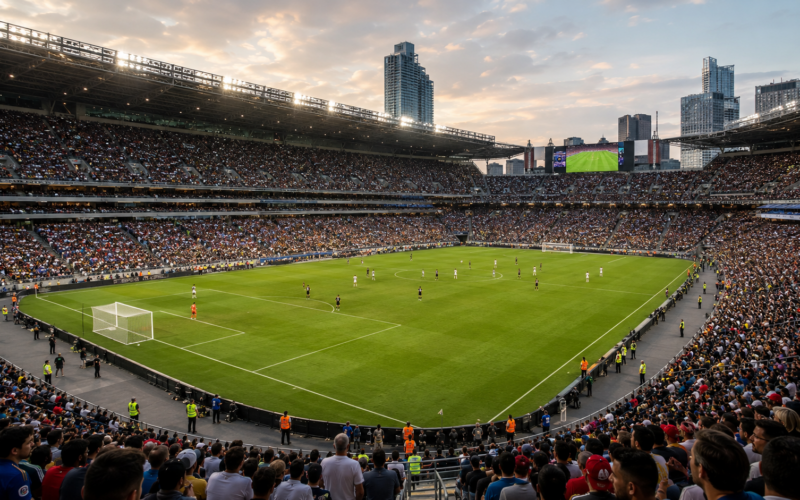
Colombia defeated DR Congo 1-0 at Guadalajara Stadium in Zapopan, Mexico, on June 23, 2026 local time, with the match concluding early on June 24 in India. Daniel Muñoz scored the decisive goal in the 76th minute after Colombia had spent most of the contest attempting to break down an organised Congolese defence.
Juan Fernando Quintero created the opening with a pass toward the right side of the penalty area. Muñoz moved into the space created when Jhon Córdoba went down seeking a penalty and struck a shot that took a deflection before finally beating Lionel Mpasi.
Mpasi had produced an outstanding goalkeeping performance, repeatedly denying James Rodríguez, Luis Díaz and Jhon Arias. Colombia placed nine attempts on target and also had three finishes disallowed before Muñoz delivered his second goal of the tournament.
The victory moved Colombia to six points from two Group K matches and confirmed their place in the FIFA World Cup 2026 Round of 32. DR Congo remain on one point and must secure a positive result against Uzbekistan to preserve their qualification hopes.
Colombia vs DR Congo FIFA World Cup 2026 match scorecard
How did Lionel Mpasi prevent Colombia from converting their early dominance?
Colombia controlled possession from the opening minutes and placed DR Congo under sustained pressure around the penalty area. Néstor Lorenzo’s team moved James Rodríguez, Jhon Arias and Luis Díaz into positions between the Congolese midfield and defence.
James produced the first significant attempt in the 11th minute. The captain received possession outside the penalty area and struck powerfully, but Mpasi reacted quickly and pushed the ball away.
The save established the pattern of the first half. Colombia continued finding shooting opportunities, while Mpasi repeatedly positioned himself correctly and prevented rebounds from developing into clear finishes.
Díaz came close in the 18th minute after controlling a chipped pass inside the area. The winger turned sharply and attempted to finish, but Mpasi extended his foot and blocked the effort.
Arias also tested the goalkeeper as Colombia attacked through different areas. James attempted to create from the right and central spaces, while Díaz repeatedly moved inside from the left.
Colombia reached half-time having attempted approximately 15 shots, with six directed on target. Nine of their ten starting outfield players had attempted at least one effort.
The volume demonstrated Colombia’s control but also revealed a weakness. Many shots were taken from outside the penalty area because DR Congo protected the central space close to goal.
Mpasi was therefore required to make several difficult saves, but Colombia rarely created the simple close-range finish that could have removed the goalkeeper from the equation.
Why did DR Congo’s compact defensive structure frustrate Colombia for 75 minutes?
Sébastien Desabre organised DR Congo with five defenders and three central midfielders. The shape placed large numbers between Colombia’s creative players and the goal.
Aaron Wan-Bissaka and Arthur Masuaku protected the wide areas, while Chancel Mbemba, Axel Tuanzebe and Steve Kapuadi remained close together inside the defensive line.
The midfield of Edo Kayembe, Samuel Moutoussamy and Ngal’ayel Mukau attempted to close the spaces around James and Arias. When Colombia moved the ball wide, DR Congo shifted as a unit rather than allowing defenders to become isolated.
The structure encouraged Colombia to shoot from distance. Those attempts increased the statistical pressure but often allowed Mpasi to see the ball early.
DR Congo also understood that a draw would preserve a favourable route into their final match against Uzbekistan. Desabre therefore had little reason to open the game unnecessarily.
The African side occasionally threatened through Cédric Bakambu, Yoane Wissa and Kayembe, but their principal objective remained defensive stability.
Colombia’s attacking players became increasingly frustrated as the match progressed. Even when they created a good shooting angle, Mpasi or another Congolese defender intervened.
The performance showed why DR Congo had already earned a 1-1 draw against Portugal. Their organisation, physical strength and willingness to defend without possession made them difficult to break down.
How did Luis Díaz threaten repeatedly without receiving a valid goal?
Díaz was Colombia’s most persistent attacking threat and repeatedly attempted to turn possession into direct action.
His movement from the left created problems for Wan-Bissaka and the covering centre-backs. Díaz was willing to receive near the touchline, move inside or attack crosses arriving from the opposite side.
Mpasi denied him during the first half and again shortly after the interval. Díaz moved through several defenders and directed a low effort toward goal, but the goalkeeper blocked with his foot.
Arias collected the rebound but sent his attempt wide. The sequence became another example of Colombia creating pressure without converting it.
Díaz later appeared to score twice after Muñoz had broken the deadlock. In the 78th minute, he won an aerial challenge against Mbemba and lifted the ball over Mpasi.
The referee ruled that Díaz had fouled the DR Congo captain during the challenge. The decision prevented Colombia from immediately doubling the advantage.
Two minutes later, Díaz collected another forward pass, shifted onto his right foot and drove an excellent finish into the top corner.
The celebrations were again stopped because he had moved marginally offside before receiving the ball.
Díaz finished without a goal, but his movement kept DR Congo under pressure and prevented the defence from concentrating entirely on James and Arias.
Why was Juan Fernando Quintero’s introduction decisive for Colombia?
Colombia required a player capable of passing through the defensive line rather than simply circulating around it.
Quintero offered that quality after entering during the second half. He positioned himself near the edge of the penalty area and looked for runners rather than immediately attempting another long-range shot.
His first significant combination with Muñoz nearly produced a breakthrough in the 61st minute. Quintero lifted a pass toward the advancing right-back, but Muñoz’s first touch carried the ball away from him.
The same connection succeeded 15 minutes later. Quintero received possession centrally and played toward the right side of the area.
Córdoba moved into the box and went down under pressure while seeking a penalty. Several DR Congo players became distracted by the incident and momentarily stopped tracking Muñoz’s movement.
The right-back continued his run into the available space and struck toward the bottom corner. The ball took a deflection, changing its direction sufficiently to defeat Mpasi.
The goal demonstrated the value of Quintero’s vision. Colombia had spent much of the match shooting through or around the defensive block, while the substitute attempted to pass behind it.
Quintero gives Lorenzo an important alternative to James. Both players can deliver the decisive pass, but Quintero’s introduction from the bench can change the rhythm against tiring defenders.
How has Daniel Muñoz become Colombia’s unexpected World Cup goalscorer?
Muñoz has scored in both of Colombia’s opening FIFA World Cup 2026 matches.
He opened the scoring against Uzbekistan before delivering the decisive goal against DR Congo. The two goals place the right-back among Colombia’s leading attacking contributors.
His influence reflects Colombia’s aggressive use of the full-backs. Muñoz is encouraged to advance beyond the midfield whenever James or Arias moves inside.
Opponents naturally concentrate their defensive attention on Díaz, James and Colombia’s central striker. That focus can leave space for Muñoz to attack from a deeper starting position.
The winning goal in Guadalajara illustrated the advantage. DR Congo tracked the recognised attackers but reacted too slowly when Muñoz entered the penalty area.
His defensive work also remained important. DR Congo attempted to counterattack through Wissa and Masuaku on Colombia’s right, requiring Muñoz to recover quickly after advancing.
The balance between those responsibilities makes his tournament start especially valuable. He has not simply scored twice while neglecting the defensive system.
Muñoz’s contribution also reduces Colombia’s dependence on Díaz and James for goals. A team becomes more difficult to contain when defenders, midfielders and substitutes can all decide matches.
How close did DR Congo come to punishing Colombia on the counterattack?
DR Congo created few opportunities, but their best attack arrived three minutes before Colombia’s goal.
Wissa combined with substitute Simon Banza near the edge of the penalty area. A quick series of passes moved the ball through Colombia’s midfield before the defence could completely reorganise.
Wissa attempted to finish, but Colombian defenders blocked the effort. The danger was eventually cleared after several touches inside the area.
The sequence demonstrated the risk within Colombia’s approach. Lorenzo’s team had committed several players forward and left space behind the attacking midfielders.
A successful DR Congo finish would have transformed the match. Colombia would have been forced to chase two goals against a defence already protecting its penalty area effectively.
DR Congo also created late pressure after falling behind. Nathanaël Mbuku improved the quality of their set pieces and forced Camilo Vargas into a diving save from distance during the final minutes.
The late rally arrived too slowly. For most of the match, DR Congo lacked the passing accuracy required to move from defence into attack.
Bakambu and Wissa frequently received direct passes without enough support. Colombia regained possession before the Congolese midfield could move forward.
Desabre’s side defended well enough to earn a result, but their limited attacking output meant one Colombian goal was likely to decide the contest.
What did James Rodríguez’s tenth World Cup appearance add to Colombia’s performance?
James made his tenth World Cup appearance and moved level with Freddy Rincón and Carlos Valderrama for the Colombian record.
The midfielder remains central to Colombia’s creative identity more than a decade after winning the Golden Boot at the 2014 tournament.
He operated from the right and central areas against DR Congo, looking for space outside the crowded defensive block.
James tested Mpasi early and delivered several set pieces into the penalty area. His passing also helped Colombia maintain control whenever DR Congo attempted to push forward.
The match did not produce a goal or assist for the captain, but his positioning influenced the space available to Muñoz and Arias.
DR Congo repeatedly moved midfielders toward James, which created opportunities for Colombia to switch possession toward Díaz on the opposite side.
Lorenzo eventually introduced Quintero to add another creative passer. The change did not reduce James’ importance. It demonstrated that Colombia can place two different playmakers around a defensive block when the match requires greater risk.
Managing James’ minutes may become important during the knockout phase. Colombia possess enough creative depth to protect him without abandoning the style built around his passing.
What does the result mean for the FIFA World Cup 2026 Group K qualification race?
Colombia lead Group K with six points after victories over Uzbekistan and DR Congo. They have scored four goals and conceded one.
Portugal sit second with four points following their opening draw with DR Congo and 5-0 victory over Uzbekistan.
DR Congo remain third with one point, while Uzbekistan are fourth after losing their first two matches.
FIFA World Cup 2026 Group K points table after Colombia vs DR Congo
| Team | P | W | D | L | GF | GA | GD | Pts |
|---|---|---|---|---|---|---|---|---|
| Colombia | 2 | 2 | 0 | 0 | 4 | 1 | +3 | 6 |
| Portugal | 2 | 1 | 1 | 0 | 6 | 1 | +5 | 4 |
| DR Congo | 2 | 0 | 1 | 1 | 1 | 2 | -1 | 1 |
| Uzbekistan | 2 | 0 | 0 | 2 | 1 | 8 | -7 | 0 |
Colombia will win Group K by avoiding defeat against Portugal. Victory would give Lorenzo’s side nine points, while a draw would leave them two points above their final opponent.
Portugal must defeat Colombia to finish first. A draw would confirm second place and qualification.
DR Congo can reach four points by defeating Uzbekistan. That total would give them a realistic route through second or third place, depending on Portugal’s result and the tournament’s third-place ranking.
Uzbekistan must win to reach three points, although their damaged goal difference makes qualification extremely difficult.
What must Colombia improve before facing Portugal for first place?
Colombia have qualified with maximum points, but the DR Congo match exposed an efficiency problem.
They attempted 20 shots and placed nine on target but required a deflected effort from a right-back to score. Stronger knockout opponents may offer fewer opportunities.
Díaz, Córdoba and Colombia’s other forwards must convert a greater proportion of the chances created by James, Quintero and Arias.
The positive is that Colombia continued attacking without losing tactical discipline. They did not allow frustration to produce reckless positioning until the final minutes.
Portugal will present a different challenge. Roberto Martínez’s team will hold more possession, attack with greater numbers and create space that DR Congo refused to offer.
That could suit Díaz and Muñoz, who are most dangerous when they can run into open areas rather than attack a stationary defensive block.
Colombia have secured qualification. The Portugal match will now determine whether they enter the Round of 32 as group winners and provide a clearer test of their ability to compete against a leading title contender.
Key takeaways from Colombia vs DR Congo at FIFA World Cup 2026
- Colombia defeated DR Congo 1-0 at Guadalajara Stadium on June 23, 2026 local time.
- Daniel Muñoz scored the decisive goal in the 76th minute after a pass from Juan Fernando Quintero.
- Muñoz scored for the second consecutive match after also finding the net against Uzbekistan.
- Lionel Mpasi made eight saves and kept DR Congo level for most of the contest.
- Colombia controlled 64 percent possession and recorded 20 attempts, including nine on target.
- Luis Díaz had two second-half finishes ruled out, one for a foul and another for offside.
- James Rodríguez made his tenth World Cup appearance, equalling Colombia’s national record.
- DR Congo created their best opportunity through Yoane Wissa shortly before Colombia scored.
- Colombia moved to six points and qualified for the FIFA World Cup 2026 Round of 32.
- Colombia next face Portugal for first place, while DR Congo meet Uzbekistan in a decisive final group fixture.
Discover more from Business-News-Today.com
Subscribe to get the latest posts sent to your email.