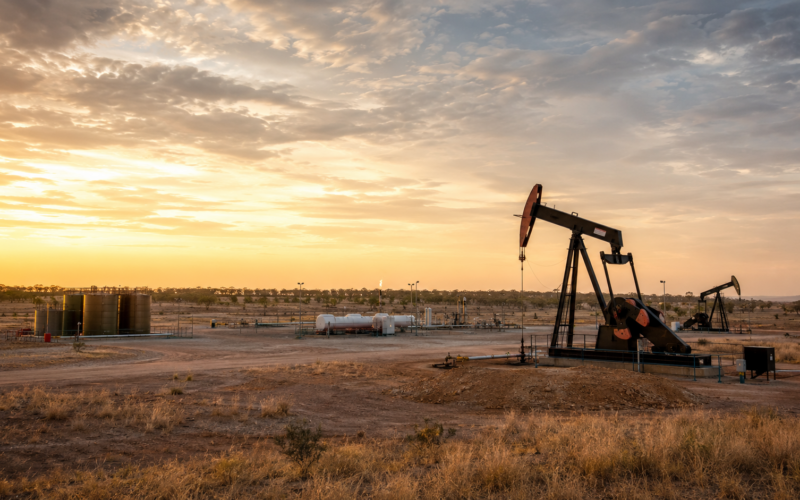
Australian Oil Company Limited (ASX:AOK) has shifted its Surat Basin strategy from planning to early production after completing its maiden crude oil lifting from the Emu Apple Oil Field in Queensland. The company said the first lifting totalled 422 barrels, generating an average realised price of A$151 per barrel and gross receipts of A$63,722, with funds expected to be received in May. Australian Oil Company Limited is now preparing a second lifting of about 400 to 420 barrels while assessing production improvement work at Emu Apple, Riverslea and the Major Gas Field. For a microcap energy stock trading around A$0.003, the announcement matters less because of its current revenue scale and more because it tests whether Australian Oil Company Limited can convert legacy Surat Basin assets into repeatable, cash-generating operations.
Why does Australian Oil Company’s first Emu Apple oil lifting matter for ASX:AOK investors?
The immediate number is small, but the strategic signal is not. Australian Oil Company Limited’s first Emu Apple lifting gives the company a live operating reference point in the Surat Basin, a region where small field economics depend heavily on low-cost interventions, reliable offtake, and disciplined capital allocation. The company clarified that the first lifting was 422 barrels rather than the previously identified 600 barrels because one tank had been incorrectly identified as holding oil when it was used for condensate storage. That correction is important because ASX microcap investors tend to punish operational ambiguity quickly, especially when production volumes are modest and every barrel is material to cash flow visibility.
The current production rate at Emu Apple is about 15 barrels of oil per day, with water cut of around 30%. That is not the kind of rate that changes Australian oil supply, but it can matter for Australian Oil Company Limited if lifting logistics, field costs, and well intervention outcomes support repeat sales. The company’s next scheduled lifting of about 400 to 420 barrels, expected around mid-May, will therefore be watched less as a standalone revenue event and more as a signal of whether the Emu Apple Oil Field can settle into a predictable operating rhythm.
The market backdrop also helps explain the timing. The company said Brent-linked pricing for the next lifting would reflect currently elevated observed prices, which it linked to geopolitical events. That pricing environment can flatter early revenue, but it also raises the bar for execution. If a small oil producer cannot build momentum when crude prices are supportive, investors may reasonably ask when it ever will.
How could Emu Apple intervention work change Australian Oil Company’s production profile?
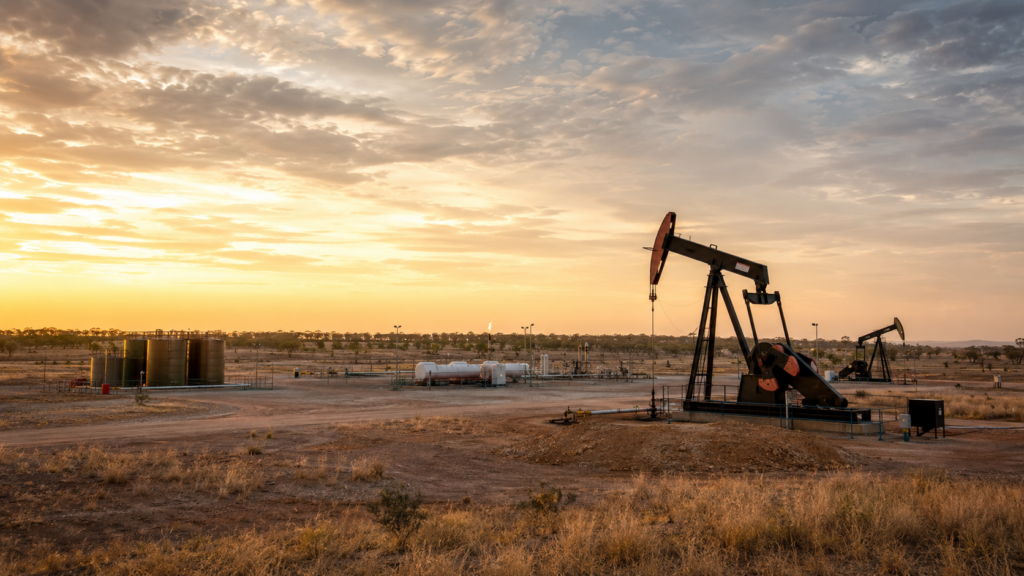
Australian Oil Company Limited is planning to acidise Emu Apple-1 and follow that with a condensate wash to improve short-term production rates. This is a classic small-field optimisation play, not a mega-project story. The company is trying to use relatively targeted well intervention to lift output from an existing asset rather than betting the balance sheet on a large exploration campaign. That is sensible for a company with a market capitalisation measured in only a few million Australian dollars, but it also means execution quality becomes everything.
The opportunity is straightforward. If the intervention improves flow rates materially, Australian Oil Company Limited could lift more frequently, improve working capital turnover, and begin to show that Emu Apple can fund at least part of the broader Surat Basin programme. If the improvement is limited, the company remains exposed to the familiar microcap energy problem: enough production to stay interesting, but not enough production to change the financial profile.
The risk is that operational enhancements are often easier to describe than to sustain. Acidisation and condensate wash work may improve wellbore conditions, but the company still has to manage reservoir behaviour, water cut, storage constraints, lifting schedules, and field costs. For Australian Oil Company Limited, the next few months will be less about a single technical success and more about whether Emu Apple can become a dependable operating base rather than a one-off milestone.
Why are Riverslea, Yapunyah and the Major Gas Field important to the broader Surat Basin strategy?
Australian Oil Company Limited’s broader Surat Basin strategy rests on whether it can turn a cluster of legacy oil and gas opportunities into a portfolio rather than a single-well story. At PL 30, the company has taken a wellhead sample from Riverslea-3 for assay work that is expected to support crude sales agreement discussions and potential reactivation of the Riverslea oil field. It is also assessing intervention work at Riverslea-3, Riverslea-1 and Yapunyah-1, with the aim of restarting production from both oil pools if field economics remain attractive.
That matters because Australian Oil Company Limited needs optionality. Emu Apple gives the company near-term oil sales, but Riverslea and Yapunyah could provide a second operational leg if reactivation work is successful. The company is also interpreting 3D seismic data across PL 30, with early mapping pointing to further exploration potential up-dip of Annabelle-1. The seismic visuals in the announcement show the Riverslea-Yapunyah 3D survey area and a cross-section through Annabelle-1, Riverslea and Yapunyah, underscoring that the company is trying to integrate legacy subsurface data with new commercial priorities rather than simply chasing headline acreage.
The Major Gas Field adds another dimension. Preliminary mapping suggests Major-4, a shut-in production well, is near the edge of the gas pool and could potentially be reinstated on a cyclical basis to manage water production. More importantly, Australian Oil Company Limited said early mapping indicates a potentially material amount of gas may sit up-dip of Major-4 and may not have been drained by existing wells. Commercial discussions are also underway for selling gas from Major through PPL 22 into the Silver Spring Gas Plant.
This is where the investment case becomes more interesting, but also more fragile. A small oil stream can create proof of execution. A broader oil and gas restart across Emu Apple, Riverslea, Yapunyah and Major would create a more credible Surat Basin development platform. The catch is that each step requires technical confirmation, commercial agreement, and capital discipline. In microcap energy, the subsurface may be complex, but the scoreboard is brutally simple: barrels, gas sales, cash receipts, repeat.
What does Queensland exploration bidding say about Australian Oil Company’s growth ambitions?
Australian Oil Company Limited said it participated in Queensland’s latest oil and gas licensing round by submitting bids for two exploration blocks while continuing to assess other Surat Basin and international opportunities. That signals management wants to expand beyond incremental workovers and field restarts. It also introduces a balancing act between growth ambition and balance-sheet realism.
For investors, the question is not whether new acreage sounds attractive. Of course it does, because new blocks always look wonderful in a map deck, especially before the expensive part begins. The real question is whether Australian Oil Company Limited can use early production cash flow and technical data to pursue new opportunities without diluting shareholders excessively or stretching the organisation across too many fronts.
The company’s current Surat Basin asset map shows a geographically connected position across PL 264, PL 30, PPL 22 and PL 512 in Queensland, with the announcement’s map placing the assets relative to Surat, Brisbane, gas fields, oil fields and pipeline infrastructure. That visual is important because Australian Oil Company Limited’s strategy depends on proximity, infrastructure access and field-level synergies, not simply acreage size. The company’s best path is likely to be a tight regional model where operational learning from one asset reduces cost and uncertainty across the next.
How is ASX:AOK stock sentiment reacting to the Surat Basin update?
Australian Oil Company Limited remains a speculative ASX microcap. Recent market data showed AOK trading around A$0.003, with the ASX quoting a day range of A$0.002 to A$0.003, a previous close of A$0.003, average volume of about 10.77 million shares and a 52-week range of A$0.001 to A$0.005. Other market data providers placed the market capitalisation around A$5 million to A$5.68 million, while TradingView indicated the stock was flat on the day, down over the past week in one data view, and still up over the past year.
That price context matters because ASX:AOK is not being valued like a mature producer. It is being valued like an option on execution. At A$0.003, even a one-tick move can represent a large percentage change, which means short-term price action can exaggerate both optimism and disappointment. The market is unlikely to rerate Australian Oil Company Limited on a 422-barrel lifting alone. Investors will want to see whether the company receives the expected proceeds, completes the next lifting, improves Emu Apple production, advances Riverslea commercial discussions, and demonstrates that Major Gas Field mapping can translate into a viable gas sales pathway.
Sentiment is cautiously constructive, but not yet decisively bullish. The company has moved from dormant asset potential toward early operating evidence, which is a positive shift. However, the production base is still small, the intervention programme is unproven, and commercial outcomes remain pending. For ASX microcap investors, this is the stage where excitement is allowed, but calculators should remain open.
What should investors watch next in Australian Oil Company’s Surat Basin programme?
The next phase is all about proof points. The most immediate catalyst is the next Emu Apple oil lifting, expected to involve roughly 400 to 420 barrels. If that occurs smoothly and follows the first sale with predictable logistics and pricing, Australian Oil Company Limited will have a stronger case that Emu Apple can serve as a recurring cash contributor rather than a symbolic restart.
The second catalyst is the well intervention programme at Emu Apple-1. Investors should watch whether acidisation and condensate washing materially improve the current production rate of about 15 barrels per day. Even a modest production uplift could matter at this scale, but the sustainability of any uplift will be more important than the initial response.
The third catalyst is Riverslea. Assay results from Riverslea-3 are expected to support crude sales agreement discussions, and any progress toward reactivating Riverslea and Yapunyah would broaden Australian Oil Company Limited’s production base. The fourth is Major Gas Field mapping, where the company is assessing whether gas up-dip of Major-4 has been left undrained. A credible pathway into the Silver Spring Gas Plant would give the company a more diversified oil and gas story.
Australian Oil Company Limited has produced the kind of update that can matter for a microcap because it combines actual oil sales, near-term operational work and multiple follow-on catalysts. But the investment case still sits firmly in execution-risk territory. The company’s job now is to make the market stop treating Emu Apple as a one-off curiosity and start treating Surat Basin output as a repeatable operating platform. That is a higher bar, but at least now there are barrels on the table.
Key takeaways on Australian Oil Company’s Surat Basin update and ASX:AOK outlook
- Australian Oil Company Limited has completed its first Emu Apple crude oil lifting, creating an early revenue marker for its Surat Basin restart strategy.
- The first sale generated A$63,722 from 422 barrels at an average realised price of A$151 per barrel, but the scale remains modest.
- The next planned lifting of roughly 400 to 420 barrels will be an important test of operational repeatability.
- Emu Apple-1 intervention work could improve production, but investors will need evidence of sustained flow-rate gains.
- Riverslea and Yapunyah provide potential second-stage oil production upside if assay results and crude sales discussions progress.
- The Major Gas Field could add a gas dimension if mapping confirms undrained up-dip volumes and commercial access through PPL 22 is secured.
- ASX:AOK remains a speculative microcap, with recent trading around A$0.003 and a 52-week range that underlines high percentage volatility.
- The company’s strongest near-term opportunity is to build a tight Surat Basin production cluster rather than overextend into distant growth options.
- Investor sentiment may improve if Australian Oil Company Limited converts technical plans into repeated liftings, cash receipts and credible production growth.
- The strategic story is improving, but the market will need more than maps and milestones. It will need barrels, gas sales and disciplined execution.
Discover more from Business-News-Today.com
Subscribe to get the latest posts sent to your email.